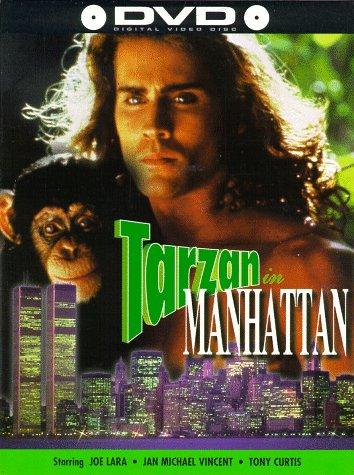
Tarzan in Manhattan (1989, directed by Michael Schultz)


An evil businessman named Brightmore (Jan-Michael Vincent) abducts Cheetah the Chimpanzee from Africa and takes him back to Manhattan.  It’s up to Cheetah’s best friend, Tarzan (Joe Lara), to rescue him.  Tarzan goes to New York where he meets a cabbie named Jane (Kim Crosby) and her father, a tough private investigator named Archimedes (Tony Curtis).  Tarzan is also briefly detained for being in the country illegally but he pulls the bars out of his cell window and escapes.  Presumably, so does everyone else in the jail.  Way to go, Tarzan.

Lisa and I discovered this playing on the Z-Living Channel last night and we watched it because it was either watch this or start binging the Police Academy films on Netflix.  That’s what this damn pandemic is leading to.  We know we’re probably going to have to watch the entire Police Academy franchise at some point but we’re trying to put it off.  So, we watched Tarzan in Manhattan.  Damn you, COVID-19!

It was bad.  It was really, really bad.  It was obviously meant to be a pilot for television series but I guess it didn’t happen.  The timing was off.  If Tarzan in Manhattan had been made in the 90s, it probably would have led to a syndicated series that would currently be airing on H&I, next to episodes of Renegade and Sheena.  It came out in 1989, though, too early to cash in on the wave of syndicated crap that was unleashed after the success of Baywatch proved that you didn’t have to produce a quality show to find success in syndication.  Because it came out too early, we were spared annual Tarzan in Manhattan conventions.  Let that sink in and be happy.

Plus, it’s just really, really bad.  Did I say that already?  It’s true.  There’s nothing consistent about Tarzan in Manhattan.  It wants to be a comedy, it wants to be a drama.  It wants to be an updated version of Tarzan but it still wants him to be confused by the modern world.  The movie also doesn’t seem to know if Tarzan is famous or not.  It seems like he must be because Brightmore went through a lot of trouble to kidnap his chimpanzee.  But, in Manhattan, no one seems to know who he is.  The movie also doesn’t get Tarzan’s famous jungle call right, either.  This Tarzan just yells, without any special inflection to let the world know that he’s Tarzan.  Instead of It’s like he’s not Tarzan at all.  Jan-Michael Vincent and Tony Curtis both seem bored while Joe Lara has the right look for Tarzan but not much else to recommend him.  The chimpanzee survives without being used to test makeup or whatever it was Brightmore was planning on doing with him so at least the movie has that going for it.
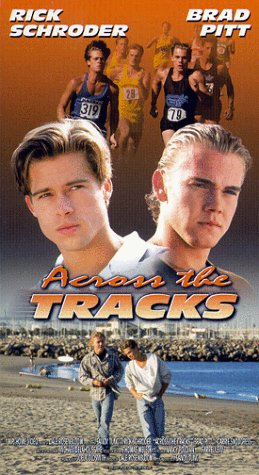
Across the Tracks (1990, directed by Sandy Tung)


Joe Maloney (Brad Pitt) is a senior at a high school in Los Angeles.  He lives with his mother (Carrie Snodgress) in a trailer park, located in a high-crime neighborhood.  Joe has managed to resist giving into all of the temptations around him.  He’s a good students with a clean record and a bright future.  He’s a track star and all he had to do is when the big race at the end of the year and he’ll get a scholarship to Sanford.

Joe’s slightly younger brother, Billy (Rick Schroder) is a different story.  Billy is always getting into trouble and, because he got caught driving a stolen car, he’s spent the last few months in reform school.  Once Billy is released, he returns to the trailer park.  His mother welcomes him with open arms but Joe wants nothing to do with his good-for-nothing brother.  Because Billy has caused too much trouble at his old high school, he’s transferred to a school in a rich district.

Things get even worse when Billy joins Joe for one of his morning runs and he discovers that he’s also a good runner.  Joe suggests that Billy try out for his new school’s track team.  Billy does so and soon, he and Joe are in direct competition.  With the the scholarship to Stanford on the line, who will win the big race?

With the exception of some language that was probably only tossed in to get an R-rating, Across The Tracks feels like an old after school special.  The brothers may not always get along but they learn a lesson.  It’s not really a bad movie but it is a very predictable one and, if you’re watching this to see an early performance from future Oscar-winner Brat Pitt, keep in mind that his role is largely a supporting one.  Rick Schroder is the star of this one and he gives a performance that, like the rest of the film, isn’t really bad but isn’t exactly memorable either.  Across The Tracks was designed to make audiences look at Rick Schroder and say, “He really can act!” but Schroder is miscast as both a juvenile delinquent and a track star.  Ironically, Brad Pitt is more believable as a high school student even though he was 26 when this film was made while Schroder was only 20.

Personally, if I had an older brother and his entire future depended on him beating me in a race, I’d probably let him win.

Did You See The Sun Rise? (1982, directed by Ray Austin)


Ivan (Bo Svenson) is a KGB colonel who, working under the guise of being a diplomat, has set up operations on Hawaii.  During the Vietnam War, Ivan tortured and brainwashed an American POW named TC (Roger E. Mosely), placing a hypnotic suggestion in his brain on just the off-chance that Ivan would need a Manchurian candidate to do some dirty work at some point in the future.  With the help of another former POW, Sebastian Nuzo (James Whitmore, Jr.), Ivan plans to activate TC and then use him to assassinate the visiting prime minister of Japan.  What Ivan hasn’t counted on is that TC has two friends looking out for him, a club owner named Rick (Larry Manetti) and a laid-back, Hawaiian-shirt loving private investigator named Magnum (Tom Selleck).

Did You See The Sun Rise?  Is it a movie or is it just a two-hour episode of the original Magnum P.I.?  I think it’s both because, while it’s definitely an episode of TV series (it was, in fact, the premiere episode of Magnum‘s third season and the fact that it was a special, extra-long episode shows how popular Magnum was back in the 80s), it’s also good enough that it can stand on its own and be viewed and appreciated even by those who have never seen any other episodes of the show.  For the most part, Magnum P.I. was a breezy detective show that mixed comedy and mystery-solving.  Occasionally, though, the show would do a more serious episode and, more of than not, that episode would deal with Magnum, T.C., and Rick’s time in Vietnam.  (At the time it premiered, Magnum was unique in that it was one of the only shows to feature characters who had served in Vietnam without portraying them as being unhinged, unemployable, or potential threats to society.  Magnum and his friends had been effected by their experiences in Vietnam but, unlike someone like Rambo, they were not solely defined by their status as being veterans of what was then America’s least popular war.)  Of those serious shows, Did You See The Sun Rise? is the best example.

There’s a lot to recommend Did You See The Sun Rise?  It’s well-acted by series regulars Selleck, Manetti, Mosely, and John Hillerman.  Bo Svenson plays a great villain and even his Russian accent is more credible than you’d probably expect it to be.  The Vietnam flashbacks are handled well.  The episode has an unexpected twist, one that daringly kills off one of the show’s semi-regular supporting characters.  Even the entire Manchurian candidate plot, even if it is a little more out there than Magnum usually got, is handled well.

And then there’s that final scene.  Did You See The Sun Rise? ends with a freeze frame of Magnum doing something that TV show heroes didn’t normally do in 1982.  You can’t blame him, of course.  It’s a satisfying ending but it still leaves you knowing that nothing is ever going to be same for any of these characters ever again.  In that final scene, Did You See The Sun Rise? takes things further than most shows would have the guts to do.  The ending may not seem as shocking today but you have to remember that this episode aired long before networks like HBO regularly challenged the assumptions of what a show’s main character could or could not do on television.

The original Magnum P.I., including Did You See The Sun Rise?, is available for free on Amazon Prime.


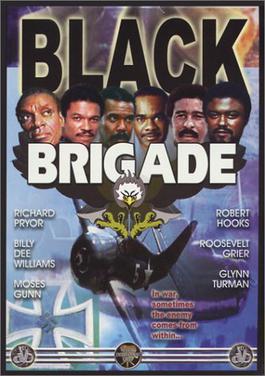
Black Brigade (1970, directed by George McCowan)


During the closing days of World War II, General Clark (Paul Stewart) wants to capture a Nazi-controlled dam and he thinks he’s found just the man for the job.  Captain Beau Carter (Stephen Boyd) is a tough and good with a knife and a gun.  Carter is sent to take command of a ragtag group of soldiers who have spent the last three years waiting for combat.  The only catch is that the soldiers are all black and Captain Carter is a racist redneck.

This was an Aaron Spelling-produced television movie that was originally broadcast under the name Carter’s Army.  When it was released on video, the name was changed to Black Brigade, probably in an effort to fool viewers into thinking that it was a cool blaxploitation film instead of a simplistic TV movie.  The film has gotten some attention because of the cast, which is full of notable names.  Roosevelt Grier plays Big Jim.  Robert Hooks is Lt. Wallace while Glynn Turman is Pvt. Brightman (who keeps a journal full of the details of the imaginary battles in which he’s fought) and Moses Gunn brings his natural gravitas to the role of Pvt. Hayes.  Probably the two biggest names in the cast are Richard Pryor as the cowardly Crunk and Billy Dee Williams as Pvt. Lewis, who says that he’s from “Harlem, baby.”

Don’t let any of those big names fool you.  Most of them are lucky if they get one or two lines to establish their character before getting killed by the Germans.  The movie is mostly about Stephen Boyd blustering and complaining before eventually learning the error of his ways.  The problem is that Carter spends most of the film as such an unrepentant racist that it’s hard not to hope that one of the soldiers will shoot him in the back when he least expects it.  The other problem is that, for an action movie, there’s not much action.  Even the climatic battle at the dam is over in just a few minutes.

There is one daring-for-its-time scene where Lt. Wallace comes close to kissing a (white) member of the German Resistance, Anna Renvic (Susan Oliver).  When Carter sees him, he angrily orders Wallace to never touch a white woman.  Anna slaps Carter hard and tells him to mind his own goddamn business.  It’s the best scene in the movie.  Otherwise, Black Brigade is forgettable despite its high-powered cast.

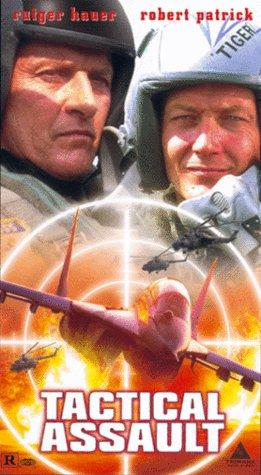
Cinemax Friday: Tactical Assault (1998, directed by Mark Griffiths)


War does strange things to people.

Captain Doc Holiday (Rutger Hauer!) was a damn good air force pilot until 1991.  During the Gulf War, he snapped and tried to shoot down a civilian airline that was flying over Iraqi airspace.  The only thing that stopped Holiday from committing a crime against humanity was his best friend, Capt. Lee Banning (Robert Patrick!!).  Banning fired on Holiday, shooting down his plane.  As a result, while Banning’s been moving up the ranks, Holiday has spent the last six years in an Iraqi POW camp.

By the time Holiday gets out, Banning is now a colonel and he’s married.  His wife (Isabel Glasser) is pregnant.  Banning seems to have everything he could want but he’s haunted by guilt over what happened to Holiday.  He arranges for Holiday to be assigned to his unit and tries to make amends.  Unfortunately, for Banning and his wife, Holiday holds a grudge and he’s played by Rutger Hauer so you know he’s not going to let things go anytime soon.

Is Tactical Assault worth tracking down?  It’s a low budge action movie that stars not only Robert Patrick but also Rutger Hauer so the answer should be obvious.  Of course it’s worth tracking down!  Robert Patrick and Rutger Hauer were direct-to-video film gods and putting them in the same movie is like getting the ghosts of Laurence Olivier, John Gielgud, and Ralph Richardson to all star in an afterlife production of Macbeth.  Along with being convincing in action scenes, both Robert Patrick and Rutger Hauer could actually act so there’s a little more more depth to Tactical Assault than just Top Gun-style dogfights.  Of course, if all you’re looking for is Top Gun-style dogfights, Tactical Assault has got you covered.  This is a movie that understands that some things can only be settled in the sky.

Finally, the main reason you should see Tactical Assault is because it has a scene where Rutger Hauer chases Robert Patrick … in a tank!  It doesn’t get much better than that!

Music Video of the Day: Runaway Boys by Stray Cats (1980, directed by Derek Burbidge)


‘Runaway Boys’ being a little more of a song, song, not just a turnarond song, that took us a while to put together. Jim Phantom helped with the lyrics and it took a while to get right. I came up with bass going chunk, chunk, chunk, chunk, and wrote the song around that. I mean there’s no set rules, I’ll have an idea in the shower, I’ll come up with the riff or something, I’ll have it floating around in my head, I’ll get an idea and I’ll get inspired to write some lyrics, I’ll get a real catchy phrase that I like. I’ll hear someone saying something and I think, oh that’s great and he actually said something else. I don’t know, there’s no way of putting any, it doesn’t make any sense, it just comes to you.”

— Brian Setzer on Runaway Boys

Since today is Brian Setzer’s birthday, it just seems right that today’s music video of the day should come from Stray Cats.  Runaway Boys was the band’s first big hit in the UK, though it would take the U.S. a little longer to get with the program and embrace the genius that is Setzer.

This video was directed by Derek Burbidge, who directed a number of videos in the 80s.  In fact, most of the videos for The Police were done by Burbidge.  He also did the famous video for Gary Numan’s Cars.

Enjoy!

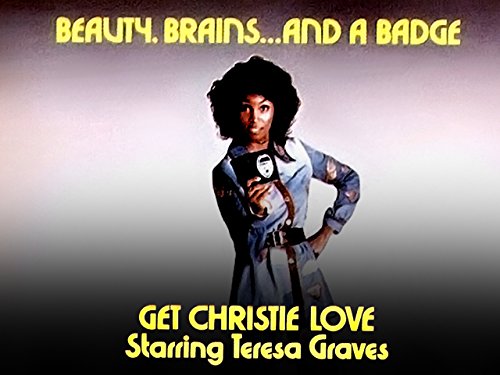
Get Christie Love! (1974, directed by William A. Graham)


When Captain Reardon (Harry Guardino) discovers that there’s a ledger that contains information that could bring down Los Angeles drug lord Enzo Cortino (Paul Stevens), he decides that the best way to get the ledger is through the drug lord’s mistress, Helena Varga (Louise Sorel).  To get Helena to betray Cortino, he’s going to have to discover what makes her tick.  He’s going to have to send someone undercover to find out all there is to know about Helena.  It’s time to get Christie Love!

Teresa Graves plays Christie Love, a tough and beautiful woman who is also the best undercover cop in Los Angeles.  She goes from busting a serial killer (played by Ron Rifkin) and investigating Helena’s life.  Along the way, she deals with by-the-book superiors, incompetent assassins, and hapless bureaucrats.  She throws one killer bellboy off of a hotel balcony and she lets a crook know that, “You’re under arrest, sugar!”

Get Christie Love! was an attempt to a do a made-for-TV version of a Blaxploitation film and the results are mixed.  While the movie features the expected car chases and a handful of fights, it’s still limited by what was considered to be acceptable for prime time in 1974.  Pam Grier may have blown someone’s head off in close-up in Coffy but, in Get Christie Love!, the camera always cuts away as soon as Christie throws her final punch.  Teresa Graves is likable as Christie Love but, unlike the best Blaxploitation heroes, she’s working inside the system and she never has any mixed feelings about being a cop.  The fight scenes are particularly disappointing because they’re edited in such a way that it’s obvious that most of the work was being done by the stunt crew.  The best scenes are not the action scenes but the ones that emphasize Christie’s intelligence and that feature her doing old-fashioned detective work, investigating Helena’s life and putting the clues together.

Get Christie Love! was enough of a rating success that it led to a short-lived television series.  It’s historically significant because it was the first hour-long drama to feature an African-American female in the lead role.  (It was the second series to do so overall, after Julia, which starred Diahann Carroll.)  The show only lasted a season but it achieved pop cultural immortality when, years later, Quentin Tarantino used it as a reference in Reservoir Dogs.


Music Video of the Day: Looks That Kill by Motley Crue (1983, directed by ????)


This is a really dumb video but it’s Mötley Crüe so why should that come as a surprise?

Like almost every heavy metal video that came out in the early 80s, this one is set in an apocalyptic future.  There’s a group of women who look like they just escaped from a dress rehearsal for Cats. Mötley Crüe shows up looking like KISS and carrying torches.  There’s a battle.  The band puts the women in a cage and then performs a concert for them, which I don’t know if you want your music video to say that you have to actually imprison people to force them to listen to your band.  One of the women fights back.  The video ends with a pentagram because Satan’s cool.

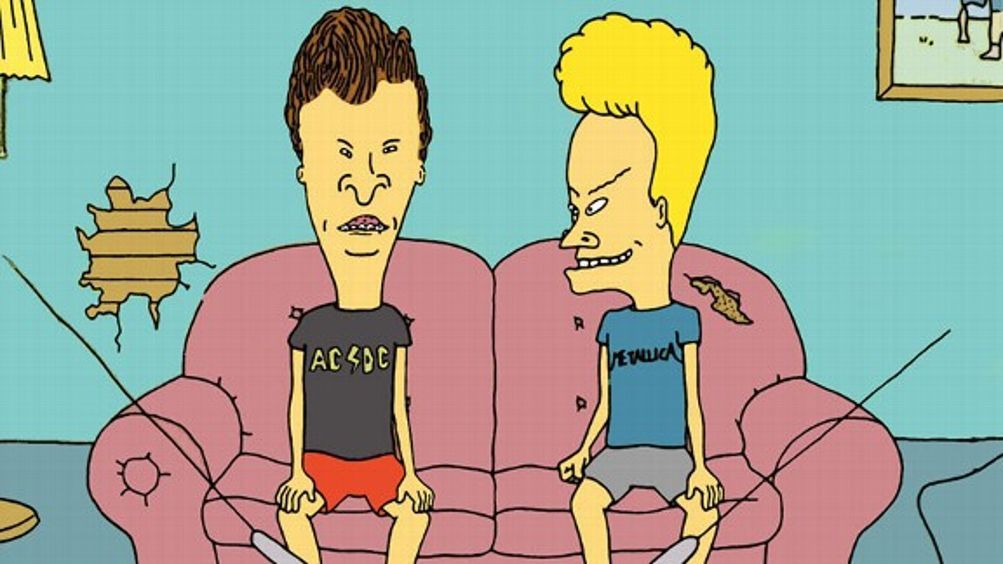
It’s Mötley Crüe.  It really doesn’t demand much thought and at least Kip Winger’s not in the band.  I may think it’s stupid but you know who probably loved this video?  These two:

Enjoy!

The Ballad of Andy Crocker (1969, directed by George McCowan)


Andy Crocker (Lee Majors) is a earnest young Texan who enlists in Vietnam, is injured in a firefight, and returns home with a purple heart.  Upon landing in California, he discovers that America has changed.  A group of hippies (led by Stuart Margolin, who also wrote this film’s script and the folk-style song that’s played throughout the action) taunts him for wearing his uniform.  After Andy steals a motorcycle from them and makes his way back down to Dallas, he discovers that his girlfriend, Lisa (Joey Heatherton), has left him for another man and that his best friend (played by singer Jimmy Dean) has sold Andy’s business.  Lisa’s mother (Agnes Moorehead) orders Andy to stay away from her family while she’s skeet shooting.  Even though everyone tells him how proud they are of him, no one seems to want Andy around.  Finally, Andy ends up back in California without any direction home.

This made-for-television movie (which was produced by Aaron Spelling) was important in that it was the first film to attempt to explore the issues that would face servicemen as they returned home after serving in an unpopular war.  It was actually meant to be a pilot for a series called Corporal Crocker, which would have followed Andy Crocker as he traveled across the country, Route 66-style.  Since the series wasn’t picked up, The Ballad of Andy Crocker instead becomes a downbeat look at a man discovering that he no longer has any place in the world.  It’s only 72-minutes long so it doesn’t examine any issues in depth but it’s still sincere in its intentions and Lee Majors gives a good performance in the lead role.  Andy Crocker is an interesting character.  Despite the fact that he just returned from fighting in it, he doesn’t seem to have any strong opinion about the war in Vietnam.  He’s hardly a pacifist and he does steal a motorcycle but, at the same time, he’s not a gung ho warrior either.  He’s just an ordinary man who is trying to figure out where he fits in.  By the end of the movie, he’s more scarred by society’s indifference than he has been by the war.

Keep an eye out for Marvin Gaye, who has a small role as Crocker’s best friend from Vietnam.