Music Video of the Day: Aeroplane by Red Hot Chili Peppers (1996, directed by Gavin Bowden)


A song about drug abuse that features a children’s chorus?

Not creepy at all!

Aeroplane makes a lot more sense if you know that it’s based on a traditional blues song called Jesus is my Areoplane.  In their version of the song, the Chili Peppers are saying that music has saved them and taken them to a higher plane of existence.  Whenever Anthony Kiedis struggled with his addictions and was tempted to turn to dust in his kitchen, it was music that kept him from destroying himself.  The original song was about people flying away with Jesus.  The Chili Peppers are flying away with songs like this one.  The Chili Peppers might be going to Hell but at least they got to make some music and shoot his video with a group of smoking hot models and synchronized swimmers.

The children’s chorus, which shows up at the end and changes the entire feel of the video, were reportedly all friends of Flea’s daughter.  Flea’s daughter is among the children singing.  At the end of the song, when you hear one girl outsinging all the rest with “You’re my areoplane!,” that’s her.

Enjoy!

Cotter (1973, directed by Paul D. Stanley)


Cotter (Don Murray) is an alcoholic Native American who works as a rodeo clown.  One day, when he’s too drunk to do his job, a bull rider is killed as a result.  All of the other bull riders track Cotter down in his trailer and tell him that his days of being a clown are over.  They tell him that if they ever see him anywhere near another rodeo, they’ll kill him.  It’s a dramatic scene that would probably be more powerful if Cotter wasn’t wearing a clown make-up while rolling around on the floor in a drunken stupor.

With nowhere else to go, Cotter returns to his hometown and tries to surprise his old friend Roy (Rip Torn) by jumping through Roy’s front door while wearing his clown make-up.  However, when Cotter jumps into the living room, the only person he meets is Roy’s half-naked wife, Leah (Carol Lynley) and she promptly fire two barrels worth of buckshot at him.  Showing the reflexes that would have saved that bull rider’s life if only Cotter had been sober, he manages to duck out of the way.

When Roy comes home, he’s at first excited to see his old friend.  He even invites Cotter to stay with them.  Leah slowly warms up to Cotter.  However, the other townsfolk are suspicious of Cotter because of his heritage and his reputation for being a hard drinker.  When a local rancher turns up dead, almost everyone immediately assumes that Cotter must be responsible.  Not even Roy is willing to stand up for his friend.

Made for a low-budget, Cotter is a well-intentioned film that doesn’t work.  A large part of the problem is that, while Don Murray and Rip Torn were both good actors, they both overact in Cotter.  For some reason, both of them yell the majority of their lines.  Torn was a good bellower but Don Murray, who was usually a far more low-key actor, seems uncomfortable in his role.  While it is true that Don Murray first found stardom playing a headstrong cowboy in Bus Stop, it’s also that, from the 60s onward, Murray was always best cast as men of authority and it’s hard to buy him as an irresponsible character like Cotter.  Maybe the film would have worked better if Torn and Murray had switched roles.  Carol Lynley seems more comfortable with her role than either one of the two male leads, though she doesn’t get to do much beyond suffer at the hands of Roy and eventually fall in love with Cotter.  Also giving a good performance is Sherry Jackson, cast as a sympathetic barmaid, though she’s also not given much to do beyond reacting to Cotter and Roy.

Cotter doesn’t have a bad message and it at least acknowledges that Cotter’s alcoholism is largely his way of dealing with the prejudice that he’s suffered his entire life, though Cotter’s monologue on the subject would have probably been more effective if it had been delivered by an actual Native American actor instead of the very white Don Murray.  Unfortunately, good intentions aside, Cotter just never really comes together as a movie.

Music Video of the Day: Hell In A Bucket by Grateful Dead (1987, directed by Len Dell’Amico)


I may be going to Hell in a bucket but at least I’m enjoying the ride

The members of the Grateful Dead didn’t do many music videos.  I think Hell In A Bucket was their second video, following the surprise hit that they had with A Touch of Grey.  From what I’ve read, it was the band’s record label that insisted that the band make some videos to help promote their 12th studio album, In the Dark.  Some members of the band were concerned that agreeing to do music videos would mean that they were “selling out.”

The video for Hell In A Bucket feels like it could be a parody of the type of videos that were popular on MTV.  With his Miami Vice-Style outfit and the way he mugs for the camera, Bob Weir almost seems like he could be Huey Lewis’s coked-out older brother.  The video opens in a biker bar, populated with the type of rough characters who most bands would never dream of featuring in a video.  While Jerry Garcia keeps his distance, Bob Weir sings a song of rock and roll decadence that seems to be saying, “This is what it’s all really about.”

No, I don’t know why there’s a duck at the bar.  It’s just there.  Jerry daughter’s Trixie is also in the video.  She plays one of the dancing devils.

Enjoy!


The Hanged Man (1974, directed by Michael Caffey)


In this made-for-TV western, Steve Forrest stars as James Devlin.  A hired killer and a notorious outlaw, Devlin has finally been captured and is sent to the gallows.  At first, it seems as if the hanging’s been a success and Devlin’s life has been extinguished at the end of the rope.  But then, while his body is at the funeral home and is being prepared for burial, Devlin suddenly opens his eyes and reveals that he’s alive.

No one can figure out how Devlin manage to survive being hung, especially not Devlin.  However, Devlin is now alive and free to leave town.  Has Devlin been sent back to Earth to serve God or did he just get lucky?  Devlin may not be sure himself but he is determined to turn around his old ways.  That starts with protecting a widow (Sharon Acker) and her son (Bobby Eilbacher) from Lew Halleck (Cameron Mitchell), a greedy businessman who wants their land and is prepared to go to any lengths to get it.  Devlin is not only still as good with a gun as he was before his execution but, having survived his hanging, he can now read minds!

The Hanged Man was designed to be a pilot for a weekly TV series and watching it, it’s easy to imagine how the show would have developed.  Devlin would have traveled around the old west, helping out a new guest star every episode and presumably trying to discover why he had been returned to life.  It’s not a bad idea for a show, though the pilot film doesn’t do enough with it.  Despite the fact that Devlin might be undead and that he now has the power to read minds, it really is just a conventional western, featuring the saintly widow and the evil land baron and all of the other familiar tropes of the genre.  It may begin with Devlin coming back to life but it ends with a shoot-out that could have been lifted from any number of old TV shows.

Still, as far as made-for-TV westerns are concerned, this one is entertaining enough.  Steve Forrest is a good hero and, as always, Cameron Mitchell is a good villain.  I wish they had done more with the supernatural aspects of the story but The Hanged Man is good enough for undemanding fans of the genre.

Music Video of the Day: Embarrassment by Madness (1980, directed by ????)


“We were trying to do Motown with this one. Lee Thompson’s sister had a baby with a black man and it caused consternation in his family. It’s a great lyric – really sensational. You couldn’t believe such sensitivity could come from such a rough diamond, but Lee is one of the best lyricists of his time. We were having trouble with people associating us with the NF, so it was nice to establish once and for all that we weren’t.”

— Suggs on Embarrassment 

The NF that Madness’s frontman refers to was the National Front, a fascist British political party that was at the height of its prominence when Embarrassment was recorded.  Because Madness was a ska band and because many of the skinheads who supported the National Front were also into ska music, Madness had to spend a good deal of their early career just assuring people that they were not themselves supporters of the National Front.  (Today, of course, it’s hard to imagine how anyone could listen to any of Madness’s songs and mistake them for supporters of the NF.)  This song, which sympathetically tells the story of a woman who has been rejected by her racist family because she’s having a black man’s baby, is not only a repudiation of everything the NF stood for but it’s also one of Madness’s rare “serious” songs.

Enjoy!

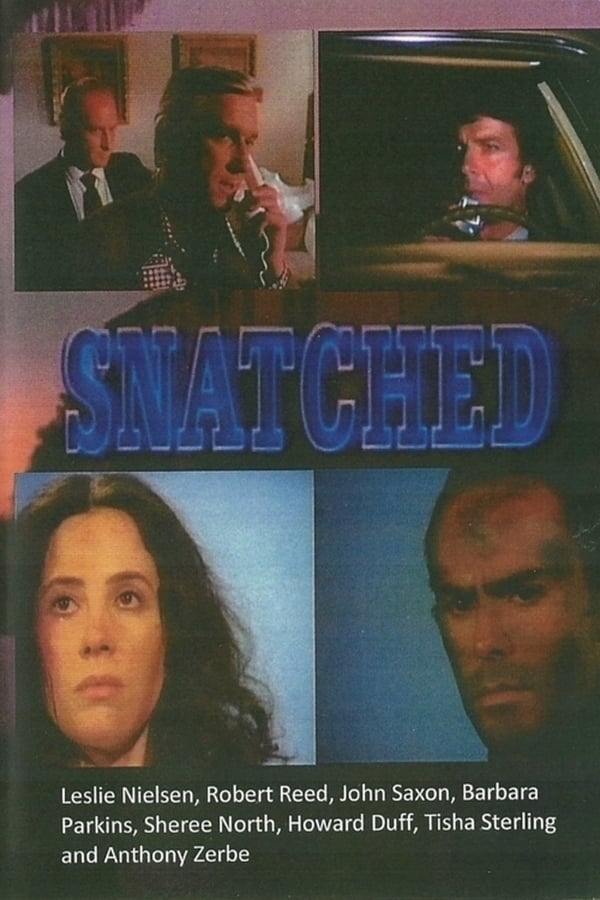
Snatched (1973, directed by Sutton Roley)


Three women have been kidnapped and are being held prisoner in a lighthouse.  Robin Wood (Tisha Sterling), Kim Sutter (Sheree North), and Barbara Maxvill (Barbara Parkins) are married to three wealthy men and the kidnappers (one of whom is played by the great Anthony Zerbe) assume that the husband will be willing to pay whatever is necessary to get back their wives.  Paul Maxvill (John Saxon) and Bill Sutter (Leslie Nielsen!) are willing to put up the money but Duncan Wood (Howard Duff) scoffs at the idea of paying a million dollars just to see his adulterous wife again!

It sounds like the set-up for a Ransom of Red Chief-type of comedy but Snatched is actually a very serious and intelligent thriller, one that will definitely keep you on your toes as you try to keep up with who is working for who.  Kim is diabetic and is growing weaker every minute that she’s being held in the lighthouse.  Paul, Bill, and police detective Frank McCloy (Robert Reed) try to get Duncan to pay his share of the ransom but Duncan is convinced that his wife has been cheating on him and he refuses to pay for her.  On top of that, it turns out that one of the wives might be in on the scheme.  When she tells the kidnappers that she’s actually the one who came up with the plan, is she just trying to protect the other wives or is she telling the truth?  It leads to betrayal and a surprisingly downbeat ending.

Snatched is a well-produced made-for-TV movie.  The mystery will keep you guessing and the cast is made up of a collection of old pros.  Leslie Nielsen, cast here long before he reinvented himself as a comedic actor, is especially good as Bill Sutter and John Saxon gives one of his better performances as Paul.  Even Robert Reed gives a good performance.  Snatched is a classic made-for-TV mystery.

Music Video of the Day: Wanted Dead or Alive by Bon Jovi (1987, directed by Wayne Isham)


Jon Bon Jovi has said that the inspiration for Wanted Dead or Alive came to him one morning while he struggling to sleep on a tour bus.  It occurred to him that being in a rock band was much like being an old west outlaw.  As Bon Jovi described it, a rock band was “a young band of thieves, riding into town, stealing the money, the girls, and the booze before the sun came up.”  I’m not sure that every rock band would agree with that description but, judging from the deathless success of this song, it worked for Bon Jovi.

(I’m also not sure how many old west outlaws came out of New Jersey.)

The video was directed by Wayne Isham and the black-and-white cinematography is courtesy of Derek M. Allen.  It was shot over the course of Bon Jovi’s 1987 world tour and it features scenes that were shot at venues all over the United States.  The theme of the video is that life on the road is hard and Bon Jovi works really hard.  Looking at other music videos that were released around the same time as this one, I’ve noticed that hard work is a recurring theme in many of them.  Bands, especially ones that were often dismissed as being “hair bands,” really wanted to make sure people knew that a tremendous amount of work into their performances.

You have to give Bon Jovi some credit.  Their music not only epitomized an era but, as a band and with the exception of Richie Sambora, they’re largely stuck together and continued to rock.  That’s more than you can say for Winger.

Enjoy!

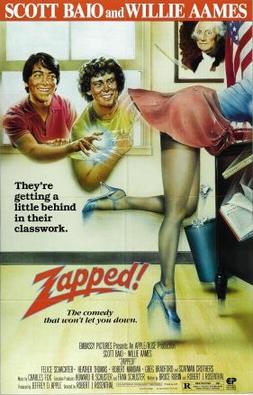
Zapped! (1982, directed by Robert J. Rosenthal)


In this painfully dumb high school comedy, Scott Baio is Barney, a teen scientist who experiments on lab mice and grows specially modified orchids for his high school’s principal, Walter Coolidge (Robert Mandan, who played a lot of high school principals back in the day).  When there’s an accident in the lab, Barney develops telekinetic powers.  Barney then falls in love with the class president, Bernadette (Felice Schachter), while his best friend Peyton (Willie Aames) pursues the beautiful but vain Jane (Heather Thomas).  Barney uses his powers to make a ventriloquist act as if it’s possessed and to help Peyton rig a casino-themed frat party.  Meanwhile, Scatman Crothers plays the school’s baseball coach and has a long scene where he gets high and imagines that he’s riding a bicycle with Albert Einstein.  That’s actually kind of cool.

Zapped! is a movie where Scott Baio magically gains the power to move things with his mind and yet the most implausible part of the movie is the idea of Willie Aames being the most popular student at the high school.  Heather Thomas is believable as a cheerleader and Felice Schachter is perfectly cast as the brainy class president.  Even Scott Baio is not terrible as Barney.  But then Willie Aames shows up and we find out that he’s supposed to be a chick magnet and it becomes impossible for those watching to continue to suspend their disbelief.

Not much really happens in Zapped!  Even after he gets his powers, Barney is frustratingly passive character who just does whatever Peyton tells him to do.  Barney uses his powers to help Peyton show up Jane’s college boyfriend and he uses his powers to help Peyton win games at the school carnival and then Barney uses his powers to help out Peyton when Jane’s boyfriend tries to beat him up.  Maybe Barney needs to get new friends.  The only time Barney uses his powers for himself is when he’s playing baseball and he makes the ball stop in mid-air so that he can hit it.  Somehow, no one watching the game seems to find it strange that the baseball stops in mid-air.  The movie ends with a take on Carrie.  Barney uses his powers to blow off everyone’s clothes at prom.  It’s all to help Peyton, of course.

Zapped! supposedly has a cult following, probably composed of people who were 13 when they first saw it and who only remember the sweater scene with Heather Thomas and the final prom scene.  (Or they’re remembering the famous poster, which is a lot more fun than anything that actually happens in the movie.)  Other than that, this is one of the most boring films ever made.  Perhaps the only interesting thing about the movie is that Heather Thomas sued the production when they failed to acknowledge that a body double was used for Jane’s nude scenes.

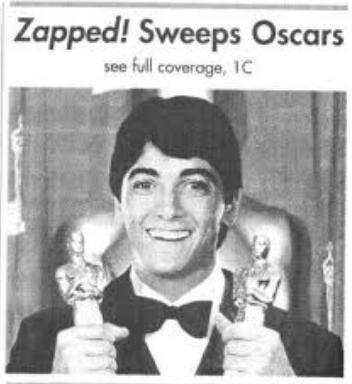
On a positive note, Zapped! did give us this classic Onion headline:


Music Video Of The Day: Rush Rush by Debbie Harry (1983, directed by ????)


Remember when we used to drive around Liberty City listening to this song?

Even though Rush Rush may be best known to some for its use in Grand Theft Auto III, it was actually first recorded for the soundtrack of Scarface.  This was Debbie Harry’s second collaboration with producer Giorgio Moroder.  Their first collaboration was Call Me, which shot to number one on the charts.  Rush Rush was slightly less popular, peaking at #105 in the U.S.

The video features people watching and reacting to footage of Debbie Harry.  Interestingly enough, this video came out around the same time as David Cronenberg’s Videodrome, which featured James Woods doing the same thing.

Enjoy!


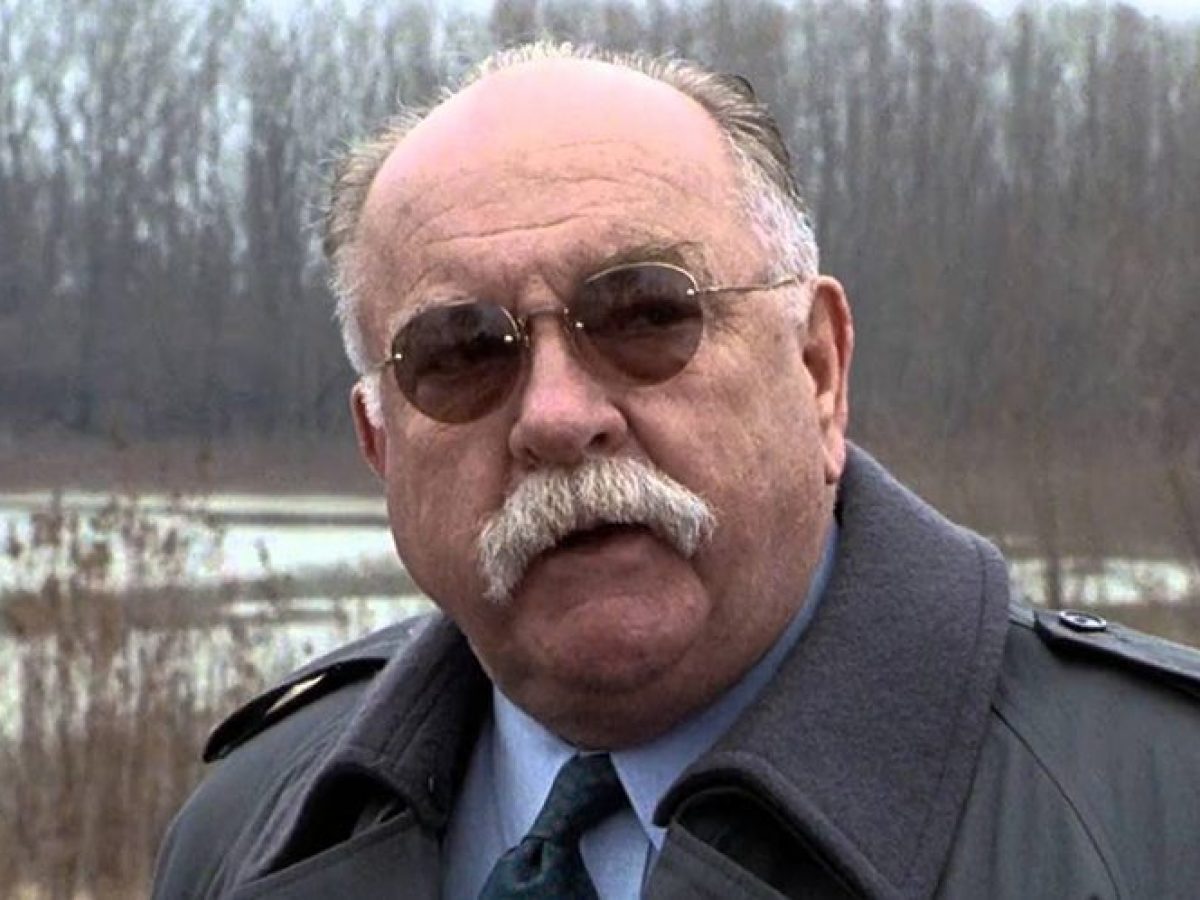
Wilford Brimley, R.I.P.


Wilford Brimley has died.  He was 85 years old.

There’s not much that I really like about twitter but I did enjoy following Wilford Brimley.  Brimley was one of those actors who always played intimidating and serious characters so it was a nice surprise to find his twitter account and discover that he had a sense of humor and that he regularly interacted with his fans.  Once, he even posted a picture of Andy Reid and asked, “When did I start coaching football?”

On screen, Brimley almost always played figures of quiet authority.  Whenever you saw Brimley in a film or on a TV show, you knew that he was going to be playing a straight shooter who didn’t have any time for any foolishness or bullshit.  One of his best performances was in Absence of Malice, where he put a weaselly Bob Balaban in his place.  Of course, everyone knows him from his performance in Cocoon and his promise to his grandson that “we won’t ever die.”  One of his best performances was in a rare bad guy role in The FirmPersonally, my favorite Wilford Brimley performance was his cameo as Postmaster General Henry Adkins on Seinfeld “I’m also a general.  And it’s the job of a general to, by God, get things done!”

Brimley also sold Quaker Oats and later, for a generation of viewers, he became the face of diabetes.  A lot of jokes and memes were made about Brimley’s diabetes commercials but tell the truth.  When Wilford Brimley said, “You need to check your blood sugar and you need to check it often,” you know damn well you immediately checked it.

I’m going to miss Wilford Brimley.  I know I’m not the only one.

Wilford Brimley, R.I.P.