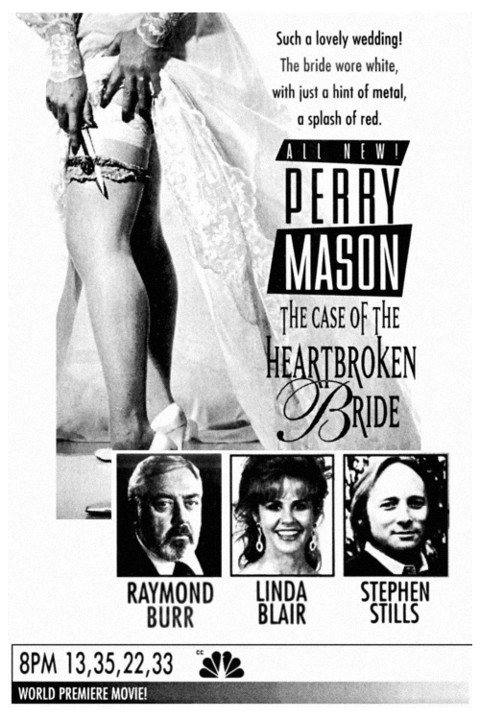
I Watched Perry Mason: The Case of the Heartbroken Bride (1992, Dir. by Christian I. Nyby II)


Perry Mason (Raymond Burr) can’t even go to a wedding without someone getting killed!  Kaitlynn Parrish (Heather McAdam) is the daughter of Max (Ronny Cox) and Diane Parrish (Diane Baker).  Diane used to work for Perry and it’s implied that they used to be more than just colleagues.  (I think that means that it is safe to assume that Kaitlynn is actually Perry’s daughter.)  At the wedding, Alonzo Hawkes (Beau Starr), the uncle of the groom, gets into an argument with Max and accuses Max of embezzlement.  Kaitlynn says she could kill Alonzo.  A few hours later, Alonzo  is found dead and Kaitlynn is arrested.

This was the 23rd Perry Mason television movie and it’s very predictable.  I didn’t care much for the mystery or the scenes of Ken (William R. Moses) looking for clues.  Once again, Ken gets in trouble with organized crime.  It’s as if the movies ran out of plot lines for Ken so he just has to keep doing the same thing over and over again.  All Ken really has to do is track down Suzy Richards (Merle Kennedy), a wedding crasher who witnessed the murder but it takes him forever to do it.  Paul Drake, Jr. would have found her in the time it takes to snap your fingers.

I still recommend this one because of the cast.  Along with Ronny Cox, the cast also includes Linda Blair, Paul Dooley, and musician Stephen Stills and they’re all really good.  Paul Dooley plays the district attorney in this one.  He really has no patience for Perry’s courtroom theatrics and Perry has a lot of them in this movie.  It’s a good thing Perry was always able to get people to confess on the stand because otherwise, he probably would have gotten in a lot of trouble.
I Watched Perry Mason: The Case of the Reckless Romeo (1992, Dir. by Christian I. Nyby II)


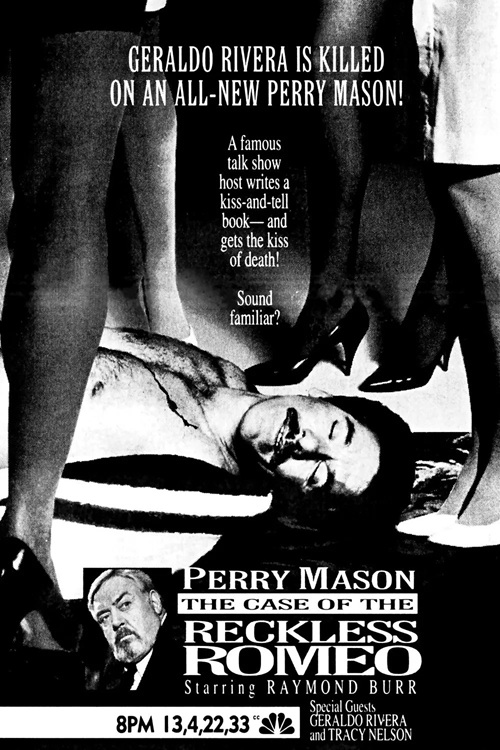
Sleazy talk show host Ted Mayne (Geraldo Rivera) writes a tell-all book about all of the famous women with whom he has had affairs.  One of the women, Roxanne Shields (Amy Steel), is filmed threatening to kill him with a knife.  When Ted is later found stabbed to death, Roxanne is arrested.  Luckily, Perry Mason (Raymond Burr) is willing to take the case and reveal the true killer of the reckless Romeo.

This was one of the last of the Perry Mason movies.  (Burr only did four more after this before he died.)  The plot is okay, even if this is the third movie to feature Ken (William R. Moses) getting in trouble with the mob while investigating the the murder.  It didn’t take me long to guess who the murderer was but the scene where Perry got his courtroom confession was still really well-done.  Not surprisingly, the main pleasure of this film was seeing Geraldo Rivera as the victim.  Geraldo may have been a terrible actor but he was still totally believable as a sleazy talk show host who went out of his way to embarrass every woman that he had ever had sex with.  Geraldo is in the film long enough for you to get sick of him and then he goes away and isn’t seen again.  That’s the way it should always be with Geraldo Rivera.

Perry does a few more courtroom tricks than usual in this movie.  As the hapless district attorney, Kenneth Kimmins is no David Ogden Stiers.  He’s not even Scott Baio.  It’s really enjoyable to watch him get continually outsmarted by Perry.  Raymond Burr was obviously not doing well physically when he made this movie but it’s still fun to watch him trick witness after witness into identifying the wrong woman.


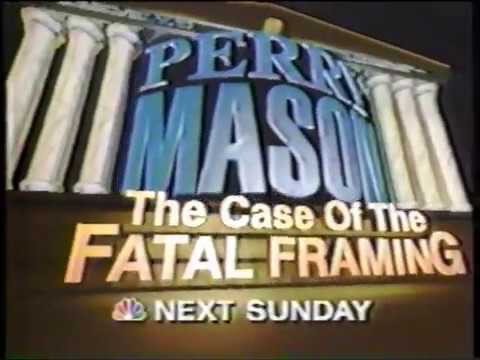
So, I Watched Perry Mason: The Case of the Fateful Framing (1992, Dir. by Christian I. Nyby II)


Truman York (David Soul), a painter who faked his death in a motorcycle accident five years earlier, reemerges because someone is selling forgeries of his work.  When York turns up dead, a photographer (Mark Moses) is arrested for the crime.  Luckily, the photographer went to college with Ken Malansky (William R. Moses) and Ken is able to convince Perry Mason (Raymond Burr) to take the case.  (If you’re going to get arrested for murder, it helps to be a friend of Ken or Perry’s.)

I was disappointed with this entry in the Perry Mason series.  It had potential but it never really reached it.  I was more interested in how the artist faked his death for five years instead of figuring out who killed him.  Raymond Burr was obviously unwell when he shot this movie and there were times when it was painful to watch him as he had to learn against a wall just to be able to stay standing while delivering his lines.  I felt bad for Burr watching this because, even though he was great in the role of Perry Mason, it was obvious that he was in pain.

Maybe because Raymond Burr couldn’t do as much as usual, Ken got to do more than usual  in this installment.  What’s strange is that the accused photographer was also interrogating people and looking for clues.  He had just been released on bail and he was on trial for murder.  He should have been laying low instead of tracking down witnesses.

I love the Perry Mason films and I have so many good memories of watching them with my aunt.  This one didn’t do it for me.

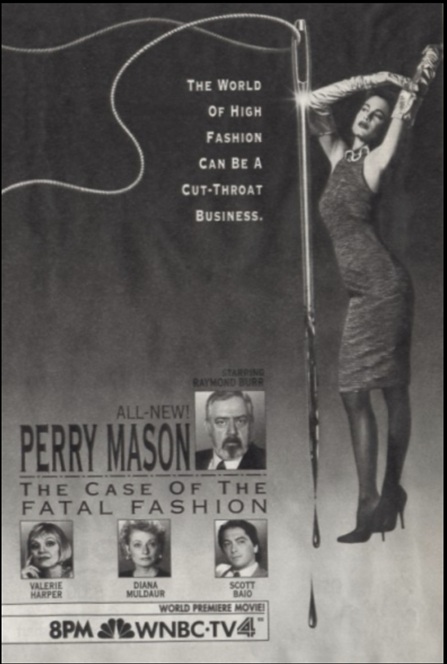
I Watched Perry Mason: The Case of the Fatal Fashion (1991, Dir. by Christian I. Nyby II)


Perry Mason (Raymond Burr), Della Street (Barbara Hale), and Ken Malansky (William R. Moses) are in New York when an old friend of Perry’s, magazine editor Lauren Jeffreys (Diana Muldaur) is accused of murdering a rival editor, Dyan Draper (Valerie Harper). Dyan was infamous for writing about the personal lives of celebrities in her column so there’s a ton of possible suspects. While Ken teams up with a mobster named Tony Loomis (Robert Clohessy) to search for clues, Perry finds himself facing off against a young district attorney (Scott Baio) who is smarter than he seems.

This Perry Mason movie is unique because, for once, the prosecutor is as good an attorney as Perry.  It reminded me of how, when the movies started, David Ogden Stiers always played the prosecutor and came across like someone who would probably win if he has going up against anyone other than Perry Mason.  Even though I immediately thought of Bob Loblaw as soon as I saw him, Scott Baio gives a good performance as a lawyer who worships Perry and can’t wait to face him in court.  For once, there’s mutual respect between the two sides.

The mystery was another one of those where I was able to guess who the killer was from the start.  They had to really stretch things to get the mob involved so that Ken could team up with Tony.  (Ken wanted to bring the killer to court while Tony just waned to shoot them.)  Also, it was obvious that Raymond Burr was not doing well when he filmed this movie.  In almost every scene, he’s either seated or leaning against something.  There are only 6 more Perry Mason films featuring Burr after this one and one of those aired after he died.  Burr still gives a commanding performance whenever Perry’s in court, though.  Sick or not, there’s no other attorney you want on your side.

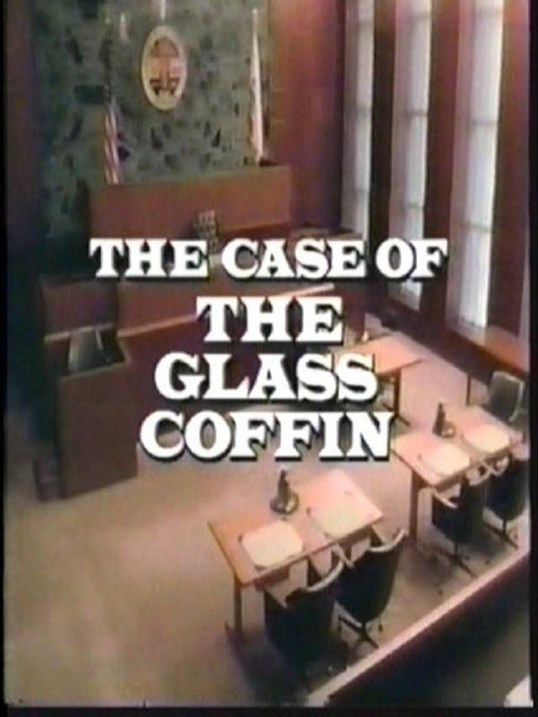
So, I Watched Perry Mason: The Case of the Glass Coffin (1991, Dir. by Christian I. Nyby II)


World famous magician David Katz (Peter Scolari) is accused of murdering his assistant (Nancy Lee Grahn) while performing a trick at a charity show.  The prosecution says that David killed her to cover-up a pregnancy that was the result of a drunken, one-night stand.  However, Perry Mason (Raymond Burr) and Ken Malansky (William R. Moses) discover that there were many people who might have a motive for killing the victim.

After the previous emotionally-charged Perry Mason movie, this entry felt pretty bland.  I liked Peter Scolari as the accused magician but otherwise, this was a little boring.  I guessed who would be playing the murderer as soon as I saw their name during the opening credits.  I did find it amusing that Perry and the prosecutor (played by Bob Gunton) seemed to sincerely dislike each other.  That added some bite to the courtroom scenes but I really do miss David Ogden Stiers’s as Perry’s regular courtroom opponent.

At the end of the movie, Perry took the jury to the theater where the murder occurred and then cross-examined the witnesses in the theater.  I guess the movie’s producers were trying to do something new but it just didn’t feel right for Perry to get his confession anywhere other than in a courtroom.