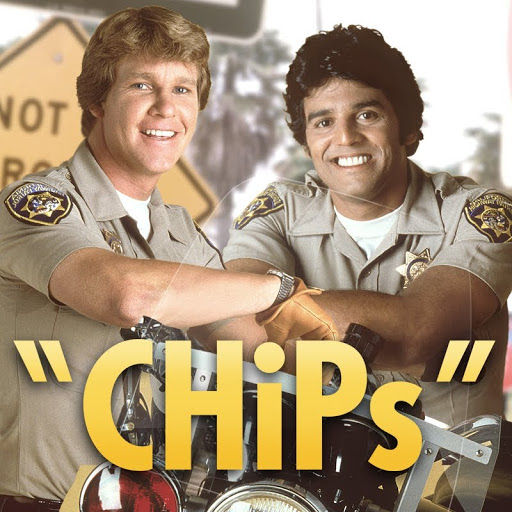
Welcome to Late Night Retro Television Reviews, a feature where we review some of our favorite and least favorite shows of the past! On Mondays, I will be reviewing CHiPs, which ran on NBC from 1977 to 1983. The entire show is currently streaming on Prime!
This week, the CHiPs team investigates an accident and a guest star gives a really terrible performance.
Episode 4.20 “Dead Man’s Riddle”
(Dir by Michael Caffey, originally aired on May 10th, 1981)
An accident in the mountains causes three cars to explode and one driver to die. Since the dead driver was a captain with the Los Angeles fire department, the MAIT Team is sent out to recreate the accident and to try to figure out what happened. They know that at least three cars were involved in the accident. One driver died. One driver is in the hospital. And the other driver appears to be missing. Getraer suspects that the accident could be due to people racing each other in the mountains.
What makes this episode odd is the casting of Joanna Kerns as psychiatrist Colleen Jacobs. She’s assigned to the MAIT Team. She actually drives through the mountains frequently and she even gets involved in racing sometimes. In fact, she saw one of the cars right before the accident! At first, she doesn’t bother to share this with anyone. Instead, she just sits in the background with a guilty look on her face. Finally, Jon Baker — in an unmarked car — tricks her into trying to race him. That’s when she finally confesses….
….and faces absolutely no consequences! Oh sure, Getraer gets a little annoyed and says that it would have been helpful if Dr. Jacobs had been honest from the start. But Dr. Jacobs is allowed to continue to work with the MAIT Team. Even though she intentionally withheld evidence from investigators, she’s not charged with obstruction. Ponch tells her that she’s getting a chance to redeem herself which I don’t think is police policy. No one comments on the fact that, even though she was worried that she may have previously caused a fatal accident, she still tried to race Baker. Does no one care that, at the very least, she appears to have no impulse control?
Making things even stranger is that Joanna Kerns gives one of the worst performances that I have ever seen as Dr. Jacobs, delivering half of her lines as if she’s struggling not to laugh. Even when she’s admitting her fear that she may have been responsible for the accident, she still seems like she’s on the verge of breaking out into laughter. It’s very odd.
Speaking of odd, an eccentric old man named Max (Owen Brooks) claims that he saw a UFO before the crash. (Dr. Jacobs laughs when she repeats this.) It turns out that he just saw a hubcap flying through the air.
In the end, it’s proven that the captain was not at fault in the accident. That’s all that anyone really seems to care about. I assume that Dr. Jacbos and Baker then proceeded to race each back to Los Angeles.
5 Shots From 5 Films is just what it says it is, 5 shots from 5 of my favorite films. As opposed to the reviews and recaps that we usually post, 5 Shots From 5 Films lets the visuals do the talking!
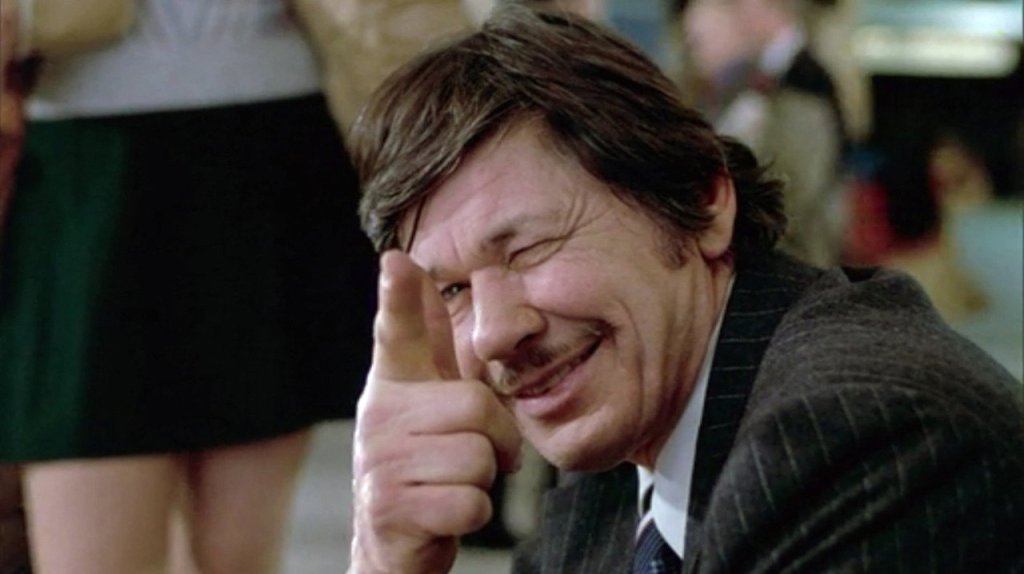
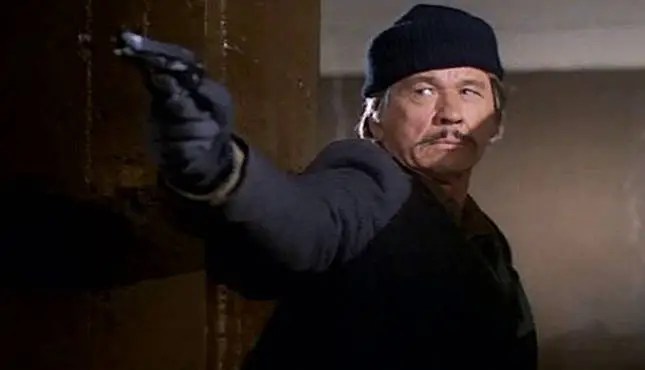
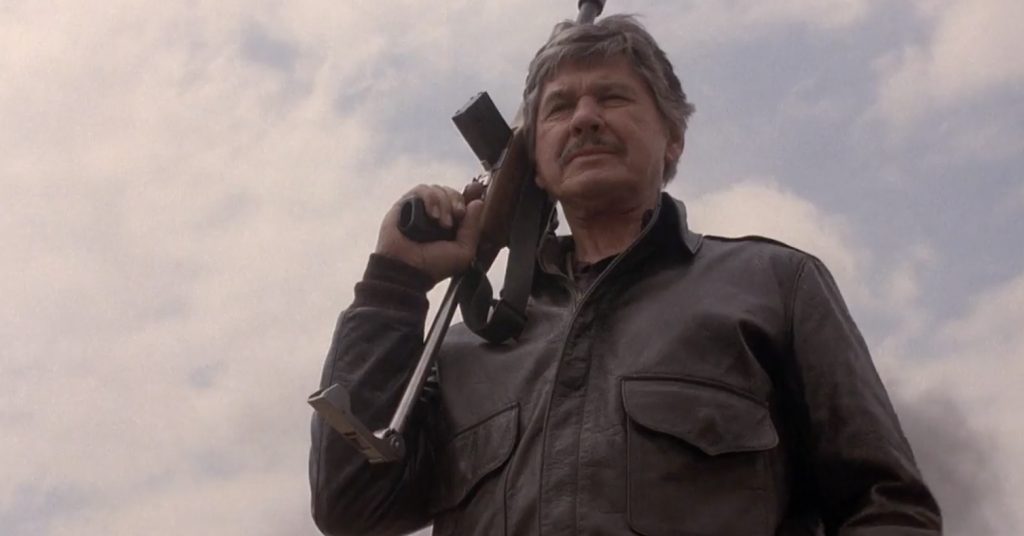
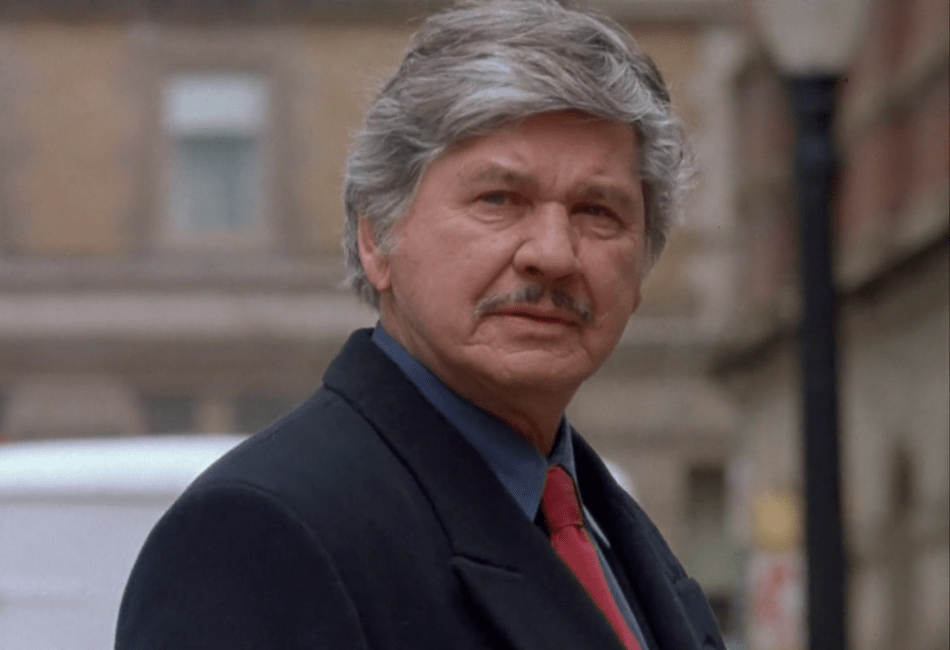
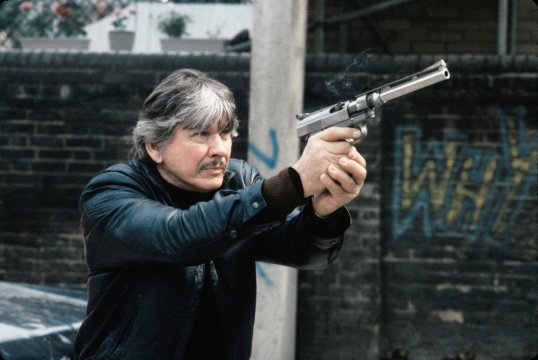
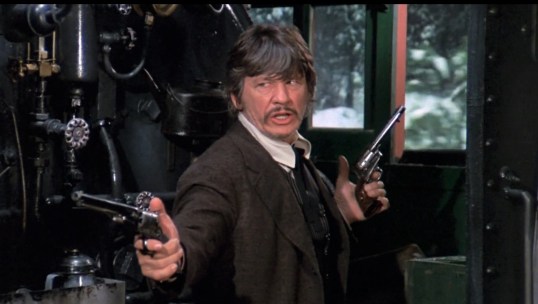
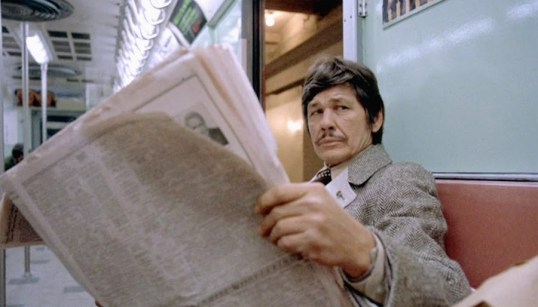
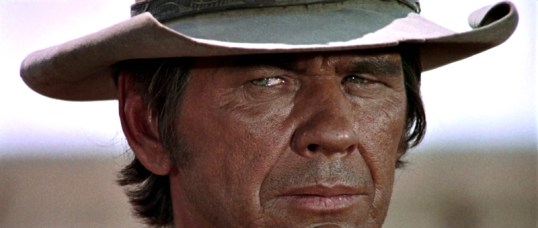
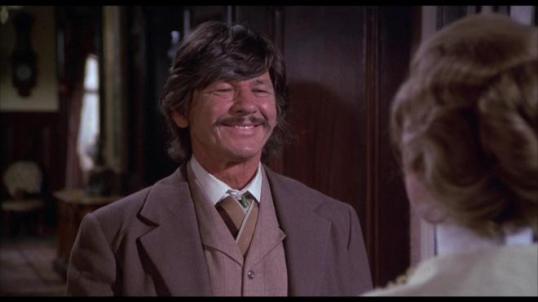
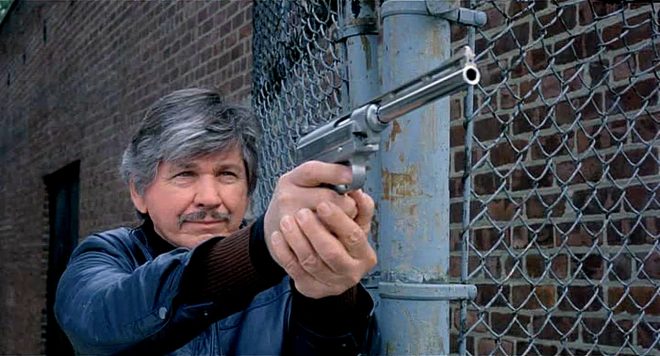
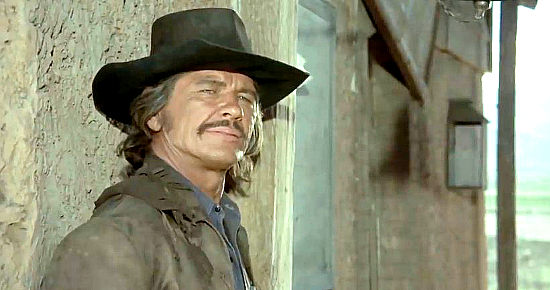
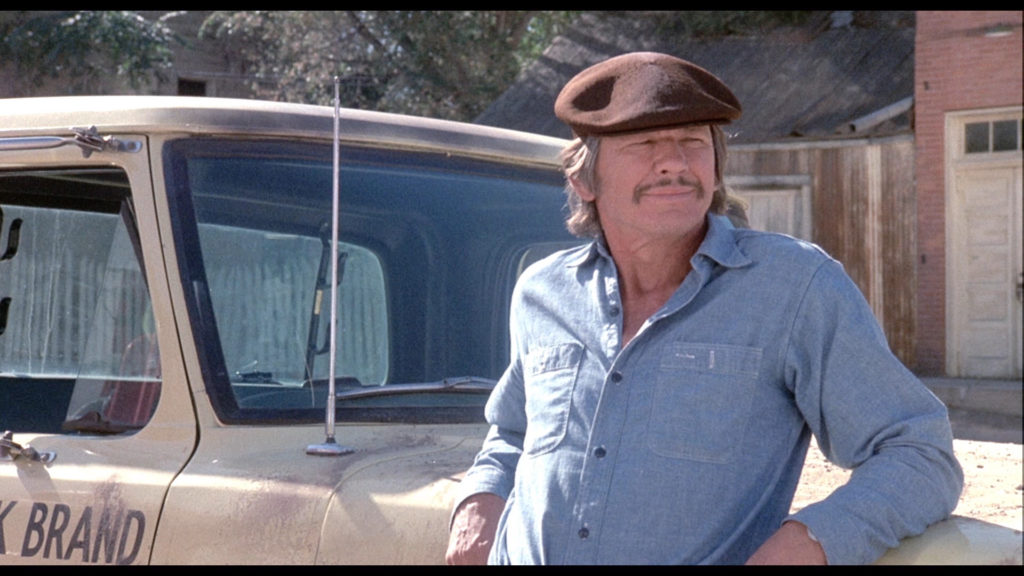
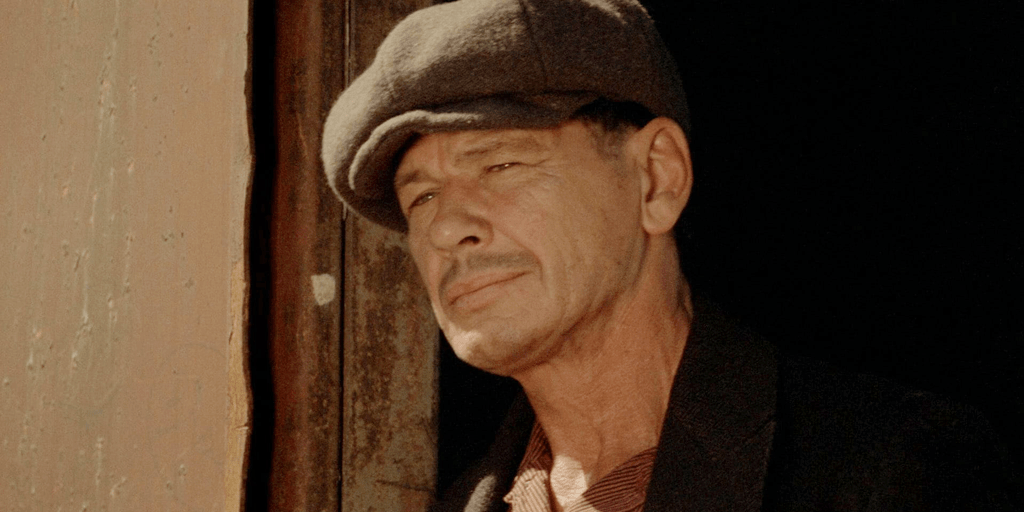
The greatest tough guy of the movies, Charles Bronson, was born 104 years ago today.
Death Wish (1974)Death Wish II (1982)Death Wish 3 (1985)Death Wish 4: The Crackdown (1987)Death Wish V: The Face of Death (1994)
Now, to make clear, I’m not the Bronson expert that Brad is so I will picking from a smaller pool of selections. But no matter! Let’s do this!
6. Death Wish III (1985, dir by Michael Winner)
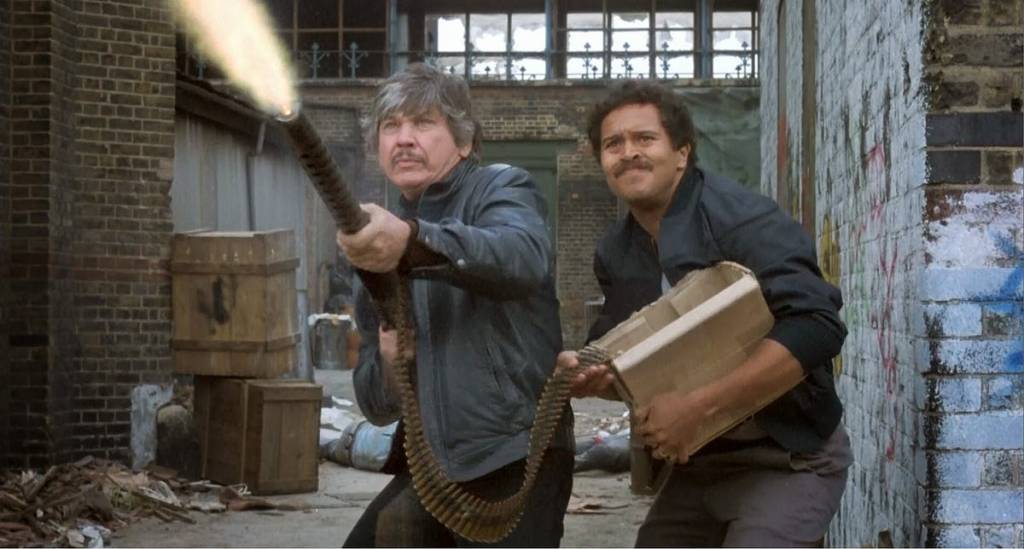
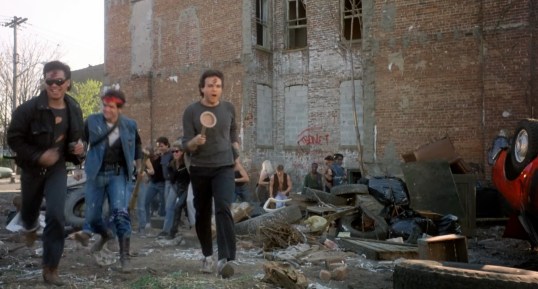
Yes, I have to start with Death Wish III. The Death Wish sequels are definitely a mixed bag but Death Wish III was wonderfully over-the-top, a film that cheerfully dropped Bronson in the middle of an absurd circus and allowed him to tame the lions, as it were. I will always love this film for the presence of Plunger Guy, a bad guy who heads into battle carrying a plunger.
5. Breakheart Pass (1975, dir by Tom Gries)
This is an enjoyable mix of a western, a murder mystery, and an adventure film. Charles Bronson is a mysterious man on a snowbound train. Charles Durning, Ben Johnson, Richard Crenna, Jill Ireland, and Ed Lauter co-star and everyone — especially Johnson and Durning — bring a lot to their roles. This may not be one of Bronson’s best-known films but it is one of his most enjoyable and Bronson himself is at his most likable.
4. Death Wish (1973, dir by Michael Winner)
“My heart bleeds a little for the less fortunate,” Bronson’s Paul Kersey says at the start of the film and those of us watching immediately say, “C’mon, Charlie, really?” That said, one reason why Death Wish works as well as it does is because Bronson actually gives a very good and very emotionally honest performance as a man who finally snaps and starts to take the law into his own hands. (I love the barely veiled contempt that’s present whenever Paul talks to his son-in-law.) Not surprisingly, considering that it was directed by Michael Winner, Death Wish is an often-sordid film that doesn’t have a hint of subtlety. But it’s also brutally effective, a film that captures the way a lot of people feel when they hear about reports of out-of-control crime. Even today, it’s easy to see why Death Wish was the film that finally Bronson a star in the United States.
3. Once Upon A Time In The West (1968, dir by Sergio Leone)
Bronson plays Harmonica in the most epic of all of Sergio Leone’s spaghetti westerns. Leone pays homage to the American western while also gleefully subverting it. The quiet and unemotional Bronson is the film’s hero. Henry Fonda is the sadistic villain who guns down a child. Jason Robards is an outlaw. While I don’t consider it to be quite as good as either The Good, The Bad, or the Ugly or Once Upon A Time In America, Once Upon A Time In The West is still one of Leone’s masterpieces.
2. From Noon Till Three (1976, dir by Frank D. Gliroy)
For all of his reputation for being a tough guy who didn’t show much emotion, there was no denying Bronson’s love for his second wife, Jill Ireland. From Noon Till Three brings Bronson and Ireland together in a film that is a third western, a third romantic comedy, and a third social satire. It’s a film that gives Bronson a chance to show off his romantic side and it might leave you surprised! The film also featured Jill Ireland’s best performance in a Bronson film. I always highly recommend this one. It’s proof that there was more to Bronson than just shooting the bad guys.
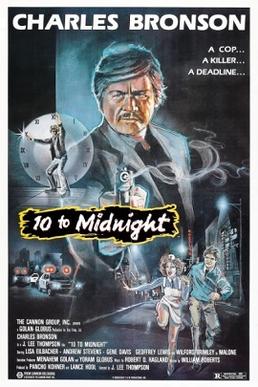
Ten To Midnight (1983, dir by J. Lee Thompson)
This is the ultimate 80s Bronson film and one that I like for a reason that might surprise you. On the one hand, you’ve got Bronson as a tough cop, Andrew Stevens as his liberal partner, and Gene Davis as the disturbingly plausible serial killer, Warren Stacy. Bronson is great as the world weary cop. His scenes with Stevens are amusing and, at times, even poignant. (It helps that Stevens was the rare co-star that Bronson liked.) Davis is terrifying and the film’s final moments are very emotionally satisfying. (“No, we won’t.”) But the reason why I love this film is because of the relationship between Bronson’s cop and his daughter, who played by Lisa Eilbacher. Their scenes together — testy but loving — are well-acted by both actors and they always make me think of me and my Dad. Ten To Midnight is the Bronson film that actually makes me cry.
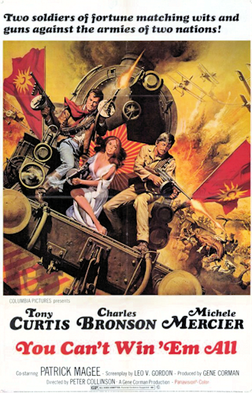
Two Americans meet up in Turkey in 1922. Josh Corey (Charles Bronson) is a cynical soldier-of-fortune who, along with his mercenary crew, is hoping to make money out of the ruins of the Ottoman Empire. Adam Dyer (Tony Curtis) is the heir to a shipping company and is hoping to get his last remaining boat out of the Turkish dock where it’s been interned since World War I. Osman Bey (Gregorie Aslan), one of the local powerbrokers who has risen to power since the Turkish Revolution, hires Josh and Adam to escort his daughters and their protector, Alia (Michele Mercier), to Mecca. Actually, the plan is for them to instead go to Cairo to recover a priceless treasure. The journey to Cairo is filled with action and betrayal as Josh and Adam try to navigate the upheaval of the post-war Middle East.
You Can’t Win ‘Em All is a mix of action and comedy, an adventure that owes more than a little to the other big budget heist films of the 60s and 70s. (Director Peter Collinson was hired due to his work on The Italian Job.) The film’s humor comes from the partnership of the stoic Bronson with the talkative Tony Curtis. In fact, the film’s main flaw is that Tony Curtis talks too much. Curtis simply will not shut up. After about fifteen minutes, I was tired of listening to him. Curtis’s acting limitations really come through the more that he talks and, as a result, Bronson walks away with the entire movie by saying next to nothing. Bronson keeps largely quiet because he doesn’t have to speak to make an impression. His stare says everything that needs to be said.
You Can’t Win ‘Em All is uneven but it has a few good action sequences and Bronson doing what Bronson did best. Watching this movie made me appreciate Charles Bronson all the more. Even when working with a less-than-great script and a miscast co-star, Bronson still had the undefinable quality that made him a star.
Welcome to Retro Television Reviews, a feature where we review some of our favorite and least favorite shows of the past! On Mondays, I will be reviewing Miami Vice, which ran on NBC from 1984 to 1989. The entire show can be purchased on Prime!
This week, Vice helps the communists once again.
Episode 5.5 “Borrasca”
(Dir by Vern Gillum, originally aired on December 9th, 1988)
Martillo Borrasca (Juan Fernandez) is a drug dealer who uses the money to fund anti-communist revolutionaries in his native South American country. Castillo, Tubbs, and Switek want to arrest him, especially after Barrisco and his men use a machete to hack an undercover cop to death. CIA agent Reese (Brion James) wants the Vice Squad to lay off Barrisco because Barrisco is working to overthrow a communist.
Personally, I’m on Reese’s side. Sure, Borrasca is a bad guy and he deserves to be punished for his crimes but the communist dictators in South and Central America were just as bad. Just because they quoted Marx and spouted a lot of anti-imperialist propaganda, that didn’t change the fact that they oppressed their own people and many of them were involved in the drug trade themselves. This episode aired long before the rise of Hugh Chavez but one need only look at the state of Venezuela today to see that the CIA perhaps had a point.
Castillo, of course, doesn’t see it that way. He assassinated Barrisco while the latter is trying to make an escape via helicopter. “I have a code,” Castillo says. Really, Castillo? That’s your code? Assassinate a drug dealer but don’t do anything about the dictators who would have allowed the Russians to plant nuclear missiles in their countries?
This episode was actually pretty routine. How many times have we been through the whole “The Vice Squad is after a drug dealer who has friends in the government” thing? On the one hand, I always appreciate Miami Vice’s cynicism about the War on Drugs. On the other hand, it’s frequent defense of communism has always been one of the show’s more glaring blind spots. Communists make just as much money from the drug trade as capitalists.
Crockett was not in this episode. Instead, Tubbs worked with Switek. It was nice to see Switek get to more than usual but, in the end, this was definitely a Castillo episode.
As possibly the biggest fan in the world of the legendary tough guy actor Charles Bronson, I’m often asked to name my favorite films that he has starred in. This is almost an impossible task, because I love his movies for many different reasons and oftentimes it doesn’t have a thing to do with what film critics think. Well, a few years ago, I decided I would try to rank all of the films where he has the lead role from my favorite to least favorite films. I threw out his supporting roles, which eliminates great films like THE GREAT ESCAPE and THE MAGNIFICENT SEVEN, and focused on films where he plays the main character. I also tried to choose the films I just enjoy watching the most. Since this is supposed to just be fun, and it’s also 100% subjective, I reserve the right to change the rules or my rankings at any time! In honor of Charles Bronson’s 104th birthday, here we go:
#5: ONCE UPON A TIME IN THE WEST (1968) – I’ve heard many people throw this classic spaghetti western into the “large ensemble cast” grouping of Charles Bronson films such as THE DIRTY DOZEN and THE GREAT ESCAPE. While I won’t argue that the cast is extremely impressive since it also stars Henry Fonda, Jason Robards and Claudia Cardinale, I don’t consider Bronson’s role in this film to be the same as those others. Here, the main storyline in the film concerns his character Harmonica’s quest to meet with the black-hatted Frank (Henry Fonda) to settle their business from the past, both beginning and ending with Harmonica in two of the most impressive scenes in movie history. I love this movie more than anything for the way Sergio Leone turns Bronson into an impossibly awesome instrument of justice. Every shot with Bronson makes him look like a badass, and every line that comes out of his mouth sounds incredibly cool. Leone had wanted Bronson for all three of the “Dollars trilogy” films, and once he finally got him, we can see why. His camera lingers on his face and eyes for a length of time that I guess was never done before or after. Henry Fonda is one of the all-time great Hollywood stars, Jason Robards is an acting legend, and Claudia Cardinale just may be the most beautiful woman who’s ever graced the face of Earth, but Charles Bronson is the star and centerpiece of ONCE UPON A TIME IN THE WEST. After this incredible performance Bronson would soon become the most popular star in the world, winning the Golden Globe award as “World Film Favorite” in 1972.
#4: DEATH WISH 3 (1985) – You are reading this right, in my list of my favorite Charles Bronson films, I rank DEATH WISH 3 above ONCE UPON A TIME IN THE WEST, and I’m not ashamed. My interest with Charles Bronson started with a late-night viewing with my dad of the original DEATH WISH, and it began to grow with some rentals of films like VIOLENT CITY and THE MECHANIC, but it reached its bloom as a full-blown obsession when I received DEATH WISH 3 as a Christmas present in 1986. It was the only Bronson film I owned on VHS (not counting a nearly unwatchable former rental tape of THE MECHANIC) and I watched it almost daily over the next sixth months or so. I still know every line of dialogue spoken in the film by heart. Granted, I recognize that new viewers may watch the film and wonder what the hell is wrong with me. To understand why I love DEATH WISH 3 so much, you have to be able to put yourself in the mind of a 13-year-old boy from Toad Suck, Arkansas, who is still new in discovering the world of R Rated cinema. This film had cussing, nudity and comic book level characters and kills from the opening scene to the last. And it had Bronson, the first tough guy actor I had ever really noticed. It would probably take an expert therapist to explain why I love Bronson and this film so much, but the fact is that it kicked off a lifelong interest that still continues almost 40 years later. If I can’t sleep at night, I just start streaming DEATH WISH 3 and lay my head down on my pillow and go to sleep to a nostalgic lifetime lullaby.
#3: RED SUN (1971) – While it does have its share of high-profile supporters, most famously Quentin Tarantino, RED SUN is another film that I hold in higher esteem than most. I remember seeing the huge VHS box at the local mom and pop movie rental store in Conway, Arkansas when I was a kid. I thought Bronson looked pretty darn cool with his cowboy hat, long hair and pointed gun. I rented the movie and liked it, but the quality of the VHS tape was horrendous, and I discovered in the years since that that particular version of the film was severely edited for content as well. The proud owner of a region-free DVD player, a couple of decades ago I bought a region 2 DVD of the film from Studio Canal. For the first time I was able to see the film, including Ursula Andress’ uninhibited performance, in its full glory. One of the things I love the most about RED SUN is Bronson’s engaging performance in the central role. He’s very much a rascal, he’s funny, he’s tough when he needs to be, and he even has a big heart, even if it takes a while to find it. The next thing I love about the film is the fact that he teams up with the incredible Japanese actor Toshiro Mifune. As Mifune himself is in my top 5 favorite actors of all time, the fact that he teamed up with Bronson in this fun western gives major bonus points to the entire production. They make an appealing pair as they head off after the evil Gauche, played by Alain Delon, another international favorite, whose LE SAMOURAI is an all-time classic in my book. With RED SUN, director Terence Young, who helmed the earliest James Bond films, took one of the great international casts ever assembled and delivered a fun and entertaining film that I revisit often!
#2: MR. MAJESTYK (1974) – A simple story about a man in rural Colorado who just wants to be left alone so he can pick his melons, MR. MAJESTYK has been one of my favorite Charles Bronson films since the beginning. I remember Dad renting this one when I was a kid in my early Bronson discovery period, prior to the life-changing DEATH WISH 3 purchase. I loved the movie, but dad had to take it back to the video store after a couple of days, and I wouldn’t see it again for quite a while. Flash forward about 37 years and one of the great days of my life was spent in those same rural Colorado locations (Canon City, Manzanola, La Junta) where Vince Majestyk had righted wrongs a half a century before. My wife and I toured the various locations, and I felt like I was walking in the footsteps of the great Charles Bronson. It was an almost mystical experience, which I documented through tons of pictures and self-made videos. A few months later, as part of the THIS WEEK IN CHARLES BRONSON podcast, I was even blessed with the opportunity to co-host an interview with Jordan Rhodes, one of the two stars of the 1974 production that is still alive, the other being the beautiful Lee Purcell. It was the type of experience you assume you’ll never get in life, and then it happens! There are now so many personal reasons for MR. MAJESTYK to be special to me, but it’s also just a great 70’s action film with an interesting story, a badass hero, and a uniquely awesome set of villains. Elmore Leonard’s screenplay rocks and makes Bronson a working-class hero in a role that fits him like a glove. Throw in Al Lettieri as the biggest bully in the Bronson canon, and Paul Koslo as a creepy, local, wannabe ass-kicker, and the stage is set for action and audience satisfaction. My only warning is to stay away if the mutilation of fruit offends you. This movie contains the most horrid melon massacre in film history!
#1: HARD TIMES (1975) – The directorial debut of Walter Hill, HARD TIMES is the undisputed and still reigning number 1 champion of my favorite Charles Bronson films. When I published my first review in November of 2024 for The Shattered Lens, it was for HARD TIMES, where I declared that the movie is my personal favorite film. My thought was just to go ahead and truly introduce myself to the readers of the site, so they’ll know where I’m coming from as a cinema lover. I have a long history with this film that includes my own personal and working relationship with my dad. Dad was the kind of guy who worked all the time, and even harder on the weekends when he wasn’t doing his paid job as a high school basketball coach and teacher. Being his son, I was always right there with him, helping as we mowed our neighbors’ yards, hauled wood, built sheds… you name it, we did it. One day in appreciation for my help over the summer, dad took me to Wal-Mart and told me I could pick out a movie, and he would buy it for me. They had a nice, fresh stack of HARD TIMES VHS copies on their shelves and that’s what I selected. I had not seen the film before so when we got home, I wanted to watch it. What really surprised me is that Dad sat and watched the whole movie with me. What you have to understand is that my dad never sits still, and if he does, he usually falls asleep. That day he watched the movie, laughed at the right places, commented on the film at times, and seemed to really enjoy himself. I think all of us appreciate it when the special people in our lives will watch and enjoy a movie with us. That was one of those best movie moments ever when you consider it was with my dad. Not only do I have a fond memory of my first viewing, but HARD TIMES has also proven itself over the years to be one of Bronson’s best films and, in my opinion, an underrated 70’s classic. The polar opposite performances of Bronson as the quiet, powerful Chaney, and James Coburn as the fast-talking, hustler Speed, set the stage for high stakes drama in depression-era New Orleans. Somewhat like Harmonica from ONCE UPON A TIME IN THE WEST, Chaney is almost a mythic superhero as he rides into town on the train, impacts a lot of lives, and then gets back on the train and rides away. The audience satisfaction is off the charts as the mysterious drifter Chaney punches out smirking, younger opponents, hulking bald-headed opponents, shady managers who refuse to hand over the cash after a loss, and even a ringer who’s brought in all the way from Chicago. It’s a great film that was bought for me by a great dad, that’s filled with great actors who give great performances, all put together by a great director who would continue to make some of the greatest action movies of all time. How could this NOT be my favorite Charles Bronson film?!!
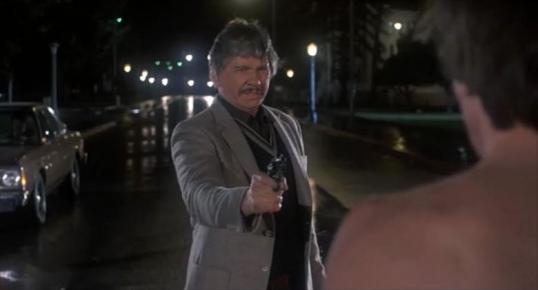
10 TO MIDNIGHT is probably Charles Bronson’s best film from the infamous Cannon Films. It’s a solid police procedural with a slasher twist. It also has a good soundtrack from Robert O. Ragland. When we meet the creepy killer Warren Stacy (Gene Davis) at the beginning of the film, “Look at Me” plays on the soundtrack as he checks himself out in the mirror and goes through the crime in his mind. On Charles Bronson’s 104th birthday, I’ve chosen this as my song of the day!
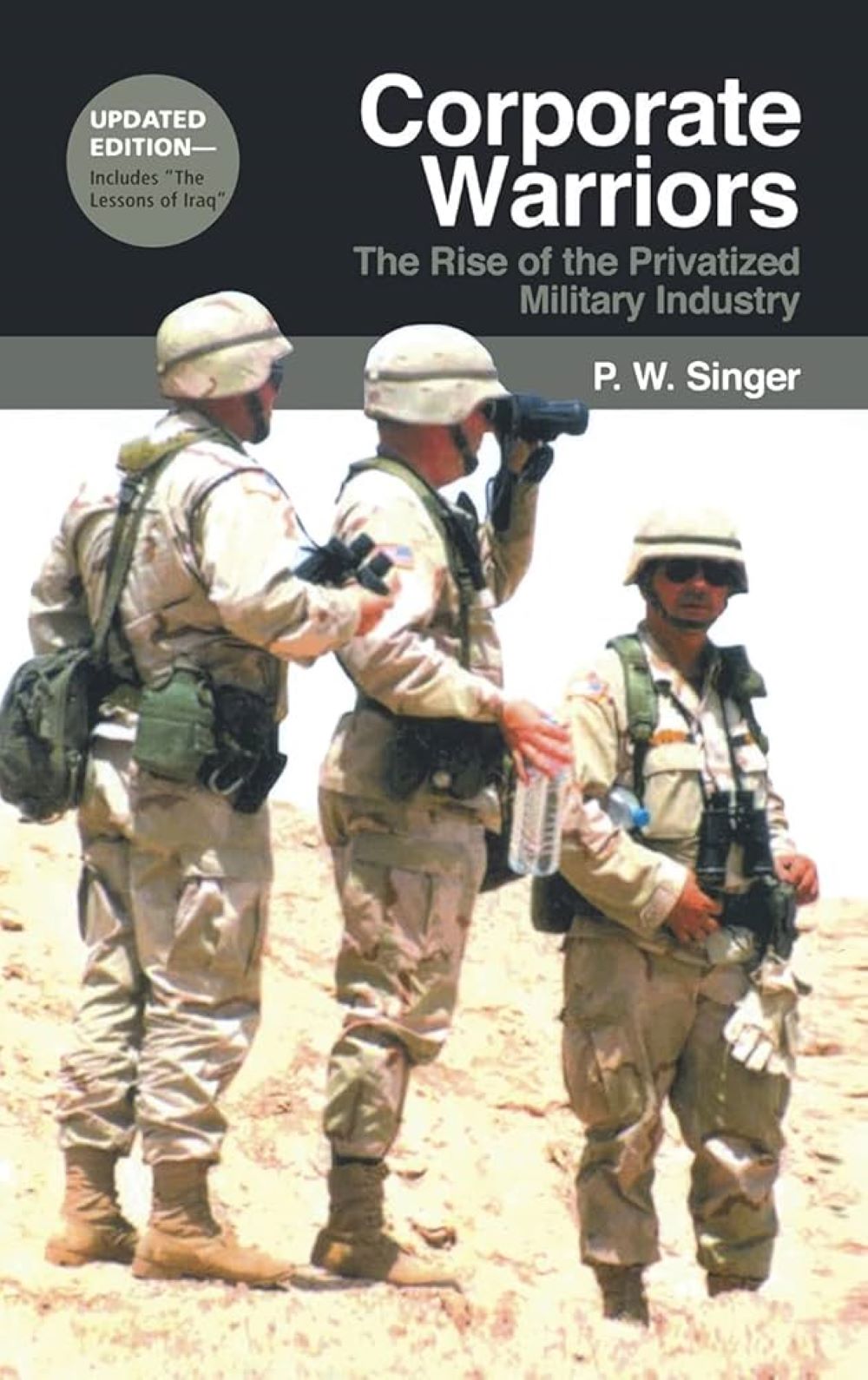
“The privatization of warfare allows startling new capabilities and efficiencies in the ways that war is carried out. At the same time, however, the entrance of the profit motive onto the battlefield raises a series of troubling questions—for democracy, for ethics, for law, for human rights, and for national security.” — P.W. Singer
P.W. Singer’s Corporate Warriors is one of the most important books about the rise of private military companies, or PMCs—businesses that sell military and security services for profit. Singer makes it clear that this is not a brand-new concept. As long as humans have fought wars, there have been soldiers willing to fight for whoever pays them. Ancient mercenaries fought for gold just as modern ones fight for governments, corporations, and even wealthy individuals. What makes today’s version different is how organized and professional these groups have become. They now look and operate like big international businesses, complete with CEOs, contracts, shareholders, and company logos.
Singer argues that these firms are now a permanent feature of modern warfare. Instead of ragtag mercenaries, many private contractors are highly trained professionals offering specialized skills that national militaries either can’t provide or don’t want to keep on the payroll full time. Governments and companies rely on them because they can move quickly, fill skill gaps, and handle dangerous or politically sensitive work. Still, that doesn’t mean they come without serious problems. Singer’s main concern is how much military power is now being handled by people who technically aren’t soldiers and don’t always fall under military law.
In the book, Singer sorts modern PMCs into three main categories. First are the “provider” companies like the South African firm Executive Outcomes, which became famous in the 1990s for fighting on the ground in places like Angola and Sierra Leone. These companies bring in their own troops, equipment, and training programs, often taking on direct combat roles. Next are “consulting” firms such as Military Professional Resources Inc. (MPRI), an American company that employs retired generals and officers to train and advise foreign militaries. The third kind includes “support” firms such as Halliburton’s subsidiary KBR, which focuses on logistics, food, construction, and base operations. These companies don’t fight but keep everything else running so that soldiers can focus on combat.
All three types share something in common: they are run like global corporations. They make money through contracts, report to shareholders, and market themselves as professional service providers. Singer notes that even major multinational companies now use PMCs for everything from executive protection to negotiations with risky foreign governments. Governments, especially the United States and its allies, also rely heavily on these firms to handle noncombat work—guarding bases, moving supplies, and securing reconstruction projects. This trend, according to Singer, represents a major shift in how warfare is organized.
The biggest concern is accountability. Private contractors don’t always fall under the same legal rules as soldiers. They operate in what Singer calls a “gray zone,” where war crimes or abuses can occur without clear consequences. One striking example came in 2004 when four American contractors working for Blackwater were ambushed and killed in Fallujah, Iraq. The brutal event shocked the public and revealed how central private contractors had become to America’s military presence there. Later incidents, like those involving private interrogators at Abu Ghraib and Guantanamo Bay, further blurred the lines between government responsibility and outsourced violence.
Singer’s warning is that handing so much military work to private companies risks separating war from national accountability. If a contractor commits a crime, who is responsible—the company, the client government, or the individual employee? When fighting becomes a business, the incentive to keep costs low and profits high can make ethics and oversight an afterthought.
Events since the book’s release have proven many of Singer’s points, especially the rise and collapse of Russia’s Wagner Group. Led by Yevgeny Prigozhin, Wagner became one of the most dangerous and talked-about private armies in the world. Unlike most Western firms, it operated under direct government influence while pretending to be independent. Wagner first gained attention during Russia’s 2014 invasion of Ukraine, then expanded into conflicts in Syria, Libya, and parts of Africa. The company didn’t just fight wars—it also ran businesses, gained control over mines, and seized energy resources. In short, it blended war and profit in a way that gave Russia global reach without official military involvement.
Wagner also showed how dangerous this model can be. Its fighters were accused of widespread brutality and war crimes, yet Russia could deny any official connection. And when Prigozhin turned against the Kremlin in mid-2023, leading a short-lived march toward Moscow, the illusion of control collapsed. His death later that year and the redistribution of Wagner’s forces into state-controlled units in 2024 revealed just how unstable such private armies can become. Wagner proved Singer’s central argument: once private forces gain real power, they can threaten not just world order but their own creators.
Other countries have followed this path with their own versions. In China, companies like Frontier Services Group protect overseas projects linked to the Belt and Road Initiative. In Turkey, SADAT provides training and advisory services aligned with the government’s foreign policy. The United Arab Emirates has hired foreign-led PMCs to conduct security operations in Yemen and parts of Africa. These cases show that many governments now use PMCs as unofficial extensions of their militaries and foreign policy tools—cheap, adaptable, and politically flexible.
However, while Singer’s analysis stands out for its clarity and early insight, it is not perfect. One issue is that he treats the rise of PMCs as almost inevitable, a natural result of globalization and free markets. In practice, their growth is far more dependent on political opportunity and state willpower than on market logic alone. Wagner’s collapse, for example, showed that governments can shut down or absorb these forces when they decide they’ve become too independent. Singer also tends to treat PMCs as private commercial actors, but many of today’s most influential groups operate as semi-official arms of the state rather than as free-market enterprises. That distinction matters because it changes how these organizations behave and how accountable they can realistically be.
Another problem is that Singer’s proposed solutions rely on greater regulation and international cooperation—goals that sound reasonable in theory but are difficult to achieve. International law struggles even to manage traditional militaries, so expecting it to control private ones that operate across borders is optimistic. Singer’s faith in future accountability mechanisms somewhat underestimates how fragmented and self-interested international politics can be.
Finally, Singer tends to focus mainly on Western examples, especially the U.S. and U.K., where the PMCs act as corporate service providers. In doing so, he underplays the different way non-Western states, especially Russia, China, and Middle Eastern powers, use them as political instruments rather than for profit. The world of PMCs today is not just about private enterprise—it’s about the blending of private business with government strategy.
Despite these weaknesses, Corporate Warriors remains a landmark work. Singer’s writing is clear, grounded, and unusually balanced for a topic that often invites conspiracy theories or alarmist rhetoric. He helps readers understand not just who these companies are, but how they fit into a global system where armies, corporations, and governments increasingly overlap.
More than twenty years on, the issues he described have only grown. PMCs still operate on nearly every major battlefield, from Eastern Europe to Africa. While governments continue to rely on them, meaningful oversight has not caught up. Even with its flaws, Corporate Warriors is still the best starting point for understanding how war became a global business, and why that shift will keep shaping world politics for decades to come.
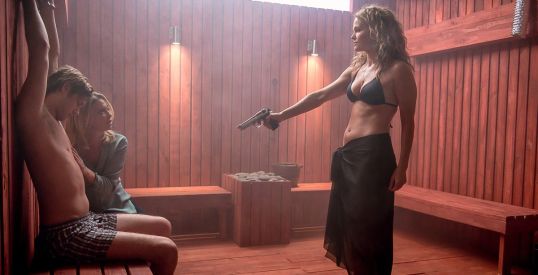
Hi, everyone! Tonight, on twitter, I will be hosting one of my favorite films for #MondayMania! Join us for Lethal Seduction, starring Dina Meyer!
You can find the movie on Prime and then you can join us on twitter at 9 pm central time! (That’s 10 pm for you folks on the East Coast.) See you then!
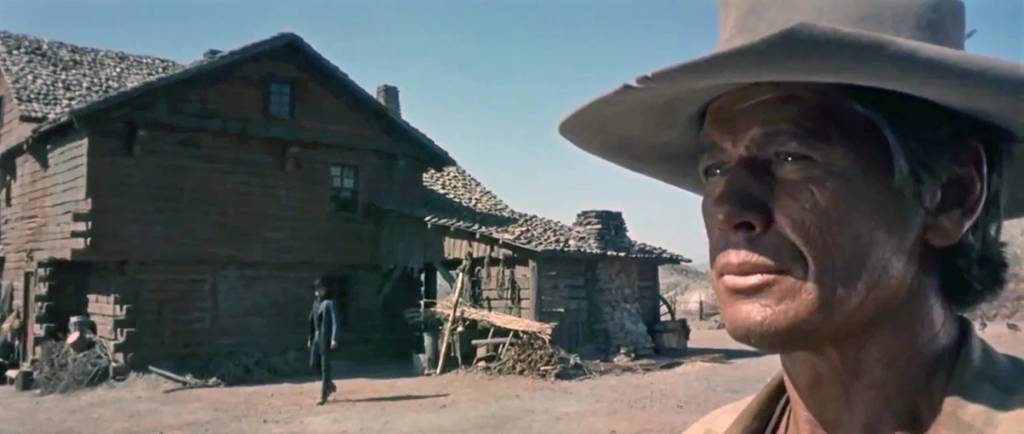
On the precipice of becoming an international superstar, director Sergio Leone gave Charles Bronson one of the coolest introduction scenes in film history in ONCE UPON A TIME IN THE WEST. Enjoy my friends!

 Through the Shattered Lens