Late Night Retro Television Review: Highway to Heaven 4.13 “A Mother’s Love”


Welcome to Late Night Retro Television Reviews, a feature where we review some of our favorite and least favorite shows of the past!  On Thursdays, I will be reviewing Highway to Heaven, which aired on NBC from 1984 to 1989.  The entire show is currently streaming on Tubi and several other services!
This week, Mark is abandoned in the park.

Episode 4.13 “A Mother’s Love”

(Dir by Michael Landon, originally aired on January 6th, 1988)

It’s time for Jonathan and Mark to start a new assignment!  This week, Jonathan gets to be a teacher (again!) and Mark gets to be …. homeless.

Seriously, Mark is dropped off in the park and told to live there.  Eventually, Jonathan shows up and gives Mark a tent and some cooking supplies.  That was nice of him but still, you have to wonder why Mark always seems to get assignments that are designed to aggravate him.  “Thanks for giving up your independence to work with my angel,” the show’s version of God seems to be saying, “Now, here …. go live in the park.”

Also living in the park are four brothers whose mother has recently died.  They’re living in a van and are trying to not get sent to foster care.  Fortunately, there’s a teacher at Jonathan’s new school who regrets that she never had a family.  Guess who is going to end up adopting four kids!

This was pretty much the epitome of Highway to Heaven, sweet-natured, sentimental, shamelessly manipulative, and so earnest that it worked even when it shouldn’t have.  That said, I hope Jonathan will put a good word in for Mark.  The guy deserves at least one easy week!
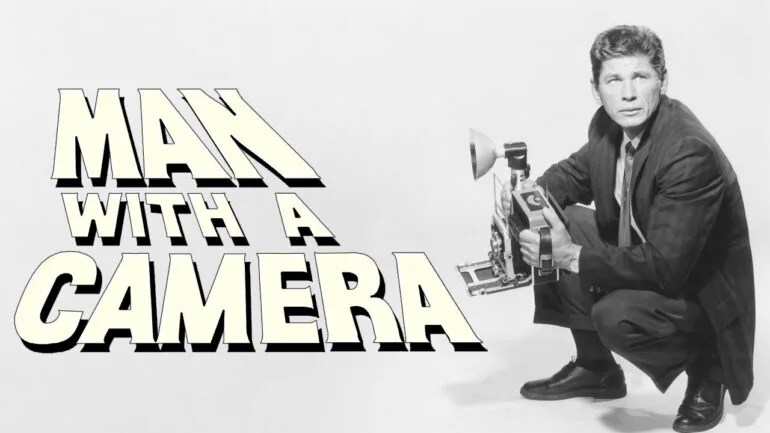
MAN WITH A CAMERA (TV Series) – starring Charles Bronson – S1, E6: Double Negative


In this episode, freelance photographer Mike Kovac (Charles Bronson) receives a tip from reporter Mike Costigan (Frank Faylen) about a mysterious woman. Acting on the lead, Mike snaps a photograph of the woman, only to discover that she bears a striking resemblance to Helen Sprague (Tracey Roberts), a lady who was reportedly murdered by night club owner Howard Dorn (Don Durant). When she shows back up alive, the D.A. will have to drop the charges on Dorn, right? Well it’s not that easy as a punch-drunk ex-fighter Pete Montee (Karl Lukas) shows up at Mike’s house and insists that the woman in the photo is his girlfriend Connie Sawyer. It turns out that Costigan and Dorn are trying to cash in on Kovac’s honest reputation to get away with murder. When Mike gets wise to their plan, he becomes their next target for death!!

This episode of MAN WITH A CAMERA was directed by Gerald Mayer, who would direct 11 episodes of the series. It’s a solid “film noir” episode, with Bronson’s Mike Kovac getting caught up in a murder plot involving double-crossing bad guys, a duplicitous dame, and a dumb lug, where he’ll be lucky if he comes out alive. Of course, a young Bronson is the biggest draw in every episode of MAN WITH A CAMERA. Along with his magnetic screen presence, Bronson always knew how to throw a punch and he gets to engage in a couple of nice fisticuff sequences in “Double Negative.” It makes for good balance as his camera gets him into hot water at the beginning and his fists get him out of hot water at the end. I also want to throw some love Karl Lukas’ way as the ex-fighter, Pete Mantee. He’s clearly not the sharpest tool in the toolshed, but his performance is the most enjoyable of the series, outside of Bronson, up to this point. His combination of innocent, dumb, and unbelievably strong is a lot of fun. 

Overall, “Double Negative” is one of the best episodes of MAN WITH A CAMERA so far. Bronson is at his best and I really like the film-noir feel. If you haven’t watched on episode on Amazon Prime yet, this would not be a bad place to start! 

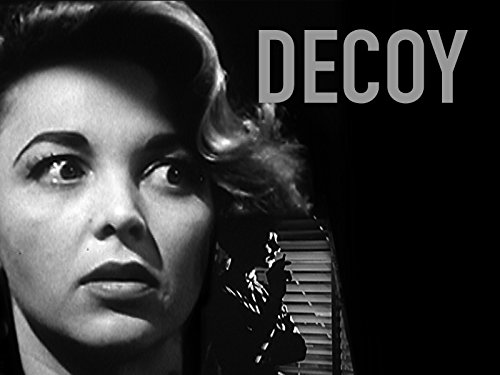
Retro Television Review: Decoy 1.3 “The Phoner”


Welcome to Retro Television Reviews, a feature where we review some of our favorite and least favorite shows of the past!  On Thursdays, I will be reviewing Decoy, which aired in Syndication in 1957 and 1958.  The show can be viewed on Tubi!

This week, Casey help to stop an obscene phone caller.

Episode 1.3 “The Phoner”

(Dir by Teddy Sills, originally aired on October 28th, 1957)

Betty Hodges (Pat Englund) has been getting obscene phone calls.  It’s the 1950s.  That means there’s no caller ID, there’s no cell towers to ping signals off of, there’s no way to block a number, the phone rings until its answered, and every call is made and taken on a landline phone.  This is the era when most calls were still connected by an operator.  Terrified of the calls but determined not to be chased out of the city like so many other young women who have targeted by the so-called Phoner, Betty calls the police.  Casey (Beverly Garland) moves in with Betty, pretending to be her sister.  When the phone rings, it’s Casey who will answer and it’s Casey who will have to keep the guy talking for five minutes while the phone company traces the call.

We don’t ever learn the name of the man making the calls.  In the credits, he’s listed as the Phoner.  Played by Frank Sutton, the Phoner is a sweaty man who makes his calls from a phone booth and who brags about how many girlfriends he claims to have  had.  (He’s the 50s version of an incel.)  We’re told that he says disturbingly obscene things over the phone but, this being a 50s show, we don’t hear any of them.  Of course, we don’t have to hear them.  Betty’s terrified reactions are all we need to see.

Eventually, Betty is attacked leaving work.  She stumbles out of an alley, her face beaten and her clothes torn.  And again, it’s the 50s.  So all we hear is that Betty has been attacked but anyone watching would understand what had happened.  In the hospital, Betty whispers to Casey.  When Casey is asked what Betty said, Casey replies, “She wishes she was dead.”

Eventually, the Phoner calls Casey back.  They set up a date in the park.  The Phoner doesn’t show up at the park but he does show up at the apartment later.  After a struggle, he’s subdued by Casey and the other cops watching the apartment.  Even though common sense tells the viewer that nothing too bad is going to happen to the show’s lead character, it’s still a tense scene, largely because of Frank Sutton’s feral performance as the Phoner.

This is a poignant episode, even if it did obviously have to hold back due to the censorship rules of the time.  Just as frightening as Sutton was as the Phoner, Garland was equally impressive as the determined Casey.  If I did have any problem with this episode, it’s that when she’s initially confronted by the Phoner, Casey doesn’t recognize his voice.  When a man threatens you, you never forget the voice.

This was a good episode.  Hopefully, the Phoner died in prison.

4 Shots From 4 Films: Special Brian De Palma Edition


4 Or More Shots From 4 Or More Films is just what it says it is, 4 shots from 4 of our favorite films. As opposed to the reviews and recaps that we usually post, 4 Shots From 4 Films lets the visuals do the talking!

Today is the birthday of Brian De Palma and that means that it is time for….

4 Shots From 4 Brian De Palma Films

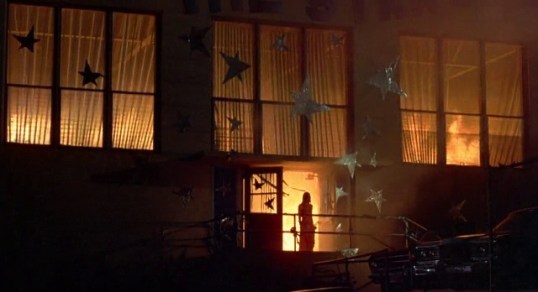
Carrie (1976, dir by Brian De Palma, DP: Mario Tosi)

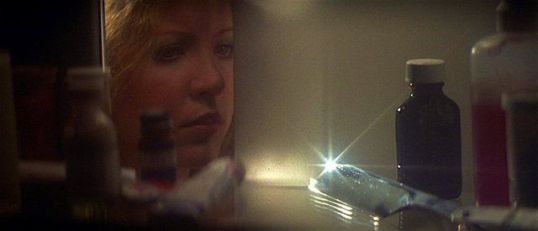
Dressed to Kill (1980, dir by Brian De Palma, DP: Ralf D. Bode)

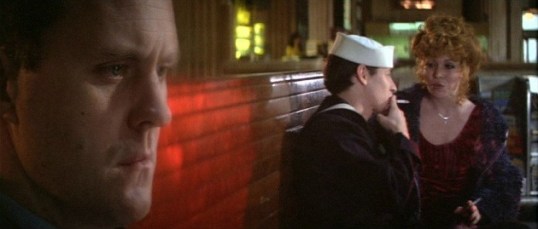
Blow Out (1981, dir by Brian De Palma, DP: Vilmos Zsigmond)

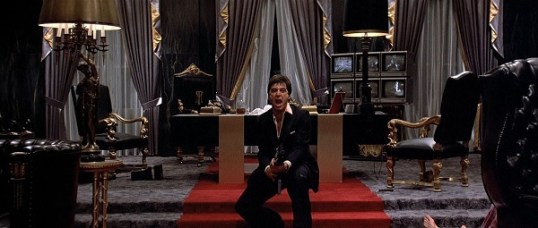
Scarface (1983, dir by Brian De Palma, DP: John A. Alonzo)