4 Shots From 4 Films is just what it says it is, 4 shots from 4 of our favorite films. As opposed to the reviews and recaps that we usually post, 4 Shots From 4 Films is all about letting the visuals do the talking.
Today’s director: James Whale!
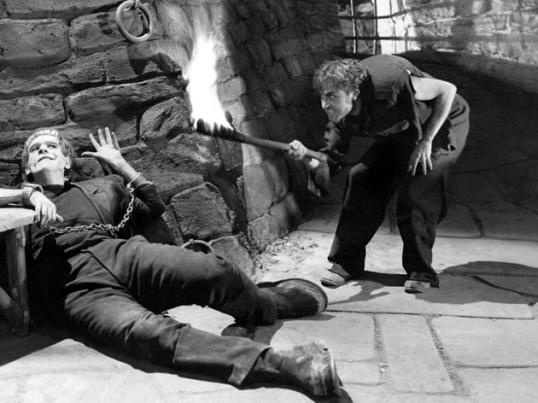
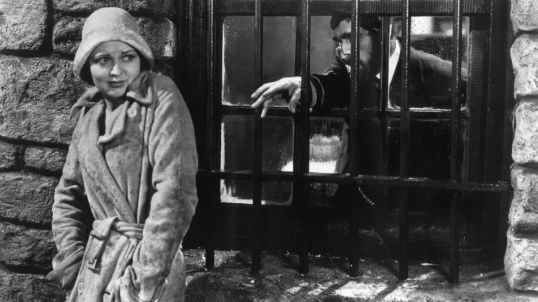
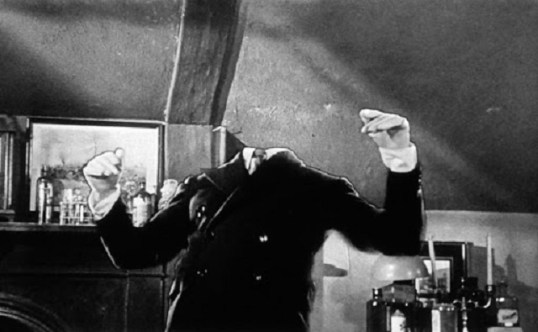
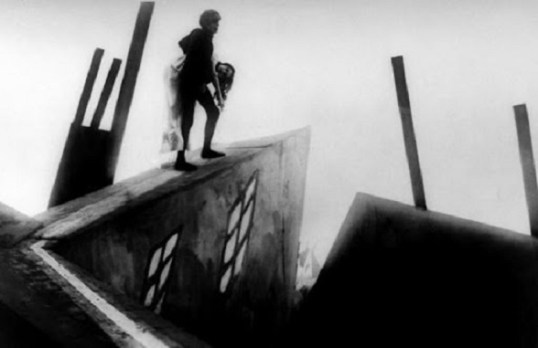
4 Shots From 4 James Whale Films
Frankenstein (1931, dir by James Whale, DP: Arthur Edeson)
The Old Dark House (1932, dir by James Whale, DP: Arthur Edeson)
The Invisible Man (1933, dir by James Whale, DP: Arthur Edeson)
Bride of Frankenstein (1935, dir James Whale, DP: John J. Mescall)
The character at the center of the 1962 Edgar Allan Poe adaptation, The Premature Burial, Guy spends his days terrified of being buried alive. Like his father before him, Guy suffers from a disease that can make him appear to be dead despite actually being alive. Guy is convinced that his father was buried alive and swears that he could even hear his father crying for help inside of his tomb. Though his fiancée, Emily (Hazel Court), insists that Guy is driving himself mad with his fears, Guy continue to spend his time trying to invent a coffin from which one can easily escape. Even after Emily and Guy are married, Guy continues to obsess.
Finally, faced with the prospect of opening his father’s tomb to discover whether or not his father truly was buried alive, Guy appears to drop dead of a heart attack. But is he really dead or is he about to be buried alive!? And who is responsible for the series of mysterious events that apparently drove Guy to collapse of fright? Watch the film to find out! Or read the Edgar Allan Poe short story.
This was the third of Roger Corman’s Edgar Allan Poe adaptations and it’s the first one to not feature Vincent Price as the lead character. For the most part, the members of the small cast all do a good job with their roles. Ray Milland is both sympathetic and a little frightening as the obsessed Guy. Heather Angel is properly enigmatic as Guy’s overprotective sister and Hazel Court will keep you guessing as far as her character’s motivations are concerned. Dick Miller has a small but key role as a grave digger who seems to take just a little bit too much enjoyment from his work. The film’s atmosphere is properly gothic and, if the film isn’t as visually audacious as the first two Poe films, Corman still finds time to include a creepy and psychedelic dream sequence.
That said, Vincent Price is still very much missed. Corman reportedly wanted to use Price but, because Corman produced and financed the film himself, Corman’s former business partners at American International Pictures would not allow Price to appear in the film. (Price was under exclusive contract to AIP.) By the time Corman and AIP worked out their disagreements and again joined forces, Ray Milland had already been cast in the lead role.
While the actors all do a good job, it’s hard to deny that Guy Correll would have been an ideal role for Vincent Price, even if it would have meant essentially re-doing his performance from The Pit and the Pendulum. It’s not just that the film misses Price’s theatrical acting style. The film also misses the energy that Price brought to the previous two Poe films. ThePremature Burial moves at a stately pace and, in the end, it’s a bit too slow and respectable for its own good. Price would have jazzed things up and made a decent film into a truly memorable one. Fortunately, Price would return for the later Poe adaptations.
The Cabinet of Dr. Caligari (1920, dir by Robert Wiene, DP: Willy Hameister)
The Cabinet of Dr. Caligari is a film that I’ve shared many times previously on the Shattered Lens. The first time was in 2011 and then I shared it again in 2014, 2015, 2016, 2017, 2018, 2019, 2020, 2021, and 2022! Well, you know what? I’m sharing it again because it’s a classic, it’s Halloween, and everyone should see it! (And let’s face it — it’s entirely possible that some of the people reading this post right now didn’t even know this site existed in any of those previous years. Why should they be deprived of Caligari just because they only now arrived?)
Released in 1920, the German film The Cabinet of Dr. Caligari is one of those films that we’ve all heard about but far too few of us have actually seen. Like most silent films, it requires some patience and a willingess to adapt to the narrative convictions of an earlier time. However, for those of us who love horror cinema, The Cabinet of Dr. Caligari remains required viewing. Not only did it introduce the concept of the twist ending (M. Night Shyamalan owes his career to this film) but it also helped to introduce German expressionism to the cinematic world.
My initial reaction to The Cabinet of Dr. Caligari was that it simply wasn’t that scary. It was certainly interesting to watch and I was happy that I was finally experiencing this film that I had previously only read about. However, the film itself was obviously primitive and it was difficult for my mind (which takes CGI for granted) to adjust to watching a silent film. I didn’t regret watching the film but I’d be lying (much like a first-year film student) if I said that I truly appreciated it after my first viewing.
But you know what? Despite my dismissive initial reaction, the film stayed with me. Whereas most modern films fade from the memory about 30 minutes after the end credits,The Cabinet of Dr. Caligari has stuck with me and the night after I watched it, I even had a nightmare in which Dr. Caligari was trying to break into my apartment. Yes, Dr. Caligari looked a little bit silly staring through my bedroom window but it still caused me to wake up with my heart about to explode out of my chest.
In short, The Cabinet of Dr. Caligari passes the most important test that a horror film can pass. It sticks with you even after it’s over.
For the curious with an open mind to watch with, here is Robert Wiene’s The Cabinet of Dr. Caligari!
In this song, Kerry King reveals that he reigns right where you would expect the lead guitarist for Slayer to reign. This song is off of King’s album, From Hell I Rise. Death Angel’s Mark Osegueda provides the vocals.
The music video keeps things simple and straight-forward, emphasizing performance over glitz. Director Jim Louvau previously directed the video for Jerry Cantrell’s Atone.

 Through the Shattered Lens