
by George Quintana
Easy on the ice! This George Quintana cover is from 1939. USA! USA! USA!
by George Quintana
Easy on the ice! This George Quintana cover is from 1939. USA! USA! USA!
This music video reminds me of many a country night.
Enjoy!
I’ve got a habit
Of loving the tragic
There’s a
Hole in my jacket
But I. don’t. care.
It’s 3 am and I can’t sleep
And you’ll find me running down the street
With tears in my eyes
But I’m alright
Because I’m alive
And I love it
My teachers never understand
Why I make all these impossible plans
And I fall apart
And I love it
But that’s just who I am
Say what you want
Cause I don’t give damn
So baby
Call me when I’m dead
You say they dropped me on my head
But i think you must be misled cause
Oddities and Prodigies
Go hand in hand
This isn’t something they teach in school
And I’m not tryna start a trend
A revolutionary war
When I hear the record spin
I feel so bloody beautiful
When I’m lying on the floor
Cause that’s just who I am
Say what you want
Cause I don’t give damn
So baby
Call me when I’m dead
You say they dropped me on my head
But i think you must be misled cause
Oddities and Prodigies
Go hand in hand
What will books say about me
What will my friends say about me
What will my mom say about me
What will you say about me
What will books say about me
What will my friends say about me
What will my mom say about me
What will I say about me
But that’s just who I am
Say what you want
Cause I don’t give damn (extended)
So baby
Call me when I’m dead
You say they dropped me on my head
But i think you must be misled cause
Oddities and Prodigies
Go hand in hand

This week stated with my watching the Super Bowl, which I imagine will be the last football game that I ever pay attention to in my life. (Seriously, football’s depressing. I hate it when the losing team starts crying.) It’s ending with my thoroughly disgusted by the Olympic Games. This has not been a great week for sporting events. Except, of course, for karate. I finally watched the fourth season of Cobra Kai. Miyagi Fang is definitely the philosophy to follow.
Anyway, here’s what I watched this week:

Allo Allo (Sunday Night, PBS)
An odd episode. Having stolen several bars of Gold from the Germans, Rene hid the gold in his cuckoo clock, which led to the clock making a weird noise every few minute but, for some reason, no one but Rene ever seemed to notice. Somehow, this led to Rene and his staff disguising themselves as a musical group so that they could infiltrate the general’s chateau and search for the stolen painting, as well as the famous Enigma machine which, if smuggled out of France, would give the British the ability to translate Germany’s secret code. Eventually, Crabtree sang a song in his mangled version of French. This was silly humor that I could appreciate.
The Amazing Race (Wednesday Night, CBS)
I wrote about the latest episode of The Amazing Race here! We’re down to the top four now. Somehow, Arun and Natalia have survived. This has been a weird season because of the COVID lockdowns and a few really strong teams were forced to drop out of the race. As a result, Kim & Penn have pretty much dominated things, despite neither one having much of a personality. I have a feeling this will continue through the finale.
Celebrity Big Brother (CBS and Paramount Plus)
I wrote about Celebrity Big Brother over at the Big Brother Blog. Celebrity Big Brother is almost over and, to be honest, I won’t miss it.
Cobra Kai (Netflix)
On Tuesday night, Jeff and I finally got a chance to start in on season 4 of Cobra Kai. We watched the first three episodes of the season and we were both immediately sucked back into the hyperemotional and somewhat silly, yet always affecting world of Cobra Kai. My heart broke for Kenny, the new kid who found himself being bullied by Daniel’s son and I was worried when I saw that Kenny was being drawn towards the Cobra Kai dojo. I enjoyed Thomas Ian Griffith’s surprisingly contemplative performance as Terry Silver and his explanation that his over-the-top behavior in Karate Kid III was due to a cocaine addiction. (Really, it’s the only explanation that makes sense.) I enjoyed the complex portrayals of characters like Robby and Torry. And, of course, I loved the uneasy friendship of Johnny Lawrence and Daniel LaRusso.
We watched the next three episodes on Wednesday. Terry confronted Daniel! Daniel and Johnny fought to a draw! The Karate tournament changed their rules! Johnny returned to his old high school and creeped out the entire track team! It was all good. I liked the fact that Cobra Kai embraces both the silliness of the later Karate Kid films while also managing to sneak in some truly touching moments. The show manages to maintain an almost perfect balance between satire and drama.
We watched episode 7 and 8 on Thursday. Daniel learned that his son was a bully and Kenny learned how to take advantage of his opponent’s overconfidence. This was followed by the return of Paul Walter Hauser’s Stingray, who attempted to rejoin Cobra Kai and eventually ended up getting beaten up by Terry Silver for his trouble. The school held their prom, Johnny and Carmen revealed their relationship to Miguel, and Robby and Torry got to show off their dance moves!
Early Saturday morning, we watched the final two episodes of the 4th season of Cobra Kai. The All-Valley Tournament dominated both episodes, with Johnny and Daniel making peace, Robby realizing that the Cobra Kai way was not his way, Miguel leaving to find his father, and Torry winning a fixed match against Sam. In the end, Terry framed Kreese for beating up Stingray. Kreese was taken to prison while Daniel realized that he would have to go against his promise to abandon Miyagi Do (or Miyagi Fang as it was renamed during the tournament) if he was going to stop Cobra Kai. It was an exciting conclusion, full of drama, tears, and some enjoyable self-parody. Bring on season 5!

King of the Hill (Weekday Afternoon, FXX)
I watched a few episodes on Tuesday afternoon. Joseph was recruited by a private school and Dale nearly had to fake his death to get out of a financial debt. (This happened quite frequently with Dale). Peggy had a memorable birthday party on train. This was followed by one of my favorite episodes, the one in which Hank accidentally stole a man’s wallet and the man interpreted Hank’s efforts to return it as being Hank threatening him. (At the same time this was going on, Dale found himself working at the show’s version of Hooter’s. Dale had applied for a job, expecting to be turned down because he was a skinny, bald guy. Dale figured he could then sue the restaurant. The restaurant’s manager decided to call his bluff.) This was followed by Hank getting scared by a bat hanging out in his garage, Louanne’s father returning from the oil rig (which, it turned out, was actually federal prison), and Bill finding himself temporarily confined to a wheelchair.
King of the Hill was a good show, though I’m biased because the show is based on my hometown and it’s all about Texas. A part of me does worry about the proposed revival, just because I don’t know if I’m prepared to hear what Hank thinks of twitter. If there is a revival, they better give Boomhauer a podcast.

Inventing Anna (Netflix)
Starring Anna Chlumsky and Julia Garner, Inventing Anna is a limited series about Anna Delvey, a Russian con artist who managed to fool some of the leading members of New York high society. Julia Garner plays Anna while Anna Chlumsky plays a fictionalized version of the reporter who interviewed Anna during her trial.
I watched the first two episodes on Thursday. From the minute I saw the Shondaland logo, I knew what I was getting into. The first two episodes were occasionally intriguing but largely superficial, with no consistent tone and too many superfluous scenes. Julia Garner gave a good performance as Anna, though, smirking her way through the interview and intentionally changing up her accent in order to keep everyone off-balance.

The Office (All week, Comedy Central)
On Saturday afternoon, I rewatched The Michael Scott Paper Company arc. I loved Pam trying to establish an identity outside of answering the phones at Dunder Mifflin, Jim trying to play soccer and Michael unsuccessfully trying to convince his grandmother to invest in his company. It’s kind of unfortunate that Pam turned out to be terrible at sales but I could relate. I doubt I could sell paper either. I’m stunned that anyone on The Office was able to make a career out of it.

Open All Hours (Sunday Night, PBS)
Granville shot a man just to watch him die. Arkwright was too busy pining for Nurse Gladys Emmnauel to notice.
Pam and Tommy (Hulu)
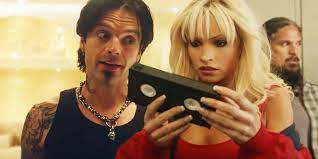
Pam and Tommy is one Nathan Lane cameo away from turning into a Ryan Murphy production. I wrote about the latest episode here.
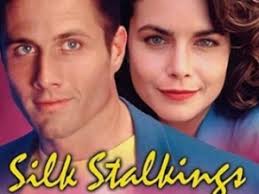
Silk Stalkings (Tubi)
On Monday morning, I got back to binging Silk Stalkings on Tubi. Though I hadn’t really been keeping track up until this week, a quick check with Wikipedia confirmed that I am currently watching episodes from the second season of the show. There’s 8 seasons in total so I’ve still got quite a bit to watch as far as this stylish and enjoyably silly series is concerned.
Anyway, the first episode that I watched on Monday was called Scorpio Killer. I’m a Scorpio so I appreciated the title! The show dealt with a man who murdered his mistress’s husband. It was a fun episode. The thing I like about Chris and Rita is, as played by Rob Estes and Mitzi Kapture, they seemed to be aware that they were characters in a somewhat sordid television series and, as such, they never had any problem winking at their audience and basically saying, “Can you believe this plot?” This was followed by an episode in which Chris and Rita investigated the death of a tennis pro’s stepfather. It featured a lot of slow motion tennis action and overheated locker room talk.
On Tuesday, I got things started with an episode in which Chris and Rita investigated a murder that occurred at a rather tacky beauty pageant. They solved the case but the highlight of the show was Rita’s attempts to buy fish for her aquarium. Needless to say, Chis was convinced that all of Rita’s fish were going to die and Chris was probably right since the aquarium was nowhere to be seen during the next episode. That episode found Chris and Rita investigating a murder that was connected to a high-profile divorce. It was a typical Chris-and-Rita-Smirk-At-Dumb-Rich-People episode. Seriously, don’t commit a murder in Palm Springs because Chris and Rita will definitely judge you.
On Thursday, I started off with a pretty good episode called Jasmine. Directed by Rob Estes, Jasmine featured Rita investigating a decades-old cold case and having plenty of surreal dreams in the process. Of course, the main reason Rita was investigating the case was to help her deal with the guilt that she felt after the murder of one of her friends. It was a well-directed episode and also well-acted by Mitzi Kapture. The next episode was an enjoyably trashy one, in which Chris and Rita tracked down a cocky teenager who was seducing both his classmates and their stepmothers.
Silk Stalking is a lot of fun. I like forward to continuing the binge next week.

Super Bowl (Sunday Night, NBC)
The Super Bowl? Does anyone remember the Super Bowl? It was played last Sunday and …. well, someone won. I don’t remember who won. I watched it for the commercials, which kind of disappointed me this year.
Super Bowl Pre-Show (Sunday Afternoon, NBC)
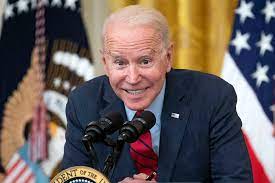
Yes, I even watched the big show before the game, just in case they showed any interesting commercials. They didn’t but it was still kind of nice to see how excited everyone was before the game started. I don’t know if it was really necessary to include an interview with President Biden, though. That gave the whole thing kind of a weird feel. Like why do we need the President’s permission to enjoy the game? At least he didn’t do that creepy whispering thing.

The Winter Games (All Week, Every Channel)
On Sunday morning, as I got ready for a day of watching Super Bowl commercials, I watched a bit of NBC’s coverage of the games. It was a little bit of skiing with some speed skating and some figure skating tossed in as well. I didn’t really pay that much attention.
On Wednesday night, I watched the USA take on Canada in hockey. Usually, when it comes to hockey, I support Canada because I know hockey is an important part of Canadian culture. This year, I was Team USA because Justin Trudeau annoys me. Canada still won, though, so I guess my cheering powers were not as powerful as I thought they were.
On Thursday night, I watched some skiing and then I watched the figure skating, which has been quite controversial this year. What I saw pretty much turned me off of watching any more of the Beijing Games. Though I didn’t agree with the decision to let her skate, I still felt bad for Kamila Valieva, the Russian skater who has essentially been villainized due to doping allegations. No one should be put under that type of pressure and scrutiny when they’re only 15 years old, especially when it’s quite probable that any drugs that she took were forced on her by the adults who are supposed to be looking out for her best interests. Not surprisingly, given all the stress she was under, Kamila did not do as well as she had done in the past. She ended up finishing in fourth place and started crying. This, of course, overshadowed the accomplishments of the talented women who did win medals but what really struck me was that none of the members of Kamila’s coaching entourage — the people who should have been acting as her “support team” — appears to offer any words of comfort or encouragement. (Later, I learned that her coach had demanded to know, “Why did you give up!?”) And we wonder why so many young athletes burn themselves out or grow up to have personal troubles once they can no longer compete. Meanwhile, the skater who came in second screamed in anger over having to settle for a silver medal while the gold medal winner sat alone, holding a teddy bear. It was not one of the better moments of the Winter Games. In fact, it was so disturbing to watch that it pretty much turned me off of the idea of watching what little was left of the Olympics.

by Julian Paul
This is from 1953 and I’m not even going to speculate on what that old woman just told him.
Enjoy this voyage!
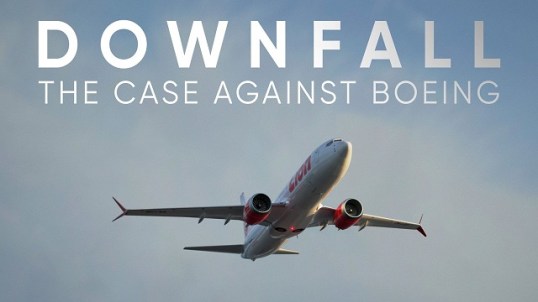
On October 29th, 2018, Lion Air Flight 610 crashed into the Java sea, killing all 187 passengers and crew. It was the first accident to involve the Boeing 737 Max series of aircraft and it was also one of the first major air disasters after a period of relative safety in the sky.
A few months later, on March 10th, 2019, Ethiopian Airlines Flight 302 crashed juts six minute after taking off. All 157 passengers and crew were killed. Like the Lion Air flight, the plane was a Boeing 737 Max.
At the time, Boeing insinuated that pilot error was to blame for both crashes but several investigations revealed that Boeing, which previously had a reputation for being one of the most safety-conscious companies around, cut corners when it came to the 737 Max series. In order to cut costs, not all safety protocols were followed. As a result, many concluded that the 737 Max jets should never have been approved for service to begin with. After a lengthy congressional hearing, Boeing CEO Dennis Mullenburg stepped down as a result of the scandal. Despite the fact that over 300 people had been killed in the two crashes and the fact that he left the company in shambles, Mullenburg left Boeing with a 62 million dollar severance.
That’s the story that’s told in the new Netflix documentary Downfall: The Case Against Boeing. It’s the type of thing that will and should leave you outraged. Due to the company’s negligence, over 300 people are dead and their families and friends have been left behind to mourn their loss. Boeing, at first, blamed the pilots, with the implication being that Indonesian and Ethiopian pilots just weren’t as good as their western counterparts. When the inevitable investigation was launched into just what exactly was going on over at Boeing, the company was less than forthcoming. There’s a lot to be angry about and the majority of the people who watch the documentary will be angry.
That said, the actual documentary itself is typical of a lot of the docs that turn up on the streaming services. It deals with an important subject but it does so in a rather superficial manner. It brings up the relevant issues but it doesn’t actually bother to dig too deeply into them. “Wow, this is really messed up, right?” the documentary seems to be saying and yes, it is messed up. But, at the same time, Downfall doesn’t really explore how it came to be so messed up or what can be done to make it less messed up. Instead, there’s a lot of archival news reports and enough footage of U.S. Rep. Peter DeFazio grilling the Boeing executives that the documentary could pass for a campaign commercial if not for the fact that DeFazio is retiring at the end of his current term. Aesthetically, the documentary feels more like an extended episode of Dateline or 60 Minutes than an actual examination as to just what exactly was going on at Boeing. As far as documentaries directed by Kennedys are concerned, Rory Kennedy’s public service docs are certainly preferable to the anti-vax nonsense pushed out by RFK, Jr. (Rory, it should be noted, is pro-vaccination and has publicly condemned her brother’s anti-vax activities.) But still, it’s hard not to wish that Downfall had dug just a little deeper.
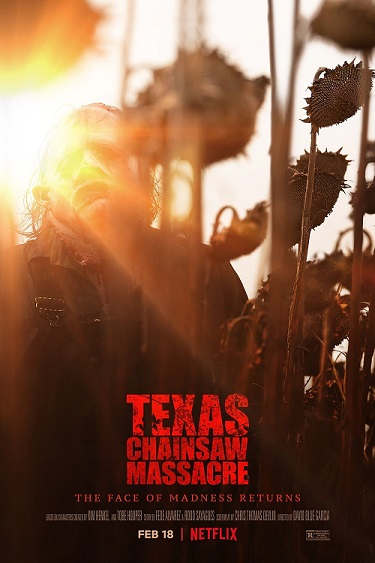
Leatherface is back but don’t worry! He’s mostly just killing hipsters.
The newest version of Texas Chainsaw Massacre is a direct sequel to the classic 1975 film. 50 years after the murders the shocked the world, Leatherface is still missing. True crime shows still do specials about the massacre at Harlow, Texas and the mysterious murderer who were a mask made out of human skin. The only survivor of that massacre, Sally Hardestry (Olwen Fouéré, taking over the role from the late Marilyn Burns), went from being a half-crazed hippie to being a Texas Ranger. She spent decades searching for Leatherface but she never found him.
I can only assume this means that Sally was terrible at her job because this film reveals that Leatherface is still living in the small rural town of Harlow, Texas. Harlow has been largely abandoned since the original massacre. But Mrs. Mc (Alice Krige) still owns the orphanage where Leatherface apparently grew up and Leatherface still lives with her, which is weird since Leatherface had a very tight-knit family in the first film and all of the subsequent sequels. (As opposed to what David Gordon Green did with his Halloween reboot, the new Texas Chainsaw Massacre does not go out if its way to specifically deny the canonicity of the other Chainsaw films. I, for one, appreciated that. Regardless to what the critics may say, there’s always been a rather appalling smugness to the way that Green’s Halloween franchise casually wiped out everything that came after Carpenter’s original film.) Unfortunately, the bank has foreclosed on most of Harlow and the town has been bought by a bunch of Austin hipsters, who are planning on turning the town into a Marfa-style artist’s colony. I guess the idea is that artists will be attracted to the town by its cannibalistic history, just as some are attracted to Marfa’s frequent UFO spottings. Of course, the Marfa Lights have never killed anyone but who knows? Austin’s weird.
When the main hipster and the sheriff order Mrs. Mc to leave the orphanage, she has a heart attack. Leatherface accompanies her in the ambulance because, apparently, no one finds it odd that there’s a silent, hulking man wandering around in the same location where a silent, hulking man previously killed a lot of people. About halfway to the hospital, Mrs. Mc dies and Leatherface decides that it’s time to retrieve his tools and go hipster hunting.
The new Texas Chainsaw Massacre isn’t terrible as much as its just generic. Everything about it feels like it’s been lifted from other recent horror revivals. The film opens with some stabs at modern relevance, with scary rednecks glaring at the Yankee invaders and Dante (Jacob Latimore) declaring the Harlow represents the “joys of late stage capitalism.” Lila (Elsie Fisher, who previously starred in Eighth Grade and who gives a good performance here, despite getting stuck with a poorly written character) is a survivor of a school shooting and she gets upset when she sees that the local mechanic owns an AR-15. The film then turns, very briefly, into a social satire when the smug hipsters are revealed to be just as greedy and superficial as the people that they’re looking down on. However, once Leatherface grabs his chainsaw, it turns into just another slasher film. Sally does eventually show up and calls Leatherface a “motherfucker” while pointing a rifle at him but that moment feels a bit too derivative of the recent Halloween films. Perhaps if Marilyn Burns were still alive and had returned to play the role, Sally vs. Leatherface would have been the iconic horror moment that it was obviously meant to be but, with a new actress who doesn’t even have a Texas accent, it just feels a bit forced. The problem with this slasher film being generic is that it’s called Texas Chainsaw Massacre. That’s quite a legacy to live up to and, for a lot of horror fans, generic simply won’t cut it.
Indeed, as I watched this latest version, I couldn’t help but think about what made the original version a classic. The original version used its low budget to its advantage. It had a rough, raw feel to it, one that made you feel as if you were watching real people as opposed to local actors. It also had very little gore, leaving it to the audience to imagine what horror truly went on inside of Leatherface’s kitchen. (Needless to say, the imagination can always come up with something far more disturbing than anything that could actually be captured on film.) This new version takes the opposite approach. If the original worked because it haunted you after the final frame, the new version is all on the surface. There’s a lack of authenticity to this new version of Texas Chainsaw Massacre. The first film was made by Texans and it was filmed in Texas. You could look at any scene in the original and feel the heat and the humidity. This new version was filmed in Bulgaria. Texas may be in the title but it’s nowhere in the film.
(Indeed, one of the main reasons why the original film was a success was because it was identified as taking place in Texas, a state that scared a lot of people when the film was originally released and a state that, admittedly, probably still scare scares a lot of people, even though we’re all pretty nice down here. People would laugh off a Vermont Chainsaw Massacre.)
There’s also no family dynamic in this new version. There’s no sign of Leatherface’s brothers or their ancient grandpa. Once Mrs. Mc dies, it’s pretty much just Leatherface and no one, not even Sally, comments on the fact that Leatherface didn’t work alone in the first film. Without his family around, Leatherface just becomes another silent serial killer. There were times, in the sequel, where he seemed like he had more in common with Rob Zombie’s version of Michael Myers than with the overwhelmed but hard-working Leatherface of the original film.
That said, on the positive side, I did appreciate the remake’s final scene. It was a bit predictable but it still managed to be enjoyably chaotic. What’s more annoying? Leatherface or a self-driving car?

by Milton Luros
This is from 1942. Something bad is about to happen here.
You may remember that this song plays over the end credits for American Outlaws. It was a good pick because the song has a real western feel to it. That said, it also has nothing to do with this music video, which interprets the song fairly literally. “Oh my God! They really are finding a baby!”
These babies are all adults now.
Enjoy!
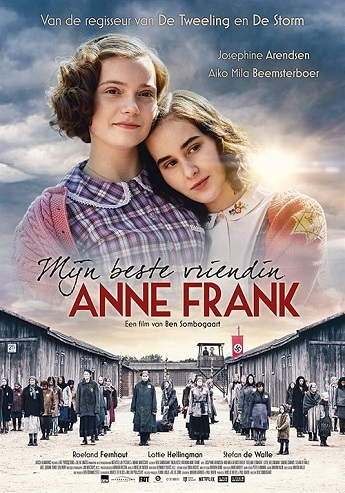
The year is 1944 and 16 year-old Hannah Goslar (Josephine Arendsen) and her younger sister, Gabi, are among the many Jews being held at the Bergen-Belsen concentration camp. Death is all around. At night, when Hannah is sent to empty out the buckets of waste that have been filled up in her barracks, she sees another prisoner being casually shot by the guards. Whenever things get to be too much for her, Hannah closes her eyes and asks herself, “What would Anne do?”
As terrible as things are where Hannah is being held, it’s rumored that things are even worse behind the wall that runs through the center of the camp. The less “privileged” prisoners are kept there. The wall is thin enough that Hannah can talk to the people on the other side, even if she can’t see them. Hannah asks them if her best friend, Anne, is among them. “She has beautiful hair,” Hannah says. The voice on the other side of the wall explains that no one in the other half of the camp has hair. Everyone on the other side of the wall is being starved and worked to death.
Occasionally, Hannah remembers what life was like before she and her family were arrested by the Nazis. Two years earlier, she was a student in Amsterdam and her best friend was Anne Frank (Aiko Beemsterboer). Hannah was shy but Anne definitely wasn’t. Hannah was often naïve and fearful but Anne was always intellectually curious and up to try almost anything. Occasionally, they fought as friends sometimes do. But Hannah always considered Anne to be her best friend.
The Amsterdam scenes do a good job of contrasting Hannah and Anne acting like ordinary teenagers with the evil that’s always lurking in the background. Haughty soldiers in German military uniforms stroll the streets of Amsterdam, moving with the arrogance of men who know that no one can defy them. Because Hannah and Anne wear gold stars on their clothing, they have to sneak into the movies and, when they do, they find themselves watching a propaganda newsreel about how much better life is in the Netherlands now that the Germans are in charge. Hannah often sees her father having hushed conversations with other nervous-looking adults.
Of course, those of us watching at home know what is going to happen. We know who Anne Frank was. Or, I should say, I hope we know who Anne Frank was. I tend to assume that everyone knows about the horror of the Holocaust and that everyone knows about the anti-Semitism that fueled the rise of Adolf Hitler and the Third Reich. Unfortunately, over the past year or so, my faith has been shaken. Anti-Semitism has never gone away but, in recent years, it seems as if it’s become socially acceptable within certain parts of mainstream society and that really should scare the Hell out of anyone who has any knowledge of history. I have seen reportedly intelligent people either playing down the horrors of the Holocaust or trying to act as if the Holocaust was not about the Third Reich’s obsession with wiping out a race of people. Whoopi Goldberg may have been the most famous person to have recently gotten the facts of the Holocaust wrong but she’s hardly the only one.
To me, that’s why a film like My Best Friend Anne Frank is important because it reminds us of not only what happened at camps like Bergen-Belsen but also what happened beforehand. The camps and the ideology that fueled them didn’t just spring up out of nowhere. Instead, they were built while the rest of the world tried to deny what was happening right before their eyes. The concentration camp scenes in this film are harrowing but even more disturbing are the Amsterdam scenes where people casually walk by signs that declare that no Jews allowed and almost everyone merely averts their eyes. When Anne and Hannah walk through Amsterdam, they are insulted not just by the Nazis but also by the Dutch citizens who don’t wear gold stars, many of who seem to take an attitude of, “At least it’s not me being othered.”
My Best Friend Anne Frank is currently on Netflix. Josephine Arendsen and Aiko Beemsterboer both give good and heart-breaking performances as Hannah and Anne. The film is not just a story of survival under the worst of circumstances but it’s also a tribute to the power of friendship. Though Anne did not survive the camps, Hannah was liberated after 14 months at Bergen-Belsen and now lives in Jerusalem. She is now 93 years old.
 Through the Shattered Lens