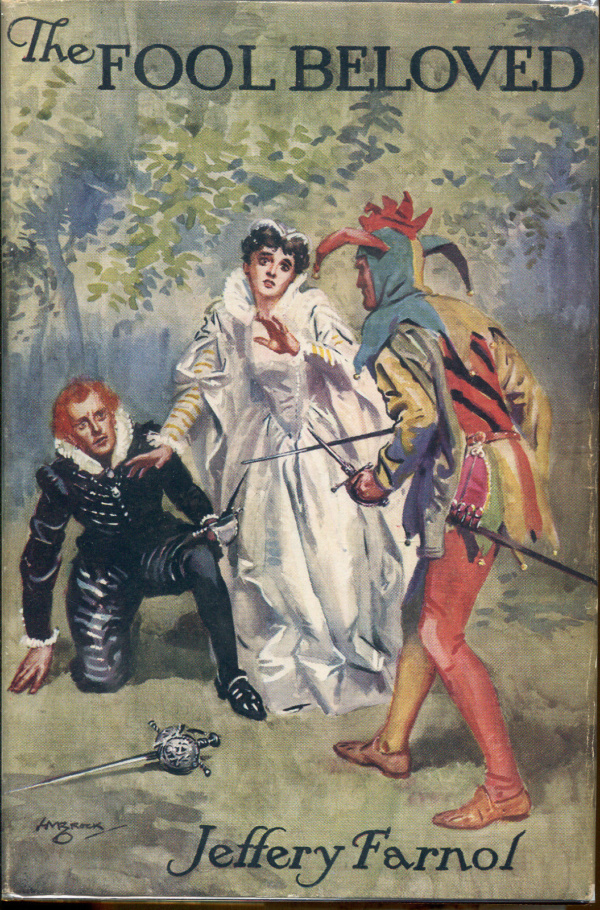
I can’t lie, this cover made ma laugh. It’s from 1949. It probably made people laugh back then too.
I can’t lie, this cover made ma laugh. It’s from 1949. It probably made people laugh back then too.
Wow, a Haim walking video that wasn’t directed by Paul Thomas Anderson! In all honest, though, Jake Schreier did a fine job directing this video and it’s a good song as well.
Enjoy!
Some things are long forgotten
Some things were never said
We were on one endless road
But I had a wandering heart
I said we were opposite lovers
Said it from the beginning
You kept trying to prove me wrong
Said you’d always see it through
And I know that I ran you down
So you ran away with your heart
But just know that I want you back
Just know that I want you back
Just know that I want you
I’ll take the fall and the fault in us
I’ll give you all the love I never gave before I left you
Just know that I want you back
Just know that I want you back
Just know that I want you
I’ll take the fall and the fault in us
I’ll give you all the love I never gave before I left you
I know it’s hard to hear it
And it may never be enough
But don’t take it out on me now
‘Cause I blame it all on myself
And I had a fear of forgiveness
Said it from the beginning
I was too proud to say I was wrong
Said you’d always see me through
All that time is gone, no more fearing control
I’m ready for the both of us now
So just know that I want you back
Just know that I want you back
Just know that I want you
I’ll take the fall and the fault in us
I’ll give you all the love I never gave before I left you
Just know that I want you back
(Just know that I want you)
Just know that I want you back
(Just know that I want you)
Just know that I want you
I’ll take the fall and the fault in us
I’ll give you all the love I never gave before I left you
(Just know that I want you back, baby)
Just know that I want you back
Just know that I want you back
Just know that I want you
I’ll take the fall and the fault in us
I’ll give you all the love I never gave before I left you
Just know that I want you back
Just know that I want you back
Just know that I want you
I’ll take the fall and the fault in us
I’ll give you all the love I never gave before I left you
Just know that I want you back
Just know that I want you back
Just know that I want you
I’ll take the fall and the fault in us
I’ll give you all the love I never gave before I left you
Just know that I want you back
(Just know that I want you)
Just know that I want you back
(Just know that I want you)
Just know that I want you
I’ll take the fall and the fault in us
I’ll give you all the love I never gave before I left you
(Just know that I want you back, baby)
(Just know that I want you)
(Just know that I want you back, baby)
I’ll take the fall and the fault in us
I’ll give you all the love I never gave before I left you

And so, dear friends, I return — and what a ‘zine to end the my little hiatus with! Brooklyn-based cartoonist Andrew Alexander has been impressing your host/critic with his self-published diary comics for the last couple/few years, but as unlikely-at-first-glance as it may seem, his latest Cram Books-published collection of charcoal drawings depicting scenes from various movies and TV shows on heavy construction-type paper, Screened In Exile, is, if anything, even more personal in nature than his memoir-oriented work. That’s because these aren’t “just” drawings — they’re drawings with a story behind them and a purpose to them.
Which, I suppose, is my cue to elaborate a bit more, but why listen to me blather on when the artist himself explains things far better than I ever could? And so we now, unbeknownst to him, turn the floor over to Mr. Alexander —

What’s equally remarkable to the compelling backstory that informs this collection, though, is the degree to which Alexander captures not only the essential character of, but his own emotive responses to, memorable instances from Jackie Brown, Cool Hand Luke, The Long Goodbye, Mean Streets — hell, even such generally-more-middling fare as Justified and Mad Men. Alexander’s perspective, and the circumstances behind it, result in a truly immersive experience for readers, one informed by factors both within and without the content being delineated and communicating something very much like what it means to watch a film or TV program from someone else’s vantage point. Simply put, you’ll recognize most of what’s in here, but you’ve never seen it like this before.
Which brings us, in a very real sense, to a language barrier of sorts — not that this ‘zine is printed in French or Spanish or something, mind you, no : this barrier is both more subtle and more impenetrable. I guess what’s I’m struggling to say is that Alexander’s drawings don’t evoke feelings that are easily translated into words so much as they just evoke, well, feelings themselves — sensory memories that are sifted through the prism of someone else entirely and reflected back in ways as utterly new as they are utterly familiar. Again, the best method of demonstration is probably for me to just shut up for a second and provide a sample page —

Droll details can’t capture the sheer intent that literally seethes from these pages, as anyone who’s ever spent time looking at strictly photo-referenced illustrations can tell you. I’d be curious, in fact, to know how many of these were drawn from sheer memory alone and how many relied on the aid of a remote control “pause” button, but maybe it doesn’t matter all that much in the final analysis : after all, honesty and exactitude are hardly one and the same thing. Alexander’s representations of media occupy a space all their own, his space, and in that space, artistic methodologies and artistic outcomes are intertwined in ways that transcend the simple equation of “well, I did this in order to produce that.” Am eloquent explication of what those ways are again leads me to a linguistic impasse, but I’m okay with that : after all, a good magician never reveals his or her tricks, and I’d be lying through my teeth if I said there wasn’t something very akin to magic going on in this book.

As a critic, then, am I inadequate to the task of telling you why this is such a special collection — one that I freely admit to having spent several hours poring over? Well, perhaps, but I guess we all meet our match at some point. And while closing this review by paraphrasing Jack Kirby’s famous “Don’t Ask — Just Buy It!” tag line is arguably less than a work this wholly remarkable deserves, it also seems oddly appropriate, because asking too many questions ruins the spell Alexander casts here, and you really do need to buy it.
**********************************************
Screened In Exile is available for $10.00 from the Cram Books website at https://www.cram-books.com/product/screened-in-exile
Also, this review is “brought to you” by my Patreon site, where I serve up exclusive thrice-weekly rants and ramblings on the worlds of comics, films, television, literature, and politics for as little as a dollar a month. And yes, I always keep it updated, even when I’m taking a break from this site. Subscribing is the best way to support my continuing work, so I’d be very appreciative indeed if you’d take a moment to check it out by directing your kind attention to https://www.patreon.com/fourcolorapocalypse
I really hate home invasion movies.
Seriously, it’s always the same thing. Some mysterious stranger breaks into an empty house and hangs out for a few days, trying on clothes and smoking cigars and drinking whatever’s available in the refrigerator. Eventually, the couple who own the house comes home. They get held hostage. The stranger wastes a lot of time trying to be intimidating. The husband always tries too hard to take control of the situation. The wife tries to keep everyone calm. The stranger is poor. The husband is rich. The stranger and the wife form a connection. Secrets are revealed. Blah blah blah.
Don’t get me wrong. There have been a few good home invasion movies. There are some directors who can pull it off and make a film compelling despite telling an overly familiar story. Ruggero Deodato brought some life to the genre, with a little help from David Hess and Giovanni Lombardo Radice, in The House At The Edge of the Park. For the most part, though, the home invasion genre has led to some of the stagiest and most dramatically inert films ever made.
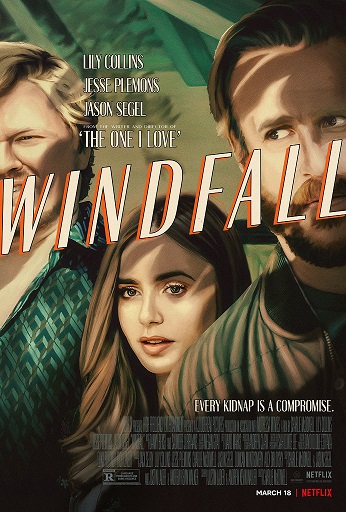
Consider Windfall, which premiered on Netflix earlier this month. Starring Jason Segel, Lily Collins, and Jesse Plemons, the film has a talented cast. It’s directed by Charlie McDowell, who previously made a very intriguing film called The One I Love. Like Windfall, The One I Love was largely confined to one location but, unlike Windfall, McDowell still managed to use that location to craft an intelligent and compelling film that never felt stagey. The house in which Windfall takes place is lovely to look at. The film has many of the ingredients to be a success but it doesn’t have a particularly clever or even interesting script and, as such, it falls flat.
Segel, Collins, and Plemons play three characters who aren’t actually given names. Segel plays the home invader, who is credited as being “Nobody.” Plemons is the CEO, a billionaire who is responsible for putting people out of work and who makes his employee signs NDAs. Collins in the Wife, who is secretly taking birth control pills. Segel may be a criminal but he’s not a very good criminal, as becomes clear as he continually finds himself being manipulated by his hostages. Plemons is selfish and never stop talking down to Segel, even when the latter is pointing a gun at him. Collins claims that she works very hard at running a charity that her husband set up but it’s obvious that she and and her husband have a strained relationship, even before Segel shows up. There’s a few heavy-handed attempts at social relevance, with Segel and Plemons debating whether or not Plemons deserves to be a billionaire. The film ends with a twist that Godard or Bunuel could have pulled off but here, it just falls flat. The action is just too predictable and dramatically inert for Windfall to be anything more than a movie about three talented performers acting up a storm while trying to bring three boring characters to life.
Windfall is a very much a film of its time, both in its focus on inequality and it’s minimalist style. Like Malcolm and Marie, it’s the type of one-location, small crew film production that was popular at the height of the COVID pandemic and the CEO and his wife heading to their vacation home to hide out from the world will undoubtedly remind some viewers of the wealthy people who were able to isolate themselves during the early part of the pandemic. So, the film has some historical value if not much dramatic value. In the end, Windfall serves as a reminder that, when combined with Malcolm and Marie, Netflix has pretty much cornered the market on pretentious, one-location films.
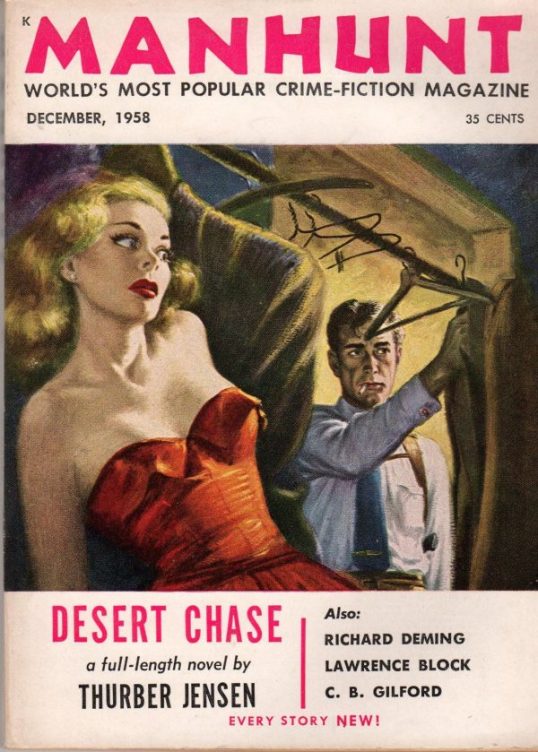
by Walter Popp
From 1958, this Walter Popp illustrated cover is proof that men never actually know what’s in their closet.
Amy Winehouse, still missed. Her music touched my life. Her death broke my heart. Fortunately, her voice can still be heard.
I used to search for excuses to sing this song. Needless to say, my vocals were not quite as effective.
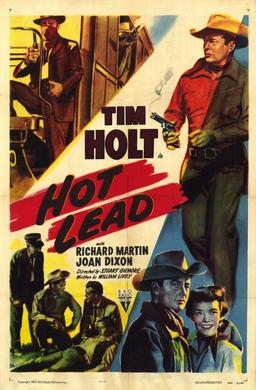 In this B-western programmer, Dave Collins (Ross Elliott) has just been released from prison. Because he knows how to operate a telegraph, outlaw Turk Thorne (John Dehner) tries to force Dave to get a job at a local telegraph office so that Turk can use his skills to rob a train.
Despite wanting to go straight, Dave also doesn’t want to get full of hot lead. He rides into town and gets a job at the ranch owned by Gail Martin (Joan Dixon). He is befriended by Gail’s two ranchhands, serious cowboy Tim Holt (played, believe it or not, by Tim Holt) and his comedy relief sidekick, Chito Rafferty (Richard Martin). Tim and Chito want revenge on Turk for killing one of their friends during a previous train robbery. Working with Dave, they set a trap for Turk and his gang. Meanwhile, Dave falls in love with Gail.
Hot Lead was one of the last of the 46 B-westerns that Tim Holt made for RKO Pictures. Holt started out playing the type of prototypical happy, go-lucky cowboys who were popular in the 1930s. At that time, he was unique as one of the few western stars to not play a continuing character who was named after him. While the studios promoted other western stars as essentially playing themselves, Tim Holt was promoted as being a serious actor. Holt’s films were popular with audiences but his career was put on hold while he served in World War II. Post-war, Holt played characters who were far more world-weary than his earlier cowboys and he also started to play characters who were specifically named “Tim Holt.”
Even though most of Holt’s later films were uneven in quality, Hot Lead is one of the better examples of the genre. Whether happy or serious, Tim Holt was always a convincing cowboy and he brings his natural gravitas to the role, playing his character as being the type of serious and no-nonsense cowboy that anyone would want in their corner. John Dehner was always a good villain and Ross Elliott is equally good as the man struggling not to go back to his old ways. The action scenes and the gunfights are well-directed and the story even carries an important message about giving people second chances. Not bad for a B-western!
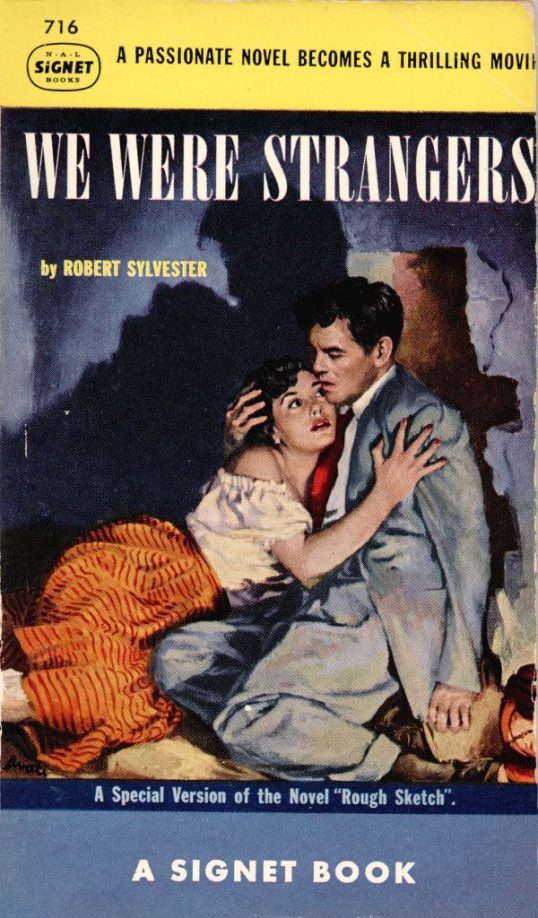
by James Avati
This cover is from 1949 and was done by James Avati, whose work we have shared many times in the past and which we will probably share many times in the future.
Enjoy!
That’s it! That’s a wrap!

We hope everyone has enjoyed Oscar Sunday!

Now that the Oscars are over with, it’s time to start a new year in entertainment! Thank you everyone for reading us over the course of 2021 and the first three months of 2022!

Now, let’s make 2022 the best year ever as we continue to celebrate the 12th year of the Shattered Lens!
Love you!

 Through the Shattered Lens