Max Knight: Ultra Spy (2000, directed by Colin Budds)


Max Knight (Michael Landes) used to be the world’s greatest hacker but now he’s a spy who is more machine than man.  He can turn invisible at will but he also has a computerized heart that has to regularly be recharged to keep him alive and functioning.  I know it sound like he’s Iron Man but he’s not.  He’s Max Knight: Ultra  Spy.  He works out of a futuristic office and he has a virtual assistant who might be in love with him.

When teenage genius Lindsay (Brooke Harman) is kidnapped by a Mark McGrath look-alike named Zach (Christopher Morris), Max is hired by Lindsay’s sister, Ricki (Rachel Blakely).  Zach, who really does look like the lead singer of Sugar Ray, has a cult of followers who are all obsessed with living the rest of their lives online.  (If they had just waited a few years, they could have all gotten twitter accounts and the problem would have been solved.)  Zach knows that Lindsay has come up with the formula that will allow them all to become a part of the Internet and to destroy the rest of the world.  (Because everywhere Zach goes, all around the world, statues crumble for him.)  Eventually, Max and Zach enter the internet and battle it out, via some CGI that makes the entire movie look like an advanced level of Castle Wolfenstein.

Max Knight: Ultra Spy was originally a pilot for a television series and it very much wears its influences for all to see.  Max borrows his look and his general attitude from The Matrix while the special effects owe much to The Lawnmower Man and Doom.  The film’s obsession with the power of the net is, appropriately, taken from The Net.  The first scene is even a recreation of the scene in Entrapment where Catherine Zeta-Jones shows off her agility by avoiding the laser beams that would set off an alarm if she made one wrong move.  Entrapment is one of those films that has been forgotten today but back in 2000, everyone was obsessed with Catherine Zeta-Jones playing an FBI agent who pretends to be a thief to take down Sean Connery.  Sadly, it’s not as much fun to watch Max Knight avoid detection than it was to watch Catherine Zeta-Jones.

There’s a lot of technobabble but it doesn’t add up too much.  Don’t even try to figure out what exactly it is that Lindsay has discovered that will allow Zach to pull off his scheme.  Even without Lindsay being the key, Zach’s plan never makes any sense to begin with.  Michael Landes is a decent hero and Christopher Morris is an annoying villain.  Rachel Blakely and Brooke Harman were cute so the film has that going for it.  Max Knight is mostly interesting as a throw-back to the time when people were still fascinated with the possibilities of the Internet instead of just taking it for granted as one of life’s annoying necessities.  In 2000, Zach was portrayed as being a dangerous madman for wanting to live the rest of his life online.  Today, he would just be a normal Starbucks shift manager.

4 Shots From 4 Films: Special Michele Soavi Edition


4 Or More Shots From 4 Or More Films is just what it says it is, 4 shots from 4 of our favorite films. As opposed to the reviews and recaps that we usually post, 4 Shots From 4 Films lets the visuals do the talking!

Today, the Shattered Lens wishes a happy 65th birthday to one of our favorite directors, Michele Soavi!  In other words, it’s time for….

4 Shots from 4 Michele Soavi Films

Stage Fright (1987, dir by Michele Soavi, DP: Renato Tafuri)

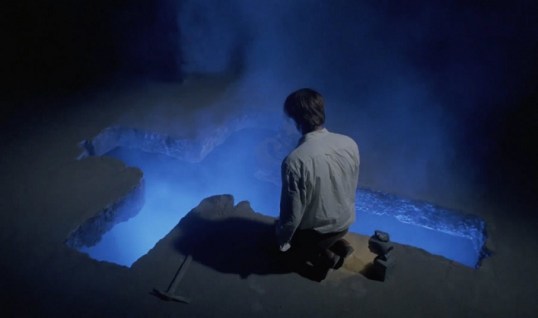
The Church (1989, dir by Michele Soavi, DP: Renato Tafuri)

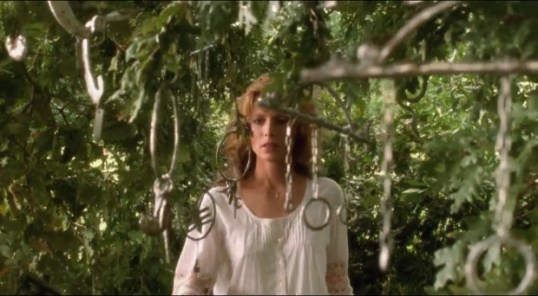
The Sect (1991, dir by Michele Soavi, DP: Raffaele Mertes)

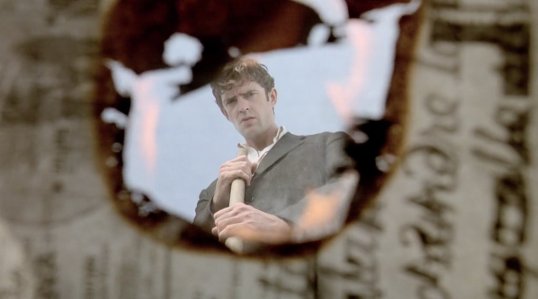
Dellamorte Dellamore (1994, dir by Michele Soavi, DP: Mauro Marchetti)

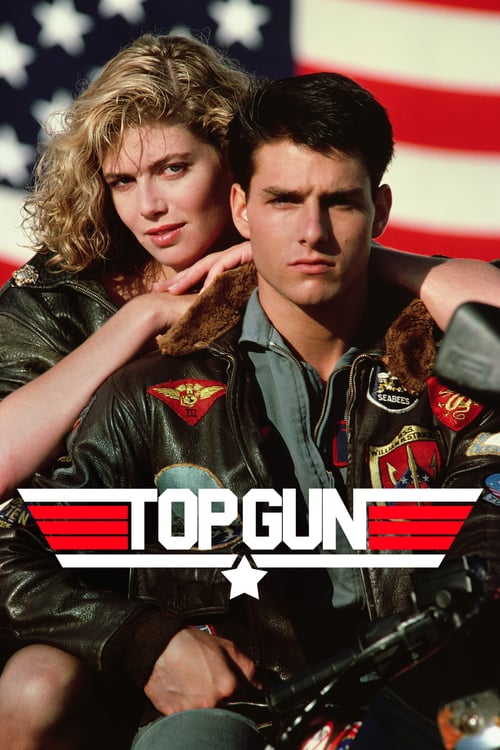
Scenes I Love: Tom Cruise and Val Kilmer Play Beach Volleyball in Top Gun


Tom Cruise is 60 years old today!  He doesn’t look a day over 36.  Insert your own Dorian Gray joke here.

No matter what else you may want to say about Tom Cruise, you can’t deny that he’s one of the last of the genuine movie stars.  He’s been a star in since the 80s, doing things onscreen that you could never imagine some of our younger actors even attempting.  And right now, Top Gun: Maverick appears to be unstoppable with audiences and critics.  There are many reasons for Maverick‘s popularity but one cannot deny that a lot of it is the fact that Cruise just has that old-fashioned movie star charisma.

Today’s scene that I love comes from the first Top Gun.  In this scene, Tom Cruise, Anthony Edwards, Val Kilmer, and Rick Rossovich play beach volleyball.  The scene kind of comes out of nowhere and there are times when the whole thing comes close to self-parody.  (Actually, if we’re going to be honest, it crosses the line into self-parody more than a few times.)  But, Cruise and Kilmer manage to save it, like the movie stars they are!

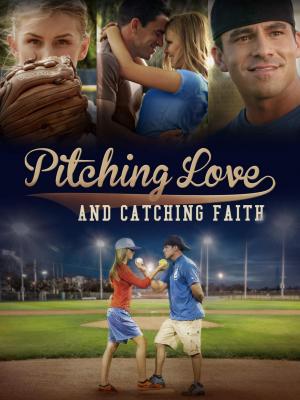
I Watched Pitching Love And Catching Faith (2015, dir. by Randy, Randolph, and Rebecca Sternberg)


I watched Pitching Love and Catching Faith on Tubi because I will always take a chance on a baseball movie.

Heather (Lala Kent) and Tyler (Derek Boone) are both students at the same college.  Heather is a softball pitcher.  Tyler plays baseball and has a chance to play in the majors.  They meet and date but it turns out that they have different approaches to life.  Tyler thinks that a purity ring is romantic gift and he’s never even kissed a girl because he made a pledge to wait until he met “the one.”  Heather has kissed a lot of people because Heather is a normal human being.

One big problem with this movie is that Tyler’s not just weird but also awfully judgmental of anyone who doesn’t agree with him.  There are a lot of people who, for various and understandable reasons, hold off on having sex until they’re married or at least in a committed relationship but Tyler takes it one step further by declaring that he won’t even kiss anyone until he’s sure that he’s in love.  And it’s not just that Tyler won’t kiss anyone.  It’s also that he’ll judge anyone else who kisses someone without marrying them first.  It’s not just kissing, though.  Tyler even judges Heather for flirting with him and then he gives her a purity ring without even finding out if that’s something that she believes in.  I never miss Sunday Mass and even I thought Tyler was being overbearing.  Tyler’s not that much of a catch but every woman in the movie is swooning over him.  I wanted someone to tell Heather that she could do better.

The other big problem is that there wasn’t enough baseball.  There wasn’t even enough softball.  Heather got to pitch once.  Tyler swung the bat once.  But if your movie has the words “pitching” and “catching” in the title, it better have more baseball than this movie!

Final verdict on this movie: Go Rangers!  The whole time I was watching the movie, I was thinking about how much I’d rather see the Rangers have a winning season for once.

Pictures of a Country Cemetery


Because America is a country that is very much divided between the urban and the rural, I always try to feature both of them in the days leading up to Independence Day.

In 2017, I was visiting family in Arkansas when I came this country cemetery.  It was a very peaceful day, so peaceful that I was joined by not only a squirrel but also a deer.  Ever since that day, the pictures below are what I think about the American countryside.

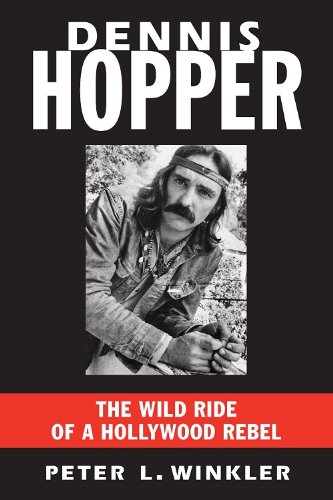
Book Review: Dennis Hopper: The Wild Ride of a Hollywood Rebel by Peter L. Winkler


Sometimes, I have to remind myself that Dennis Hopper is no longer with us.

Seriously, he’s one of those iconic screen figures who remains as much of a pop cultural presence in death as he was in life.  For an actor who spent a good deal of his career under an unofficial blacklist, Hopper appeared in a number of classic films.  Rebel Without A Cause, Giant, Night Tide, Easy Rider, Apocalypse Now, Blue Velvet, Speed, True Romance, The Trip, The Other Side of the Wind, Queen of Blood, Land of the Dead, Hoosiers, Out of The Blue …. one of the things that they all share in common is the eccentric presence of Dennis Hopper.  Even Hopper’s bad films, like Waterworld, are more popular than the bad films of other actors.  And while Hopper will probably always be best-known as an actor, he’s received some posthumous recognition for his work as a director.  It’s been 12 years since Dennis Hopper passed but he’s still very much a part of the American cultural landscape.

How did this happen?  How did Dennis Hopper go from being a kid from Kansas to being a disciple of James Dean?  How did Hopper go from appearing in big budget films like Giant to working as a member of Roger Corman’s stock company?  How did Hopper come to revolutionize American film with Easy Rider, just to lose the next few years of his life to his legendary addictions?  Remarkably, Dennis Hopper not only inspired the “New Hollywood” with Easy Rider but he nearly destroyed it with The Last Movie.  In the 70s and the first half of the 80s, he was still capable of giving a good performance but the key was to find him when he wasn’t dealing with a fit of drug-induced paranoia.  And yet, even with his addictions and demons, he still directed one of the most important films of the 80s, Out of the Blue.

Remarkably, Hopper did eventually conquer his addictions.  Starting with David Lynch’s Blue Velvet, Hopper remade himself as one of Hollywood’s busiest character actors and, to many, he became an almost lovable relic of the 60s.  The former self-described communist became a Republican.  And, even if he never could quite restart his directing career, Hopper stayed busy for the rest of his life.  It was a remarkable transformation.  The rebel who once ran a cult-like commune in New Mexico became a beloved member of the establishment that he once swore he would destroy.

Peter L. Winkler’s 2011 biography, Dennis Hopper: The Wild Ride of a Hollywood Rebel, takes a look at how this happened.  The Dennis Hopper that emerges from this detailed biography is a natural born rebel who was also canny enough to keep one foot in the system that he was trying to destroy.  As such, Hopper could shares James Dean’s dismissive attitude towards Hollywood while also remaining a favorite of John Wayne’s.  Hopper could make the ultimate hippie film without actually becoming a hippie himself.  Hopper had the talent necessary to keep getting roles even when he had a reputation for not being quite sane.  Indeed, the book argues that Hopper’s best performances were given when he had something to prove and that Hopper’s work and his films became significantly less interesting once he was fully welcome back into the establishment.

And while I do think that Winkler is a bit too dismissive of some of Hopper’s later work, he does have a point.  Dennis Hopper thrived on being a rebel, which is one reason why he came to define the late 60s and the early 70s.  One reason why Hopper’s performance as Frank Booth in Blue Velvet remains so powerful is because he’s rage is so palpable.  Booth is trying to destroy the world, just as surely as Hopper once tried to destroy Hollywood.  But, eventually, Hopper’s style of rebellion fell out of fashion and then resurfaced as the subject of nostalgia.  The rebels always eventually become the establishment.

Winkler’s biography not only takes a look at some of Hopper’s best films but it also puts him and his work in a proper historical and cultural context.  The book is as much about what Hopper represented to a generation as how Hopper lived his life.  And while Hopper himself is not always a sympathetic figure (like many actors, he could be more than a little self-absorbed), he does come across as being a fascinating talent.  Hopper often referred to himself as being the epitome of the “American Dreamer” and this biography leaves no doubt that he was correct.

Lisa Marie’s Week In Television: 6/25/22 — 7/2/22


Emmy voting has officially closed but I’m still catching up on this year’s contenders.  I should be able to finish up over the upcoming week.

The Beatles: Get Back (Disney Plus)

This documentary, which was produced and put together by Peter Jackson, is about the recording of Let It Be and the final days of the Beatles.  Featuring actual footage of the Beatles joking, arguing, and acting like a dysfunctional family, this is a fascinating but extremely long documentary.  I watched the first episode on Saturday and I was exhausted by the time that it ended but I’m still looking forward to watching the remaining two episodes next week.

As far as the Beatles are concerned, I like George.

Better Things (Hulu)

I watched two episodes of the latest season of this sitcom on Tuesday.  Pamela Adlon’s great but the show was a bit depressing, in the way that so many sitcoms tend to be nowadays.  I guess the best way to put it is that the show has its moment but sometimes, it seemed to be trying too hard.

Bridgerton (Netflix)

I watched a bit of the second season on Thursday.  I liked the costumes.

Flack (Amazon Prime)

Ann Paquin plays a self-destructive, London PR agent.  I watched two episodes from the show’s second season.  Paquin was great and Sam Neill appears in a few episodes but the show itself was a bit predictable.  Even it’s cynicism felt a bit trendy.

The Flight Attendant (HBOMax)

Oh my God, I love this show!  Kaley Cuoco gives a brilliant performance as a flight attendant who is both a recovering alcoholic and an asset for the CIA.  I watched the second season this week and it wonderfully balanced comedy with action.

The Gilded Age (HBO)

This HBO series takes place in New York City in 1882 and it’s basically an American version of Downton Abbey, which is not surprising considering that it was created by Julian Fellowes.  The first season followed a host of characters as they navigated their way through New York’s demanding social world.  It was good but occasionally a bit uneven, largely because of the presence of Marian Brook (Louise Jacobson), who comes to New York to stay with her wealthy aunts (Christine Baranski and Cynthia Nixon).  Marian is supposed to be the audience surrogate but she’s such a dull and self-righteous character and Jacobson gave such a blah performance that I soon found myself dreading any scene that involved her.

Far more interesting were the characters of robber baron George Russell (Morgan Spector) and his ambitious wife, Bertha (Carrie Coon).  As long as the show focused on them and on the servants (all of whom has their own opinions on the wealthy people they served), The Gilded Age was compelling and entertaining.  It’s also a gorgeous show to look at.  I am looking forward to the the second season, though I hope there will be a bit less Marian drama to deal with.

Hacks (HBOMax)

I watched two episodes of the second season of this comedy.  Jean Smart plays an egocentric comedian.  Hannah Embinder plays her writer.  Embinder and especially Smart give good performances.  The rest of the show’s ensemble isn’t as interesting.

iCarly (Peacock)

Yay!  Carly’s back!  I binged the second season on Wednesday and this is a good example of how a show can be updated for the times without losing its charm.

Inspector Lewis (YouTube)

The Inspector and Hathaway had to solve another series of murders in Oxford.  Hathaway was trying to quit smoking and he was so miserable about it that I actually cheered a little when he lit up at the end.  Good for you, Hathaway!  I don’t smoke and I do think that people should be happy.

The Lincoln Lawyer (Netflix)

Eh.  I watched the first episode of this new legal series.  I enjoyed the movie with Matthew McConaughey but the show was boring.  It was David E. Kelley on autopilot.

MacGruber (Peacock)

It’s been a while since I’ve cared about SNL but I definitely remember MacGruber and I enjoyed his show on Peacock.  Will Forte is so underrated.

The Marvelous Mrs. Maisel (Amazon Prime)

I finally watched the latest season of The Marvelous Mrs. Maisel.  It’s a good show, I just hope no one’s getting too attached to Lenny Bruce.

The Squid Game (Netflix)

In this South Korean show, a group of financially destitute people are recruited to play deadly games for the amusement of the wealthy.  I finally watched this show on Wednesday and Thursday and I was a bit surprised to learn that it lived up to its considerable hype.  I know that some people, including the show’s creator, say that its a critique of capitalism.  Myself, I feel that its a critique of authoritarianism but then again, I’m a capitalist.  The most important thing is that the imagery was memorably surreal and the cast did a good job of making things feel real.

Ted Lasso (Apple TV+)

I finally watched the first two episodes of this second season of this series on Wednesday.  I will probably never join the cult of Ted Lasso but I do agree with those who have praised Jason Sudeikis’s performance in the title role.  If there was ever a Ted Lasso/Barry/MacGruber cross-over event, I probably wouldn’t mind.

What We Do In The Shadows (Hulu)

What We Do In The Shadows actually airs on FX but I watched the 3rd season on Hulu.  It’s a funny show, sort of like The Office but with exceptionally crude vampires.  The third season was both funny and surprisingly poignant, as Colin Robinson actually died.  (Maybe he faked his death but then Nandor crushed his head while trying to revive him….)  This season also featured the brilliant Kristine Schaal as The Guide.

Yellowstone (Peacock)

I finally watched this show, binging the entire fourth season on Monday and Tuesday and, to my surprise, I really enjoyed it.  Kevin Costner plays a politically powerful rancher who has a lot of enemies.  The great Kelly Reilly plays his daughter.  The show was undeniably melodramatic but it was also a lot of fun, with great performances from Costner, Reilly, Wes Bentley, and Cole Hauser.  I’ve never been a huge fan of Costner in the past but this show makes the best use of his somewhat flinty screen presence.

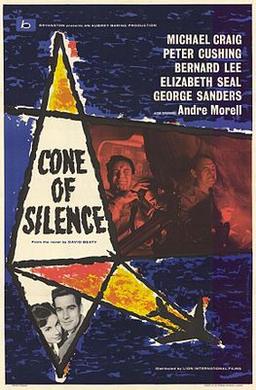
Cone of Silence (1960, directed by Charles Frend)


Cone of Silence is a very British film about aviation.

George Sanders plays an investigator who is looking into a crash of a “Phoenix” jetliner.  The crash has been blamed on the pilot, Captain George Gort (Bernard Lee).  Because Gort was killed in the crash, he is not around to defend himself.  Gort had a previous crash on his record and had also been reprimanded for flying to low when he landed a flight in Calcutta.  To Phoenix Airlines, Gort is the perfect scapegoat but a series of flashbacks reveals that Gort was a good pilot and that the cowardly Captain Clive Judd (Peter Cushing) was responsible for the incident in Calcutta.  Captain Hugh Dallas (Michael Craig) tries to exonerate Gort’s name before another crash occurs.

Cone of Silence is named not for the famed listening device from Get Smart but instead for a key part of Gort’s certification process, where he has to fly a plane without being able to hear anyone or anything else around him.  That Gort manages to do so is one of the things that leads to Dallas believing the Gort couldn’t have been responsible for the later crash.  Bernard Lee is best-known for playing James Bond’s unflappable superior, M, and it’s interesting to see him playing a much more neurotic character in Cone of Silence.  Gort is a good pilot but he knows that, after his first crash, no one trusts his judgment and everyone is expecting him to fail and it gets to him.  It does not help that he has to deal with the weaselly Captain Judd, who is looking to blame anything that happens on Gort.  Cushing does a good job of playing Judd as someone who is outwardly friendly but who is ultimately only looking out for himself.

Cone of Silence was released at a time when jet travel was still considered to be a luxury and pilots were viewed as being the men who could do the impossible.  Not surprisingly, the film is full of lengthy scenes in which Captain Dallas and others explain every step that goes into flying a jet.  Great care was taken to get every detail right, even if it meant limiting the film’s dramatic potential.  This may have been fascinating to audiences in 1960, many of whom had never traveled on a plane, but today, Cone of Silence can feel dry and overly talky.  It’s good to see Sanders, Lee, and Cushing all in the same film but Cone of Silence is never as compelling as its cast.