Mini Kus! Round-Up : “Nausea,” “Collection,” “Master Song,” And “Resident Lover”


For fans of international “art comics,” there’s no more exciting package to receive in the mail than the latest four-pack of minis from Latvian publisher Kus! — you never know what a new batch from them will have to offer, but you can be certain that, one way or another, it’s going to be challenging, thought-provoking, idiosyncratic stuff, so solid is the Kus! track record. And so, with their latest quartet hot off the presses, then (printed, as always, in full and lavish color on top-quality paper stock and featuring heavy cardstock covers), now would pretty much be the perfect time to give ’em all the once-over, would it not? Why don’t we do just that —

Nausea by Abraham Diaz (Mini Kus! number 63) is a wild ride through the socio-economic gutters of Mexico City, infused with a hard-edged immediacy and vulgarity that the lazy might call “punk,” but is probably more accurately described as “nihilistic.” The narrative is linear enough after a fashion, but definitely scattershot, and the same can be said of the art, which certainly calls to mind the early-career works of Gary Panter and Lloyd Dangle, but with a decidedly more dangerous undercurrent. Diaz has been plumbing these sorts of depths for some time in woks like Suicida, and shows no signs of “mellowing out” when it comes to depicting the underside of the underside of the underside of his home city. A visceral gut-punch that’ll leave you reeling — and, frequently, laughing in spite of yourself.

Collection by Pedro Franz (Mini Kus! number 64) is an emotive series of images, with accompanying text, that sees the noted Brazilian cartoonist/fine artist filtering a series of melancholic reminiscences of various childhood injuries through the lens of another set of memories — those of the racks n’ stacks that once populated expat Mexican artist Ulises Carrion’s quasi-legendary Amsterdam books/art/comics shop Other Books and So. Of the four offerings under our metaphorical microscope today, this one is admittedly the most difficult to get a firm “handle” on, so personal is Franz’ vision and methodology, but it more than returns the investment of time you’re willing to put into it by revealing new depths not only of the work itself, but of your own reactions to it, with each successive re-reading. My best advice? Try feeling, rather than thinking, your way through this one and see if the at-first-glance oblique connective tissue holding it together becomes less so as you absorb not only the cartoonist’s offerings, but the intent behind them. This is a comic that may very well mean something entirely different to each reader.

Master Song by Francisco Sousa Lobo (Mini Kus! number 65) is a strictly-formatted (four panels per page) character study of a complex, no-doubt-emotionally-damaged young nanny in London who harbors anti-Semitic views and a deep passion for the risible novel Fifty Shades Of Grey, and if that sounds like a combination for internalized conflict of the most harrowing sort, well — it is. Emily, our protagonist, isn’t what one would call a sympathetic character by any stretch of the imagination, but Lobo does a masterful job of making you feel her emptiness and longing as she seeks fulfillment of her jumbled fantasy life by means of anonymous bar hook-ups that are, of course, doomed to disappoint. The simplicity of the cartooning and text in this comic stands in stark contrast to, while simultaneously drawing out, the depth of the painful self-examination Emily is constantly drifting into/out of, and the clinical dispassion with which she analyzes her own existence is at once disconcerting and, somehow, logical. A work of sparse and haunting beauty delineating a person’s near-complete sense of estrangement from their own life that raises a million probing questions, the most prominent for this reader/critic being — how does one process an alienation so deep-seated that one is even alienated from it? Sosa is a Portuguese talent that I admit to having been unfamiliar with previous to this, but I will be eagerly hunting down whatever works of his I can find in the very near future.

Resident Lover by Roman Muradov (Mini Kus! number 66) is one of those comics that almost manages to leave me at a loss for words — almost. I’ve read this through eight times now, and came away more impressed each time. Ostensibly a story about love that conspicuously never mentions love once, it’s actually something far more than that — a study of duality, symmetry, and identity (or lack thereof) that poses the same query a more youthful version of myself was floored by in the early-days Tears For Fears single Change, “Where does the end of me become the start of you?” Muradov’s cartooning is a mass of beautifully-balanced contradictions : rich yet austere, symbolic yet literal, mechanical yet organic, static yet fluid —- it’s no wonder that this Russian “import” now based in San Francicso has seen his work featured prominently in everything from The New Yorker to Vogue to GQ to The Paris Review. Visual poetry gets no more poignant and absorbing than this — prepare to spend hours poring over its mysteries and magnificence.

Once again, then, our friends at Kus! have outdone themselves with perhaps their strongest slate of new offerings yet, and the only thing better than buying each of them is buying them all together for the bargain price of $19 — with free shipping to the US! No need to hem and haw over this decision, get off my website now and get over to https://kushkomikss.ecrater.com/p/29745014/mini-ku-63-64-65-66
 

An Olympic Horror Film Review: Fatal Games (dir by Michael Elliot)


Like all good people, I am currently obsessed with the Winter Olympics!  As a result, over the past two weeks, I’ve been watching and reviewing a lot of Olympic-themed films.  Today, I watched the 1984 slasher film, Fatal Games!

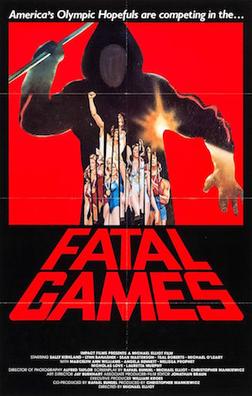
If you look at the poster above, you’ll see that Fatal Games was advertised as being a film about “America’s Olympic hopefuls … competing in the Fatal Games!”  That’s kind of true.  The Olympics are frequently mentioned throughout Fatal Games but technically, no one in the movie is actually a member of the Olympic team.  At least not yet.  Instead, they’re all students at a special athletic academy.  Apparently, it’s supposed to be a high school, though we don’t ever see anyone taking a math test or attending English class or anything like that.  Instead, it appears that everyone at the school spends all day practicing gymnastics, swimming, or running.  In fact, it appears that there’s only 20 students at the school and, at most, 5 members of the faculty.  Maybe it’s meant to be like that school that all of the clones attended in Never Let Me Go.  Either that or it’s just an indication that Fatal Games was an extremely low-budget film.

Anyway, seven of the students have just won some sort of regional competition and now they’re getting ready for nationals!  And, if they win at nationals, they’ll get to go to the Olympics.  However, they might not even make it to nationals.  Someone is stalking the blandly likable athletes and using a javelin to pick them off, one-by-one.

Interestingly, it takes people a while to notice that the number of potential Olympians is steadily dwindling.  Instead, people say stuff like, “Hey, have you seen Nancy?”  “Not for a few days.”  “Hey, have you seen Sue Ellen?”  “Didn’t she got to San Francisco to see her boyfriend?”

Well, I guess it’s understandable.  It’s not like anyone in the film is going to school to develop their critical thinking skills.  They’re athletes.  Who cares about all of the people mysteriously disappearing?  They have athletic stuff to worry about!

Fatal Games is pretty much a typical mid-80s slasher.  Interestingly enough, it’s structured like a giallo.  The murderer dresses in black and we get all of the required close-ups of the killer’s gloved hands.  The film introduces several potential suspects but doesn’t reveal the killer’s identity until the final ten minutes.

Is it the overly critical track coach?

Is it the creepy doctor?

Is it the nurse who is worried that the athletes are being injected with too many hormones?  (Obviously, she’s seen Goldengirl.)

Is it the swim coach?

Or is it her girlfriend, the swimmer who didn’t qualify for nationals?

Is it the gymnast whose grades are slipping?

Could it be the other gymnast who is always telling jokes?

Or the runner who has father issues?

Or is it Joe, the token weird guy?

They’re all given a scene or two to establish that they have a potential motive for wanting the seven aspiring Olympians dead.  When the killer and the killer’s motive is finally revealed, it’s so over-the-top and stupid that you can’t help but admire the film for actually going there.  The filmmakers obviously said, “Forget trying to make sense.  WE’RE GOING FOR IT!”

Anyway, the main problem with Fatal Games is that the murderer uses a javelin and, as a result, there’s a lot of scenes of the killer running through narrow school hallways, carrying this goofy-looking javelin.  Don’t get me wrong.  Javelins are sharp and scary and I wouldn’t want one thrown at me.  But still, when someone spends more than five minutes running down a narrow hallway while carrying a javelin, it just looks silly.  Let’s not even think about the logistics of using a javelin to kill someone in broad daylight without anyone else noticing.

That said, as silly and predictable as Fatal Games may have been, there were a few moments of inspired lunacy.  I already mentioned the ending, which is so over-the-top and silly that you can’t help but admire it.  But there’s also a few shots that are genuinely effective.  A scene where the killer suddenly appears in a doorway was handled well.  There’s also an oddly dream-like sequence in which a swimmer practices in the pool, little realizing that the killer is floating underneath her.  How did the killer get in the pool, with the javelin, without anyone noticing?  Who knows?  It’s still an effective scene.

Finally, I have to mention that Fatal Games opens with a song called “Take It All The Way,” which is so generically 80s that it’s oddly brilliant.  It’s almost as good as Graduation Day‘s “The Winner.”

Fatal Games is currently available for viewing on YouTube.

Music Video Of The Day: Modern Parenting by Creep Show (2018, dir by Chris Turner)


“Agck!”

That’s the best way that I can sum up my reaction to today’s music video of the day.  This video is for Creep Show’s Modern Parenting and it’s the type of video that makes you want to pick up the phone and call whoever it is that you should call when children are living in deserted buildings and destroying televisions.

That said, I like this video.  I like the atmosphere of that deserted building.  Being young, alone, and angry is both scary and exhilarating and this video captures that feeling.

Enjoy!

Lisa Reviews An Oscar Nominee: On Golden Pond (dir by Mark Rydell)


(With the Oscars scheduled to be awarded on March 4th, I have decided to review at least one Oscar-nominated film a day.  These films could be nominees or they could be winners.  They could be from this year’s Oscars or they could be a previous year’s nominee!  We’ll see how things play out.  Today, I take a look at the 1981 best picture nominee, On Golden Pond!)

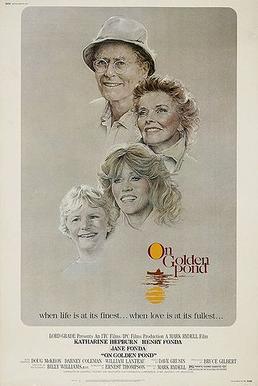
On Golden Pond takes place in a cottage that’s located on a lake called Golden Pond.  Hence, the title.  As far as title’s go, it’s not a bad one.  It’s a film about an elderly couple who spends every summer in that cottage.  They’re in their golden years so I guess it makes sense that they would feel an affinity for Golden Pond.

That said, I think that an even better title for the film would be Everything Annoys Norman.

Norman Thayer, Jr. (Henry Fonda) is a cantankerous old man.  He’s 79 and not particularly looking forward to celebrating his 80th birthday.  He’s a retired college professor.  His wife claims that the last time Norma was really happy was when Franklin Roosevelt was elected president.  Norman likes to fish and still brags about the time he caught a legendary trout named Walter.

What Norman doesn’t like is having to deal with the world.  When he stops to get gas, he loudly complains that, “in his day,” gas only cost eighty-five cents.  When he’s told that there’s another “middle-aged” couple on the lake, he says that, unless he’s going to live to be 150, he’s not middle-aged.  He gets frustrated because his memory isn’t as good as it used to be.  When he goes out for a walk in the woods, he forgets where the path is and he has to return to the house.  Sometimes, he calls people by the wrong name.  At one point, he struggles to use a landline phone.  (I can only imagine how annoyed Norman would be if he was alive today.)  Norman doesn’t like to deal with anyone other than his wife.

Ethel (Katharine Hepburn) is Norman’s wife.  She loves him.  When she hears Norman referred to as being “a son of a bitch,” she replies, “That son of a bitch is my husband.”  Ethel is used to Norman and his ways.  As she puts it, she understands that he’s like a “lion” who has to roar just to remind himself that he still can.  Ethel is … well, basically, she’s Katharine Hepburn.

Ethel has invited their daughter, Chelsea (Jane Fonda), to celebrate Norman’s birthday with them.  Norman and Chelsea have a strained relationship.  It’s implied that Norman was an emotionally distant and overly critical father and that Chelsea has never been able to forgive him.  When she shows up with her new boyfriend, Bill Ray (Dabney Coleman) and his 13 year-old son, Billy Ray (Doug McKeon), Norman barely bothers to acknowledge her.  With Bill and Chelsea planning on vacation in Europe, they ask if Billy can stay at the cottage with Norman and Ethel.  Ethel agrees.  Norman acquiesces.

On Golden Pond is a film that I wanted to like more than I actually did.  After all, the film features two classic actors, Henry Fonda and Katharine Hepburn, appearing in their only film together.  (Both Henry Fonda and Hepburn won Oscars for their work here.)  Henry Fonda gives a good performance as a strong-willed man who is struggling to deal with his own mortality.  As for Hepburn, it’s not a great performance, largely because Ethel is a thinly written role, but she’s Katharine Hepburn so it doesn’t matter.  But almost everything about the film — from the tasteful music to the pretty but not overwhelming cinematography — feels more like something you’d expect to find in a television production instead of a feature film.  On Golden Pond was based on a play and, with almost all of the action set in that cottage, it really doesn’t escape its theatrical origins.  That said, it’s a sweet movie.  The love between Norman and Ethel feels real.  If nothing else, the film gave the great Henry Fonda his only Oscar.

On Golden Pond was nominated for Best Picture but lost to Chariots of Fire.

A Winter Game Film Review: Goon: Last of the Enforcers (dir by Jay Baruchel)


Here at the Shattered Lens, Leonard Wilson is our resident hockey expert.  He can tell you all about the in and outs of the game in general and the New York Rangers in specific.

Myself, I know very little about hockey.  Here’s what I do know:

  1. It’s played on the ice and with a puck.
  2. There are a lot of fights.
  3. All of my Canadian friends love it.
  4. It’s a sport that is mentioned many times on Degrassi.
  5. Two hockey players won the 22nd season of The Amazing Race.
  6. Back in 2011, I followed Arleigh’s suggestion and watched a hockey movie called Goon.  Surprisingly, I really, really liked it.

Six years ago, I started my review of Goon by admitting that I didn’t know anything hockey so not much has changed.  However, while I still may not know much about hockey, I am currently obsessed with the Winter Olympics.  And, of course, hockey is a big part of the Winter Games.  Since I’m currently watching movies about winter sports, today seemed like the perfect time to watch 2016’s Goon: The Last of The Enforcers and get caught up on the story of Doug Glatt.

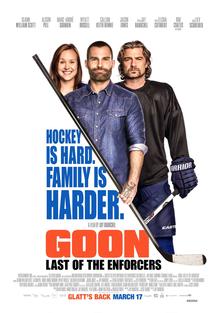
Who is Doug Glatt?  As played by Seann William Scott, Doug Glatt is probably one of the nicest guys that you could ever hope to meet.  He’s not particularly smart.  He’s the type who responds to almost comment with a slightly confused smile.  He tend to take things literally.  But he’s a genuinely sweet guy and it’s impossible not to like him.

Except, of course, when he’s on the ice.  Doug is a semi-pro hockey player, playing for the Halifax Highlanders.  Even his biggest fans will admit that Doug isn’t the best hockey player of all time.  However, no one can throw a punch like he can.  Doug’s an enforcer.  His specialty is beating up the opposing team.  When his coach (Kim Coates) needs to intimidate the other team, he sends Doug out with orders to beat someone up.  Doug has no problem breaking someone’s nose but he usually apologizes afterward.  He’s known as The Thug.

Doug is married to Eva (Allison Pill), who loves hockey but, now that she’s pregnant, she worries about Doug getting seriously injured.  These worries come true when Doug gets into a fight with Anders Cain (Wyatt Russell), a fearsome enforcer on another team.  (Anders just happens to be the son of the owner of the Highlanders.)  Cain not only leaves Doug crumpled up on the ice but he also injures Doug’s right shoulder, making it difficult for Doug to throw a punch with his right hand.  It appears that Doug’s playing days are over.  Doug ends up working in the storage room of an insurance company while the Highlanders continue on without him.  Adding insult to injury, Anders is soon signed by the Highlanders and given Doug’s old position as team captain.

As much as Doug tries to move on, he keeps finding himself drawn back to hockey.  When he runs into a former rival, Ross Rhea (Liev Schreiber), who is now making a living as a glorified gladiator, Doug realizes that he can learn how to fight with his left fist.  But with Eva not wanting him to fight anymore, Doug is forced to decide which team he’s going to play for, the Highlanders or his family?

Especially when compared to the first Goon, Goon: Last of the Enforcers is an extremely busy film.  Beyond Doug trying to adjust to life off the ice, the film also deals with Anders Cain’s relationship with his father, the locker room shenanigans of the Highlanders, Ross Rhea’s attempt to make a comeback, and the antics of obnoxious sports reporter Chad Bailey (T.J. Miller).  That’s a lot for one film to deal with and it’s not surprising that the end result is an uneven mishmash of raunchy comedy and sports-themed melodrama.  Whereas the first Goon worked because it kept things simple and sincere, Goon: Last of the Enforcers is way too complicated for its own good.

That said, as played by Seann William Scott, Doug is just as likable as he was in the first film and Scott and Allison Pill still make for an adorable couple.  In fact, the entire cast does a pretty good job, especially Wyatt Russell and Liev Schreiber.  The film doesn’t really work but, for fans of the first film, it’s still enjoyable enough.  If nothing else, it’s nice to see how things work out for Doug Glatt.

“Is The Guy For Real? The Unbelievable Andy Kaufman” : Here Comes Box Brown To Save The Day


Don’t look now, but it appears as though Box Brown is making a concerted play for the title of “Best Biographer In Comics” — and he’s doing it by telling the life story of a guy who held a title of his own, that of “World Intergender Wresting Champion.”

Yup, dadaist comedian Andy Kaufman is back under the media microscope in a big way, and it makes all the sense in the world that the cartoonist who chronicled the exploits of Andre The Giant and the history of Tetris in his previous volumes for First Second (who also publish his latest) would be the guy to do it. Kaufman’s never really left the spotlight entirely, of course — his tragically early death, combined with his singularly bizarre (and I mean that in the best possible way) career are more than enough to ensure that his legend will always carry on — but detailed looks at the man behind such memorable characters are Latka Gravas and Tony Clifton have been few and far between. Academy Award-winning director Milos Forman gave it his best shot with Man On The Moon nearly twenty years ago (the title being taken from R.E.M.’s song about Andy — which also never seems to go away completely), but despite a stellar starring turn from Jim Carrey, who absolutely inhabited the role (or should that be roles?) of Kaufman, I think most would agree that the film didn’t quite manage to pierce the veil of its own subject. And so now it falls to Brown to humanize this most alien of talents, and with his graphic novel Is This Guy For Real? The Unbelievable Andy Kaufman, he (spoiler alert) manages to do it — at least to a greater degree than has been done in the past.

The fleshing-out of important members of “Team Kaufman” such as writing partner/Tony Clifton fill-in Bob Zmuda, girlfriend Lynne Margulies, and manager George Shapiro go some way toward answering the books’ titular question for us, as does a more-than-cursory examination of the future comic’s early years and of his relationship with his family throughout his life. Brown being Brown, though, you pretty much know going in that one particular aspect of Kaufman’s career is going to get the most attention — his turn as a pro wrestling bad guy.

Cue some rather curious side-bars — such as Brown devoting something like 15 pages to a re-telling of the career of Kaufman’s main “nemesis,” Jerry “The King” Lawler , as well as a relating of the history and minutiae of Memphis regional wrestling in general — that very nearly run the book off the rails, and yet things come back together more or less just in time to prevent your interest from waning, even if it is rather curious, to say the least, that Brown spends more time on the Kaufman/Fred Blassie one-off video Breakfast With Blassie than he does on Kaufman’s entire five-year stint on Taxi. Go Figure.

Still, for every lapse in judgment like that, there’s at least one strong choice that Brown makes to ensure that your faith in his storytelling abilities never wanes. He makes it clear, for instance, that yes, Kaufman’s entire “thing” was an act (or, if you prefer, a series of acts), and shows enough of the comedian away/apart from his various ingeniously-constructed personas so that readers finally have a fairly solid handle on where Andy ends and, say, the “foreign guy,” or the misogynist wrestler, begins. This takes a deft touch, to be sure, but the disarmingly straight-forward script is aided in no small part by Brown’s smartly minimalist cartooning that draws special attention to differences in body language, facial expression, etc. that let you know when various “switches” are “flipped.” No one will ever accuse Brown of having a hugely varied repertoire as an illustrator, but his rote and basic forms and figures carry a degree of nuance that their ostensible “simplicity” wouldn’t necessarily be assumed to be capable of conveying. There’s also something of the frank and absurd to Brown’s style that fits this material perfectly — as if something utterly unique unto itself is being communicated in a visual language we can all understand.

A style as no-frills as Brown’s is also highly adaptable, and so whether Kaufman is portraying Elvis, Latka, Tony Clifton, or Lawler’s foil in the ring, the panels transition into each role nearly as seamlessly as did the comic himself. At the end of the day, though, Box Brown’s greatest triumph with Is This Guy For Real? The Unbelievable Andy Kaufman lies in the fact that, perhaps for the first time (and thanks, no doubt, to the assistance and participation he was able to obtain from the late performer’s family, particularly his brother, Michael), he finds a way to show Kaufman  — at every phase of his life and career, from his earliest years to his ascension of showbiz’s heights to his painful final days — as his most complex and compelling character of all : himself.

Spy in the House of Love: Alfred Hitchcock’s NOTORIOUS (RKO 1946) — cracked rear viewer


You won’t find a more glamorous pair of spies than Cary Grant and Ingrid Bergman in Alfred Hitchcock’s NOTORIOUS… except maybe in other films that feature Cary Grant as a spy! The Master of Suspense once again goes full speed ahead in bringing this exciting espionage caper to the screen loaded with the usual “Hitchcock Touches”, and […]

via Spy in the House of Love: Alfred Hitchcock’s NOTORIOUS (RKO 1946) — cracked rear viewer