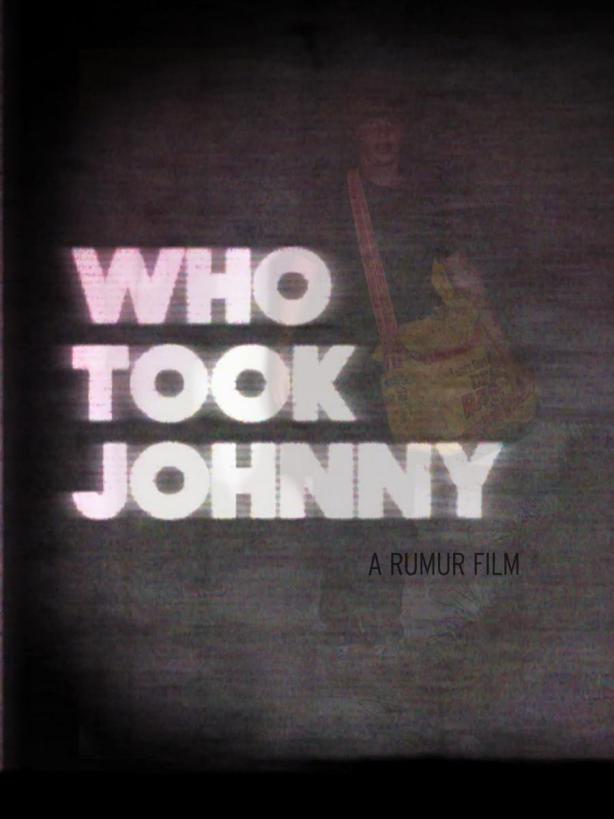
The recent, tragic resolution to the Jacob Wetterling case here in Minnesota got me thinking back to other, dare I use the term, “famous” missing children stories of years gone by, and when I noticed that Netflix had recently added the 2014 documentary Who Took Johnny (I know, I know — I think the title should have a question mark in it, too, but it doesn’t), which focuses on the 1982 disappearance of then-paperboy Johnny Gosch while on his morning delivery route in West Des Moines, Iowa, to their streaming queue (which is probably your only way to see it given that it’s not, to my knowledge, available on either Blu-ray or DVD), I decided to give it a go the other night. The idea that anyone would abduct or otherwise harm a child is anathema to most of us, I would hope, and the plight of any missing kid’s…
From its first issue in 1920 until it ceased publication in 1951, Black Mask was one of America’s premier pulp magazines. Though it was best known for its crime stories (including the work of Dashiell Hammett and Raymond Chandler), it also published westerns, romance, horror, and adventure stories. Black Mask was also remembered for its colorful and frequently lurid covers.
I’ve always found it ridiculous that Stone Temple Pilots seems to be that band from the early 90s that keeps getting misclassified. The one I see all over the place is that they are a grunge rock band. Every time I read that, I wonder if they have ever actually listened to their music. I find it particularly baffling since they are a straightforward hard rock band–if you must classify them. I get the impression that people overthink their music, and tend to lump them in with grunge because it sounds close enough if you only listen to a couple of songs like Creep, Big Empty, or Plush. Also, I think there tends to be some general confusion about what is and isn’t grunge as opposed to just 90s hard rock. It doesn’t help that the term alternative rock can be slapped on just about anything that wasn’t obviously pop or punk in the 90s. That’s my best guess about this non-issue that I see from time to time.
I was introduced to them via the album Tiny Music…Songs From the Vatican Gift Shop, and the song Big Bang Baby in particular. I later picked up Core and Purple. Today I have all six of their studio albums. Out of all of their songs, I would say Interstate Love Song is right up there at the top along with the hidden lounge singer song at the end of Kitchen Ware & Candy Bars.
There isn’t much to say about the music video itself. The beginning of the music video makes me think of Queen Kelly (1929) for some reason. The video has a character from the silent film portion running around with his nose growing in order to fit with the theme of lying that the song is singing about.
The rest is washed out and has Scott Weiland dressed how I imagine Marc Bolan would look like if he had made it to this decade. I think we can just chalk those things up to that it was the 90s and that was Weiland’s style. I really think it’s that simple.
They got director Kevin Kerslake to do the music video who did most of Nirvana’s videos, but also worked with both Stone Temple Pilots and the spin-off group Velvet Revolver on several occasions. He also worked with other major bands of the era such as Sonic Youth, Soundgarden, Red Hot Chili Peppers, and Green Day. He appears to still be working in music videos today since I can find a credit for him shooting Bang Bang for Green Day, but otherwise his credits seem to drop off in the mid-2000s. Like quite a few music video directors, he also has gone on to numerous concert films and music-related documentaries.
I have known many artists and being able to support oneself with one’s art is a rare thing, demanding respect and investigation. A friend told me that even the piano singer at a hotel singing “Summer Winds”, if he is supporting himself solely with his art, he is a rare success in the echelon of the .0001% of artists. It is with that understanding and respect that I bring you Gentle Reader to my discussion with Director – Guy Bee.
Guy came to Hollywood via Florida to California in 1987; he obtained a job working for a camera and camera equipment leasing company. AsGuy put it, “I came in early and stayed late.” He managed their books, meaning he logged the equipment that was checked in and out, he cleaned an repaired the equipment, and drove the company truck. Guy’s diligence impressed his boss who offered to let him go to a Steadicam workshop because he wanted him to keep track of the equipment that was leant to the workshop, allowing Guy to attend a free Steadicam workshop. As Guy leased this equipment he, would meet more and more Directors and Producers. This led to a string of short projects while he continued to work at the leasing shop, which slowly built up his reel (segments showing his camera work) on VHS TAPE.
Guy states that “You live and die by the reputation that you can handle anything without being rattled.” This philosophy set the stage for Guy’s shot at Directing. By working diligently and establishing relationships with the cast, crew, directors, and producers of “Third Watch”, Guy was given his first professional directing opportunity, which would grow into 13 episodes of directing. His success as a director on “Third Watch” led to “Alias” which led to one of my favorite shows of ALL TIME: “Jericho”. “Jericho”, for the uninitiated, is the story of a Kansas town holding together in the wake of Nuclear War. Guy described the show as – “Every scene was important and the stakes were always high. There was no ‘C Story’.” Guy directed three episodes of this show that was gone too soon.
Protips? Flexibility. “If you’re behind because of lighting or someone’s late, you still have to figure out how to get it done in time”. Why? Budgets! Once you cross 12 hours of shooting, everyone’s rates go up. “It takes seven days prep for eight to nine days of filming.” These principles took him to three of my favorite shows: “Supernatural”, “Arrow”, “The Magicians”, and “iZombie”.
The question I had was how was he able to keep working and have one show feed into the next? “[He] never turned down work.” On “Supernatural”, he met Erik Kripke, Kim Manners, Bob Singer, and Sera Gamble and each of these producers led him to other episodes and new shows.
Where does he do the bulk of his work? Not in Hollywood. Why? “New York is busy because the tax incentives have made it sexy to shoot there.” This dates me a bit, but is there a true hiatus anymore? “Everything has changed. Filming used to be from July through April. Now, with basic cable, it’s year round production.”
Protips: I have an artsy daughter- what have I learned from Guy that I can impart to her to help her support herself in the arts?
Be versatile. Guy has more than one skill. If she were interested in filmmaking, I would advise her to not just be a writer. I’m a writer and it’s fallow … A LOT. If she wanted to be a writer, I would tell her that she should also understand how to put together budgets for stories she’s writing. Similarly, Guy has skills as a camera operator, which led to and helped him as a director- the skills were synergistic.
Build relationships. I would tell my daughter to be totally reliable and pleasant to work with (I apologize for ending with a preposition). Guy worked on every project with diligence, never complained, and never turned down work, enabling him to continue working in the arts without a day job.
Wow! I waited a whole 92 music videos of the day to do a Madonna video.
This is one of the oddball songs in Madonna’s catalog, but it’s one of my favorites.
The background story is pretty simple. One of her producers at the time named Patrick Leonard had to bring his daughter Jessie to the studio, Madonna took a liking to her, Leonard gave Madonna a song he had written for Jessie, she changed the lyrics a bit, and the rest is history.
There isn’t much to say about the music video itself either. It’s a very literal interpretation of the lyrics filled with animated characters you would expect from 70s-80s Disney. Madonna appears animated as Tinker Bell. I love that there appears to be some sort of cross between Tigger and Chester Cheetah during the marches of animated characters.
There are quite a few people that I was able to find who worked on the music video. Oddly, the little girl herself is not one of them.
Derek Hayes directed the music video. He seems to have only directed three music videos. I couldn’t find him for sure on IMDb, but there does appear to be two Derek Hayes that worked in animation.
Edit: According to Stephan in the comments section, Hayes is currently teaching animation at Falmouth University in the UK.
Nigel Hadley was the editor. I found a Nigel Hadley on IMDb who seems to have only worked as an editor on Derek Jarman’s The Garden (1990). If that is him, then that’s rather amazing seeing as Tilda Swinton played the Madonna in that movie.
Maddy Sparrow was the producer. She produced at least one other music video for Elton John’s Club at the End of the Street. I imagine she worked on other music videos as well.
There were numerous animators, which included Derek Hayes himself. The other ones I could find are as follows: Jimmy Farrington, Andy Goff, Alison Snowden, Neville Astley, Malcolm Hartley, and Erica Russell. I’ll just talk about a few noteworthy ones.
Jimmy Farrington appears to have worked on a bunch of big films from Who Framed Roger Rabbit (1988) to Harry Potter to Marvel.
Alison Snowden went on to do more work in animation that included winning an Oscar for the film Bob’s Birthday (1994).
Neville Hartley appears to have had great success–going on to be a writer for the British TV Show Peppa Pig. He also co-created the show.
John Stevenson was the Character Technical Director, or Character TD for short. He seems to have been the most successful–going on to direct Kung Fu Panda (2008).
I’m sitting in my office with the speakerphone on and listening to one of my artistic heroes – Tom Abernathy – speak as his creation The Freak from Destroy All Humans! 2. Yes, this really happened and it was …. awesome.
Our discussion covers how Tom started his career, his past achievements, and what more he wants to give us.
When I first started speaking with him, I didn’t understand him. Where was the angst-ridden melancholy that is so familiar in so many artists? Where was the bitterness? I realized that his artistic process was totally different from that of a TV and movie writer who spends their artistic career in a great deal of isolation punctuated by a team of constructive criticism and clearly defined tasks. His job touches all facets of the creative process, allowing him to fully realize his creative voice and vision.
Tom’s video game narrative career influenced or decided the dialogue, direction, and casting of many of our most beloved games. His career began in Los Angeles doing coverage – summarizing and reviewing scripts to determine if they were worth making. He did this job for twenty-five dollars a script. Through a connection, Joseph Donaldson, Tom was able to get a job writing scripts for Activision Studios. It was not like today. Tom said, “The writing [for games] was terrible then.” The video game writing done by the designers and producers who had little need for professional writers at that time. His first game “Dark Reign 2” did not do well and Tom’s future as a professional game writer was uncertain. However, something occurred in 2004 that made him eagerly look for work in TV, Film, or Games – he had a baby on the way.
Once again, Joseph Donaldson pushed Tom’s name forward as the head writer. This was for Destroy All Humans!, a Mars Attacks set in the 1950s where you played the Alien Invader. Tom had a unique take on both the people who inhabited the world and the Hero of the game – Crypto.
Tom brought the satirical humor to DAH! Tom created the premise that “the 50s were Ward and June Clever and Eisenhower exterior, but everything going on in their minds must be depraved and wild.” Since Crypto was able to read minds, as he leveled towns and harvested human brains, we got to read and hear the unspoken, providing both comic relief and clues to completing missions. He wanted Crypto to be “two parts Jack Nicholson and one part Charlton Heston.”
This was revolutionary because unlike the characters in “Doom” and other FPS, Crypto had a personality and a story. Although Crypto would be insulted to read this, he had real humanity. This will shock many fans, but “the original [Crypto voice] had a stilted tone like the 50s saucer movies”. YIKES! Tom wanted Crypto to be a “cowboy walking id, very American individualist.” Therefore, it was “Jack Nicholson for id and Charlton Heston for cowboy.” He continued. “[Crypto] needed the pomposity of Charlton Heston, [he] needed arrogance/confidence with swagger like Soylent Green. TOUGH!”
What was Tom’s role besides being the writer? Were people lording over him? How much freedom did he have? It turns out that he had A LOT of artistic control. Why? “The [game developers] were in Brisbane and [he] only interacted with them by phone and email.” Therefore, the geographic separation allowed Tom to have immense creative influence that would not have been afforded to him otherwise. For example, Tom knew what he wanted Crypto to sound like and Tom was able to do the casting. Yes, creatives – he got to do the casting.
DAH!2 Crypto was pitched as a James Bond/Austin Powers. There was a pause in the discussion and I had to ask about The Freak and if it was true that he was the voice? Yes!!! “The voice director, Doug Carrigan, and I realized that, in all our months-long work to get the important parts cast and recorded, there was one reasonably significant role we had totally forgotten about: The Freak. [We] were out of money and time, we had no choice but for me to hop in the booth and perform The Freak myself in what was probably the final 15 minutes of the entire series of recording sessions. Apologies to Bobcat Goldthwaite; I had zero time to come up with an original take on the character, so I just decided to commit to the idea of Goldthwaite on a really bad acid trip.” Yes, he did the voice for me and it was …. EPIC!!!
I asked him about the DAH!2 side missions. “Leanne Taylor did a ton of work [assigned] late in production.” Leanne Taylor – from me- THANK YOU!!!
I asked him about getting Anthony Stewart Head to play Ponsonby, who would’ve been a get for the time. This was an interesting story because it not only reflected the creative process for a narrative, but also the limits of their power. Tom had directed and recorded another actor to play Poncenby. “I had cast an older man who brought out the humor and after he was recorded, THQ UK Marketing emails – “We want you to cast a ‘name’ actor from the UK so we can sell more units over here.” I was curious as to Tom’s reaction. “Not great. No one ever bought a game because someone voice acted in it because you don’t see the actors!”
What’s Happening Now?
Infinite-Arms.com
“The story is like Matrix meets Fringe. “There are mechs, known as Metamods, that come in both software and hardware version. The hardware versions are actual 3-D printed action figures as much as ten or twelve inches tall, with 200 coats of paint and more than 20 points of articulation.” I didn’t really understand this until I watched the above video. There are toys and a video game component. In other words, this will be really badass. Most importantly, “you don’t have to pour tons of money into the game to be successful! Jumo the company behind the game- wants players to get value with or without investing money.” There are RPG components, platform, and toy components!
Given Tom’s track record of bringing story and humanity to games, this will be a MUST BUY for the holidays!
You know how it goes — you hear reasonably decent things about a film for some time, but for whatever reason, you just never get around to watching it. There’s always something else to see, read, or otherwise pay attention to, and something that you know you really should check out just ends up getting buried further and further down in the old baket of priorities.
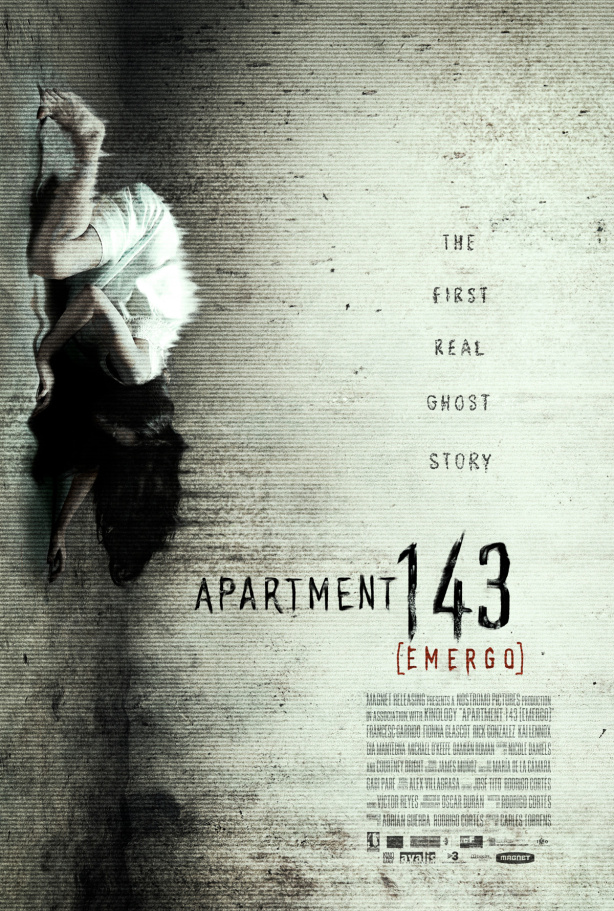
Such was the case with me and Apartment 143 (or, as it’s known in its native Spain, Emergo), a Barcelona-filmed “found footage” number from 2011 directed by then-first-timer Carles Torrens and written by Buried director Rodrigo Cortes that’s been available on Netflix (as well as Blu-ray and DVD) for some time. Plenty of folks whose opinions I generally respect have had plenty good to say about it, but it never worked its way to the top of my “must-see” list for whatever reason…
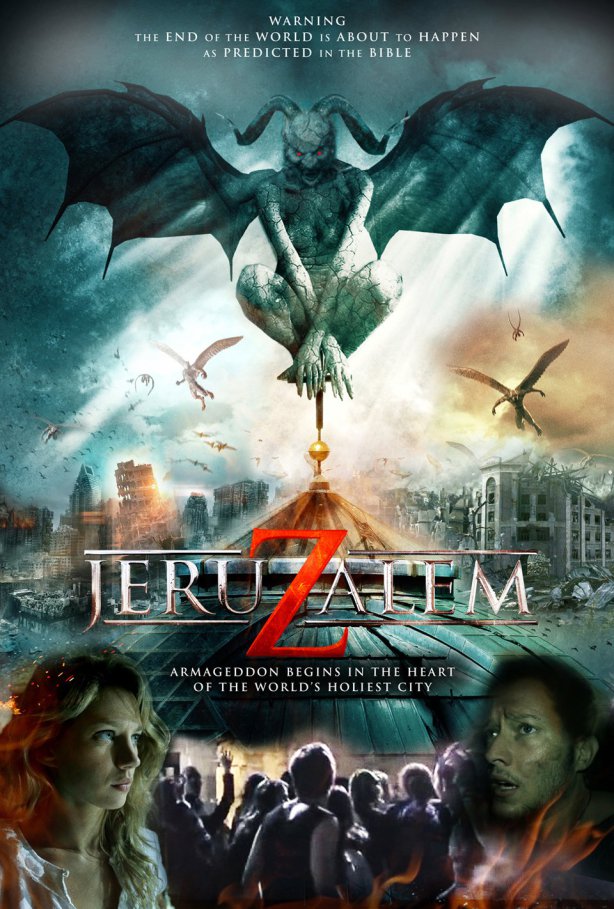
I suppose it was inevitable at some point : having emptied the respective wells of every single “found footage” framing device well past the point most of us would consider to be bone dry, a couple of enterprising young indie filmmakers — in this case Israeli low-budget would-be auteurs Doron and Yoav Paz (who have upped the ante in the self-branding department by capitalizing their collective “handle” of “The PAZ Brothers”) — have gone and given us the first “mockumentary” horror filmed through a pair of Google Glasses with their 2015 effort Jeruzalem. It’s a clever enough conceit (that will certainly be done to death within a few years) to keep you watching , to be sure — but is what our protagonist is seeing through her prescription-specific toy worth keeping an eye on? I’ll give you the particulars and you can decide for yourself :





 Through the Shattered Lens