Four episode test: #Greenleaf


First off, this is my first post on TSL since being back from my health scare, happy that is over with, for now! So I will be back to reviewing and posting TV stuff you want to know about on a regular basis again! 🙂

I am going to start my TV reviews with Greenleaf, and do it in a bit of an unorthodox way. You will see what I mean in a minute.

What is Greenleaf about?

It is a family drama, a bit soapy, but a bit gritty. Grace Greenleaf, with her daughter, comes back to her Tennessee home for a funeral. Shortly after she is plunged into the family secrets she so longed to keep herself and her daughter out of. Mixed in a setting of betrayal, infidelity and a lot of scandal.

Who is in it, you ask? I got that answer too!

Grace: (Merle Dandridge) of ‘Sons of Anarchy’ fame and others

Bishop James: (Keith David) who needs no introduction

Aunt Mavis (Some lady named Oprah, but I can’t find much about her)

What does Greenleaf bring to the table?

Greenleaf is the first time the OWN network has branched out in it’s own scripted series. Prior to this series it it has tried with Oprahs talk show and some Tyler Perry shows, most with hitting ratings bottoms .

Review:

Very character driven. I got invested in them really quick. I wasn’t expecting much going in, but after watching four episodes, I am hooked! It differs greatly from what you would think this type of show would be. There is nothing campy about it. The acting lacks for a bit, but all the drama you want is there.

Four episode test*?

After four episodes I am giving it a B+ I will definitely keep watching!

Greenleaf airs on the OWN network Wednesdays at 10pm East. with re-airs prior to that.

*four episode test = after four epis I stay or go

Happy to be posting back at TSL!


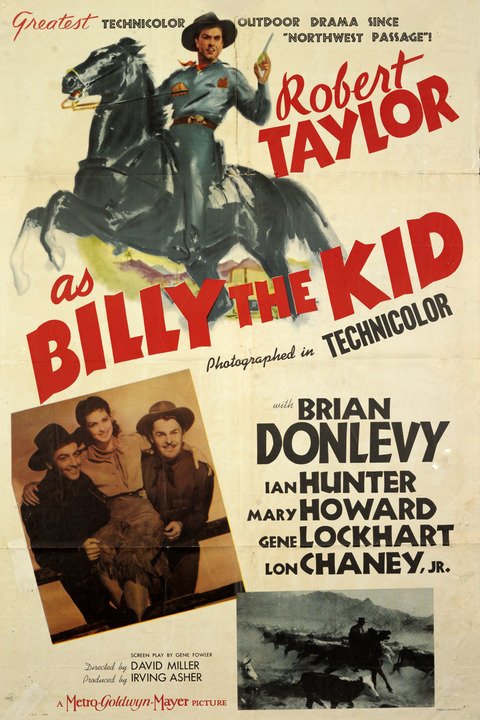
Saddle Sore: BILLY THE KID (MGM 1941)


gary loggins's avatarcracked rear viewer

billy1

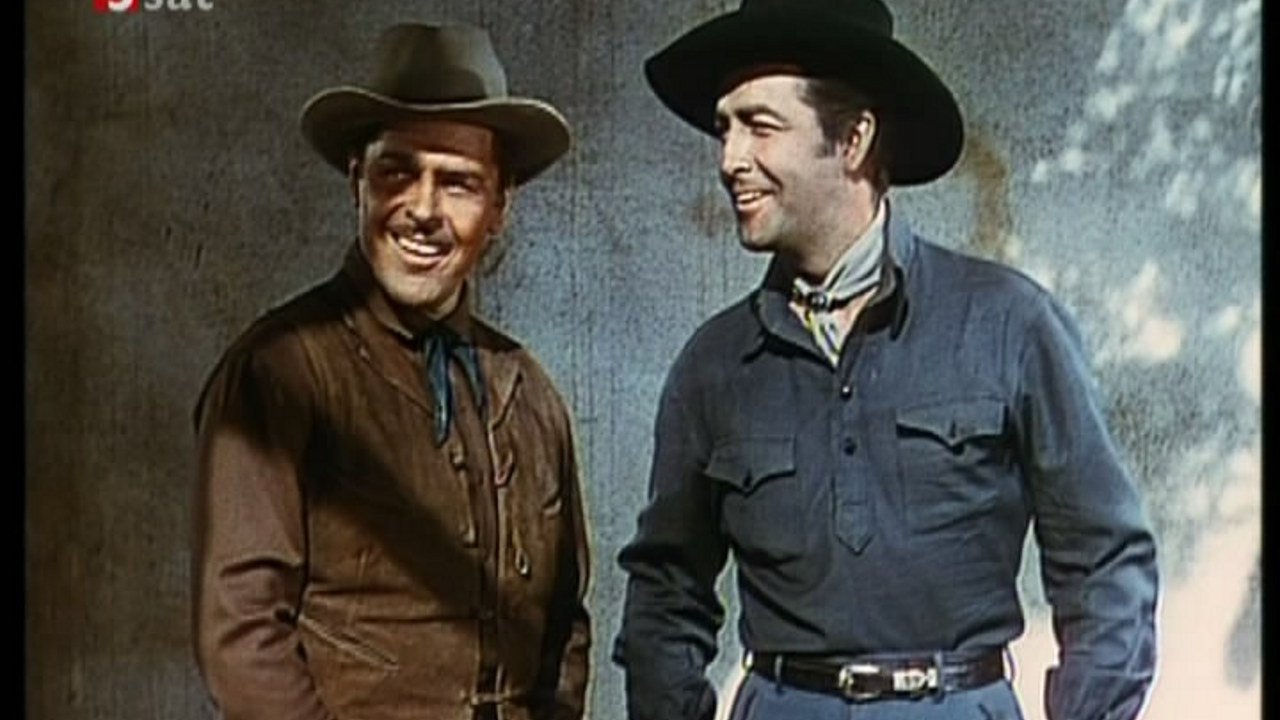
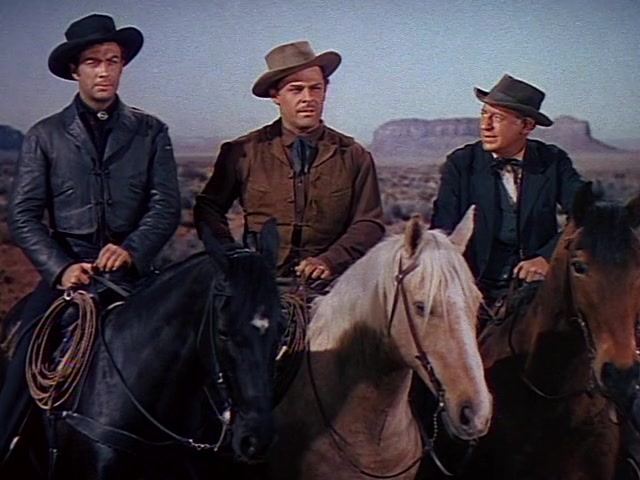
What kind of topsy-turvy world is this? Perennial bad guy Brian Donlevy is on the side of the law, loveable Gene Lockhart is the villain, and almost 30 Robert Taylor is BILLY THE KID. This 1941 Technicolor horse opera has only a passing resemblance to reality, and was actually a remake of a 1930 film starring Wallace Beery and Johnny Mack Brown, which depicted the outlaw’s legend a bit more truthfully… but not much!

billy2

In this version, Billy joins up with ruthless cattleman Hickey, who’s out to takeover Lincoln County. They start a stampede of rival Keating’s cattle, and during the commotion Billy encounters childhood friend Jim Sherwood, now working for Keating. Billy and his pal Pedro switch sides, and Pedro takes a bullet for it. The Kid is out for revenge, but Keating’s cooler head prevails, and he sets out to seek help from the territorial governor.

billy3

But Keating doesn’t make it, as we…

View original post 534 more words

Cleaning Out The DVR, Again #5: We Are Still Here (dir by Ted Geoghegan)


1-we-are-still-here

The fifth film on my DVR was the 2015 haunted house film, We Are Still Here.  I recorded We Are Still Here off of the SyFy channel on March 20th.  Sad to say, I really can’t remember what I was doing or watching on March 20th while my DVR recorded one of the best horror movies of the previous year.  I was probably watching something pn Lifetime.  That usually seems to be the case.

But anyway, let’s talk about We Are Still Here.

As a self-professed lover of both horror and old grindhouse exploitation films, there is really no excuse for it to have taken me this long to see We Are Still Here.  We Are Still Here is one of those wonderfully low-budget indie films that mixes a traditional genre — in this case, the haunted house film — with a far less traditional view of humanity.  With its mix of bump-in-the-dark horror and cynicism about human nature, We Are Still Here feels like a mix of the Coen Brothers and H.P. Lovecraft.

Anne (Barbra Crampton, a veteran of horror films like Castle Freak and You’re Next) and Paul (Andrew Sensenig, who played the mysterious antagonist of Upstream Color) are a married couple who are struggling to deal with tragedy.  Their son, Bobby, was recently killed in a car wreck.  Anne is trapped in a prison of depression, while Paul just wants to move on with their lives.  Hoping that it will help them to forget their sadness, Paul and Anne buy a house in New England.

(New England, not coincidentally, was also the home of H.P. Lovecraft, as well as being the setting for some of his best-remembered stories.)

But, of course, the house proves to be anything but therapeutic.  From the minute they move in, Anne is convinced that they are not alone.  With every mysterious sound and strange happening within the house, Ann becomes more and more convinced that the spirit of Bobby is with them.

If you’re a horror fan, you will not be surprised to learn that they are not alone.  There is a presence in the house but is it Bobby or is it something far more sinister?  Shortly after moving in, Anne and Paul meet their new neighbors.  As friendly as they may be, there is definitely something off about Dave (Monte Markham) and his wife, Cat (Connie Neer).  Dave tells them that the house was originally a funeral home an about how it was owned by the mysterious Dagmar family.  The Dagmars were reportedly forced to leave town after it was learned that they were selling the bodies brought to them for burial and burying empty coffins.  Could this have anything to do with the strange vibe that Anne and Paul both get from the house?

Despite Paul’s skepticism, Anne invites her friends, May (Lisa Marie) and Jacob (Larry Fessenden), to come for a visit.  May and Jacob are both spiritualists and Anne hopes that they can contact Bobby’s spirit.  Again, it’s not a spoiler to reveal that they do contact something.  The surprise comes from what they contact and what happens as a result.

We Are Still Here is a chilly and dream-like film, one that wisely devotes as much time to creating and maintaining a properly creepy atmosphere as it does to all the expected scare scenes.  When the presence in the house is finally revealed, it’s a scary moment but for me, the most haunting scenes in the film are the shots of the snow-covered landscape surrounding the house.  The icy roads are as cold and unforgiving and as potentially dangerous as anything that might be living in the old Dagmar house.  And, just as the weather cannot be controlled, neither can the paranormal.

We Are Still Here is a deliberately paced film.  In fact, it’s probably a bit too deliberate to really be effective when viewed with commercial interruptions.  We Are Still Here works because it creates an atmosphere of foreboding and certain doom and it’s hard to maintain an atmosphere when, every 20 minutes or so, the action has to stop for a commercial about Tide pods.  To best appreciate this film and what it has to say about loss, faith, and delusion, it’s necessary to watch the story unfold without any pause to the narrative.

Fortunately, this intelligent and well-acted horror film is currently available on Netflix, where it can be viewed without commercial interruption!  If you’re a horror fan, you owe it to yourself to watch.

We-Are-Still-Here

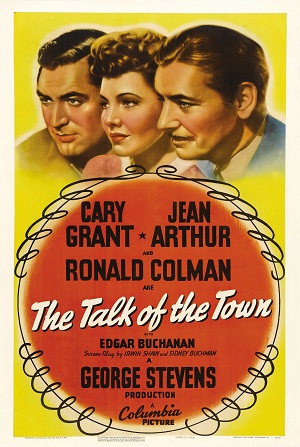
Cleaning Out The DVR, Again #4: The Talk of the Town (dir by George Stevens)


The_Talk_of_the_Town_dvd_cover

The fourth film on my DVR was the 1942 film, The Talk of the Town.  The Talk of The Town originally aired on TCM on March 20th and I recorded it because it was a best picture nominee.  As some of our regular readers undoubtedly know, it’s long been a goal of mine to watch and review every single film nominated for Oscar’s top prize.

The Talk of The Town is an odd little hybrid of comedy, melodrama, and a civics lecture.  Michael Lightcap (Ronald Colman) is a brilliant attorney and legal professor.  He’s been shortlisted for the Supreme Court and he’s also a widely read author.  In fact, he’s even rented a house for the summer, so that he may work on a book.  The owner of the house — teacher Nora Shelley (Jean Arthur) — will also be acting as his secretary.

As well-read as Prof. Lightcap may be, he’s also rather stuffy and out-of-touch with what’s going on outside of the world of academia.  He knows how the law should work but he has little understanding of how the law actually does work.  Fortunately, he gets a lesson in reality when he arrives at the house and eventually meets the gardener, Joseph (Cary Grant).  Joseph turns out to be surprisingly intelligent and very passionate about politics.  Lightcap and Joseph have many debates about whether or not the American legal system actually protects the working man.

What Lightcap doesn’t know is that Joseph is actually Leopold Dilg.  Leopold is a labor activist, the type who you always see in old documentaries, standing on a street corner and preaching about unions.  Leopold is also a fugitive.  He was accused of setting fire to a mill, a fire that apparently led to the death of the foreman.  Despite the fact that he loudly proclaimed his innocence, Leopold was arrested and prosecutors announced that they would seek the death penalty.  Convinced that he would never get a fair trial, Leopold escaped from jail and fled to Nora’s house.

Nora and Leopold went to school together.  They love each other, even though circumstances — mostly his political activism — conspired to keep them apart.  When Lightcap moves into the house, Nora and Leopold’s attorney, Sam (Edgar Buchanan), hope that they can convince him to take on Leopold’s case.  However, they also have to not only convince Leopold to reveal his true identity but also convince Lightcap to put his supreme court appointment at risk by defending a politically unpopular defendant.  Their solution is to trick Lightcap into falling in love with Nora and then convince him to take on the case for her.

However, Nora soons finds herself falling in love with Lightcap for real.  Who will she choose in the end?  Cary Grant or Ronald Colman?  Today, it seems like a pretty easy decision but apparently, in 1942, Columbia Pictures actually shot two different endings for the movie.

The Talk of The Town is an odd little movie.  For the most part, it’s a drama.  But it also has plenty of comedic elements, mostly dealing with the attempts to keep Leopold’s identity a secret.  In the end, it’s a little bit too preachy to really work as either a drama or a comedy.  That said, I still liked The Talk Of The Town because it made a strong case for the importance of due process, which is a concept that a lot of people take for granted.

(At the same time, The Talk of the Town was made in 1942 so you never have any doubt that Lightcap’s belief in the American legal system will eventually be vindicated.  With America having just entered World War II, 1942 was not a time for cynicism.  If Talk of the Town has been made in the 30s, it probably would have been a very different movie.)

Probably the best thing about Talk of the Town is the cast.  It may not be a great film but, when you’ve got Cary Grant and Jean Arthur in a scene together, it almost doesn’t matter.

The Talk of the Town was nominated for best picture but it lost to Mrs. Miniver.