Lisa Reviews An Oscar Nominee: The Pride of the Yankees (dir by Sam Wood)


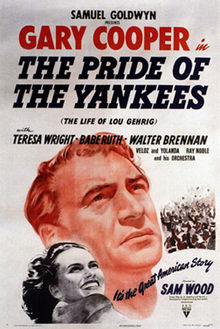
220px-The_Pride_Of_The_Yankees_1942

“People all say that I’ve had a bad break. But today … today, I consider myself the luckiest man on the face of the Earth.”

— Lou Gehrig (Gary Cooper) at the end of The Pride of the Yankees (1943)

After airing Foreign Correspondent earlier tonight, TCM followed up by showing the 1943 best picture nominee, The Pride of the Yankees.  Knowing that Pride of the Yankees was going to be a baseball film and that I know next to nothing about baseball, I recruited my sister, the Dazzling Erin, to watch the movie with me.  Erin loves baseball and I knew that she would be able to explain anything that went over my head.

Well, I absolutely loved watching this movie with my sister but it turns out that The Pride of the Yankees isn’t really much of a baseball movie.  True, it’s about a real life baseball player.  Several actual players appeared as themselves.  About 85% of the film’s dialogue deals with baseball and probably about 70% of the film features characters playing some form of the game.  But the film never goes into any great detail about baseball or how it’s played.  There’s no talk of strategy or rules or deeper meaning or anything else.  Going into the film, I knew that baseball was a game that involved throwing, swinging bats, and running.  And it turns out that was all that I needed to know.

The Pride of the Yankees is less about baseball and more about celebrity.  It’s a biopic of Lou Gehrig, who today is best known for his battle with ALS, a disease that is also known as Lou Gehrig’s disease.  Lou Gehrig died on June 2, 1941 and The Pride of the Yankees was released just a year later.  Watching the film, it’s obvious that Gehrig was a beloved figure, the type of celebrity who, if he were alive today, would probably be the center of stories like, “Lou Gehrig Did Something This Weekend And It Was Perfect.”  Watching the film, it easy to imagine how traumatic it must have been for the nation when a beloved athlete like Lou Gehrig died at the age of 37.

As a result, The Pride of the Yankees is less a biopic and more a case for canonization.  From the minute that the film’s Lou Gehrig appears on-screen, he is presented as being the type of saintly athlete who, by promising to hit two home runs in one game, inspires a crippled child to walk.  Lou is modest, kind, unpretentious, and never gets angry.  Over the course of the film, he takes care of his mother, displays a worthy work ethic, and marries Eleanor.  He and Eleanor have a perfect marriage without a single argument or a hint of trouble, except for the fact that Lou sometimes gets so busy playing baseball with the local children that he’s late coming home.  There’s not a hint of sadness in their life, until Lou suddenly gets sick.

And really, it should not work.  If ever there’s ever been a film that should be painfully out-of-place in our more cynical times, it would be The Pride of the Yankees.  However, the film still works because Lou is played by Gary Cooper and Eleanor is played by Teresa Wright.  These two excellent performers bring their considerable talents to making overly sentimental scenes feel credible.  Gary Cooper was 40 years old when he made The Pride of the Yankees and there’s a few scenes — especially the ones where Lou is supposed to be a student at Columbia University — where Cooper is clearly too old for the role.  But, for the most part, Gary Cooper did a great job as Lou Gehrig.  Cooper is especially memorable when Lou first starts to show signs of being ill.  Watching Lou struggle to swing a bat, I was reminded of a horse struggling to stand on an injured leg.  It was almost painfully poignant.

The Pride of the Yankees was nominated for 11 Academy Awards, including best picture.  However, it lost to another sentimental film that featured Teresa Wright, Mrs. Miniver.

Lisa Reviews An Oscar Nominee: Foreign Correspondent (dir by Alfred Hitchcock)


ForeignCorrespondent

Before watching a film like 1940’s Foreign Correspondent, it helps to know a little something about history.

Nowadays, when we think about World War II, there’s a tendency to assume that, from the minute that Hitler came to power in Germany and started to invade the rest of Europe, the entire world united against the Nazis.  The truth is actually far more complex.  The world was still recovering from World War I and throughout the 1930s, even as the Axis powers were growing more and more aggressive, respected intellectual leaders and politicians continued to argue that peace must be maintained at all costs.  Pacifism was such a popular concept that otherwise intelligent people were perfectly willing to make excuses for Hitler and Mussolini.  For five years, the UK followed a policy of appeasement towards Nazi Germany.  Even after war broke out between Britain and Germany, the U.S. remained officially neutral.  In the 1940 presidential election, President Franklin D. Roosevelt — running on a platform of neutrality — was overwhelmingly reelected over internationalist Wendell Willkie.

Foreign Correspondent, an American film made by a British director, opens before the start of World War II.  An American newspaper editor, Mr. Powers (Harry Davenport), is frustrated because none of his foreign correspondents seem to be able to understand the truth of the situation in Europe.  They all claim that there is going to be no war in Europe but Mr. Powers feels differently.  He also feels that the newspaper’s most celebrated and respected foreign correspondents are just a bunch of out-of-touch elitists.  Instead of sending another upper class academic, Mr. Powers decides to send a hard-boiled crime reporter to cover the situation in Europe.  Johnny Jones (Joel McCrea) has never been to Europe and that’s exactly why Mr. Powers decides to send him.  In one of the film’s more clever moments, he does, however, insist that Johnny write under the more distinguished sounding name of “Huntley Haverstock.”

(Foreign Correspondent‘s pointed criticism of out-of-touch elitists repeating the establishment line remains just as relevant today as it was in 1940.)

From the minute the brash and tough Johnny arrives in Europe, he finds himself caught up in a huge conspiracy.  He’s been assigned to report on a group known as the Universal Peace Party and, since this film was directed by Alfred Hitchcock, we automatically know that any organization with the word “Peace” in its name has to be up to something shady.  The Universal Peace Party has been founded by Stephen Fisher (Herbert Marshall), who appears to sincere in his desire to avoid war.  Johnny meets and falls in love with Fisher’s daughter, Carol (Laraine Day).

From the minute that Johnny witnesses the assassination of distinguished Dutch diplomat Von Meer (Albert Bassermann), he suspects that things are not how they seem.  Working with Carol and a British journalist named Scott ffolliot* (delightfully played by the great George Sanders), Johnny discovers that Von Meer was not killed at all.  Instead, a double was assassinated and Von Meer was kidnapped by a group of spies.

But who are the spies?  After nearly getting killed by one of Fisher’s bodyguards, Johnny starts to suspect that Stephen Fisher might not be as into world peace as was originally assumed.  Complicating matters, however, is the fact that Johnny is now engaged to marry Carol…

Foreign Correspondent is a wonderfully witty thriller, one that has a very serious message.  While the film is distinguished by Hitchcock’s typically droll sense of humor (eccentric characters abound and the scene where Edmund Gwenn keeps getting interrupted before he can attempt to push Joel McCrea off of a tower is both funny and suspenseful), the film’s message was that America could not afford to stay neutral as war broke out across Europe.  As the all-American Johnny Jones says at the end of the film:

“All that noise you hear isn’t static – it’s death, coming to London. Yes, they’re coming here now. You can hear the bombs falling on the streets and the homes. Don’t tune me out, hang on a while – this is a big story, and you’re part of it. It’s too late to do anything here now except stand in the dark and let them come… as if the lights were all out everywhere, except in America. Keep those lights burning, cover them with steel, ring them with guns, build a canopy of battleships and bombing planes around them. Hello, America, hang on to your lights: they’re the only lights left in the world!”

Foreign Correspondent was nominated for best picture of 1940 but it lost to another far different Hitchcock-directed film, Rebecca.

——

* Yes, that is how he spells his last name.  As he explains, his family dropped the capital name in his surname after an ancestor was executed by Henry II.  Since it was George Sanders doing the explaining, it somehow made perfect sense.

How The West Was Fun: SUPPORT YOUR LOCAL SHERIFF! (United Artists 1969)


gary loggins's avatarcracked rear viewer

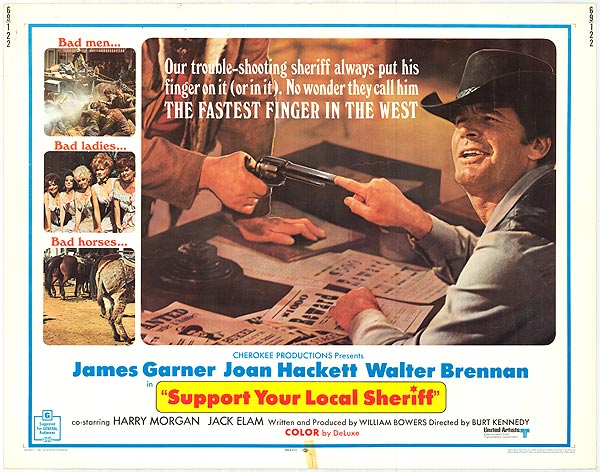
sup1

SUPPORT YOUR LOCAL SHERIFF! is played strictly for laughs. It’s broad performances and slapstick situations won’t strain your brain, but will give you an hour and a half’s worth of escapist fun. Easy going James Garner has the lead, with solid comic support from Joan Hackett, Walter Brennan, Harry Morgan, and Jack Elam. Director Burt Kennedy made quite a few of these, and this is probably the best of the bunch.

sup2

While burying an itinerant drifter, the townsfolk of Calendar, Colorado discover a mother lode of gold. The subsequent boom turns Calendar into a lawless, rowdy town that can’t keep a sheriff alive long enough to tame it. The town elders also can’t get their gold through without paying a 20% tribute to the mean Danby clan. Enter our hero Jason McCullough (Garner), who applies for the sheriff’s position “on a temporary basis…I’m on my way to Australia”.  Jason is a crack shot and fast…

View original post 576 more words

Lisa Reviews An Oscar Nominee: The Caine Mutiny (dir by Edward Dmytryk)


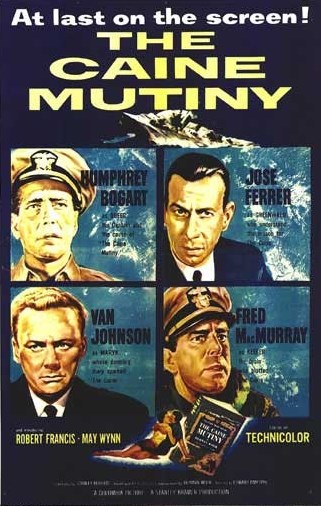
Mutiny_0

It’s the 1940s and World War II is raging.  The U.S. Navy is model of military discipline and efficiency.  Well, except for the U.S.S. Caine, that is.  The Caine is something of a disorganized mess, where no one takes his job seriously and sailors have names like Meatball (Lee Marvin) and Horrible (Claude Akins).  The men love Lt. Commander DeVriess (Tom Tully), largely because he has given up on trying to enforce any sort of discipline.  However, DeVriess has recently been relieved of his command.  As he leaves, Meatball gives him a new watch, a gift from all the men.  DeVriess admonishes them, snapping that the gift is violation of Naval regulations.  He then puts the watch on his wrist and leaves the ship.

DeVriess’s replacement is Captain Francis Queeg and, at first, we have reason to be hopeful because Captain Queeg is being played by Humphrey Bogart.  Surely, if anyone can get this ship into shape, it’ll be Humphrey Bogart!  From the moment he arrives, Queeg announces that he’s going to enforce discipline on the Caine and if that means spending hours yelling at a man for not having his shirt tucked in, that’s exactly what Queeg is prepared to do.  However, it also quickly becomes apparent that the awkward Queeg has no idea how to talk to people.  He is also overly sensitive and quick to take offense.  Whenever Queeg makes a mistake (and he does make a few), he’s quick to blame everyone else.

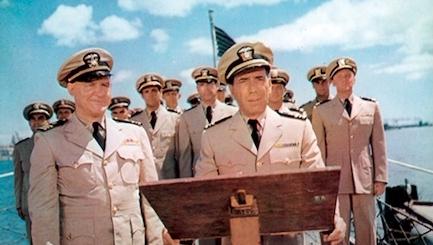
the-caine-mutiny-deck

Realizing that the men are turning against him, Queeg even begs his officers for their help.  He asks them if they have any suggestions.  They all sit silently, their heads bowed as Queeg somewhat poignantly rambles on about how his wife and his dog both like him but the crew of the Caine does not.

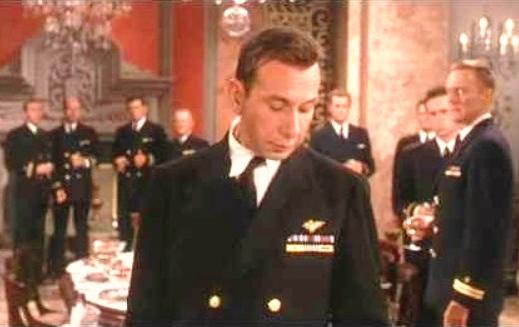
Queeg’s officers are a diverse bunch, none of whom are quite sure what to make of Queeg or the state of the Caine.  Ensign Willie Keith (Robert Francis) is a wealthy graduate of Princeton University who, at first, likes Queeg but quickly comes to doubt his abilities.  On the other hand, Lt. Steve Marsyk (Van Johnson) has doubts about Queeg from the start but, as a career Navy man, his natural instinct is to respect the chain of command above all else.

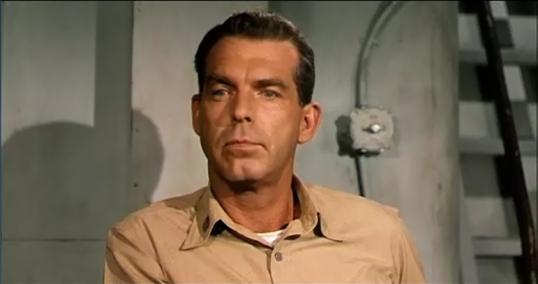
And then there’s Lt. Tom Keefer (Fred MacMurray).  Keefer is a self-styled intellectual, a novelist who is always quick with a snarky comment and a cynical observation.  (If The Caine Mutiny were remade as a B-horror film, Lt. Keefer’s name would probably be Lt. Sardonicus.)  From the minute the viewers meet Lt. Keefer, our inclination is to like him.  After all, he seems to be the only person in the film who has a sense of humor.  If we had to pick someone to have dinner with, most of us would definitely pick the erudite Tom Keefer over the humorless and socially awkward Francis Queeg.  As such, when Keefer starts to suggest that Queeg might be mentally unstable, our natural impulse is to agree with him.

It’s Tom Keefer who first suggests that it may be necessary to take the command away from Queeg.  And yet, when it comes time to take action, it’s Keith and Marsyk who do so while Keefer stands to the side and quietly watches.  And, once the Caine arrives back in the U.S., it Keith and Marsyk who are court martialed.  Will they be found guilty of treason or will their lawyer, Lt. Barney Greenwald (Jose Ferrer), prove that Queeg was unfit for command?

the-caine-mutiny-ferrer

Made in 1954 and based on a novel by Herman Wouk, The Caine Mutiny is one of those big and glossy 1950s productions that holds up a lot better than you might expect.  The film has its flaws.  In the role of Keith, Robert Francis is a bit on the dull side and a subplot in which he courts May Wynn feels unneccessary and only serves to distract from the main story.  But, for the most part, it’s an intelligent and well-directed film.  Humphrey Bogart turns Queeg into a pathetic and lonely figure and you can’t help but feel sorry for him when he talks about how his dog loves him.  Van Johnson also does well as Marsyk, effectively portraying a well-meaning character who is in over his head.  Jose Ferrer gets a great drunk scene at the end of the film and, of course, you can’t go wrong with Lee Marvin as a smirking sailor, even if Marvin only appears for a handful of minutes.

Fred MacMurray The Caine Mutiny

But for me, my favorite character (and performance) was Fred MacMurray’s Tom Keefer.  Technically, Keefer is not meant to be a likable character.  He’s totally passive aggressive.  He’s pretentious.  He’s smug.  At times, he’s rather cowardly.  And yet, Tom Keefer remains the most memorable and interesting character in the entire film.  He gets all of the good one-lines and MacMurray delivers them with just the right amount of barely concealed venom.  (“If only the strawberries were poisoned…” he says as he considers dinner aboard the Caine.)  It’s a great role and Fred MacMurray gives a great performance.  And you know what?  I don’t care how bad a character he may have been.  I still want to read Tom Keefer’s book!

The Caine Mutiny was nominated for best picture of 1954.  However, it lost to On The Waterfront.

Rolling In The Mud With “The Pigkeeper’s Daughter”


Ryan C. (fourcolorapocalypse)'s avatarTrash Film Guru

FIt0U8xXtUK4xt_99_a

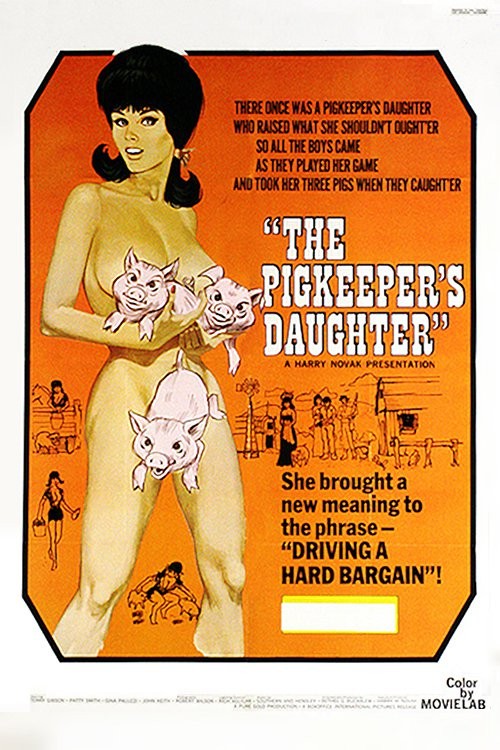
Voluptuous farmer’s daughter Moonbeam (played by Terry Gibson) has what passes for a “problem” in backwoods country in 1972 — she’s all of 19 years old and still unmarried. Needless to say her parents, Mr. and Mrs. Swyner  (Bruce Kimball, working under the pseudonym of “Buck Wayne,” and Gina Paluzzi, respectively) are worried about this situation to no end, but what they don’t know is that their darling not-so-little girl is getting it on with every single swinging dick the countryside has to offer, including those between the legs of local yokel stud Jasper (John Keith — who makes time with every chick in the movie), another dimwit named Wyngate (Paul Stanley —  don’t get excited Kiss fans, not that one), and even, when she drifts off to dreamland, an imaginary handsome prince (Nick Armmans) who used to be not a frog, but her prize porker, Lord Hamilton.

Running concurrently…

View original post 533 more words

Hallmark Review: The Sweeter Side of Life (2013, dir. Michael Damian)


IMG_6722

I remember sitting in a theater back in 1995 watching Clueless for the first time. I really enjoyed it and can still enjoy it today. Cher was certainly pampered, rich, and a bit of ditz, but she never lost her lovability. We could always tell there was a smart and wonderful person just underneath her exterior. We understood and believed her transformation from the superficial to the person we could see from the beginning waiting to spring forth from just under her persona. Even in the poor man’s Clueless that came out last fall on Hallmark called Harvest Moon they created a character that we could find endearing on some level. The Sweeter Side of Life does none of these things.

Just before showing that title card we are introduced to our main character named Desiree Harper (Kathryn Morris). We see her turn off her fancy alarm clock with a fancy watch sitting just next to it. Then we see that she not only sleeps with a sleep mask on but a pillow of sorts that wraps around her neck. Something someone uses for pain problems, but here is supposed to show just how rich she is. Then the typical walk-in closet scene happens while a maid cleans the New York City apartment where she lives. But she’s not unlikable enough yet.

IMG_6747

That’s why we get this scene with her friends at the gym looking at an overweight woman while debating the maximum weight allowed for wearing latex. This is followed by the shopping montage before she sits down at a lunch with her friends. One of them is seeing a guy named Renaldo who they just found out has three kids and a wife back in Argentina. Another friend says, “Who cares as long as his family stays over there, right?” Our lead who is already unbearable says she’d care. That’s the one hint at this point that there might be a decent person in there. I know I can’t really get across how she manages to be so darn unpleasant already, but take a look at her.

IMG_6761

Actress Kathryn Morris may be the nicest person in the world in real life, but her appearance combined with the way she acts in only these first few minutes makes it really hard to warm up to her. She goes home and finds her husband missed their anniversary for a last minute surgery so she gets drunk for the night. Couldn’t care less at this point.
IMG_6780

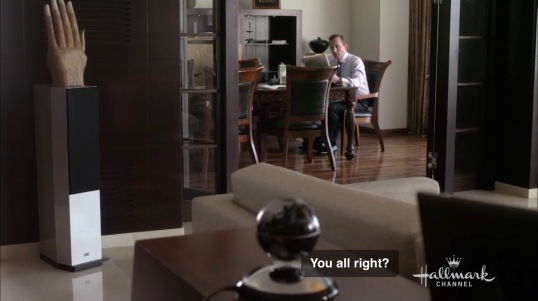
The next morning she finds her husband at the dinner table and we see that they have a giant hand sculpture in the house. That’s interesting. Now we find out that her husband is going to leave her for his 20 year-old acupuncturist Olive. Here’s my requisite joke that he has also been sticking her with a little needle too. Couldn’t let that go. Now we get to the best character of the film.
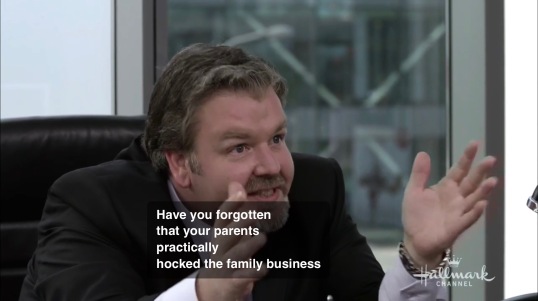
IMG_6823

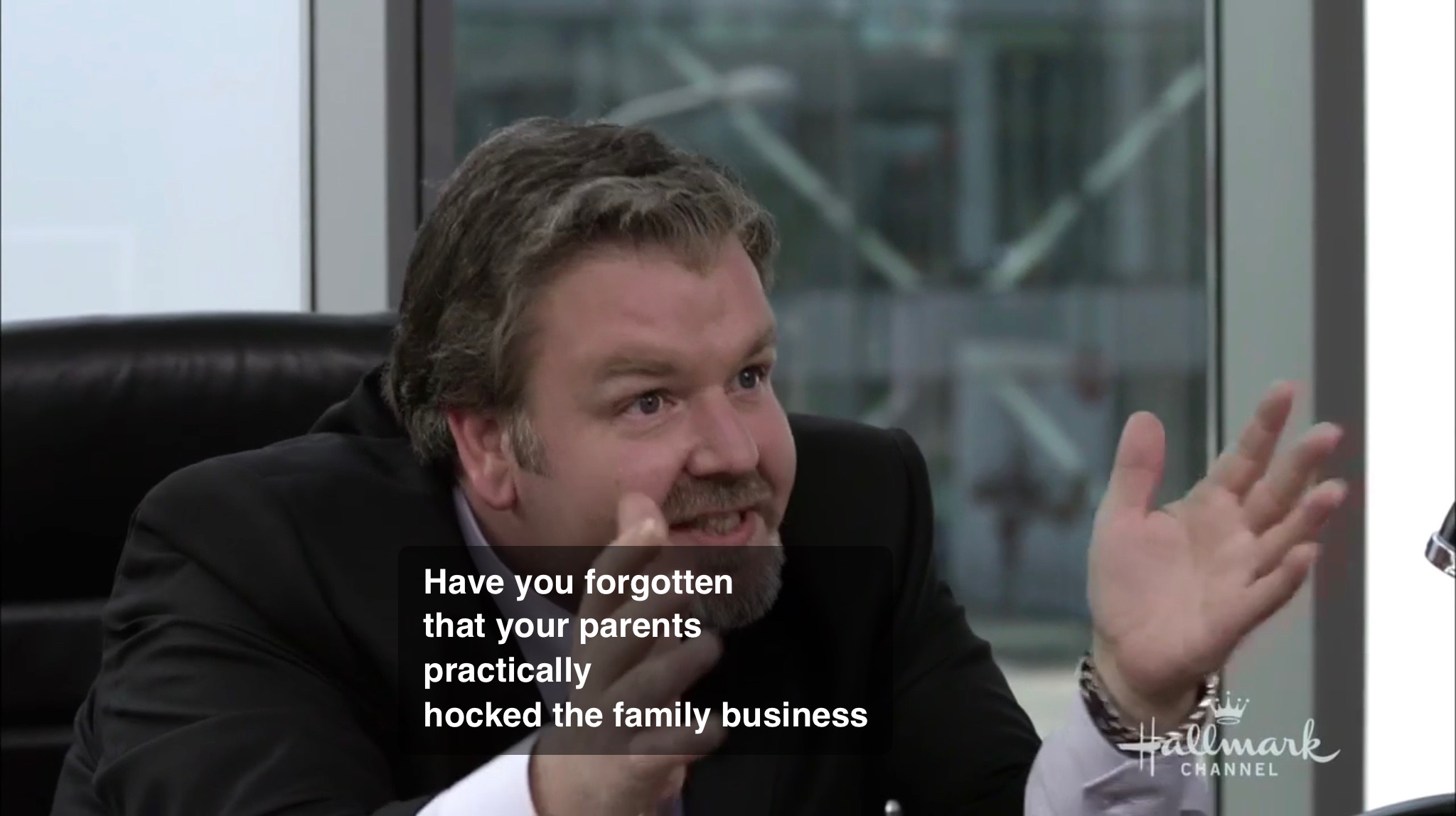
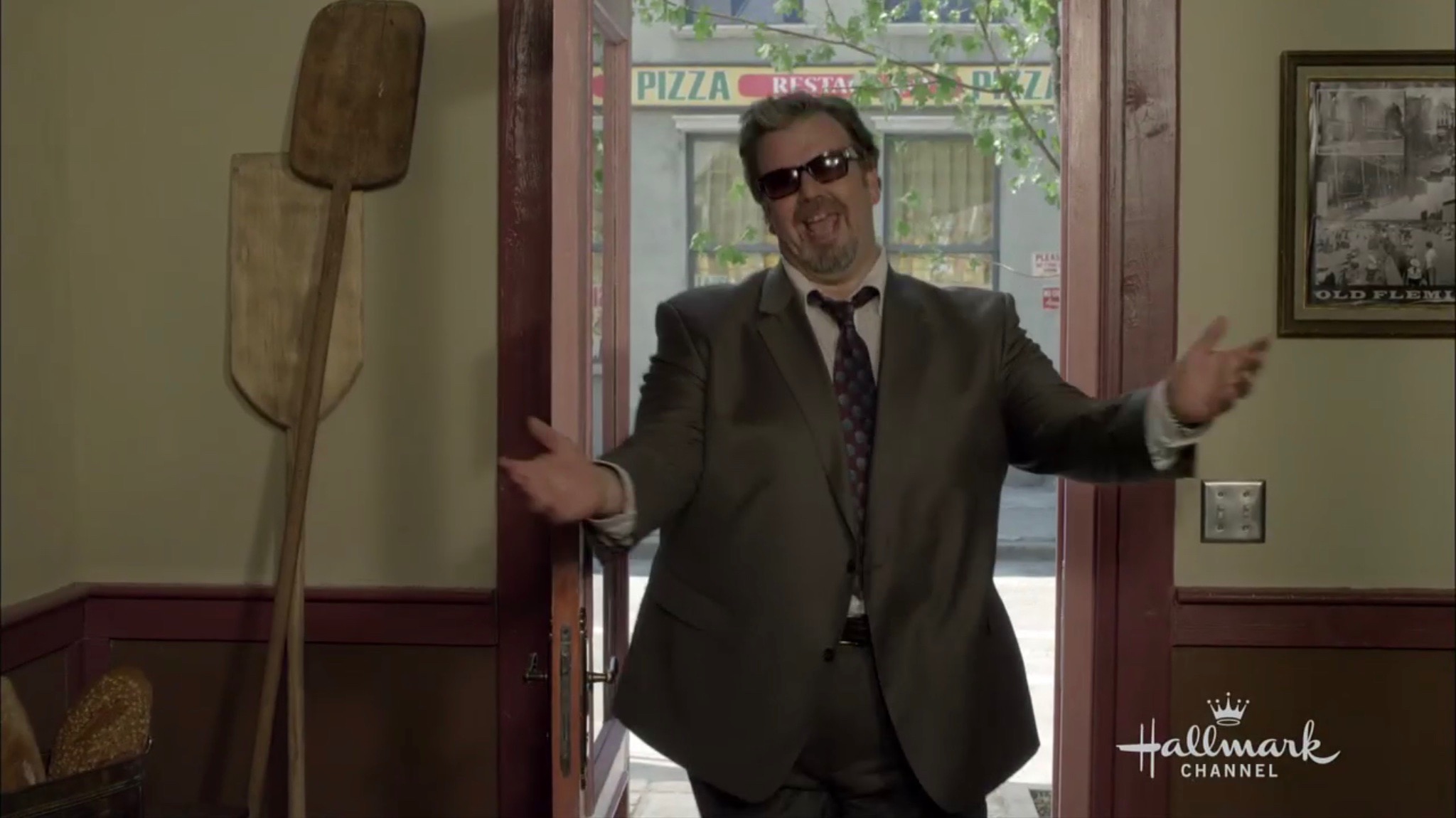
This is her somewhat slimy, comical, and lovable lawyer. If they could make his character this way, then why couldn’t they write her the same way? He’s here to remind her she signed a prenuptial agreement. The movie will never bring up whether the agreement had anything in it about adultery which is weird. He also reminds the audience that her family bent over backwards to send her to Columbia where she obtained an MBA which she never used. She says that the interview would ask her about job experience and that all she has experience in is shopping. There are jobs where that actually is a skill, but they don’t bring that up even though I have seen a Hallmark movie with a personal shopper (12 Gifts of Christmas). He asks her where the girl he knew in elementary school went. However, he doesn’t give us any details which would have been really important so we could see beyond her nasty exterior.

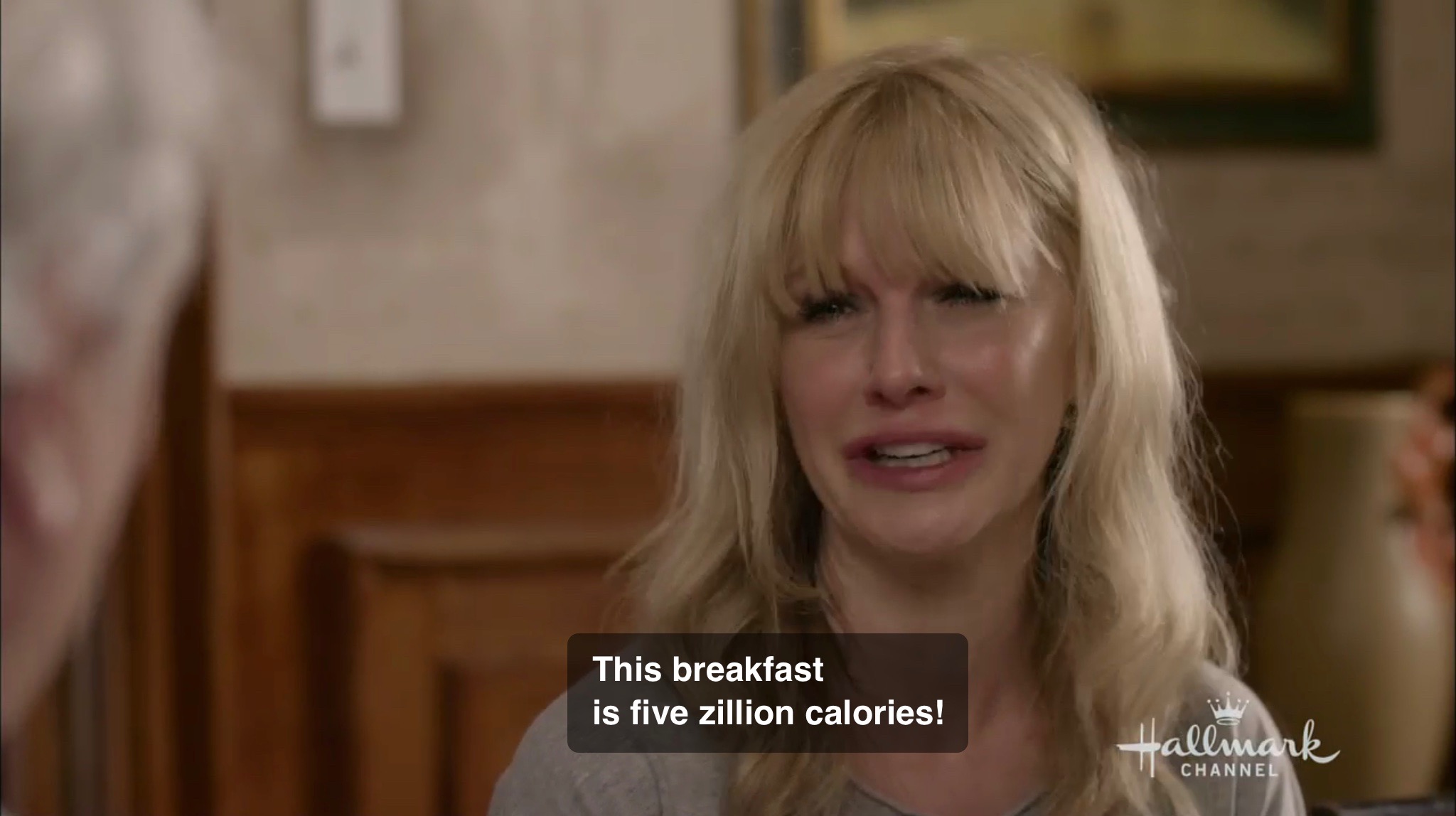
Now of course her credit card is taken away from her, she gets hit by a car, and she wakes up in New Jersey with her dad. Her family hasn’t changed her room since she was little. That’s nice. Her father even has breakfast ready so what are some of those first words out of her mouth?
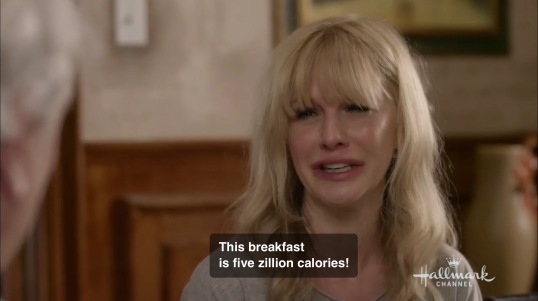
IMG_6906

Oh, and the fact that the husband said she shouldn’t drink so much dairy before dumping her doesn’t make this line any more digestible. She moans and groans including that she was a good wife. Could have been helpful for us to see something that hinted at her being a good wife. All I saw was body shaming and shopping. She wonders how she is going to support herself. The father reminds her that she knows how to bake. He runs a bakery. Since she hasn’t been shell shocked enough, we need to have her do some deliveries using the local florist’s car. This really only exists so she can meet a love interest. Yes, this movie will ask us to buy that this guy…
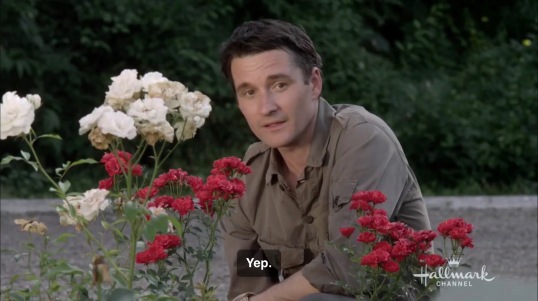
IMG_6984

should have any reason to want to be with her, despite only being in a couple of scenes together. He’s rich too. Of course their first meeting has her hitting and knocking down his bird house.

IMG_6978

I think the screenwriters may have seen Clueless. Here she was looking at someone getting into a chopper and saying she wants the rich life back before hitting the bird’s nest. Love?

She makes it back alive and we get a proper introduction to the florist. She is also a reasonably likable character especially because we find out she’s smart and cultured even when it comes to rap music.

Now we get a weird scene. The movie will never follow this scene up either to really explain it. There’s a black kid who works at the bakery. She catches him presumedly stealing from the register, but covering it up by saying that it has just been popping out on it’s own. This is never followed up on even though he asks if he can take on more duties than just cleaning up and that his family needs the money. Is the film saying he was going to steal and that she is helping him or not? And the fact that someone immediately comes up to the register, the drawer pops open, and he says it’s doing that again and needs to be fixed doesn’t help. Was this supposed to say that Desiree was racist? It doesn’t make sense. Especially when we will see her help a black policewoman by giving her one of her outfits a little later. A character that will come around at the end of the film in a relationship with the lawyer. Honestly, the movie would have made a lot more sense had she ended up with the lawyer who bends over backwards for her and has an affection for her. Also, remember Cher’s father was a lawyer in Clueless. I’m sure it’s just a coincidence.

Anyways, it’s time to learn that Desiree is still stuck up because she wants to straighten her hair? I don’t get that at all. But what I really don’t get is why her hair dryer is shaped like a gun.
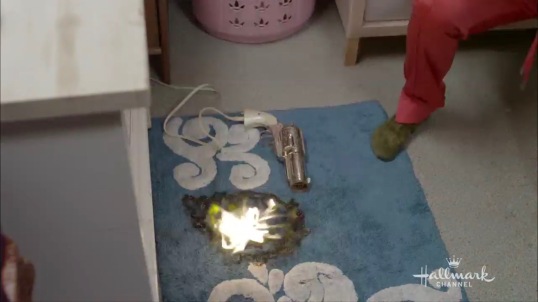
IMG_7062

Then in case we didn’t know the dad is really supposed to be, dare I say, clueless, he apparently had no idea that some clothes have to be hung to dry and has shrunk one of her dresses. What? He raised her and isn’t gay or anything so he was a married to a woman. Not that there aren’t men’s clothes that aren’t supposed to be put in the dryer as well. It’s just a really stupid scene that just tells us she still hasn’t changed and her dad is supposed to be so different because he is an idiot. Actually, this scene exists just so that the next ridiculous thing can happen on her way to meet with lawyers in the city.
IMG_7097

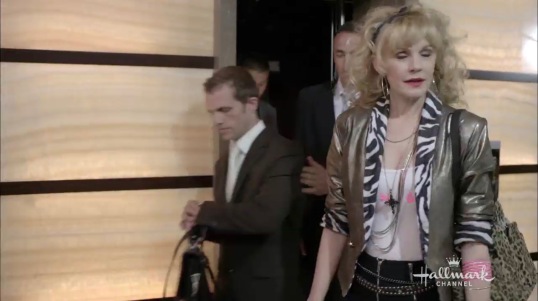
She has to wear the same clothes she wore when she lived with her father back in the 1980s cause she’s wearing the early Madonna clothes. Not funny, and nor did I feel sorry for her when one of her friends brushes her off because of her fall from riches. Oh, and when they have her walking through the crowded sidewalks they do it in slow motion with upbeat I’m going to show them music, but why? She hasn’t changed at all. She shrieked at the reality of having to wear the clothes and just finished complaining about her hair dryer as well as her father’s incompetence. Why use this type of shot that is normally reserved for someone full of confidence? Makes no sense.

Oh, and small complaint, but her former friend tells her the 80’s have come and gone twice after looking at her outfit. Can someone please tell that to all the woman I see with off the one shoulder tops in modern movies? This lady is right. It’s not the 1980s all over again. While we’re here. One of the things that made Clueless so good is that part of Cher’s transformation is to stop seeing and treating her friends as superficial and start to appreciate the good and special things about them. Why is it necessary to lump all her former friends in the trashcan for characters as deep as a puddle who we are supposed to accept as better simply because they live in New Jersey?

She now goes in to meet with her husband’s lawyer and you know why nothing is brought up in her defense? Like the adultery for example. It’s because the lawyer comes in and is stoned after a dental visit. Yep. The only thing of value here is that we find out Olive is pregnant.
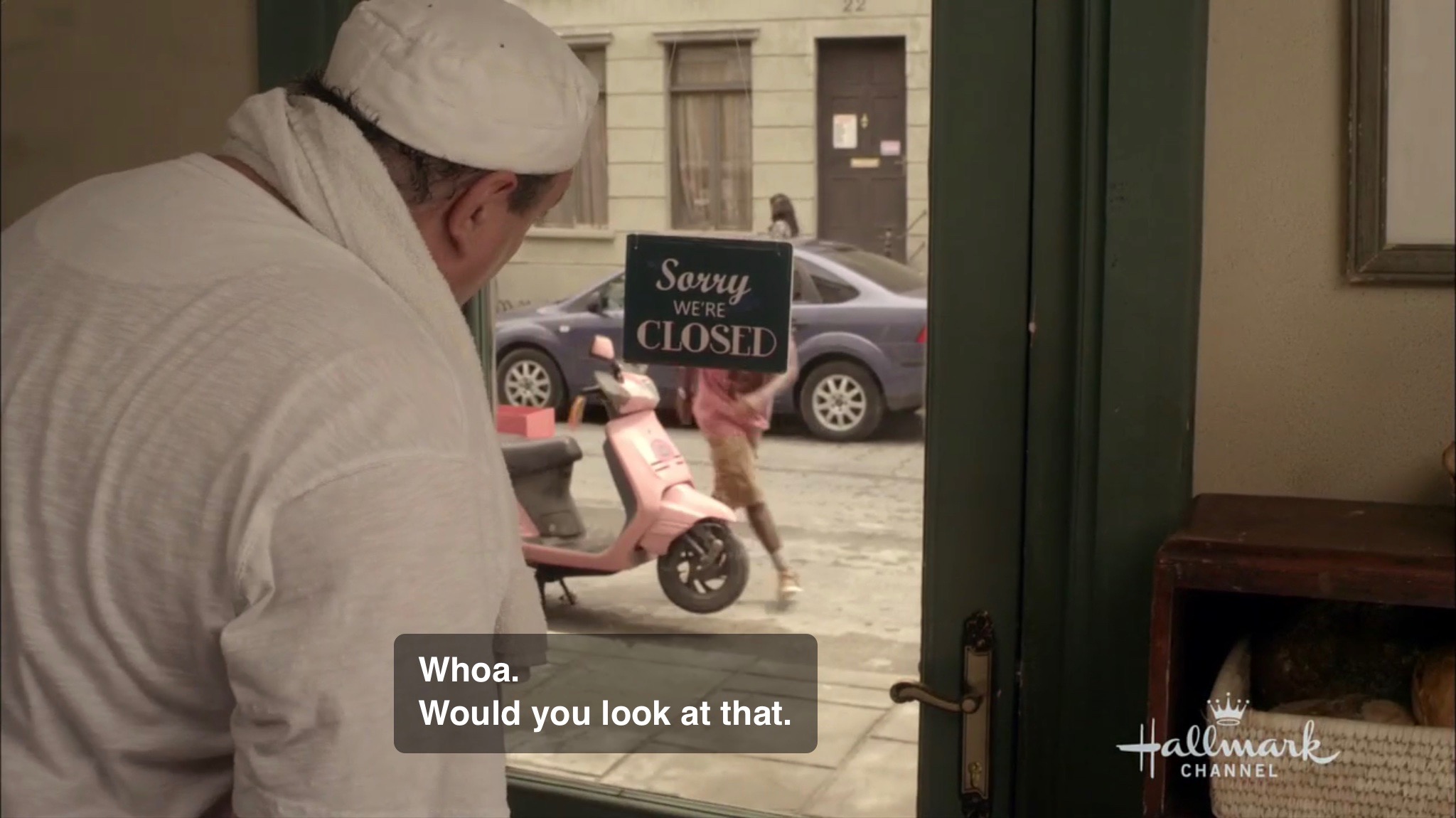
IMG_7156

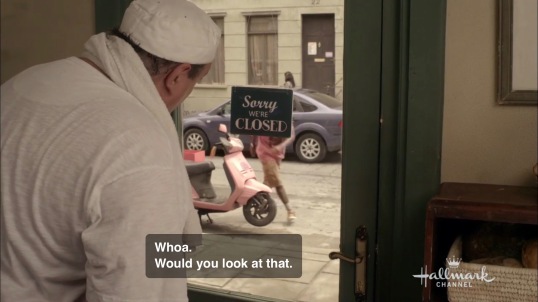
After a kitchen accident which isn’t funny, it’s time to insult the black kid who shows up on a pink scooter. He’s wearing pink too. Just in case we thought this was a meaningless little joke it immediately cuts to two guys at the counter where one says to the other “I want the fruity one” to which the other replies “I pointed to it first.” Yeah, that’s great. They do come across as if they are supposed to be a couple. Wouldn’t have been an issue if they hadn’t just harassed the kid about the pink. In fact, it would have made them seem progressive seeing as they don’t seem to have any reaction to these two guys. If you think I might be reading too much into this, then go watch the Hallmark movies Nearlyweds with it’s really gay stereotype hair dresser or Strawberry Summer where the singer has to assure the country folk that he doesn’t come from “those parts” of New York City but “the good parts.”

After people talk behind Desiree’s back, she gives them a piece of her mind, and a nun pops out of nowhere for comedy, the florist sits down with her to have a heart to heart. And by heart to heart, I mean insult her for standing up for herself. She even says that while they may have deserved it, her father certainly didn’t. Oh, that’s nice except nothing she said was directed at her father, he was there to hear their insults, and he doesn’t defend her after she stormed out, but simply asked who’s next. She then insults her for her supposed lousy work ethic. Really? When? When she did her father’s deliveries even though she knew she was out of practice driving or maybe when she tried baking even though she really has no experience in it. That and covering the counter for him. Yes, lousy work ethic indeed. By the way, Desiree still manages to be unlikable even though she doesn’t deserve this from the florist. We also discover that her father’s business isn’t doing so well. She says she had no idea since why would she. The florist tells her because she didn’t even bother asking. Somewhere during this, when even the audience is given no reason to believe his business is in trouble, she was supposed to ask him about it while also dealing with all these other things. I don’t like her, but cut her a little slack for crying out loud.

Now she seems to take an interest in her father’s business. That’s nice, but now bird house boy named Benny/Benoit stops by. We find out that he’s rich. Yep, she’s going to go from a rich guy in the city to a rich guy in the “suburbs”/”country” of New Jersey. During this scene he hands her a check to settle his account for the month. He’s a major chef and the scene leads us to believe he’s buying his stuff from them seeing as he is giving them a check. Why is the father’s business in trouble? Is this meant as a handout? He asks for her phone number here so is he trying to buy her or lure her to him with his money?

I keep bringing these things up because this movie keeps doing stupid things throughout it. She’s still rather insufferable too.

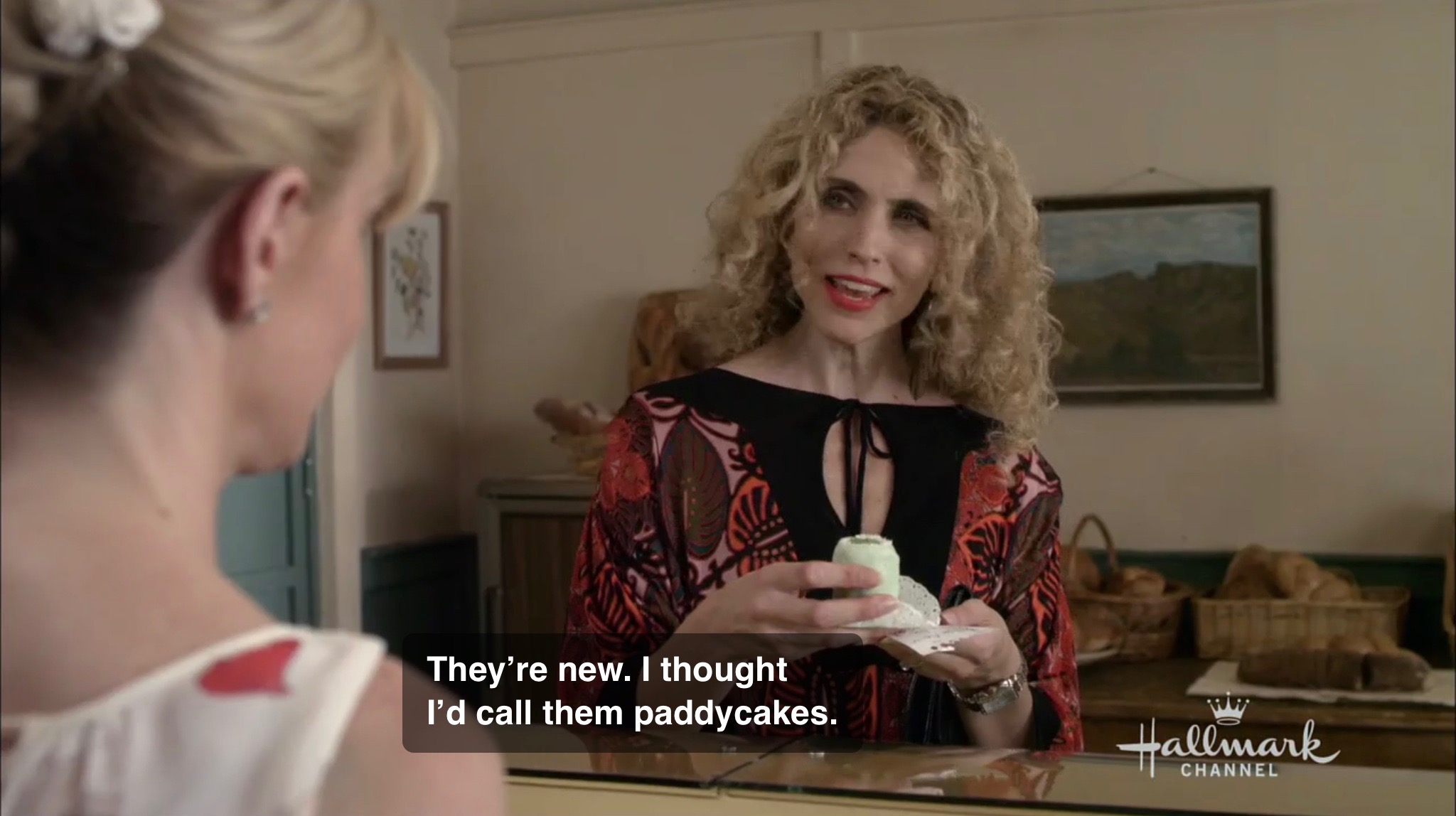
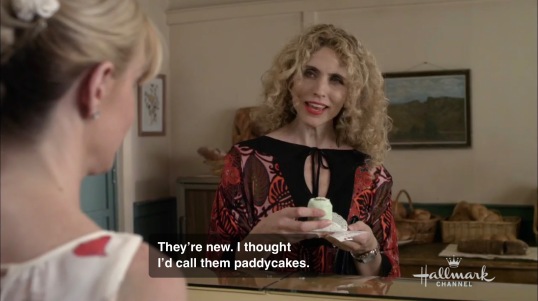
Now out of nowhere she is suddenly making these lovely little pastries that will be called Paddycakes after her father Paddy even though only a few minutes ago she was a disaster in the kitchen. Yes, these paddycakes will be the savior of the bakery. That’s because of this lady.
IMG_7271

She is very impressed, and of course will turn out to be a newspaper writer later on.

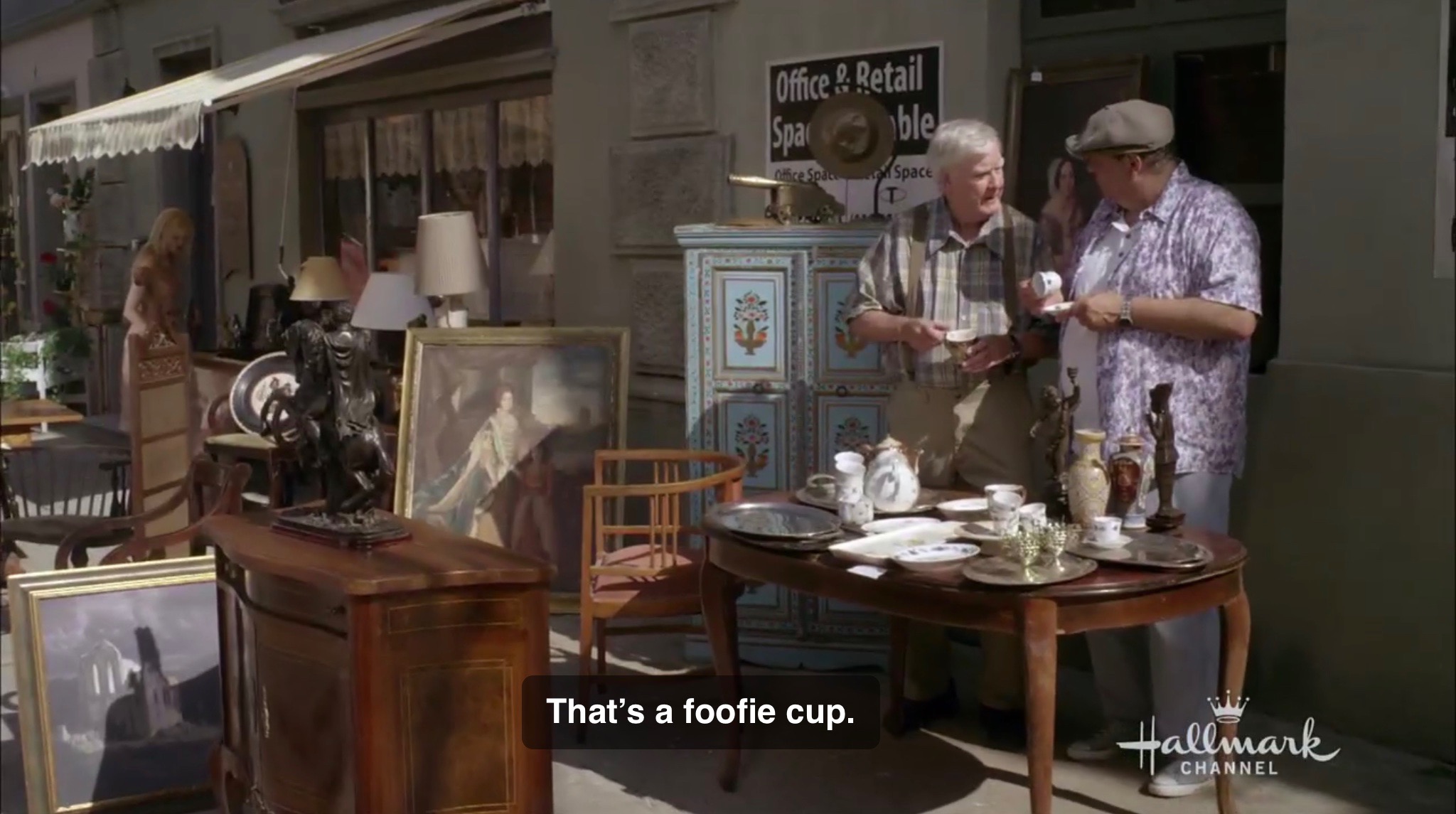
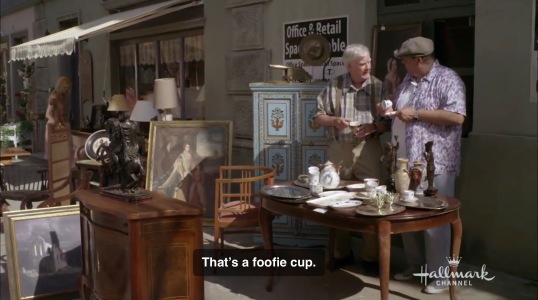
After stupid dancing and shtick, the lawyer shows up again to remind us he really is the only character we enjoy in this movie. Oh, but before that we need to get in another homophobic bit.
IMG_7285

At least the guy says he knows but still likes coffee in a cup like that to which the father responds, “good grief”. The rich guy again shows up to get her phone number and the instant she says he still can’t call her, he just walks away.

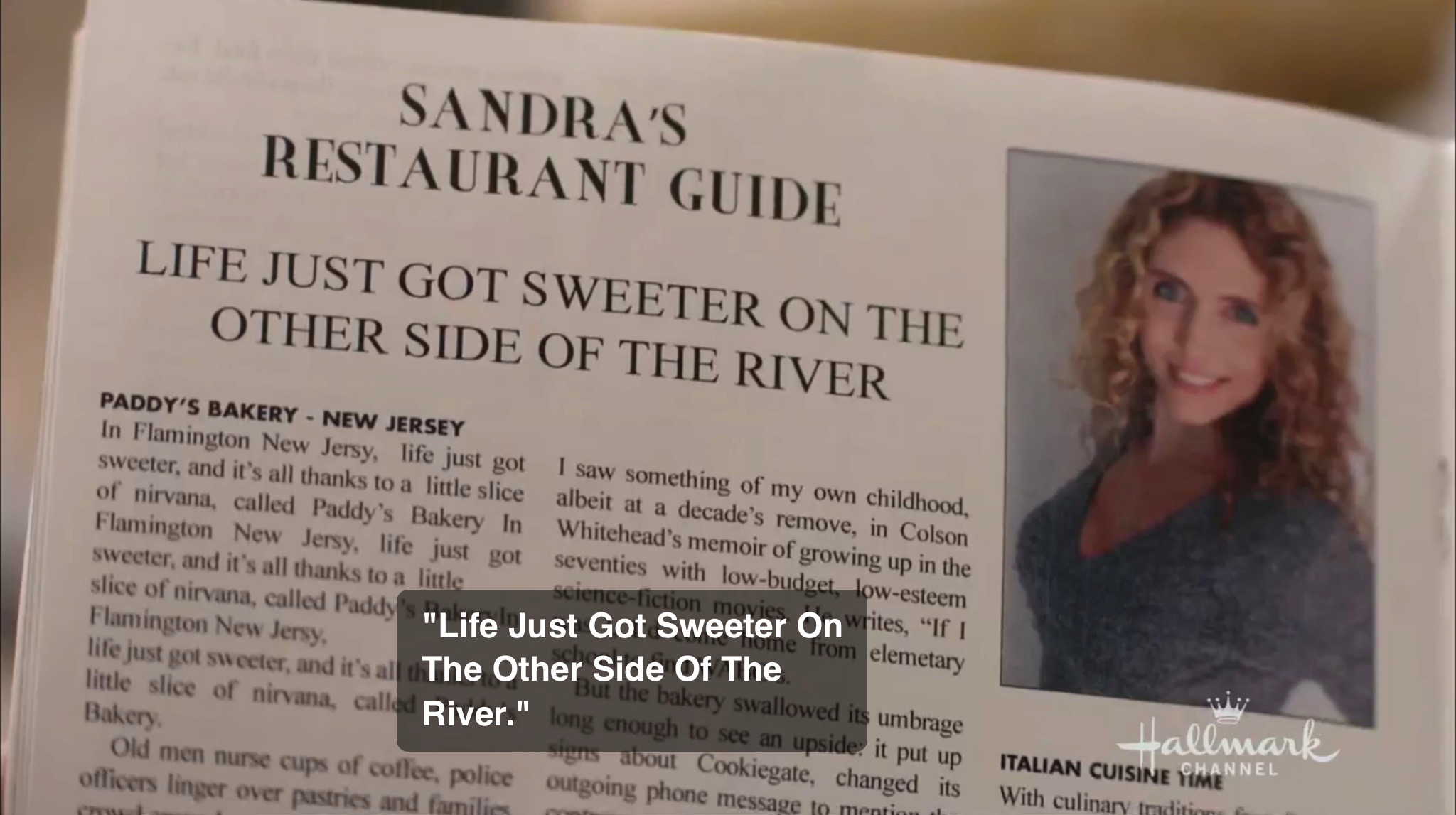
When the lawyer shows up, the joint is apparently doing really well now. Those must be some paddycakes. A few scenes, then the article comes out in the newspaper! Just look!
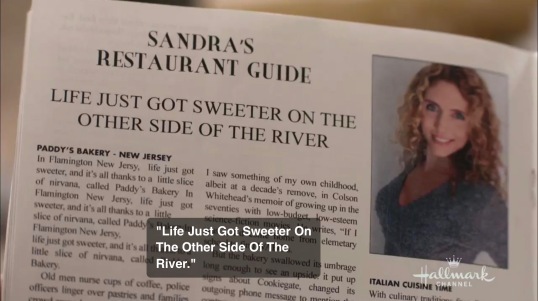
IMG_7357

The bakery is so great that it had to repeat “In Flamington New Jersy, life just got sweeter, and it’s all thanks to a little slice of nirvana, called Paddy’s Bakery” three times! But what is the rest of the article here? I’m telling you, Darcy from A Gift Of Miracles is everywhere and she can shapeshift into other people too.

-The “Old men nurse cups of coffee, police officers linger over pastries and families…” come from a New York Times article by Rebecca Flint Marx.

-The “I saw something of my own childhood, albeit a decade’s remove, in Colson Whitehead’s memoir of growing up in the seventies with low-budget, low-esteem science-fiction movies. He writes, ‘If I was lucky, I’d come home from elementary school to find WABC’s…” comes from a New Yorker article written by Richard Brody.

-The “But the bakery swallowed its umbrage long enough to see an upside: it put up signs about Cookiegate, changed its outgoing phone message to mention…” comes from a New York Times article by Michael Barbaro.

The second one makes sense…sort of…since the magazine the article is in is supposed to be The New Yorker.

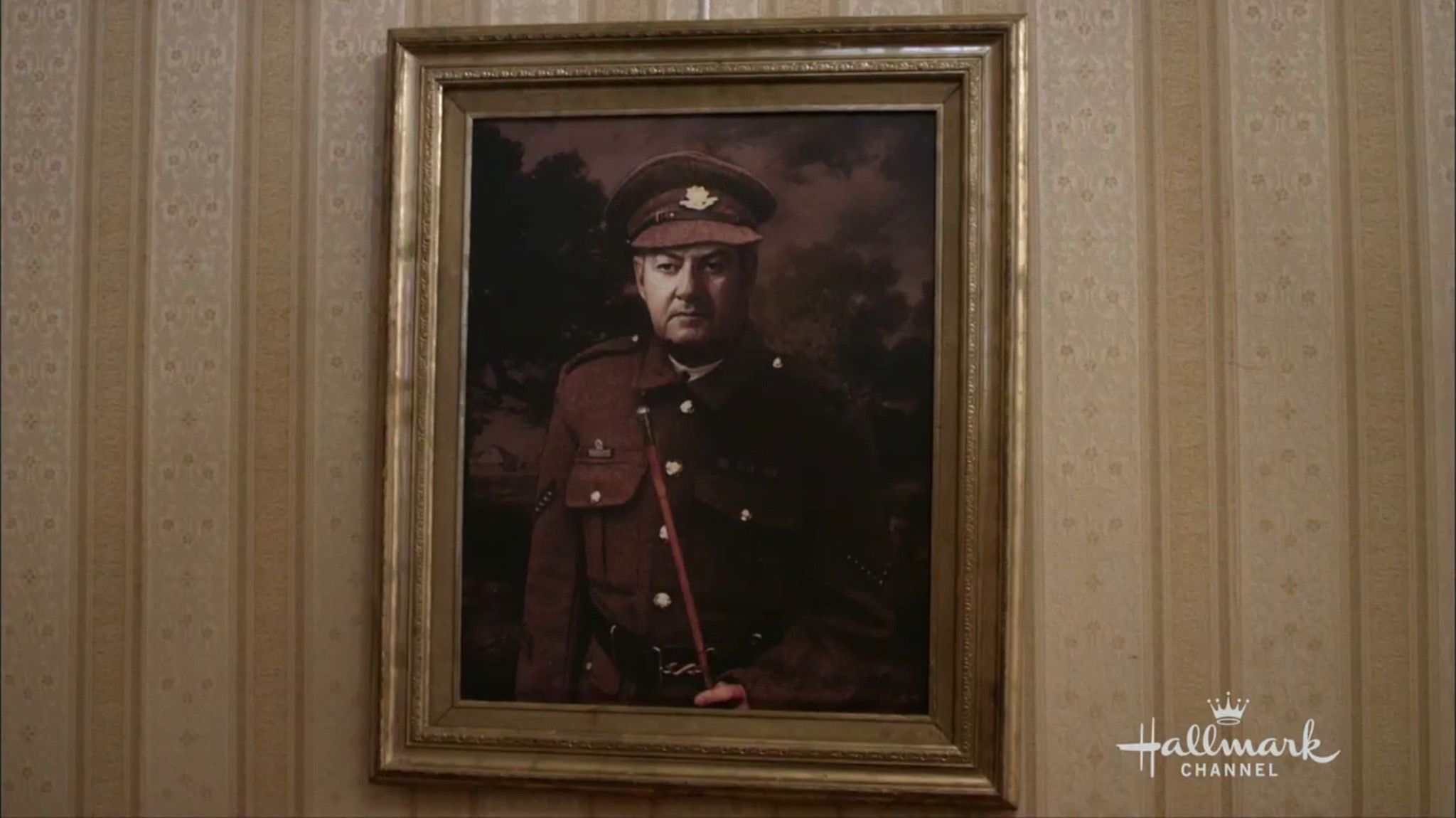
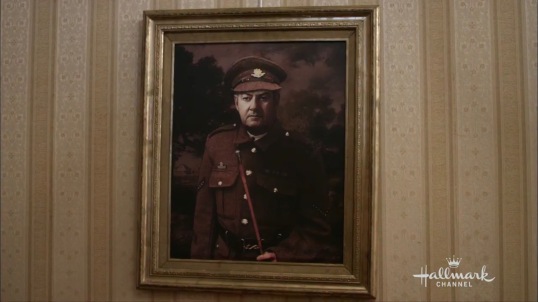
Now it’s off to dinner with Benny. She even fixed his birdhouse. This is when something weird happens yet again. Her and Benny are going down a hallway to have some privacy when she notices an open door with an office inside. He quickly closes it saying she doesn’t want to look at it which she responds with an odd “okay”. Now we find out for sure he’s single. Then they make out. Now she notices this painting as she is pinned against the wall being kissed.
IMG_7402

He says it’s his great uncle. What was all that about? Is this supposed to imply his family was involved with the Nazis via the Vichy regime? I don’t really recognize the uniform. What was the point of the office and painting? It doesn’t make sense and is never brought up again.

After we have a stupid conversation about waiting three days before calling up Benny, the lawyer calls to tell her he has a deal to “franchise the bakery”. The father just sends her. Doesn’t come along at all. I know I can’t possibly get this across, but the movie really hasn’t given us any reason for this. He even corrects her when she says it’s not his bakery, but their bakery. Then doesn’t that mean he should be there even more? I know it’s supposed to show he trusts his daughter, but we don’t have any real reason too as the audience.

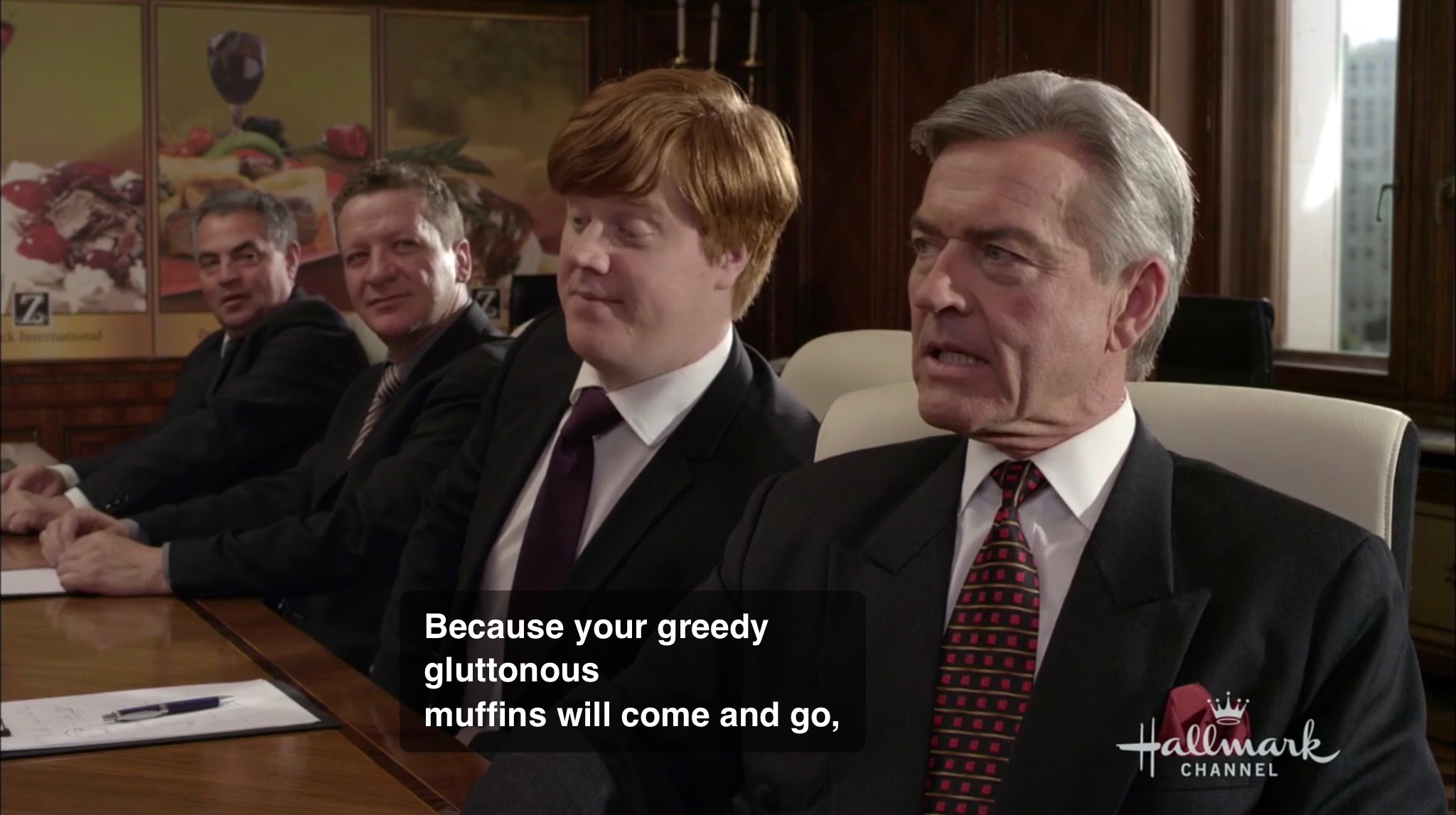
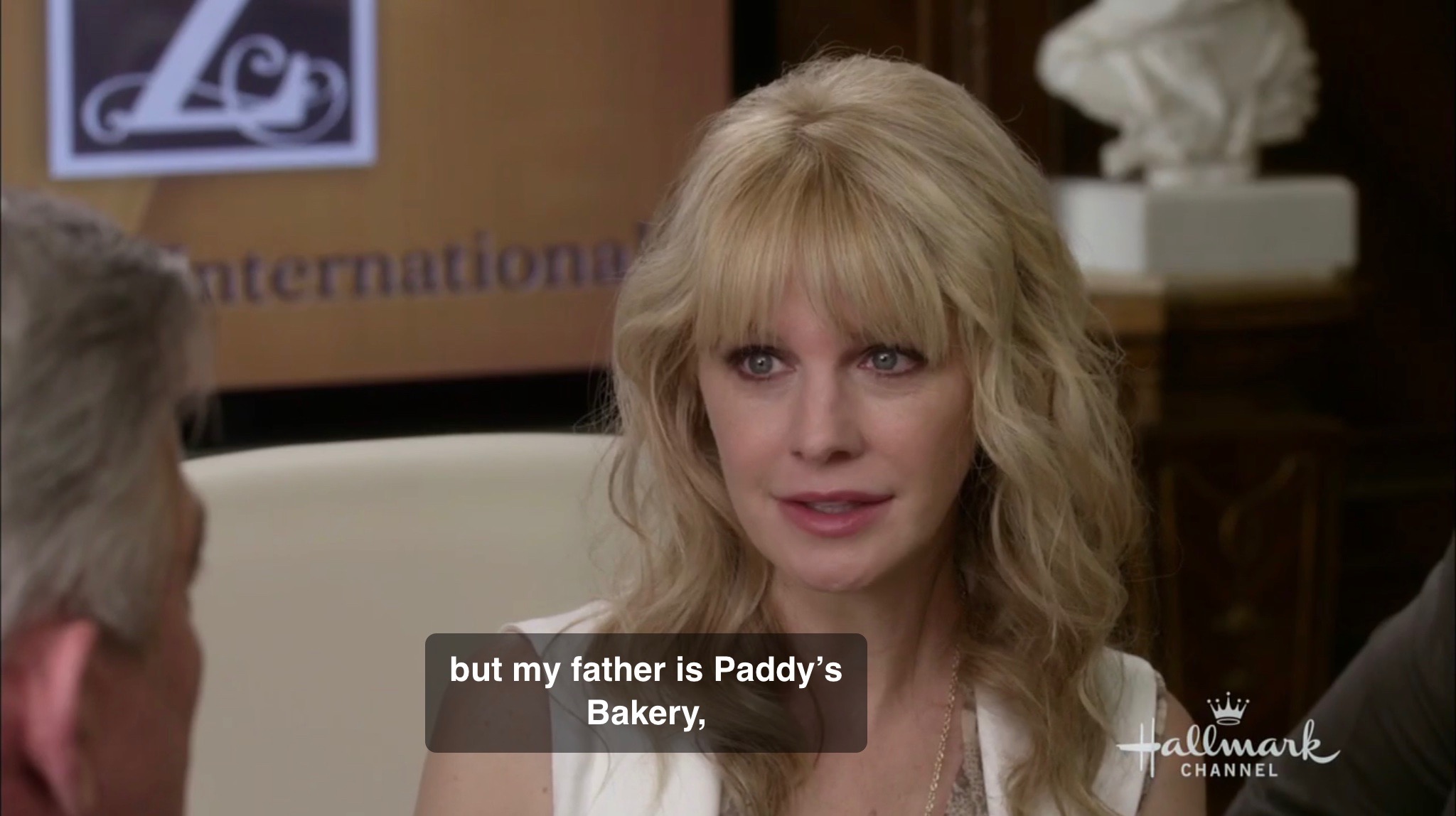
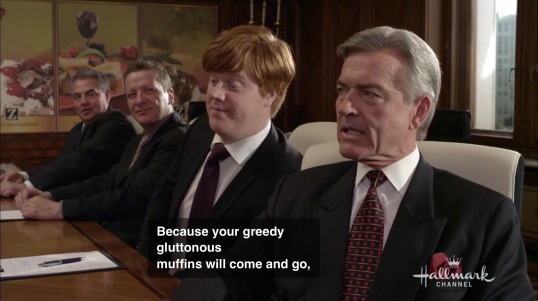
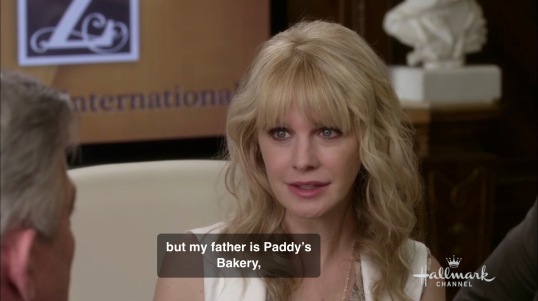
Of course big city folks meddling in small businesses are usually portrayed as evil, so she turns down their deal.
IMG_7482

IMG_7483

You’ll have to take my word for it, but these are the only lines in this that she delivers that are done right. They make sense, we feel that she really believes in what she is saying, and we finally see some believable change in her character. Why couldn’t this have been going on throughout the movie? I don’t get it.

She goes home when the husband shows up. No reason given for why he shows up other than that Olive dumped him and the pregnancy was fake. That’s nice, but the only thing we saw Desiree do prior to being dumped is spend his money in the short time we spent with her prior to the breakup and we could hardly stand her afterwards. Again, it doesn’t make sense. We just are supposed to believe from their really short little exchange that she brought something to the marriage that he would want back. Just a simple scene where we at least see her being used as a trophy wife would have gone a long way.

Obviously she shuts him out, she winds up with Benny, the lawyer shows up with the policewoman from earlier, they dance out the door of the bakery, Desiree and Benny kiss, etc.

This movie sucked. Plain and simple. In the end, she has changed, but it’s too late at that point. Go watch Clueless or Harvest Moon instead.

Now a tribute to the best character in the entire film: the lawyer played by Steve Varnom.
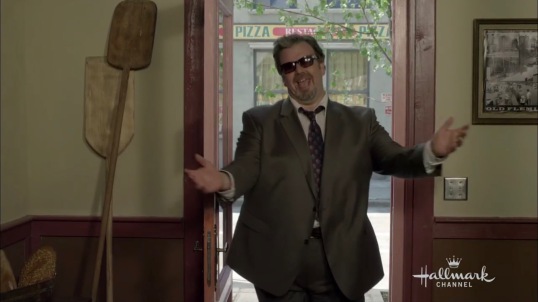
IMG_7571

The First Western: Edwin S. Porter’s THE GREAT TRAIN ROBBERY (1903)


1w

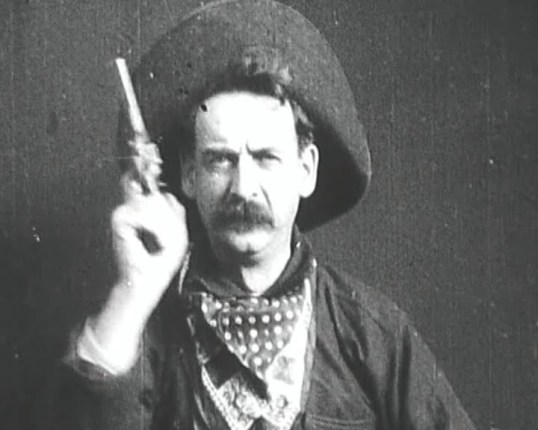
THE GREAT TRAIN ROBBERY is considered the world’s first Western. Film pioneer Edwin S. Porter made this little gem in the wilds of New Jersey, with additional scenes at Thomas Edison’s studio. It’s the first film to have some kind of narrative, and features in it’s cast future cowboy star Broncho Billy Anderson. Crude by today’s standards, this history making ten minute short was a technical marvel in its time,  with Porter was the first to introduce cross-cutting and panning to the screen. So without further ado, enjoy  1903’s THE GREAT TRAIN ROBBERY:

4 Shots From 4 Films: The Elephant Man, Blue Velvet, Twin Peaks: Fire Walk With Me, Mulholland Drive


4 Shots From 4 Films is just what it says it is, 4 shots from 4 of our favorite films. As opposed to the reviews and recaps that we usually post, 4 Shots From 4 Films is all about letting the visuals do the talking.

Happy birthday, David Lynch!

4 Shots From 4 Films

The Elephant Man (1980, directed by David Lynch)

The Elephant Man (1980, directed by David Lynch)

Blue Velvet (1986, directed by David Lynch)

Blue Velvet (1986, directed by David Lynch)

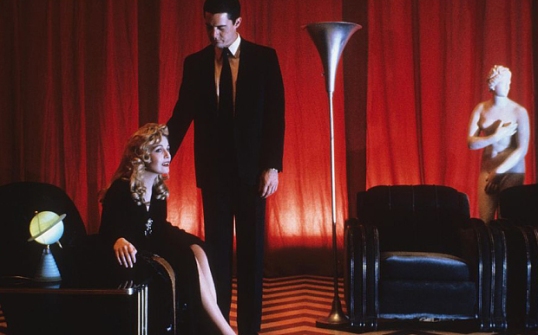
Twin Peaks: Fire Walk With Me (1992, directed by David Lynch)

Twin Peaks: Fire Walk With Me (1992, directed by David Lynch)

Mulholland Drive (2000, directed by David Lynch)

Mulholland Drive (2000, directed by David Lynch)