Review: Pyramids – A Northern Meadow


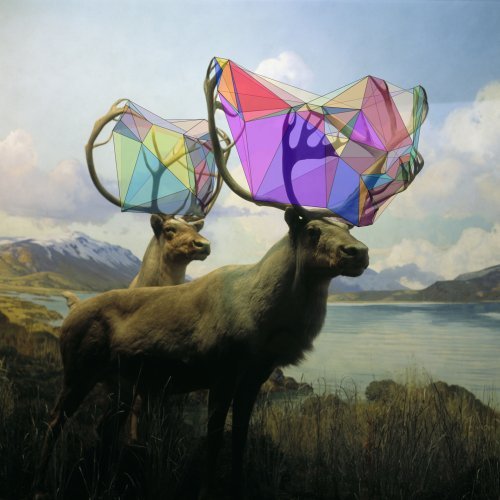
Pyramids are four seemingly random Joes from Denton, Texas, who have managed to attract some huge names in the world of music, possibly through their completely ridiculous album covers. Well, maybe not that, but the genre-defying oddity known as Pyramids and their associated acts have shown an uncanny knack for recruiting stars to their projects. Originally signed to Aaron Turner’s (Isis, Old Man Gloom) acclaimed Hydra Head Records, they managed a transition to metal’s newest cutting edge label, Profound Lore, as soon as the former went defunct. Their self-titled debut in 2008 scored Colin Marston (Krallice), Vindsval (Blut Aus Nord), and Justin Broadrick (Godflesh, Jesu), among others, to contribute to a remix album, while band leader R. Loren’s White Moth and Sailors with Wax Wings projects have featured David Tibet (Current 93), Alec Empire (Atari Teenage Riot), Jonas Renkse (Katatonia), John Gossard (Weakling), Simon Scott (Slowdive), Hildur Guðnadóttir (múm), and Aaron Stainthorpe (My Dying Bride), to name… a few? The 2009 follow-up, a collaborative album with Nadja, featured Simon Raymonde (Cocteau Twins), and there’s an Ulver remix of it floating around out there. They also lead some cassette tape project with 49 bands I’ve never heard of and This Will Destroy You.

In spite of the absolutely ridiculous, confounding string of names I just threw out, this band remains pretty damn obscure. A Northern Meadow, their first full-length since 2009, may well change all that, with positive reviews on sites like Pitchfork Media ensuring them a moment in the spotlight. Moreover, Colin Marston and Vindsval are active guest musicians this time, with pretty encompassing roles.

track: “In Perfect Stillness, I’ve Only Found Sorrow

The opening track, “In Perfect Stillness, I’ve Only Found Sorrow”, kicks off with Marston’s quintessential tremolo and Vindsval’s equally iconic drum programming, while R. Loren’s vocals quickly cue us into the fact that this isn’t going to be a straight metal album. Instead, we face a prolonged melancholy that finds its essence in the vocals and never really resolves into anything. This brooding approach carries throughout the album, but as the minutes tick by you can notice a slight sort of development–little hints at a more complex animal below the surface. “The Earth Melts Into Red Gashes Like The Mouths Of Whales” rises out of the plod for thirty seconds of really catchy guitar before dissolving back into bleak noise. “The Substance Of Grief Is Not Imaginary” feels like a Blut Aus Nord song in slow motion, offering all of their accustomed madness with none of the speed or volume, while Loren briefly confounds the mood with a really beautiful but short lived vocal melody. “Indigo Birds” extends the vocal presence, with Loren singing longer with more effects and range. As the song dissolves out into distorted droning and ultimately three minutes of dissonant synth, the album approaches a modest transition in character. The interlude resets the mood, allowing the remainder of the album to take, I think, a slightly more abrasive or confrontational approach.

Track: “I Am So Sorry, Goodbye

The second half of the album is more distinct, with more drive in the guitar and a faster rate of transition. “I Have Four Sons, All Named For Men We Lost To War” starts off with the most crushing tones on the album, enhanced in their finality by the still slow pace set by Vindsval’s drums. “I Am So Sorry, Goodbye” has a really memorable industrial groove, with some synth tones that invoke for the first time in me a real vision of something… perhaps ancient, a sort of primordial ruin made all the older by Loren’s forlorn, beautiful vocals. Like “Indigo Birds”, the song dissolves out into low-tuned guitar and synth droning, but the feeling is more complete. The substance of the song gives you more to reflect on in the haze of noise that follows.

On “I Am So Sorry, Goodbye” and growing throughout the remainder of the album, Loren’s vocals start to sound subtly reminiscent of Chino Moreno to me–high-pitch meanderings that feel slightly unstable yet always harmonious. It’s an effect he pulls off well, and it makes the album feel rather back-loaded to me. “Consilience” wraps things up with a turn back to the darker side. More chaotic, and with a new touch of pessimism to the vocals, it concludes an already morbid album on a particularly bleak note. Oppressive synth creeps its way in a bit earlier, and a hard stop takes us to fading noise and silence.

A Northern Meadow leaves me with pretty mixed feelings. R. Loren has a clear aural agenda that he sticks to throughout, yet I can’t escape the feeling that the album’s highest points were those most distant from the overarching theme. The beat-down opening of “I Have Four Sons…”, the synth early in “I Am So Sorry, Goodbye”, Marston’s driving 30-second sweep in “The Earth Melts…”, the short-lived vocal burst at the start of “My Father, Tall as Goliath”… I find myself anticipating these finer moments through a lot of the moody grind, rather than just enjoying the ride and taking the highs as they hit me. That grind has a lot of character at times, especially the further into the album I get, but not enough to match the talent Loren was working with here.

I guess I would say that A Northern Meadow is a very unique album, and I love Loren’s dedication to uniting awesome musicians, but I don’t feel very compelled to keep listening to it as the novelty begins to wear off. If its slightly chaotic morbidity strikes a chord with you, you might love it, but if you can’t connect to that feeling it will inevitably grow tedious at times. Marston’s noodling isn’t extensive enough to keep me constantly engaged the way a Krallice album can–a tall order, considering how equally brilliant that band’s other three members are–nor do I think Vindsval’s drum tones hold up in this sort of mono-tempo drag. It doesn’t help that both musicians inevitably play themselves. Like say, Humphrey Bogart or Morgan Freeman, they are so distinctly themselves that you feel like you’re hearing the actors, not the characters they are meant to portray. There is nothing of the instrumental synergy both produce in their main bands. I don’t hear the chemistry of two great musicians working together here. I just hear two great musicians, like some mash-up with Loren mixing vocals and synth into the pot. There may be some truth to that: if I understood Loren’s recent interview with Decibel Magazine correctly, I’m pretty sure Vindsval and Marston had no direct communication while crafting this.

I’m not saying A Northern Meadow is bad. Not at all. But it does leave me wanting something more. I can’t help but wonder what could come out of Loren, Marston, and Vindsval sitting down in a recording studio together, and I suspect it would be something more substantive than this, with a lot more motion and a lot less gloom. But that meeting might be pretty difficult to arrange, and who knows whether they would see eye to eye if Loren had allowed them less freedom to do their own things. I might yet get into this, if I can get over what it isn’t sufficiently to appreciate what it is.
The Daily Grindhouse: Project Nightmare (dir by Donald M. Jones)


Project Nightmare

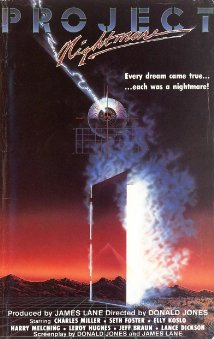
Earlier tonight, the Late Night Movie crew and I watched Project Nightmare, an obscure little film from 1987.  (Actually, it would be more correct to say that the film was released in 1987.  Judging from the clothes, the cars, and the hair, the film was actually made at some point in the 70s.)

The best word that I can think to describe Project Nightmare would be weird.  This is just a weird and trippy movie.

The film opens with Gus (Charles Miller) and John (Seth Foster), two friends who played football in college and who are now in the air conditioning business together.  Gus is insecure and angst-ridden.  John is confident and spends almost the entire movie with his shirt becoming progressively more and more unbuttoned.  Gus and John go on a camping trip.  As the film opens, they are both running from something that they think attacked their camp site.  They’re not quite sure what it was and their descriptions remain frustratingly vague.  Even when their mysterious pursuer comes near, we never get a clear look at it.  Instead, we just hear buzzing on the soundtrack while the sky changes colors.

Gus and John come across a house sitting in the middle of nowhere.  Inside the house is Marcie (Elly Koslo).  Marcie doesn’t have a telephone but she does have a bottle of Scotch.  As Gus and John drink, they sit on the floor because Marcie doesn’t appear to have any furniture in their house.  Their conversation is stiff and oddly stilted and we’re left to wonder if this is the result of bad acting or if it’s just another sign of the film’s overall surreal atmosphere.  Gus admits that he wants to sleep with Marcie and then proceeds to tell her a long and confusing story about why he and John are such good friends.  John, meanwhile, dreams of a little boy running in a cemetery while a priest makes unintelligible sounds.

The next morning, as the two men leave the house, we hear a howling wind and yet none of the surrounding plant life appears to be swaying.  Was this just bad filmmaking or was it another example of the director trying to create a sense of unease?  It’s not an easy question to answer but I’m willing to give director Donald Jones the benefit of the doubt.

The two men walk.  A mysterious light pursues them.  They come across a man sitting in a car.  Gus and John get in the car.  The man lays down in the back seat and promptly dies.  They drive back to Marcie’s house and manage to get Marcie to come outside right before the entire house vanishes.  Eventually, they somehow come across an airplane sitting in the middle of the desert.  Gus gets in the plane and flies away, leaving John and Marcie behind.  Both Marcie and the car vanish.  John wanders alone.

And then the movie really starts to get weird…

How weird?  I mean weird as in a character finding a pyramid in the middle of the desert.  I mean weird like a room where a woman dances in slow motion while a group of shadowy men applaud.  I mean weird like a big floating head that taunts those below it…

I mean weird.

And here’s another odd thing about Project Nightmare.  I’ve done a google search, I’ve read what it says on the imdb, and there is next to no information out there about how this film came to be.  As I previously stated, the film was obviously made nearly a decade before it was actually released.  Director Donald Jones served a director, writer, and editor on this and three other films but hasn’t had a film released since 1993.  Meanwhile, the film’s cast is also similarly obscure.

Project Nightmare is an enigma.  Everything about this film — from the obscure storyline to the miniscule budget to the unnatural dialogue to the stiff acting — comes together to create an otherworldly viewing experience.  And that’s why you simply must watch it at least once!  Whether it was meant to be or not, Project Nightmare is something of a surrealistic masterpiece.

And guess what?

It’s on YouTube!

Watch it now before it gets taken down.


‘It Follows’ Review (dir. David Robert Mitchell)


It-Follows-poster

**Leonard Wilson posted a great review of the film earlier this week, so read that as well!**

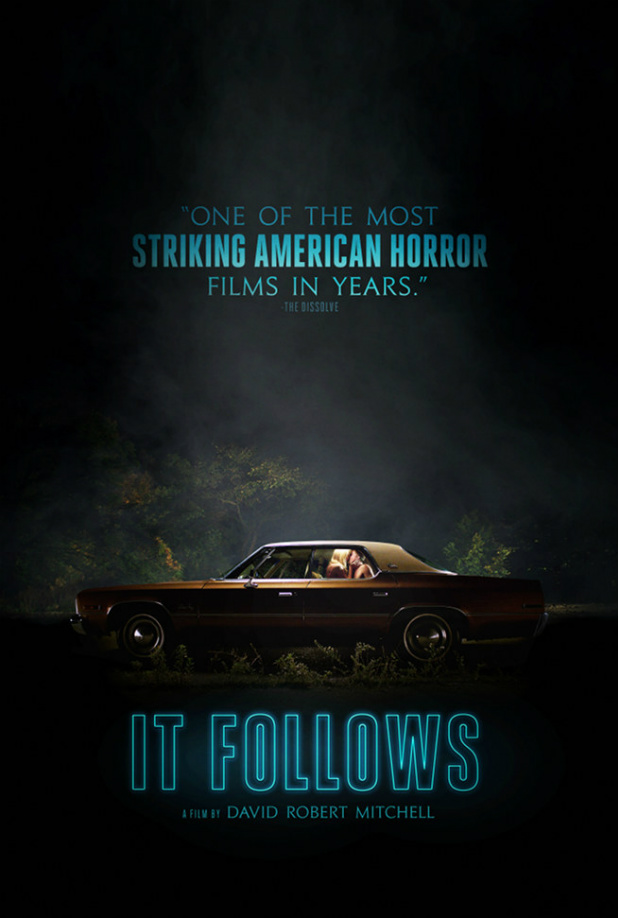
‘It Follows’ – which rocks a 70’s vibe and kickin’ score – earns high marks and much admiration in my book for taking an atmosphere that has been done before – and adding enough craftsmanship and creativity – to make it feel fresh, terrifying and surprisingly meaningful.

I am hesitant to go into much detail about the film’s premise. Not because of potential spoilers – this review may contain some so be warned – but because it might come off as too gimmicky to possibly result in the praise that follows. All I can say is trust me…it isn’t.

The film stars Maika Monroe (from the kick-ass 2014 gem ‘The Guest’) as Jay – a girl on the cusp of adulthood. She spends her days lounging in her pool or hanging with her friends – all of which are experiencing the boredom that encompasses those late stages of adolescence. To the disappointment of Paul, one of her male friends who has a crush on her, Jay has recently started dating an older boy named Hugh. He seems nice enough – but an incident at a movie theater hints at something very wrong with him. Jay doesn’t think much of it and on their next date they sleep together. It is a rather uneventful moment – but what comes next leaves everyone shaken and changed. Hugh drugs her – and she wakes up tied to a wheelchair in a rundown building. Hugh doesn’t intend to kill her – instead he wants to force her to see what she will be up against. As he explains – she will now be hunted by a supernatural creature that is part of a curse passed on through intercourse. “It” is slow – only ever being able to walk to its victim – but it never gives up. Anyone afflicted can see this entity – but it is only able to kill the last one to receive the affliction – and will then move down the chain of people who have had it. This leaves Jay stuck having to outrun this persistent and frightening being – all the while she must decide whether to “pass it on” to someone else. Luckily she isn’t alone, and with the help of her friends she tries to find out if this thing can be stopped.

tumblr_ng80muo78o1qej1i6o2_1280

The emotion and fear here is earned – which is all I ask for in these films – though it also exceeded my expectations on all fronts. It did what many of my all time favorite horror films have done – like ‘Halloween’, ‘Black Christmas’ and ‘Repulsion’ it contains a slow building level of suspense and dread. A constant feeling of unease even at its calmest moments. It is the sort of horror that leaves you on the edge of your seat – not in anticipation of the next jump scare – but because you can’t help but frantically search each frame – from corner to corner – to see what or who may be lurking; and it is impossible to trust anyone. On top of that is a fine level of craftsmanship by director David Robert Mitchell on display. The camera brilliantly acting like a jittery onlooker – often spinning and scanning the horizon. This is made all the more heart pounding by the remarkable and kinetic score by Rich Vreeland. As the pressure and suspense builds, so does the score – and it is all released in incredibly effective bursts throughout.

But no matter how effectively scary it is, perhaps what I appreciated most was that like ‘The Babadook’ last year – if you strip away all the supernatural horror aspects – at the very core is still an emotional and layered story worth telling. In ‘The Babadook’ it was a mother dealing with a troubled child and the death of her husband – and with ‘It Follows’ we get a genuine coming of age tale about sex, responsibility and the fears that comes with impending adulthood.

tumblr_nlvbx0UNtO1r1uj3fo4_1280

What do I mean by that last bit? For me the ‘It’ wasn’t just some evil monster – but can be seen as a manifestation of the mundanity and uncertainty of the possible future in store for these teens. Some may view the film as being about the consequences of sex. But I never saw it like that. Yes, sex is the catalyst of the curse, but the film never viewed the actual act in a negative light. You are not supposed to walk out thinking “Well I am never having sex again!”

It is just another part of growing up. It is the “growing up” part that really matters. It’s something that often sneaks up on you – but once you pass a certain moment in your life you are forever followed by a sense of responsibility that never leaves. These feels are reflected by Hugh who mentions how he wants to be a child with no worries and a whole new life ahead of him – or by Jay explaining how when she was young the world seemed so open and free; but once she actually grew up she realized there really wasn’t anywhere to go.

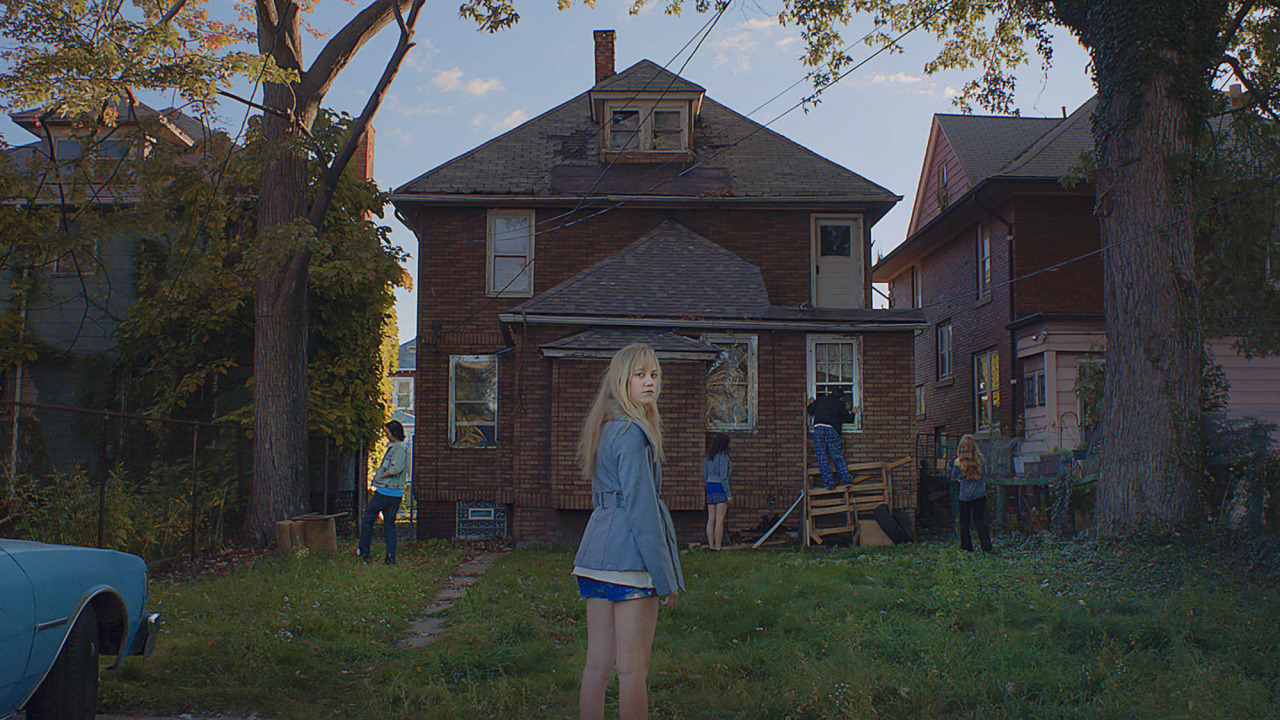
I think it is no coincidence that these characters live in Detroit – a broken down city whose future is unknown. They even live with broken parents unhappy with their own lives – Jay’s mother drinks heavily. One can only imagine that these things weigh heavily on them, whether we see that directly or not. Is it any surprise that “It” often takes on the form of those that love and care for them, or are people who are gone that they miss? These are all themes that run through most coming of age stories. That weight, those worries, are what are truly haunting these people. This makes the last scene all the more brilliant and effective for me. Like ‘The Babadook’ there is this idea that these sorts of worries, emotions and struggles don’t just fade away. You can’t just get rid of them and you cannot just run away and hide. But by facing them head on and together with those you love, they can at least be managed. I found it to actually be quite a hopeful way to end. But that’s just my take. The film never tries to shove such a specific meaning down the viewer’s throat. I think there is just enough ambiguity to allow the viewer to find their own – and it is layered enough to require multiple viewings.

At the end of the day I think this is surely worthy of being deemed an instant classic. One that can stand the test of time. Not just because of how effectively scary it is – but also because it deals with themes that can be appreciated from generation to generation. That, along with just how damn well made it is, makes it the best film I have seen so far this year – and a must see by everyone.