Monthly Archives: October 2013
Happy Halloween with The Greatest Film Ever Made
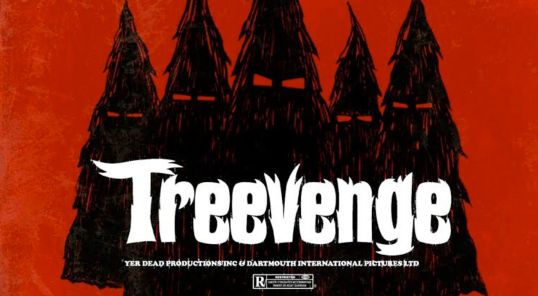
It’s that time of year again when Through the Shattered Lens celebrates it’s favorite month with another screening of I consider the greatest film ever made. This is a film that speaks to everyone at this site in one way or another. To dispute it’s “G.O.A.T.” status would be an exercise in inept futility.
It has horror, heartache, romance, kinky sex, interspecies assault, Disney-esque reenactments, revolution, ninja stars, redneck sociopaths, chainsaws and Jawa-speak. Not to mention it has baby-sitting tips, how to make a knothole in a Christmas tree and an Evil Dead tree reenactment. It’s a film that’s fun for the whole family.
As another October comes to a close it’s another opportunity to give Jason Eisener his due and say, “Good sir, we salute you.”
Horror On TV: Twilight Zone — “To Serve Man”
As Halloween comes to a close, so does both horror month here at the Shattered Lens and our series of televised horrors. What better way to finish out this feature than with one of the best known and most popular episodes of The Twilight Zone?
There’s a lot I could say about To Serve Man but really, all that needs to be acknowledged is that it’s a classic and features one of the best endings ever.
To Serve Man was written by Rod Serling and directed by Richard L. Bare. It originally aired on March 2nd, 1962.
Bon appetit!
Ten Years #15: Alestorm
Decade of last.fm scrobbling countdown:
15. Alestorm (1,437 plays)
Top track (73 plays): Barrett’s Privateers, from Back Through Time (2011)
Featured track: Keelhauled, from Black Sails at Midnight (2009)
I tried to start a zombie metal band once, but when I asked some friends to give me a hand they all ran away… Erm, where was I going with this?
Oh yes, for your Halloween evening amusement: Pirate Metal!
I’ve actually listened to this band so much since picking up Captain Morgan’s Revenge in 2008 that they managed to climb all the way to 15th place in my decade-spanning last.fm charts. Alestorm might be the most delightful thing to ever happen to folk metal, pending a Nekrogoblikon follow-up as sweet as Stench (2011). Alestorm support their gimmick with a brilliant knack for catchy composition and a lyrics sheet guaranteed to entertain. Happy Halloween!
My friends, I stand before you
To tell a truth most dire
There lurks a traitor in our midst
Who hath invoked the captain’s ire
He don’t deserve no mercy
We ought to shoot him with a gun
But I am not an evil man
So first let’s have a little fun
We’ll tie that scoundrel to a rope
And throw him overboard
Drag him underneath the ship
A terrifying deadly trip
Keelhaul that filthy landlubber
Send him down to the depths below
Make that bastard walk the plank
With a bottle of rum and a yo ho ho
I will not say what he has done
His sins are far too grave to tell
It’s not my place to judge a man
But for them he will burn in hell
The sharks will dine upon his flesh
And Davy Jones will have his soul
Take his money and his hat
He won’t need them where he’s gonna go
But first lets tie him to a rope
And throw him overboard
Drag him underneath the ship
A terrifying deadly trip.
Keelhaul that filthy landlubber
Send him down to the depths below
Make that bastard walk the plank
With a bottle of rum and a yo ho ho
Poll: Which Films Are You Most Looking Forward To Seeing In December?
6 Trailers For Halloween, Part 3
Hi there and welcome to the 3rd and final part of this special Halloween edition of Lisa Marie’s Favorite Grindhouse and Exploitation Film Trailers!
For this final edition, we take a look at horror films that were nominated for Oscars. Because of their Oscar pedigree, these films are rarely referred to as being exploitation films. However, have no doubt — at heart, these films all belong in the grindhouse.
1) The Exorcist (1973)
Among other nominations, The Exorcist was the first horror film to ever receive a nomination for best picture of the year. The Exorcist, however, lost the Oscar to The Sting.
2) Jaws (1975)
Jaws was nominated for best picture in 1975 but lost to One Flew Over The Cuckoo’s Nest.
3) The Silence of the Lambs (1991)
The Silence of the Lambs was the first horror movie to win best picture.
4) The Sixth Sense (1999)
The Sixth Sense was nominated for best picture but lost to American Beauty.
5) Rosemary’s Baby (1968)
Ruth Gordon won the Oscar for best supporting actress for her performance in this film.
6) Shadow of the Vampire (2000)
Willem DaFoe was nominated for best supporting actor but lost to Benicio Del Toro in Traffic.
What do you think, Trailer Kitties?
Ten Years #16: Falkenbach
Decade of last.fm scrobbling countdown:
16. Falkenbach (1,418 plays)
Top track (84 plays): Heathenpride, from En Their Medh Riki Fara (1996)
Featured track: Tanfana, from Tiurida (2011)
Happy Halloween! As you may have guessed, October 31st is our favorite day of the year here at Shattered Lens. I thought I’d celebrate with two entries in my Top 50 series that both happen to be particularly appropriate for the occasion. The first, coming in at 16th place with 1,418 listens over the past ten years, is the solo brainchild of Vratyas Vakyas: Falkenbach. A band I find some excuse to mention almost every October, Falkenbach have about as much of a right as Bathory or Enslaved to claim the invention of viking metal. While Vakyas certainly lacks the widespread influence attributable to Quorthon–only nine copies were supposedly ever made of the 1989 Havamal demo–he seems to have been a part of the movement from its very founding. Recording originally in Iceland and later settling down in Germany, Vakyas has dedicated his career as a musician to persistently refining a unique sound inseparable from the notion of viking metal.
“Viking metal” is a term I use sparingly. It marks, in my opinion, the transition of fringe metal bands away from reactionary Satanism and towards a more refined, pagan appreciation for pre-Christian European tradition. This process took the majority of the 1990s to fully realize, and many of the bands that most commonly receive a “viking” tag–Bathory, Enslaved, Falkenbach, Burzum–originated firmly within the spectrum of black metal. (The term “pagan metal” emerged in much the same manner further east, as Ukrainian and Russian black metal bands found similar cause to divorce Satanism.) Modern use of “viking metal” refers to little more than a lyrical theme, the transition to a folk aesthetic in black metal circles and beyond being at this point complete. “Pagan metal” seems to be the tag for any folkish band that still lies on the fringe, usually through heavy doses of black metal, provided they didn’t get dumped off in the “viking” bin first.
It would make a great deal of sense to me to lump the likes of Enslaved and Bathory into the “pagan” category where applicable, along with more recent acts like Moonsorrow, and abandon “viking metal” altogether. But if it is to persist, I find no band more appropriate for the title than Falkenbach. Much like Summoning, Falkenbach’s sound developed into an independent entity with no clear counterparts. From Ok Nefna Tysvar Ty (2003) onward, Vakyas’s sound has stood distinctly apart. The looping electronic woodwinds, acoustic guitar, mid-tempo beat, and chugging electric guitar in the sample track I’ve provided are all fundamental to the sound visible within the earliest available Falkenbach recordings and fully realized by 2003. But where Summoning has always defied classification, Falkenbach’s close ties to the onset of the viking metal movement seem to grant the term weight. It would be a bit silly to suggest that Falkenbach’s uniqueness is somehow more significant than the countless other innovative, folk-inspired metal bands of the 90s and 2000s, but his timing in history and lack of parallels, be they copycats or coincidental, has earned Vakyas a distinction beyond his impeccable song writing and sincere reverence for the old gods. Falkenbach is, for me at least, the closest thing to viking metal as a style of music that you will ever find.
Horror On The Lens: Night of the Living Dead (dir by George Romero)
 Happy Halloween!
Watching Night of the Living Dead is a bit of a Halloween tradition here at the Shattered Lens.
Check out Arleigh’s review here and enjoy the film!
Happy Halloween From The Shattered Lens!
Happy Halloween From the Shattered Lens!
Halloween Horrors 2013 : “The Sandman : Overture” #1
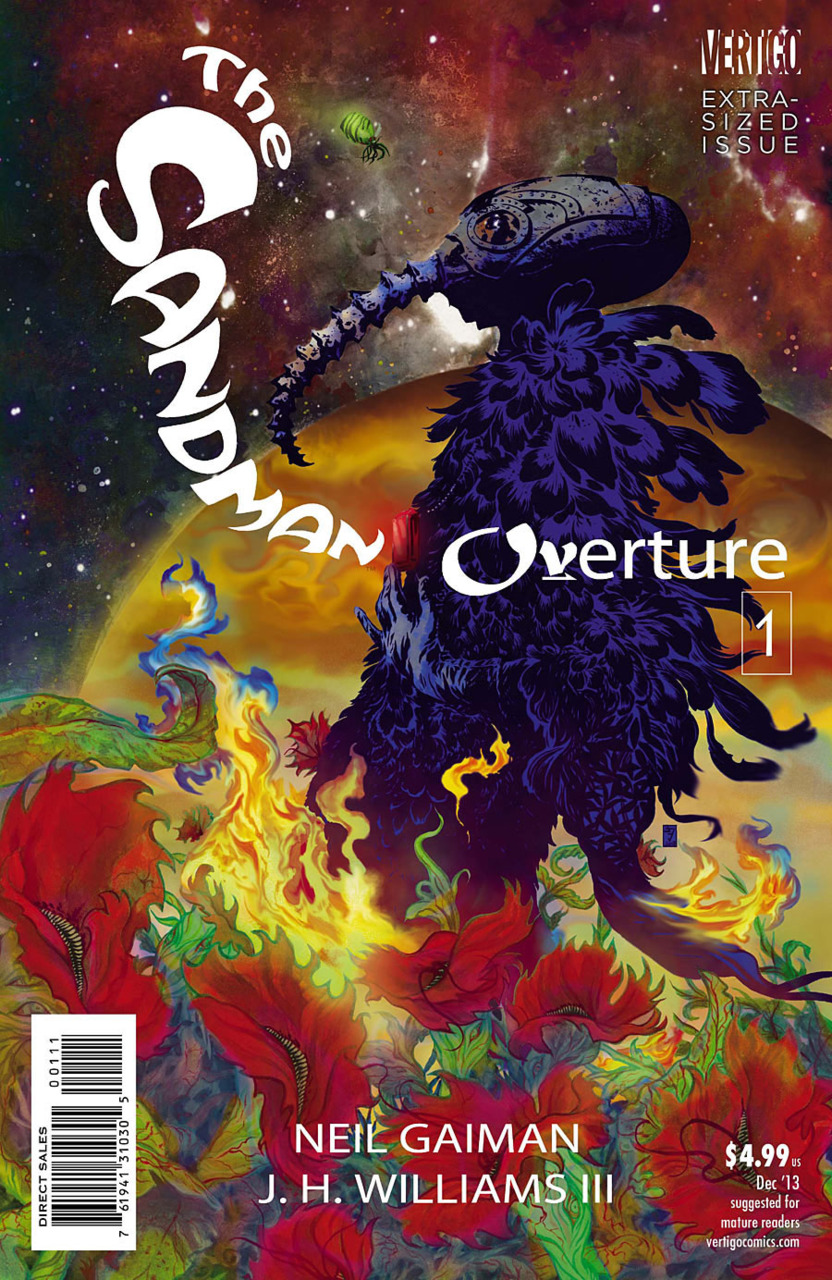
So — you probably weren’t expecting me to finish up my contributions to TTSL’s Halloween horror round-up with a review of a horror comic, as opposed to a horror movie — or, hell, maybe you were — but let’s be honest : the debut of Neil Gaiman and J.H. Williams III’s The Sandman : Overture (which, I suppose, might be more accurately categorized as “myth” or even “fairy tale” than actual “horror,” per se, but what the heck — The Sandman started out life being billed and marketed as a “horror” series, and it’s certainly always maintained a strong following among horror fans, so — that’s good enough for me) is an honest-to-goodness event in its own right, and something tells me that a lot of folks who haven’t set foot in a comic shop in a very long time will be back to pick this one up ( guess we’ll see how well those former black-clad goth kids have aged), and, Sandman fans being by and large a pretty hard-core lot, I don’t think we’ll have a repeat of the type of precipitous sales declines between the first and second issues that we saw with, say, Before Watchmen, which was the last big “bring the old readers back” push that DC/Vertigo undertook. It also helps that The Sandman : Overture is probably going to be a good comic, of course, as well — at least if the first issue is any indication.
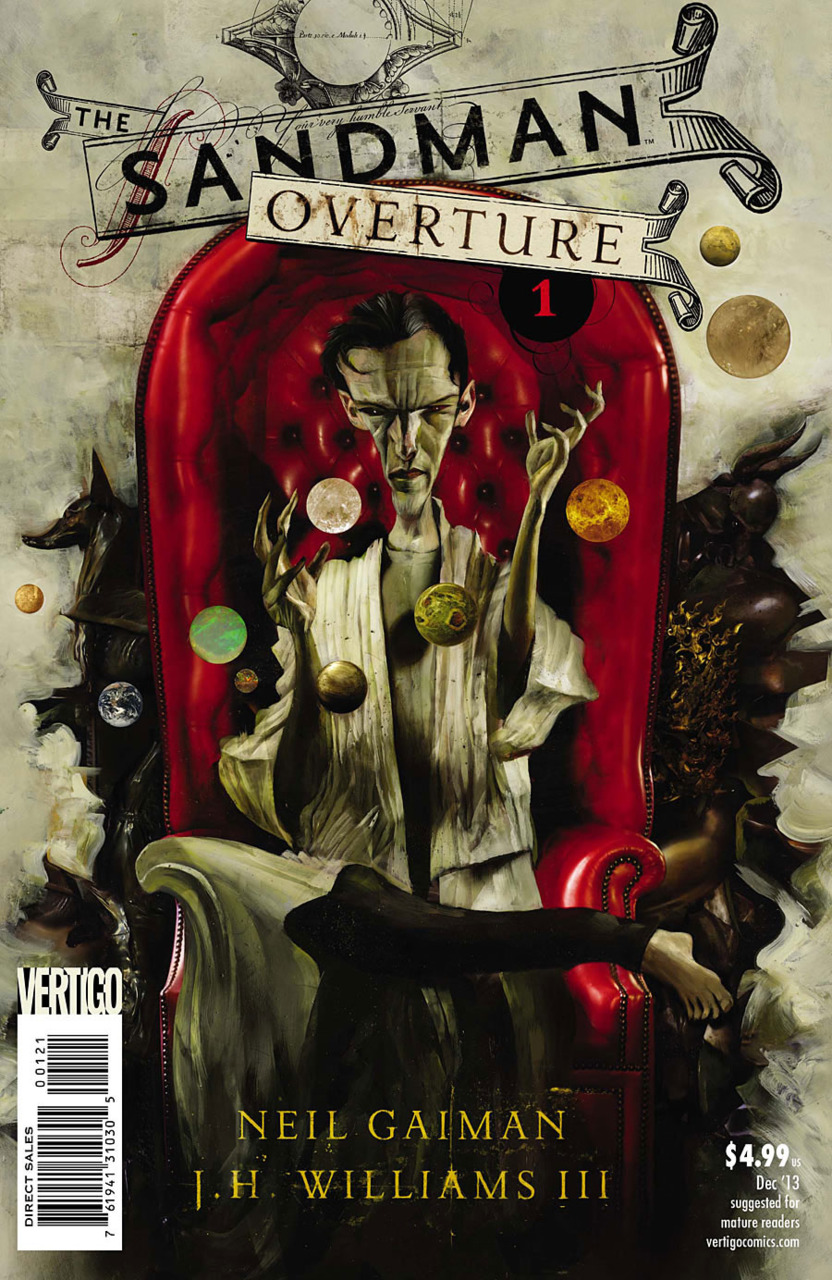
Notice, however, that I didn’t quite go so far as to say that it’s going to be a great comic. Frankly, it’s just too early to tell. I’m certainly hoping it will be, and have no real reason to doubt Gaiman or Williams, but — for the time being, I think it might be smart to leave myself just a little bit of wiggle room by not pronouncing its greatness too early. There’s no doubt that I absolutely enjoyed each and every word and panel in this book, and that it made me smile from ear to ear and cover to cover all three times (so far) that I’ve read it, but it’s also not without its (small, I grant you, but still — ) flaws.
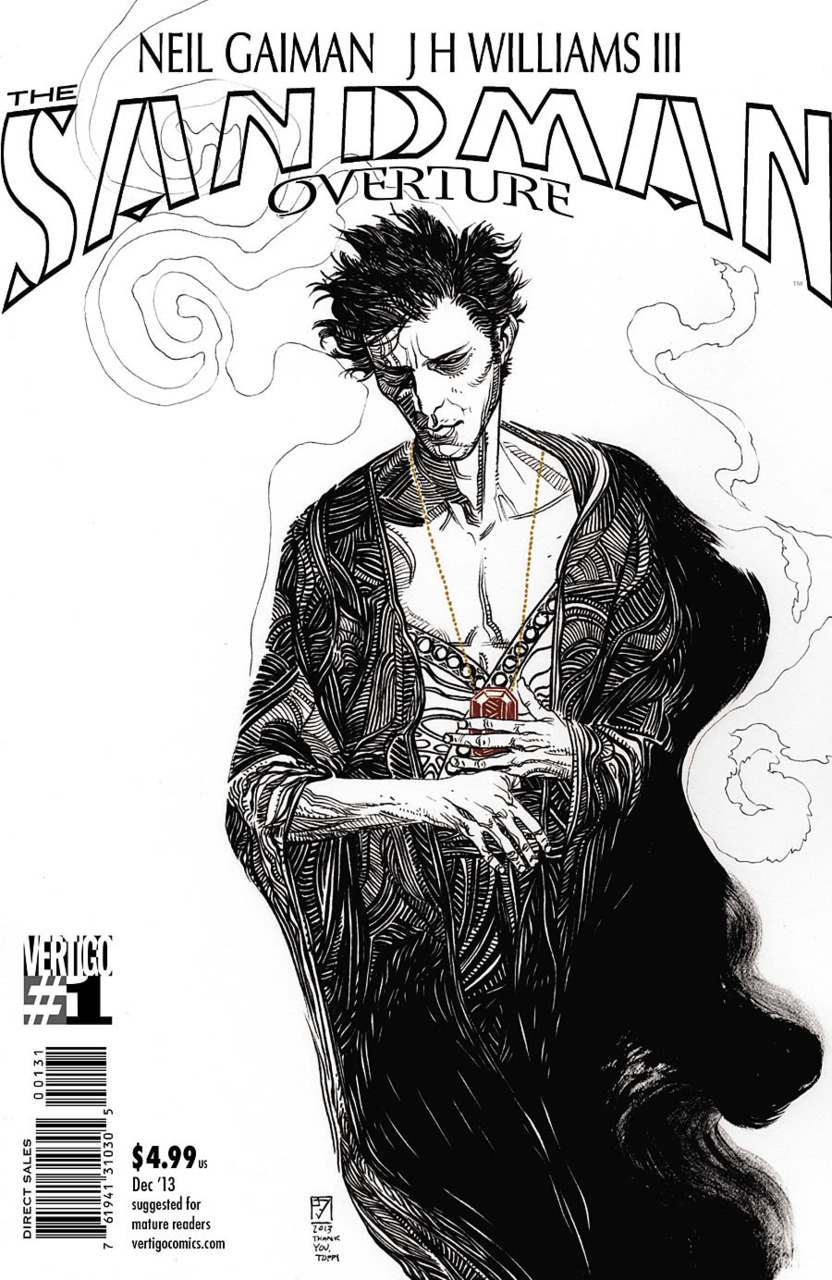
I’ll tell ya what, though — the art’s not one of them. This is probably the first Sandman comic where the illustrations have outshone the script. Which is no knock on the script, by any means — it’s just to say that Williams, who employs literally dozens of different styles here, really knocks it out of the park. Whether he’s doing lush dreamscapes, black-and-white etchings, watercolor historical pastiches, or magnificent cosmic two-,three-, and even four-page spreads, he’s entirely and majestically at the top of his game. Honestly, his work on this first issue puts even his best efforts on Promethea to shame. This is a consummate and visionary professional at the height of his creative powers. Feel free to “ooh” and “aah” profusely — I sure did.
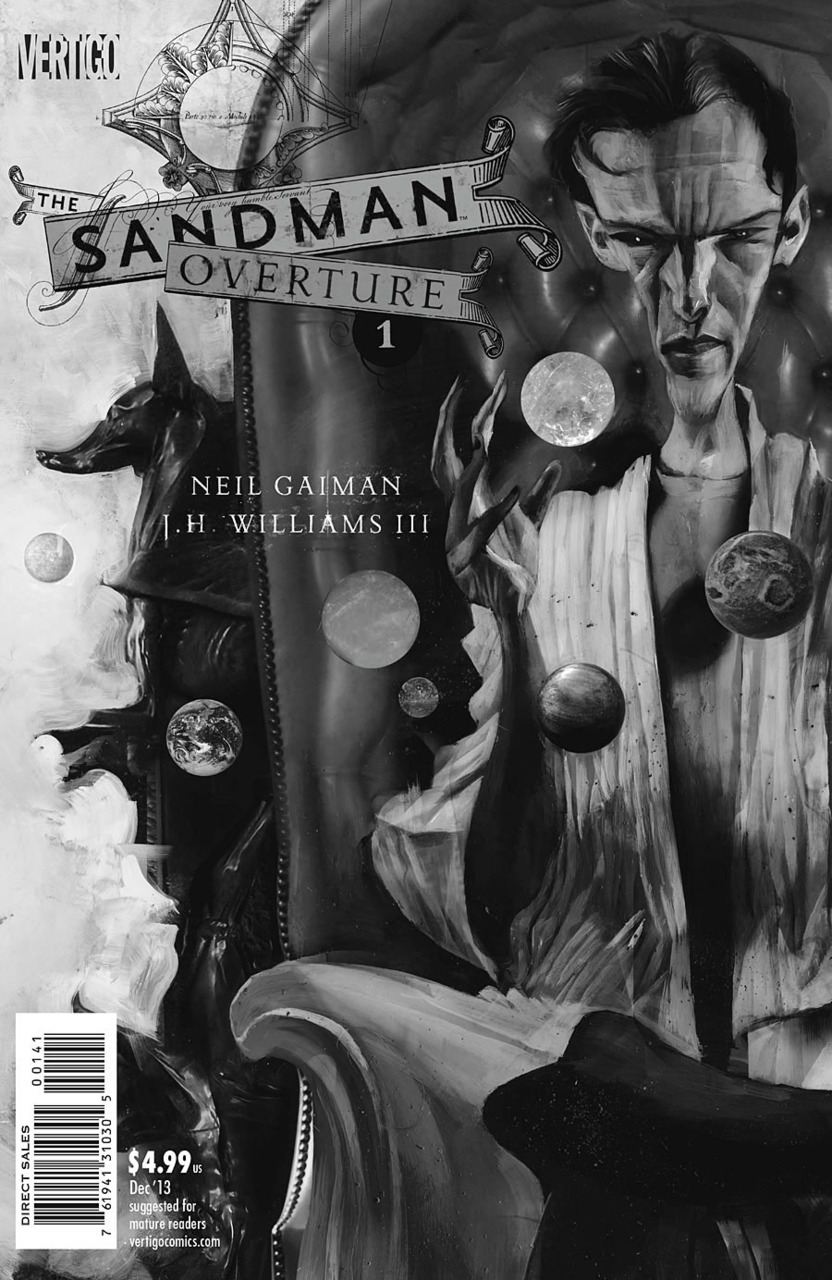
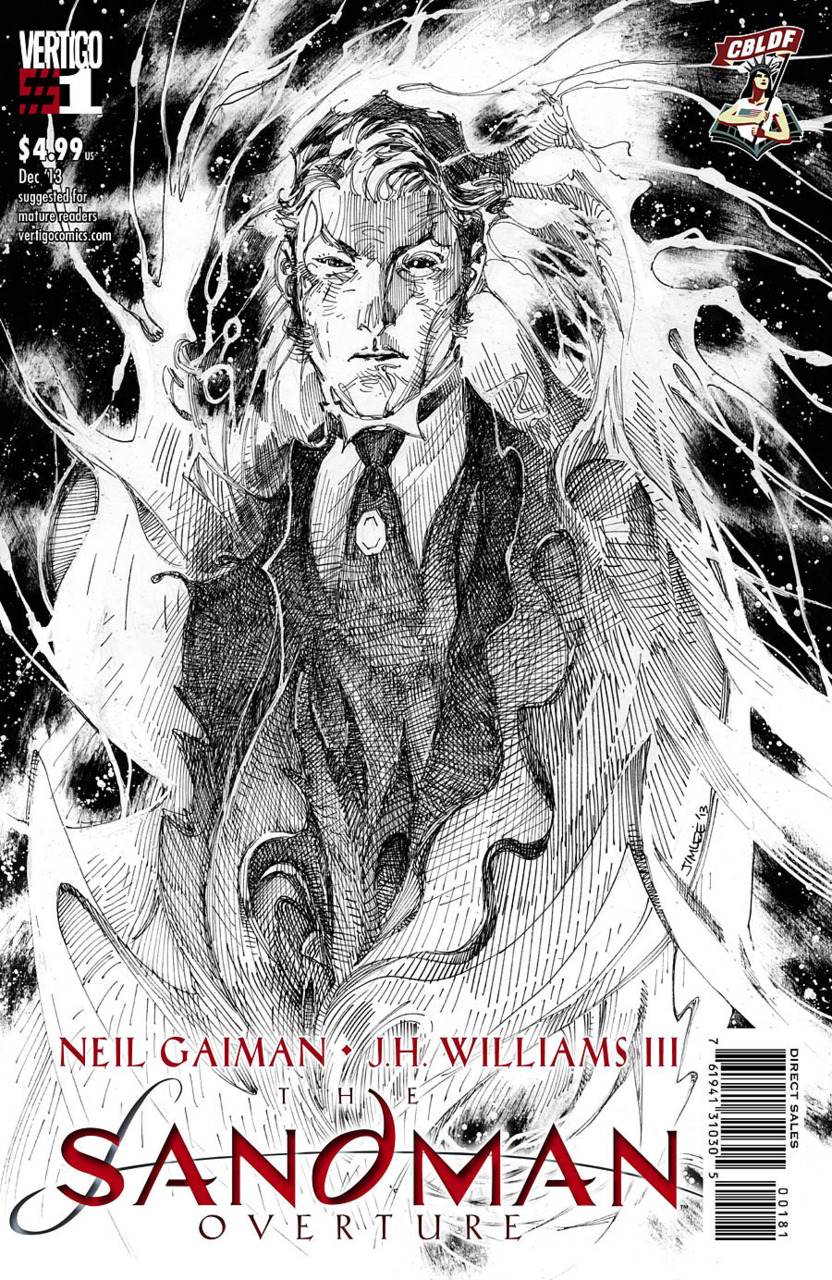
The variant covers (by, as pictured, Williams, original Sandman cover artist Dave McKean, Williams again, McKean again, and DC head honcho Jim Lee — yes, even his looks cool) are all quite a sight to behold, as well, even if McKean’s “two” amount to different iterations of the same painting. There’s no doubt that these lavish works do much more than just celebrate the 25th anniversary of this series (shit, I suddenly feel really old), or herald the arrival of a major new story, or even reintroduce a fan favorite with the proverbial “bang” — they all complement the issue itself about as perfectly as one could hope — dare I say dream — for. Each says “welcome back, old friend — you’re in good hands, this was crafted with love and we’re pleased that you’ve joined us.”
Not to be too overly- effusive with my praise, mind you — just calling it like it is.
So what’s holding me back from saying that this is the best thing to come down the mainstream comics pipeline in a decade or more, at least? Well, to be honest, the book does have a few minor problems. Gaiman seems to have hung the framework for this introductory chapter over a couple of really neat ideas that, for whatever reason, he never really delved into much in The Sandman‘s original 76-issue run — namely, what dreams are like for alien life forms and what a gigantic conclave of all the various iterations of Morpheus/Dream’s anthropomorphic “selves” would play out like. Between all that we have brief but welcome appearances of beloved characters like Destiny, Death, Lucien, Merv Punkinhead, and The Corinthian, but so far all we really know is that this six-issue “prequel” is going to end where The Sandman #1 began and finally tell us exactly how the Lord of Dreams was able to be captured by mere human dabblers in necromancy in the first place.
It promises to be an intriguing and dare I say wild ride, to be sure, but — we also knew that’s what this book was going to be about going into it. I mean, the Overture part of the title pretty much gives things away, doesn’t it?
In all fairness, there’s nothing here in the first issue that will dissuade anyone from sticking with the series to its conclusion (although Gaiman’s intuitive knack for sequential pacing appears to have slipped a bit in the first few pages, he quickly regains his old form and is firing on all cylinders by about the fifth or sixth page) — quite the reverse — but it’s also neither particularly accessible to new readers nor of much value, story-wise, as a “stand-alone” piece. There’s nothing wrong with that, of course, but it strikes me that the very best issues of the original Sandman series were either stand-alone works like the magnificent “A Midsummer Night’s Dream” or “August,” or individual segments of sweeping, multi-part epics like “The Dolls’ House” and “A Game Of You” that also could be read and enjoyed (although, admittedly, not enjoyed, or even understood, as completely) when read on their own. The Sandman : Overture #1 really only works when considered within its context : as the opening salvo of a story that readers have been waiting a quarter-century to be told.
In all honesty, though, it’s probably well-nigh impossible for me to separate this book out from my own personal context as a reader either. I picked up The Sandman #1 back when it first came out and stayed with it right up to the end. The years of its publication coincided with my heaviest period of comics collecting, and though my tastes changed radically over the course of its run — I was subsisting on a steady diet of then-current Marvel and DC pablum when the series started and had all but given up on the mainstream in favor of titles like Hate, Eightball, Yummy Fur, and Palookaville by the time it was done — my love for Gaiman’s characters, concepts, imagination, and sheer storytelling prowess never dimmed in all that time. Reading The Sandman : Overture #1 is like catching up with a long-lost friend or family member that, if pressed, you’d have to confess you probably thought you’d never see again. I can’t even accurately describe how fucking good it felt to see a new Sandman comic on the shelves at the shop today, nor how great it felt to immerse myself in its pages after buying it.
The book itself may not be perfect, but life sure felt perfect while I was reading it. That. my friends, is as good a textbook definition of “magic” as you’re likely to find right there. Pinch me, please, because I must be dreaming.
 Through the Shattered Lens