Film Review: Magnum Force (dir by Ted Post)


Today, we continue our look at the Dirty Harry film franchise by taking a look at the second film in the series, 1973’s Magnum Force.

Despite the fact that Dirty Harry famously ended with Harry Callahan throwing away his badge in disgust, Magnum Force reveals that Callahan (played again by Clint Eastwood) is still a member of the San Francisco Police Department.  He’s got a new partner (Felton Perry, a likable actor in a thankless role) but he’s still butting heads with his superiors at the department.  He’s also still got a way with the one-liners.  When Lt. Briggs (Hal Holbrook) brags that he never once had to draw his gun while he was in uniform, Callahan replies, “A man’s got to know his limitations.”

While Callahan is busying himself with doing things like gunning down robbers and preventing an attempt to hijack a plane, a group of motorcycle cops are gunning down the town’s criminals.  They begin by killing a mobster who has just beaten a murder charge on a technicality but soon, they’re gunning down anyone who has ever so much as been suspected of committing a crime.  Alone among the detectives investigating the murders, Callahan believes that the killers are cops and, even worse, he suspects that his old friend Charlie McCoy (played by Mitchell Ryan) might be a member of the group…

Though it suffers when compared to Dirty Harry, Magnum Force is still an exciting and effective action film that is clearly a product of the same period of time that gave us such classics of paranoid cinema as The Parallax View and Three Days of the Condor.  Whereas Dirty Harry took an almost documentary approach to capturing life and death in San Francisco, Magnum Force is a film that is full of dark shadows and expressionistic angles.

In Dirty Harry, the Scorpio Killer was both an obvious outsider and an obvious force of destruction.  The film’s dramatic tension came from the fact that he was so clearly guilty and yet nothing could be done to stop him.  The villains in Magnum Force are the exact opposite of Scorpio.  As chillingly played by David Soul, Robert Urich, Tim Matheson, and Kip Niven, the killer cops are distinguished not by their otherness but by their total lack of individuality.

In the film’s best scene, they confront Harry in a parking garage and basically tell him that he’s either with them or against him.  Sitting on their motorcycles, wearing their leather jackets, and with their grim faces hidden behind their aviator sunglasses, these cops are the ultimate representation of  faceless fascism.  After listening to their excuses, Harry asks if they consider themselves to be heroes.

“All of our heroes are dead,” one of them replies, delivering the film’s best line.

Obviously, Magnum Force was made to be an answer to those critics who claimed that Dirty Harry was a fascist film and it is a bit jarring, at first, to see Harry “defending” the system.  (“I hate the goddamn system but until something better comes along…”)  When Harry tells the killer cops, “I’m afraid you’ve misjudged me,” it’s not hard to see that this is the same message that Eastwood meant to give his critics.

However, what makes the killer cops in Magnum Force such interesting villains is that they are, ultimately, tools of the system that they’re attempting to destroy.  By killing off criminals as opposed to arresting them and putting them on trial, the killer cops are minimizing the risk of the flaws inherent in the system being exposed.  Hence, by defending the system, Harry is helping to expose and destroy it.

When I told Jeff that I was planning on watching and reviewing all of the Dirty Harry films, he suggested that I watch them in reverse-order.  His logic was that, since the films tended to get worse as the series progressed, watching them backwards would allow me to end my project on a happy note as opposed to a note of bitter disappointment.  I took his advice and I’m glad I did.  While I disagree with him about whether or not The Dead Pool is a better film than Sudden Impact, I do have to agree that the first two Dirty Harry films are dramatically better (and quite different in tone) from the ones that subsequently followed.

Tomorrow, we’ll look at the third film in the series, 1976’s The Enforcer.
Which Way Forward For The “Batman” Movie Franchise? Take Eleven : Other Principal Players


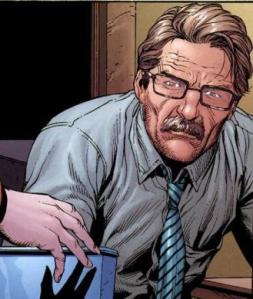
Hello once again, friends, and welcome to yet another in this seemingly endless series on relaunching the Batman franchise for the silver screen. Our introductory graphic this time around comes from the rather lackluster Batman : Earth One graphic novel, which I don’t really recommend anyone actually read, but I’m kicking things off with this picture because it’s a pretty accurate depiction of how I’m thinking Jim Gordon ought to look in this movie, and where this story falls for him chronologically in terms of his career. More about which in a very brief moment —

So, as we left things yesterday, Bruce Wayne was on his way back to Gotham, having headed west Boxcar Willie-style and spent most of the trip daydreaming about his past, giving us a pastiche of origin/background scenes to either tell us what we already know about his origins or tease us with aspects we may not be as familiar with. It seems to me that this point in our hypothetical Batman I  would be a pretty good time to introduce our other key cast members before lunging into the media circus that will await Batman in his “civilian” identity when he “officially” returns home.

First off I think police commissioner Jim Gordon (who, it should be noted, will be holding the “top cop” job from the start of this series) merits a quick intro, and while I hate to say “any scene showing him to be a good cop at this point will do,” the truth of the matter is — any scene showing him to be a good cop at this point will do. I’m thinking a little confrontation with his former partner, the hopelessly corrupt Lieutenant Flass, would serve our purposes well, maybe with Gordon on the right side of a set of cell bars and Flass on the wrong side, with some dialogue between them along the lines of Gordon near-taunting Flass about being sent upriver along with the rest of Carmine Falcone’s men, while Flass retorts limply with something like “way to sell out your old partner, Jimmy-boy, you got to the top on the backs of 80 good cops you sold out,” and Gordon responding with “80 cops, maybe, but good cops? Don’t kid yourself, Flass — anyway, just came to say goodbye, Harvey Dent will be seeing you in court in a few hours, and he’s batting .1000 with his conviction rate.”

Which will, of course, naturally lead to a scene showing Harvey Dent, maybe eating a bowl of cereal at home, with his wife, Gilda, in the background. He’s got a newspaper opened up next to him on the table, and Gilda asks who’s on his docket that day. He mentions the names of four Falcone deputies, including Flass. She says he must be feeling confident since he doesn’t have any legal briefs in front of him. “Just catching up on what’s happening around town?” She takes the paper and says “what is happening around town — besides you and Gordon finally cleaning up all the garbage?” At this point she takes a look at the article he was reading and says “ahhhh, the notorious cat-burglar — is she on your radar screen next?” “No need to be jealous, honey, the truth is she won’t be on my radar screen until Jim and his boys actually catch her,” all of which, of course, will lead us to —

A rather shabby-chic, semi-Bohemian-looking apartment in an obviously run-down part of town, where, dawn breaking, a lithe figure slinks in through an open window in a rather skin-tight outfit. She shoos about a dozen cats aside before reaching into a sewed-in compartment on her costume and taking out a couple pearl necklaces, diamond rings, and a wad of large bills, which she quickly locks away in a safe in her closet. A disembodies voice asks “Selina? Is that you? And we see the voice belongs to a 16-or 17-year old girl who’s still in bed, a few cats laying around her. Selina removes her mask and goggles, leans over her young charge, kisses her on the forehead, says “ssshhhh — yes, it’s me — just back from work — go on back to sleep, you’ve still got an hour or so before school,” and with that, we’ve “met,” at least in passing, the three most significant supporting cast members in our series not named Alfred.

So that’s the intros out of the way — next up we’ll have the much-talked-about-on-this-blog-already “return” of Bruce Wayne to Gotham, so please check back tomorrow if you’re interested in the details of just exactly how all that’s going to play out!

VGM Entry 58: Illusion City


VGM Entry 58: Illusion City
(Thanks to Tish at FFShrine for the banner)

Illusion City never saw an English translation. Micro Cabin first released it in December 1991 for the MSX turboR, and this was rapidly followed by versions for the PC-9801/PC-88VA (January 1992), FM Towns (July 1992), Sharp X68000 (July 1992), and a bit later the Sega CD (May 1993).

http://www.youtube.com/watch?v=l7Ec6UbzNqg

On a completely irrelevant note, I finally looked up why they called it the Towns, and apparently Fujitsu named their 1989 PC after 1964 Nobel Prize in Physics winner Charles Hard Townes. Aaanyway, Illusion City had a soundtrack to rival the SNES legends, and that’s about all you’ll ever find concerning the game in English. It *gasp* doesn’t even have an English Wikipedia page.

The music collections you’ll find scattered across youtube–and these are relatively abundant–showcase the MSX turboR version, so I will to. Two years behind our current historical progression or three years after the original release of Snatcher, I thought it best to bring the game up now since they’re occasionally compared. The two have next to nothing in common concerning gameplay, but they are both cyberpunk, and I gather they have some common plot features. (Not that I would know, short of digging up a fan translation.)

http://www.youtube.com/watch?v=hQw7MA8ogeA

Illusion City is not a visual novel. It’s an RPG. The best you’ll find concerning what style of RPG are a few stills here and there; I am thoroughly convinced that no Illusion City gameplay video exists on youtube. You’ll find plenty of videos of the introduction, and there’s an ending/credits roll video out there for the Sega CD version. That’s about it. But with these credits, conveniently originally in English, and a last resort Google Translate of the game’s Japanese Wikipedia entry, we can piece together its authorship easily enough.

The music was composed by Tadahiro Nitta (the same Nitta responsible for Micro Cabin’s Final Fantasy MSX port), Yasufumi Fukuda, and Koji Urita (Kouji Urita in the credits). These are the names listed on the wiki, and the Sega CD credits clearly distinguish them (“Music Compose”) from composers contributing new material to the port (“Mega-CD Special Music”). This latter group consists of Hirokazu Ohta, who “arranged and computer programmed” the intro and end-game music, and Yasufumi Fukuda, who added new combat music. Lastly the credits list Hirotoshi Moriya and Masato Takahashi under “sound” for the “Mega-CD Work Staff”.

There we go: clean and concise credits. How often does that happen on a Japanese PC game port?

http://www.youtube.com/watch?v=fFyje2308vI

In so far as this is the first cyberpunk RPG I know of (the Phantasy Star series comes to mind as a similar comparison), Tadahiro Nitta, Yasufumi Fukuda, and Kouji Urita had their work cut out for them. Where Masahiro Ikariko and company were able to score Snatcher more or less like a movie, Illusion City required themes for all of the contrivances of a standard RPG. The sort of poppy vibe with which Tokuhiko Uwabo flavored Phantasy Star II, to use a game I’ve previously showcased, can’t fly in cyberpunk–if that is in fact what kind of game Illusion City is, as many have claimed. It needed something a bit more dark and grimy.

Whether they really pulled it off is debatable, but if “City Noise” (3:37 in the present video) is in fact the main town theme then they definitely had the right idea. Oh, it’s not dark on the scale of Snatcher, but I get the sneaking suspicion anyway–mainly from the Sega CD intro and outros–that this is more of a futuristic adventure game with cyberpunk overtones than Akira-worship. It definitely succeeds in creating a futuristic RPG soundtrack to a far greater extent than what I’ve heard of Phantasy Star, and it’s got a decently dark edge.

oldskoolgamertje on youtube has provided a complete soundtrack of the MSX version for your enjoyment. Cheers.

AMV of the Day: Moves Like Jagger (NSFW)


This particular tune had stuck itself in my head all week and I finally figured out who sang the song. Maroon 5 is a band that I would consider as being part of this new generation of pop rock. That’s not to denigrate the band or anything. I like them well enough and when they release a new single it’s usually one that’s quite catchy which makes them big hits for the band. It’s the use of one of their songs that the latest “AMV of the Day” uses to some good effect.

“Moves Like Jagger (Anime Mix)” is the latest AMV and one produced by one xXxKrazyKookiexXx and one that uses scenes from a cornucopia of anime series. It’s a video that’s simple and straightforward in that the editor tries (and succeeds) in syncing the lyrics being sung to lip movements in the scenes chosen. Even the type of scenes picked fits the song well with all of them characters dancing, singing or doing both.

DxXxKrazyKookiexXx has other AMV’s, but this is one that I’ve latched onto as a favorite of this particular producer and just like the song used in the video this AMV is just as catchy and fun. It is also quite fan service heavy which means NSFW as a word of warning.

Anime: Macross Frontier, Nyan Koi, Needless, Baka to Test, Seitokai Yakuindomo, Princess Lover, Kampfer, Highscool of the Dead, Sekirei, Sora no Otoshimono, Asobi ni Ikuyo, Hyakka Ryouran Samurai Girls, Ladies vs Butlers, Bakemonogatari, Naruto, Chaos Head, Uta no Prince Sama, Melancholy of Haruhi Suziyama, Rosario+Vampire, Teppo Tengen Gurren Lagann

Song: “Moves Like Jagger (Radio Edit)” by Maroon 5 feat. Christina Aguilera

Creator: xXxKrazyKookiexXx

Past AMVs of the Day

Which Way Forward For The “Batman” Movie Franchise? Take Ten : Flashbacks And Origins


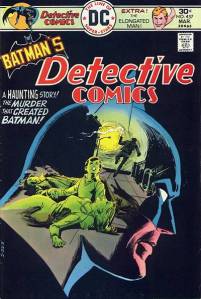
If you’ll recall, when we left things yesterday, the basic plot background for our hypothetical Batman I  was pretty well underway, and Bruce Wayne was hopping onto the back of a boxcar to make his way westward in preparation for catching a flight there that would mark his “official” return to Gotham City. Which probably, and quite naturally, makes you wonder why I would choose to kick this post off with the cover to the classic 1970s Batman origin story “There Is No Hope In Crime Alley!” by Denny O’Neil and Dick Giordano (who was in full Neal Adams rip-off mode at the time, like a lot of the comics industry).

Well, friends, that’s because I figure that this type of scene would give us the best opportunity to give this flick the closest thing I really want it to have to an “origin of the Batman” sequence, which would consist largely of flashbacks running across Bruce’s bat-brain as he takes in scenic views of the vast American landscape. Ideally, I wouldn’t think this montage would need to last more than four or five minutes, but it should hit on all the following key points:

It should start with the by-now-ubiquitous murder of young Bruce Wayne’s parents, followed by a scene of him dropping out of a prestigious prep school, followed by several scenes of intense martial arts and physical stamina training in a wilderness environment where he’s seen side-by-side with numerous other black-clad “ninja-type” guys (spoiler alert! This will be revealed to be Ra’s Al Ghul and his “League Of Shadows” outfit in the second film of our imaginary series), finally wrapping up with some scenes showing the Batman’s earliest exploits rounding up the Gotham crime lords as we laid out in our last little installment here.

I was giving some serious thought as to whether this flashback montage should be in black and white or color, and finally decided on the simple answer of : frankly, it doesn’t really matter. I’m sure a skilled director can pull it off either way and maybe making the whole thing B&W would be a little bit too obvious. In any case, that’s about as “deep” into the origins as we really need this story to go for our purposes. As the scene concludes, we can show Bruce jumping off the train into the quiet, just-post-dawn West Coast morning, and when we next join him, it will be an in entirely different, complete-media-circus-type atmosphere.

I suppose, short and sweet as it is, that’s probably as good a spot as any to leave things for today, since slow, steady, and methodical is our MO here with this series, I’ll just “tease” tomorrow’s installment by saying this — we’ll be leaving Bruce Wayne for a short while and meeting our other principal players, namely Jim Gordon, Harvey Dent, and Selina Kyle before we get back to the star of the show, so their various methods of introduction will be what we take a look at a short 24 hours (or less) from now.

Until then, as always, I welcome any thoughts, criticisms, concerns, critiques, etc. that you, dear reader, may have about today’s (admittedly rather brief) addition to this little ongoing blogging opus-of-sorts I’m in the midst of here.

Artist Profile: Harold W. McCauley (1913–1977)


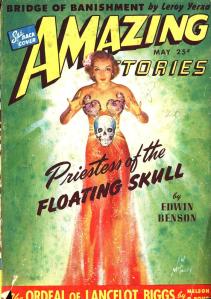
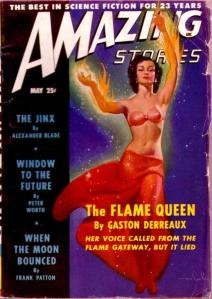
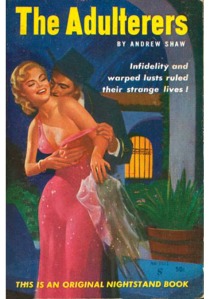
A Chicago native, Harold McCauley trained at the Art Institute of Chicago and at the American Academy of Art.  From 1939 until 1942, he worked at Haddon Sundbloom’s busy Chicago art studio and posed for the original painting of the Quaker Oats Man.  Starting in 1946, McCauley worked as a staff artist for the Ziff-Davis publishing house and painted over a hundred covers for magazines like Amazing, Fantastic Adventures, and Mammoth Detective.  Duringthe early 1960s, he also painted several covers for Nightstand Library.

Film Review: Dirty Harry (dir. by Don Siegel)


Dirty Harry is obviously just a genre film but this action genre has always had fascist potential and it has finally surfaced…Dirty Harry is a deeply immoral movie.” — Pauline Kael

“It’s not about a man who stands for violence.  It’s about a man who can’t understand society tolerating violence.” — Clint Eastwood

I decided that I wanted to review the Dirty Harry film franchise about two seconds after Clint Eastwood finished giving his speech at the Republican National Convention last month. 

It had nothing to do with the politics of Eastwood’s speech because, quite frankly, I think a good film is a work of art and art is always more important than politics.  Instead, as I watched Eastwood give his speech, I was reminded that Clint Eastwood is about as close to a living icon as we have in America.  There aren’t many actors who could get away with giving a speech to an empty chair and, despite the predictable outraged tweets from Roger Ebert, Eastwood is one of them.  And, if Eastwood is an icon, Harry Callahan is perhaps the most iconic role of his career.

Now, I have to admit that, as I started this project, I knew more about Harry Callahan as a character than I did about the films he had actually appeared in.  I had seen both Dirty Harry and The Dead Pool because, for whatever reason, they both seem to turn up on AMC every other week.  I knew that Harry Callahan was a police inspector who was based in San Francisco.  I knew that he was willing to go to extremes when it came to fighting criminals.  I knew that, in his first film appearance, Harry had a really impressive head of hair that had pretty much vanished by the time that he reached his final appearance in The Dead Pool.  And, finally, I knew that, at some point in the film series, Harry growled the line, “Go ahead, make my day.”

So, for me, reviewing every film in the Dirty Harry franchise gave me a chance to discover why Harry has become such an iconic character and why people still ask Eastwood to repeat that “make my day” line.  When I started watching the films, Jeff warned me that the Dirty Harry films got worse as you went along and I discovered that, in many ways, he was right.  But I still enjoyed the experience and I hope that you enjoy reading my reviews over the next few days.

But, first things first.  Let’s take a look at the film that started the entire series, 1971’s Dirty Harry.

I have to admit that it’s a bit intimidating to try to review Dirty Harry because, quite frankly, what’s left to be said about this film?  It’s one of the most influential movies of all time. Any time you see a cop in a TV show or a movie getting yelled at by his superiors for not going “by the book,” it means that you’re watching a movie or an episode that is directly descended from Dirty Harry.  And yet, despite all the imitations, it’s a movie that remains as exciting and visceral today as when it was first released. 

Dirty Harry tells the story of two outsiders, two men who seem to exist solely to reveal the dark impulses of conventional society.  Both of these men are killers and both of these men are motivated by a rage against what they perceive society as being. 

One of these men calls himself Scorpio.  As played by Andy Robinson (who gives one of the definitive cinematic psycho performances here), Scorpio is a jittery mass of nerves, an unkempt man who wears a peace sign as a belt buckle but who also writes letters to the Mayor of San Francisco (played by John Vernon) in which he threatens to kill one innocent person a day unless he’s paid off.  When he first appears, he’s on a rooftop, aiming a rifle at an unaware woman in a swimming pool. At one point, the phallic barrel of rifle seems to be pointed directly at the camera (and by extension, at us in the audience).  When he fires the rifle, we see the mortally wounded woman silently sink under the water.  It’s a scene that still disturbs me every time I see it, one that establishes early on that we’re all potentially vulnerable to the Scorpios of the world.

In the next scene, we see San Francisco Police Inspector Harry Callahan (Clint Eastwood, of course) investigating the crime scene.  The difference between Harry and Scorpio is striking.  Whereas Scorpio is only calm while killing, Callahan inspects the crime scene (and goes through almost the entire film) without showing a hint of emotion.  While Scorpio looks like a madman, Callahan looks like a professional.  And yet, when Callahan foils a bank robbery (and delivers his famous “Do you feel lucky?” monologue to wounded bank robber played by Albert Popwell), it becomes obvious that he does have something in common with Scorpio.  They’re both willing to shoot to kill.  The only difference is that, as a police officer, Callahan is ostracized for his willingness to kill while Scorpio, as an American citizen, is protected by the U.S. Constitution.

It would be foolish to pretend that Dirty Harry isn’t a political film.  One need only watch the scene where a law professor explains to Harry why his pursuit and arrest of Scorpio violated Scorpio’s constitutional rights.  (The way that Eastwood snarls during this scene is priceless.)  As one can tell from the quote from Pauline Kael at the beginning of this review, Dirty Harry was a film that upset a lot of liberals when it was first released (much as Clint Eastwood’s empty chair speech managed to upset Roger Ebert).  However, as the years have passed, Dirty Harry has come to be acknowledged as a classic by critics on both sides of the political divide.

The success of Dirty Harry goes beyond politics.  I think any film students who aspires to direct an action film should be required to watch Dirty Harry a few dozen times before he graduates.  What makes the film work is not just what director Don Siegel does but what he doesn’t do.  As opposed to some of the later films in the franchise, Dirty Harry is a fast-paced film that tells its story with a minimum amount of padding.  It’s hard to think of a single scene that isn’t necessary to tell the story that the film wants to tell.  Even the oft-criticized scene where Harry, on a stake out, spies on some naked lesbians, works as a parallel to Scorpio’s own voyeurism at the start of the film.

Much as in a classic western, Harry and Scorpio are presented as two sides of the same coin.  Both of them are outsiders who refuse to follow the rules of society and the film’s violent and mournful climax is powerful precisely because, by this point, the audience understands that the Scorpios of the world can not exist without the Harrys and vice versa.

Along with generated a lot of controversy, Dirty Harry was a huge box office success.  Not surprisingly, a sequel would follow.

We’ll look at Magnum Force tomorrow.

Which Way Forward For The “Batman” Movie Franchise? Take Nine : The Story Takes Shape


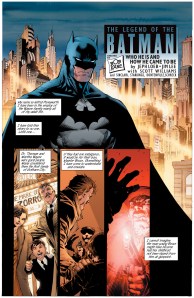
The above image, in case you hadn’t figured it out, is an updating of the classic Batman “quick-version” origin story, “The Legend Of The Batman – Who He Is And How He Came To Be” by Bill Finger and Bob Kane that I included with the last post. This modernized version was done for the Jeph Loeb/Jim Lee Batman storyline “Hush,” which is considered something of a modern “classic” even though, for my money, it pretty much sucks. I’ve never been a fan of Lee’s art, and the story here is essentially another drawn-out murder mystery by Loeb a la his “Long Halloween” storyline, and in point of fact he even employs the exact same plot conceit to disguise the identity of the true killer that he used in that previous series! All of which has precisely zero to do, specifically, with the hypothetical storyline of our hypothetical Bat-trilogy, save for one thing — folks who have read the “Hush” story should know that the Batman/Catwoman relationship depicted therein will have a big influence on how I see their relationship developing in this series. In an ideal world, I suppose, we’d just be able with this new series to come right out and admit a couple less-than-well-kept secrets about the Batman — namely that he’s gay and that he has a taste for a bit of, as the British would so politely put it, “rough trade,” but I think the world is, sadly, about 20 years years away from being ready and able to accept an openly gay Batman, so in this trilogy we’re going to keep up the pretense, paper-thin as it’s getting to be at this point, that the Caped Crusader is, indeed, heterosexual.

But we’re a good few posts away from really getting into the “meat” of how I see the whole Batman/Catwoman relationship evolving, being that we just wrapped up our pre-credit “teaser” sequence, the credits themselves have just rolled, and the there’s already a bit of a conundrum brewing in the audience’s mind as to whether or not this really is the Batman we’ve always known — as in, Bruce Wayne — at all.

Our first scene after the credits roll would be to see Bruce Wayne examining a large computer screen in the nearly-completed Batcave, and as the ever-reliable Alfred Pennyworth enters, they’ll exchange some dialogue about how two years of intense legwork are nearly complete — the cave itself, where Wayne has essentially been living and training, is all set, the “Bat vigilante” is firmly fixed in the public mind as a force that seems to be on their side, and their super-computer has been able to pin all the crime lords in town barring Vincent Lucchesi with plenty of criminal charges. Now is the time for the next phase in Bruce Wayne’s master plan to begin — he’ll “return” to Gotham officially, stake his claim to Wayne Enterprises through a surrogate, take the reins of the Thomas And Martha Wayne Foundation himself as his “day job,” and at night he’ll concentrate on nailing Lucchesi in his “Bat-vigilante” persona.

For that, though, he’ll need some help — and he’s zeroed in on two people on the “inside” that he’s made a calculated determination he can trust — new police commissioner Jim Gordon and new DA Harvey Dent. His period of working alone is over, and now that he’s delivered every other big crime lord in town to them, he’s earned a level of trust and respect from both these men. Lucchesi’s going to be a tougher nut to crack, though, because unlike the other guys, who could all be tied to the drug trade eventually through various phony business set-ups, bank accounts, etc., Gotham’s last “crime lord” doesn’t actually seem to be involved in the drug trade at all — the strangest thing Bruce Wayne/Batman has been able to come across in regards to Lucchesi is his well-concealed , even more well-concealed than the other guys were in regards to their involvement with the drug trade, orchestration of the shipment of large amounts of a perfectly legal, albeit quite dangerous, form of liquefied fertilizer into town, which naturally has Batman thinking that he’s working on a massive bomb of some sort.

Now, hopefully a competent screenwriter quite weave all this into a naturally-enough-sounding conversation that wasn’t too heavy on the info-dump and that would end with Alfred saying something along the lines of “well, all these questions will have to wait, sir, because Bruce Wayne is due in on a flight from San Francisco at noon on Friday.”

“And so I do, Alfred, and so I do.”

“And how, pray tell, do you intend to get to San Francisco undetected, sir?”

“You know, Alfred, I’m feeling a bit nostalgic — I thought I’d hop the rails for old times’ sake.”

I think I’ll leave it at that for now, since the next scene, with a clearly disguised-to-give-him-a-disheveled appearance Bruce Wayne playing hobo and riding in the back of a boxcar is the next crucial stage in the overall setup of the film’s first act and probably deserves a post of its own, so we’ll focus in on that tomorrow.

What say you to our little setup so far, then? Thumbs up? Thumbs down? Still too early to tell? As always, any and all comments are welcome, whether positive, negative, or aggressively neutral!