Welcome to the next installment of my little month of metal countdown. This time I’ll kick off my list of more traditional black metal material. Again, don’t regard this as any sort of ordering of favorites so much as the order I happened to settle on after a number of considerations.
21. Satyricon – Mother North
I’ve got to confess, I could never get into Satyricon. Most of their music never quite hit home for me. In fact, after some consideration they lost out to a band which I couldn’t really start my list with and retain any hope of people taking this seriously. So in recognition of their significance, I present to you the 21st entry of my top 20, and the one song by them I’ve heard that really strikes me.
20. Dimmu Borgir – Mourning Palace
That band that I couldn’t bear to start my list with is Dimmu Borgir. I don’t care what anyone says, they’ve written some pretty kickass music over the years and have no business being placed alongside Cradle of Filth as “fake” black metal. This song shows it best. Released in 1997, it’s certainly got some competition as the most worthy Borgir song for this list (Puritanical Euphoric Misanthropia has some rather impressive ones), but the melody that kicks off at 0:48 has been stuck in my head for a good ten years now and I just couldn’t resist including it.
19. Venom – Countess Bathory
Alright, enough of that. I’ll transition into more common fair with the ultimate proto-black metal band, the group that started it all, and the song by them that appeals to me most. What distinguishes it from thrash is not so much the music itself as the message and mood it presents. Their monumental 1982 release that gave black metal its name really marks the transition from a show of force to an uninhibited glorification of evil.
18. Dark Funeral – The Dawn No More Rises
In 1995, Dark Funeral emerged with a great Swedish-style black metal album, The Secrets of the Black Arts. In 1996, they inexplicably decided that it was too raw and rerecorded the whole thing with an eye towards better production. They haven’t been very good ever since. Unfortunately I could only find the re-recording on youtube, and that is why this song is in 18th place and not much higher. If you can by any means find a copy of the original Secrets of the Black Arts (they’re packaging it as a bonus disc with the re-recording these days), pick it up and recognize what a solid band Dark Funeral briefly were. (Ok, I still like them and their new album is pretty good stuff if you’re into the Swedish style, but their transition is still irritating.)
17. Gehenna – The Shivering Voice of the Ghost
In 1994, often forgotten Gehenna released one of the most unique albums in the early history of black metal. Completely forgoing brutality, First Spell captures the sinister element of black metal that excessive blast beats and crushing guitars have a tendency to disguise.
16. Possessed – The Exorcist
I’m not sure why this song isn’t on more black metal charts. Maybe it’s because by 1985 Bathory had really stolen the show. Maybe it’s because Seven Churches is such a monumental thrash and death album that its black metal significance gets overlooked. But between the most sinister introduction I’ve ever heard and the first fully developed use of tremolo picking in metal I can think of (granted I’m no expert on death or thrash metal, hell, maybe bands had been doing it for years), The Exorcist is, in my mind, as much a black metal song as anything Venom or Bathory were writing at the time. I mean, the album cover says it all.
15. Marduk – Christraping Black Metal
I earlier hinted that I’m not a fan of Swedish black metal, and you won’t see much of it in this list. But Marduk (who I’ll finally get to see live this Friday!) are an amazing exception. Every word they write delights me. (True story: I had an idiotic TA once who said she’d give us a bonus point if we named our next paper after a song. It mentioned environmental reforms a few times, so I asked her if “Fistfucking God’s Planet” would be acceptable.)
14. Ulver – Hymn I: Of Wolf and Fear
Nattens Madrigal isn’t the most raw black metal album I’ve ever heard by accident, and given where Ulver turned afterwards I’m always inclined to think it’s a gimmick until I listen to it again. If this stuff didn’t honestly give me a headache it might be among my most listened-to albums. Every track on it is a masterpiece.
13. Emperor – Cosmic Keys to My Creations & Times
And speaking of masterpieces, Emperor are second only to Noktunal Mortum as my favorite black metal band. Not much really need be said about this album, or Emperor in general for that matter. It’s black metal 101, and it’s incredible.
12. Darkthrone – Kathaarian Life Code
This song might not be quite as memorable as some of Darkthrone’s later works. But when, in August 1991, in a studio in southern Norway, “we are… a blaze… in the northern… sky…” was choked forth into a microphone, the second wave of black metal had begun.
11. Nattefrost – Sluts of Hell
“Filthy bitches of hellish sin.” … If I have a black metal idol it’s Nattefrost. Carpathian Forest is the most underrated band in the scene, and his solo work is just as entertaining.
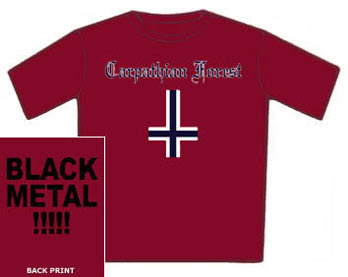
Seriously. You can’t not love this shit.
Hope you’ve enjoyed. I’ve got three more posts to come. Hopefully I’ll get the last one up by Halloween.
 Through the Shattered Lens