Past Review: The Prestige (dir. by Christopher Nolan)


2006 has been a quiet year for event films. The predicted blockbusters this past summer pretty much underperformed despite some being exactly as good as I thought they’d be. Other than Johnny Depp and the gang’s Pirates of the Caribbean: Dead Man’s Chest, every blockbuster didn’t blow the industry out of the water. It’s a very good thing that I had smaller films to tide me over. This year has been a very good ones for some independent-minded and smaller films which came out during the slow first couple months of the year and during the graveyard release months between the end of summer and the start of the late year holidays. I’ve already had the chance to see such very good films like Running Scared from Wayne Kramer and Hard Candy from David Slade to The Proposition from John Hillcoat. I am glad to say that Christopher Nolan’s film adaptation of Christopher Priest’s novel, The Prestige is another non-blockbuster that excites, entertains and, in the end, keeps the audience mystified but not confused.

I’ve read Christopher Priest’s novel about dueling late 19th-century London magicians. It’s a novel written in epistolary format with each chapter and section written as entries into the journal of one of the main characters in the story. The novel itself is pretty straightforward as it tells the story in near chronological order. I was hesistant to embrace this film adaptation when I first heard about it since alot of the mystery of of the story wouldn’t translate so well in film if they followed the strict order of how the story was told in the novel. For Christopher Nolan and his brother, Jonathan, to just adapt the novel straight-out would’ve made for a dull and boring mystery-thriller. I was glad that the Nolan brothers were inventive enough to borrow abit from Christopher Nolan’s first feature film, Memento. Their film adaptation of The Prestige doesn’t go backwards in its narrative, but it does mixes up the chronological order of the story somewhat, but not to the point that Tarantino does in Pulp Fiction and Kill Bill. The two Nolans fudges abit with the timeline to add some backstory filler to help give the characters that Christian Bale and Hugh Jackman portrays with the reason for their pathological obsession with each other.

Christopher and Jonathan Nolan’s screenplay for The Prestige was able to keep the mystery of the story intact, but it also keeps the amount of red herrings in such films to a minimum. Michael Caine’s character, Harry Cutter, opens up the film explaining just exactly what constitutes a magic trick on stage. How it’s divided into three parts. First, there’s “The Pledge” wherein the magician shows the audience something ordinary he or she will use in the trick. Soon, the magician will follow this up with “The Turn” where the abovementioned ordinary object does something extraordinary in front of the audience. The pay-off of the magician’s trick is “The Prestige” where the audience’s astonishment occurs as they fail to deconstruct and figure out the means of the trick. That’s pretty much the film in a nutshell. It’s one big magic trick. The clues are there for the audience to see, gather and extrapolate their answer to the mystery that is the story. The screenplay doesn’t treat the audience as if they need to be hand-held throughout the film. In fact, anyone who pays attention will be able to solve one-half of the mystery by the first hour. I won’t say exactly whose half of the mystery it will be but people will be kicking themselves afterwards if they don’t figure it out right away.

This magic trick of a film does have its many underlying layers of themes to add some complexity, drama and tension to the characters of Alfred Borden (Christian Bale) and Rupert Angier (Hugh Jackman). I’ve already mentioned that throughout the film their mutual obsession about each other is due to a backstory detailing their past. A past where they were initially friends — rivals even — and apprentices to the magician Milton (played by Ricky Jay) and Harry Cutter (excellently played by Michael Caine as the only voice of reason throughout the film) who creates and maintains the devices used in all the stage tricks. Borden and Angier’s obsession is not just in ruining and sabotaging each other’s magic tricks and lives, but also trying to find out each other’s secrets as they both learn magic tricks which amaze and thrill the gentry of London’s stage. From the beginning of the film these two characters begin a journey towards a path of destructive behavior which puts not just each other’s lives at risk, but those who they care about. All of it in the name of humiliating and upstaging the other due to a tragic incident early in their mutual careers. These two individuals were not sympathetic characters and I applaud Christopher Nolan and his brother for not softening up their hard edges.

Most adaptors will try to make a story’s characters more sympathetic and likable. They went the opposite in The Prestige. But even these two dark characters continue to exude the charisma and strong personalities that the audience will root for one or the other. Should they root for the charismatic and born shownman that Hugh Jackman’s Angier character plays or go for the perfectionist Borden character Christian Bale plays. A perfectionist whose technical skills surpasses that of Angier’s but whose introverted and brooding personality makes him little or no stage presence.

Both Jackman and Bale play their characters well. The film wouldn’t be so good if it wasn’t for the work of these two actors. It helps that they’re surrounded by quality supporting character like Michael Caine as the seasoned, veteran mentor to the dueling magicians. Even Scarlett Johansson does very well with the part she’s given. It’s a part that many sees as more of a throwaway character. A piece of very good-looking distraction for both the story and the audience. But she gamely plays the role of pawn for both Angier and Borden. Unlike Michael Caine’s character who remains the singular voice of sanity in the film, even Johansson’s character of Olivia gets pulled into the obsessions and betrayals that’s plagued both Angier and Borden. But in the end, she’s just part of the process of “The Turn” and if people have been watching the film closely right from the beginning then she’s also a clue as to the secret of one of the amazing magic tricks shown by the two magicians.

The Prestige also has a distinct look about it. The 19th-century London just before the start of the new millenium gives it a certain sense of Victorian-era familiarity. Production designer Nathan Crowley shows a London at the height of its Gilded Age, but soon gives way to a certain steampunk look as inventor Nikola Tesla makes an appearance during an integral part of the story. David Bowie portrays Tesla as an eccentric genius whose search for the secrets of the universe will lead to the discovery of what many of that era would consider magic. It’s the ingenius looking technology created for the Tesla sequence which finally gives The Prestige it’s root in fantasy and science-fiction. The film doesn’t dwell on this new development but from that part of the story and until the end, the film takes on a look and feel of a steampunk mystery-thriller. There’s not enough films that tries to mine this new subgenre and I, for one, am glad that Christopher Nolan added this new dimension to the film’s overall look.

In the end, The Prestige really needs to be seen to be appreciated and for people to make up their minds about the film. Some will see it as a thriller with twists and turns that doesn’t insult the intelligence of its audience. Some may see the film as just one large gimmick from start to end. Those people will probably be correct as well. The film at its most basic level is one long magic trick with all three acts. It has “The Pledge” which is then followed up by “The Turn” and then ends with “The Prestige”. It will be up to each individual who sees the film to make the final decision as to whether they’ve bought into all three acts of the magic trick that is The Prestige, or come away having felt like they’ve wasted their time. I’ve not come across many who felt like the latter, even those whose own feelings about the film don’t reach the same level of praise as I have for Christopher Nolan’s latest offering. All I know is that this is a film that delivers on its premise to confound and amaze. It also continues to validate my views that Bruce Wayne and Batman are in very good hands with Christopher Nolan at the wheel. The Prestige was easily one of the best film of 2006.

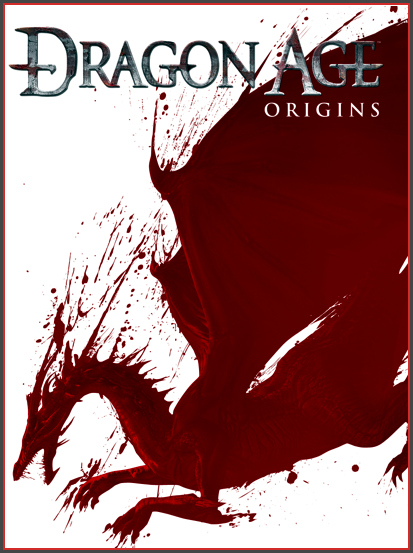
Review: Dragon Age: Origins


Before BioWare became famous for its console rpgs set in scifi settings (Mass Effect and Star Wars: Knights of the Old Republic), they were a company already well-known and well-loved by PC gamers for their excellent Baldur’s Gate and Neverwinter Nights fantasy-based rpgs. The company was able to take the rich and complex setting of AD&D’s Forgotten Realms universe and actually succeed in making it accessible to old and new fans alike. While they made one fantasy-based console rpg in the last couple years (the very underrated Jade Empire for the original Xbox), BioWare seem to have stuck mainly in making scifi rpgs. It was a nice surprise when just a couple years ago the company announced that in addition to developing Mass Effect for the Xbox 360 the company was also in the midst of creating a new and original fantasy-based rpg for the next-gen consoles (Xbox 360/PS3) and the PC. This game was to be called Dragon Age and was to be their latest rpg franchise. A fantasy one to bookend the scifi franchise they had established with Mass Effect. It took them a couple years, but the renamed Dragon Age: Origins was finally released in early November 2009 to some considerable fanfare. This was a game fans of the company’s earlier fantasy rpgs on the PC have been waiting for. Did fans of the Baldur’s Gate Series get what they’ve been wishing for or did BioWare misstep with their return to fantasy rpg in Dragon Age: Origins. I’m happy to say that BioWare more than lived up to their own hype of their latest fantasy offering.

Dragon Age: Origins is a a fantasy rpg based on a world wholly-created and owned by BioWare. Like it’s scifi sibling in Mass Effect, this game is an amalgamation of ideas from well-established franchises (Forgotten Realms, Lord of the Rings, Warhammer Fantasy) but with a rich history and background created from the ground up by the creative forces within BioWare. This world that DA:O inhabits is called Thedas with the realm of Ferelden being the main setting for this introductory game to what looks to be an on-going franchise. It is populated by the usual fantasy races such as elfs, dwarfs and imperial humans. The world has its own version of the usual orcs, goblins and other so-called evil races of fantasy. These races are generally called “darkspawn” and it is this danger which forms the main conflict the player must fight and defeat throughout most of the game’s playthrough. BioWare has also introduced a very complex political and intrigue element to the game in the form of a civil war brewing within the human faction in the game not to mention a conflict of succession on the dwarf side of the equation. The elf race (divided in two separate and distinct groups – city elf and Dalish elf aka wood elf) also get it’s own brand of subplot in the form of racial discrimination and a genocidal battle with a primal race. One common thread binds all these different races and the many classes one could choose from and that’s they all become Grey Wardens and the main hero of the game.

Such rich additions to an rpg are usually simple and minor in even some of the best rpgs of the past both western and Japanese. BioWare’s decision to make these sorts of storytelling additions very complex and rich makes for a more immersive gameplay. There are literally volumes of history and information to find and sort through in the game and from the impression I was able to glean from books and stories found throughout it barely scratches the surface of the history and background of Thedas and Ferelden. The world-building BioWare has done with DA:O was as deep and complex as Tolkien’s fantasy world and those created by the legion of writers who worked on AD&D’s Forgotten Realms. DA:O just doesn’t introduce you to the game and it’s world but immerses you in its details. These were details ranging from those needed to get through the game to the minutiae which doesn’t do much in terms of gameplay but does help make the world seem more real.

The gameplay begins with an introductory chapter which works as both introducing the origins of the player’s chosen race and class, but also as a way for new players to get an on-the-field tutorial on the game’s combat and inventory mechanics. Combat both melee and spellcasting has less to do with button-mashing once a target has been highlighted but instead similar to BioWare’s combat system in their KOTOR games. A player selects the appropriate special attacks and buffs using a radial menu (attacks and buffs used often can be hotkeyed to the appropriate button on the Xbox 360 controller for instant access). Other characters in the player’s combat party could either be left to attack, defend and support the player using preset commands similar to Square-Enix’s “Gambit System” in Final Fantasy XII or the player could pause the game to switch to those characters individually and set a particular command manually before unpausing the game to continue the fight. The combat in DA:O is more about managing how the party fights and making sure the right combinations of attacks and spells are chosen. In the beginning of the game the simplest commands should suffice to beat most enemies in small or large numbers, but as the game progresses deeper into the story both main and sidequests the need to make use of every type of attacks and spells became more important. Bulldozing one’s way through most of the game only works in the beginning and would only get a player and his party killed once they enter Chapter 2.

This type of gameplay mechanic might turn-off some players who prefer a more active-style of combat which BioWare implemented in Jade Empire. At times I still found myself button-mashng a particular hotkeyed attack even though I knew that pressing that attack nonstop didn’t make me attack faster (each use of an ability came with a cooldown time which last just mere seconds to minutes depending on their level and potency). It is definitely a combat mechanic that took some getting used to and at time it does make the player less an active participant in the game and more an observer. I’m still on the fence as to whether I like this micromanaging-style of combat. While it does add some complexity and strategy to how a player fights the multitudes of battles in the game it also makes some of the larger boss fights (especially the final boss fight) very long with a wrong choice of commands ending a fight as quickly as it started.

The graphics for DA:O on the Xbox 360 is pretty crisp and keeps a steady frame-rate throughout the  game and it’s many cutscenes. I’ve heard comparisons about the look of the game on the 360 to the PS3 version with the latter having a more vibrant color palette but some slowdowns in the framerate when there’s many things going on in the screen. Until I actually get a chance to play the PS3 version I will say that the 360’s look and stability of its graphics I’d prefer than slowdowns which considering the type of combat mechanic it uses could really become detrimental to gameplay. It’s not the prettiest Xbox 360 game out there but this game makes’ ample use of the 360’s power to make gameplay as smooth as possible.

Now one can’t talk about the graphics without pointing out the pros and cons of the audio in the game. I’d say that it’s in this aspect of DA:O that BioWare had better success. Each weapon strike whether they be sword, staff or bow/crossbow has a very distinct sound to them. The sounds of the world around the player adds to the experience. Even when a player is not in battle and just stands around to admire the view the game still bombards them with sounds both ambient and natural depending on the area they’re currently at. One aspect of the sound design that would probably put a smile on many gamers would be the varying sounds of weapons and spells hitting flesh in the game. BioWare sure delivered on making a very violent world come to life with their sound design. I’d also like to make special mention to the soundtrack by longtime collaborator Inon Zur. His orchestral work in the game is a great mixture of Medieval Europe and Middle Eastern musical influences.

The voiceover work by the large cast in Dragon Age: Origins gives life to the dialogue both in and out of camp. I would say that pretty much 60 percent of all the dialogue in the game was spoken and done well. While it’s not on the same level as Mass Effect‘s voice work for an rpg it was a lot and helps distinguish it from it’s Japanese rpg counterparts where most dialogue outside of cutscenes are silent and read-only affairs. Some players might even recognize some of the voices in the game. Two who stood out where Claudia Black (of Farscape and Stargate SG-1 fame) as the witch Morrigan and Kate Mulgrew (Star Trek Voyager’s Capt. Janeway) as Morrigan’s mother, Flemeth. All the actors on in the game give off dramatic readings instead of flat, directionless reads which could break a player out of the moment. I think Black’s work as Morrigan was some of the best voiceover work in video game history and really fleshesh out her character. I knew that I kept her around through pretty much most of the game’s playthrough just to hear her speak.

Overall, Dragon Age: Origins was a great introduction to BioWare’s newest rpg franchise. It’s definitely the spiritual successor to their acclaimed Baldur’s Gate rpg series on the PC. As with most introductory games in a franchise it does have some flaws that could’ve been fixed prior to the game’s release, but these flaws were not enough to take away from the game’s enjoyment (on the Xbox 360 at least which I played it on). The rich and complex world-building BioWare’s creative magicians were able to inject into their own brand of rpg gameplay makes for a very immersive videogaming experience. Thedas and Ferelden come to life as do the Grey Wardens and it’s other inhabitants both good and evil. BioWare has already announced a new expansion to extend the game past it’s final boss fight. Here’s to hoping that they continue to support the game while they begin work on the sequel.

Dragon Age: Origins – Morrigan Profile

Dragon Age: Origins – Leilana Profile

Dragon Age: Origins – Zevran Profile

Dragon Age: Origins – Wynne Profile

Dragon Age: Origins – Oghren Profile

Dragon Age: Origins – Sten Profile

Dragon Age: Origins – Alistair Profile

Dragon Age: Origins – Shale Profile