Late Night Retro Television Review: CHiPs 3.24 “Dynamite Alley”


Welcome to Late Night Retro Television Reviews, a feature where we review some of our favorite and least favorite shows of the past!  On Mondays, I will be reviewing CHiPs, which ran on NBC from 1977 to 1983.  The entire show is currently streaming on Prime!
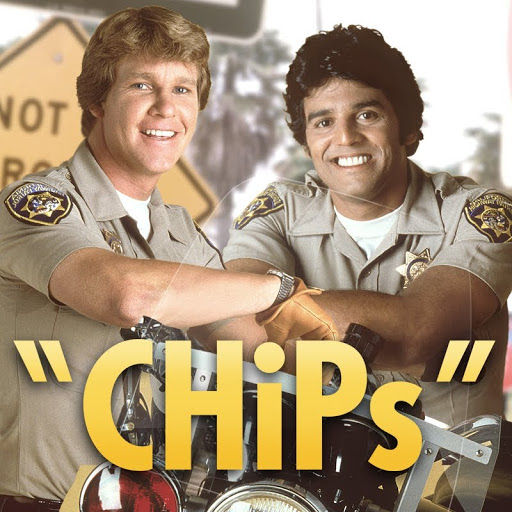
This week, season 3 comes to an end.

Episode 3.24 “Dynamite Alley”

(Dir by Bruce Kessler, originally aired on March 30th, 1980)

After testifying in a trial in Bakersfield, Bonnie (Randi Oakes) is driving back to Los Angeles when, somehow, she ends up flipping her squad car.  In the hospital, Bonnie swears that she had to swerve suddenly to avoid a truck that came out of nowhere.  The only witness to Bonnie’s accident is a pre-adolescent named Corey (Bryan Scott), who was watching as Bonnie drove by his house.  Corey says that he saw the truck but Ponch and Jon come to suspect that he might be lying because he doesn’t want Bonnie to get in trouble.  Meanwhile, Grossman is writing an article on how tired drivers can hallucinate seeing other vehicles and he comes to suspect that this is what happened to Bonnie.

And he’s right!  It’s interesting that, just last season, CHiPs did an entire episode about proving that Sindy Cahill was not responsible for a crash she was involved with.  Meanwhile, this season ends with an episode that’s all about Bonnie being a menace on the streets.  Of course, event though Bonnie flipped her car after imagining seeing a truck in front of her, she gets to keep her job and everyone has a good laugh about it.

My main issue with this episode is that Corey was 1) portrayed as having a stutter and 2) nicknamed Blabbermouth by everyone he knew, even the characters who were supposed to be sympathetic to him.  When he showed up in the hospital to confess that he didn’t really see a truck push Bonnie off the road, Bonnie replies, “Oh, Blabbermouth.”  Even Jon and Ponch call him Blabbermouth.  As a former stutterer, this episode really annoyed me.

As for our B-plot, the “funny car show” is in town.  All sorts of weird vehicles show up on the streets.  One man tries to drive a tank to the show and people start throwing bottles at him.  When Baker and Ponch show up to investigate the tank, Baker nearly gets hit by a glass bottle that’s thrown at him by two kids.  Ponch grabs one of the kids but then just laughs and lets him leave.  Really, Ponch?  BAKER COULD HAVE LOST AN EYE!

And that’s how the third season ended, with Bonnie crashing her squad car because she had a hallucination and a poor kid with a stutter being called “Blabbermouth” by the police.  That’s not the best way to end a season.

Season 4 starts next week!

Embracing the Melodrama Part III #4: The Grasshopper (dir by Jerry Paris)


“It’s very simple what I want to be: totally happy; totally different; and totally in love.”

— Christine Adams (Jacqueline Bisset) in The Grasshopper (1970)

Seriously, is Christine asking for too much?

Total happiness?  That may sound like a lot but trust me, it can be done.

Totally different?  That’s a little bit more challenging because, to be honest, you’re either different or you’re not.  If you have to make the effort to be different, then you definitely are not.

Totally in love?  Well, it depends on how you define love…

At the start of The Grasshopper, Christine thinks that she’s heading to America to find love.  While an oh-so late 60s/early 70s theme song plays in the background, Christine leaves her small hometown in Canada and she heads down to California.  She’s planning on meeting up with her boyfriend Eddie (Tim O’Kelly) and taking a job as a bank teller.

Of course, it soon turns out that working in a bank isn’t as exciting as Christine originally assumed.  Eddie expects Christine to just be a conventional girlfriend and that’s not what Christine is looking for. As well, it’s possible that Christine may have seen Targets, in which O’Kelly played an all-American boy who picks up a rifle and goes on a killing spree.

And so, Christine abandons Eddie and heads to Las Vegas.  Since this movie was made in 1970 and Uber didn’t exist back then, Christine’s preferred method of traveling is hitchhiking.  This gives her a chance to meet the usual collection of late 60s weirdos who always populate movies like this.  One driver crosses herself when Christine says that she plans to have a baby before getting married.  Another is a hacky Las Vegas comic.

In Vegas, Christine applies for a job as a showgirl.  As she explains to sleazy casino owner Jack Benton (Ed Flanders), she “once did Little Women in school.”

“Did you do it nude?” Jack replies.

Yep, that’s Vegas for you!  It’s the city of Showgirls, Casino, and Saved By The Bell: Wedding in Vegas, after all!

Anyway, thing do get better once Christine meets and falls in love with Tommy Marcott (Jim Brown), a former football player who is now working as a door greeter in Jack’s casino.  Everyone tells Christine not to get involved with Tommy.  One of Jack’s men, a menacing hitman who looks just like Johnny from Night of the Living Death (he even wears glasses), warns Christine to watch herself.

Through a long series of events, Christine ends up on her own again.  The usual collection of 70s events occur: murder, drugs, prostitution, and ultimately a stint as the mistress of a rich man played by Joseph Cotten.  The important thing is that it all eventually leads to Christine and a skywriter getting stoned, stealing a plane, and deciding to write a message in the sky.

That’s when this happens:

Yes, it’s all very 1970!

Anyway, The Grasshopper is one of those films that tries to have it both ways.  Establishment audiences could watch it and think, “Wow, those kids are really messed up.”  Counterculture audiences could watch it and say, “Old people are such hypocrites.”  Oddly enough, The Grasshopper was written by future director Garry Marshall and it’s an incredibly overwrought film.  There’s not a subtle moment to be found in the entire film and the film’s direction is flashy but empty.  However, for those of us who love history, it’s as close to 1970 as we’re going to get without hopping into a time machine.