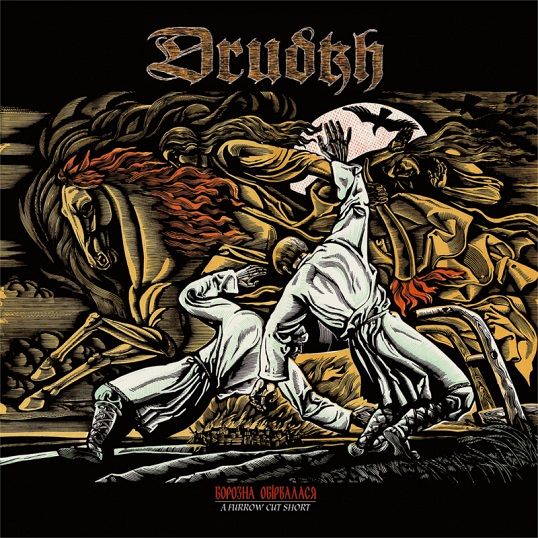
Review: Drudkh – A Furrow Cut Short


When I fired up Drudkh’s tenth studio album yesterday, A Furrow Cut Short, I was holding my breath in the dim hope that something awesome would slam into my brain from the get-go. After all, this is Drudkh. Not all of their releases have been met with equal acclaim, but they always seem to carry hype on their side.

The album began interestingly enough, with some bending tremolo guitar that kind of brought to mind Blut Aus Nord, and then I waited a bit and moved the play bar ahead. A pretty cool groove picked up around 1:50, and I rode it for a while. The song began to repeat an earlier passage with vocals tossed into the mix, and I moved the play bar ahead. There was that groove from 1:50 again. I rode it. I moved the bar ahead…

Greatness did not grace my ears in a neatly wrapped box, and that was fine. It was just a distant hope. At that point, my immediate instinct was to browse through the sixty minutes of content for all of the gripping moments that would surely rise out of the long black metal grind to knock my head around. A few came. Should I count them? Was that how best to measure this album’s worth? I started to feel a bit silly. This sort of fast-forward treasure hunt has been my subconscious approach to Drudkh for some time now. Here was a band that used to keep me wide-eyed through ten minute tracks as I waited for the peaks to overwhelm me, and over the course of ten albums the appeal had been reduced to skimming. What changed?

The production changed. That’s for certain. Since Microcosmos, Drudkh have been presenting a more deep and refined sound, and I don’t think it did them any favors. It was a technical improvement at the expense of the unique aesthetic appeal of their sound. They also largely left the world of folk music behind. On Songs of Grief and Solitude (2006), Drudkh reworked a variety of earlier melodies from their metal albums into a collection of instrumental folk tracks. It worked really well, and it’s something they would never be able to do with the tunes of Eternal Turn of the Wheel or A Furrow Cut Short.

Song: Cursed Sons I

<@Shad> One day
<@Shad> I will tell my children
<@Shad> That I started the Drudkh wikipedia page.

And there has been one other change. It’s something far beyond the band’s control, but it is significant: historical context. This first dawned on me when I was glancing over the reviews of A Furrow Cut Short already popping up on Encyclopaedia Metallum. One guy started off by writing “Ukraine is not a country where heavy metal thrives like in the UK or Scandinavia”. I stumbled over the words. I suppose fifteen years is a long time when you’re talking music. There are high school kids enjoying A Furrow Cut Short who weren’t born yet when Kharkiv was carving out its claim on the map of metal. That’s a little… weird for me, but it probably has a real impact on how I perceive this music too.

I will never really appreciate thrash metal, because I was never there. I encountered the genre as a prim and proper, cookie-cutter devolution of its original glory. I lacked the contextual sense that something new and monumental was overriding the standards of metal as I’d formerly known them. To me, thrash is just that sound Metallica pioneered, and I have no doubt that this perspective is woefully misguided. This same sort of historical misconception might be taking root on Ukrainian black metal. The reviewer I quoted… his statement would have been a reasonable introduction to Lunar Poetry or Goat Horns in the mid-90s, but by the time Drudkh started to gain attention, Kharkiv was no heavy metal backwater. It was a placename that you gobbled up. “Ukrainian” meant there was no need to sample an album first. You knew you wanted to hear it.

Nokturnal Mortum put Kharkiv on the map, and Knjaz Varggoth’s brainchild still stands leagues above anything else east of Prussia in my book. But Knjaz is also a racist piece of shit, and I can’t say I feel bad that the history books have been rewritten to regard Drudkh as the mother of all Ukrainian black metal. Still, we can’t forget the pre-existing spirit in which this band emerged. Standardized black metal was all about LaVeyan Satanism back then, its music a sort of declaration against society’s disposition to enforce religious values. “Satan” was a shallow facade, and once the point was made, the scene stagnated. Nokturnal Mortum ignited something novel by merging second-wave black metal’s counter-cultural rage with a sort of Bathory-esque true reverence for the old gods. Their music was as hateful as anything Mayhem or Emperor had produced, but it was also rabidly pagan. NeChrist slaughtered the tenets of modern society, smeared their blood across its chest, and danced naked on the pyre.

And that, to me at least, was the spirit of Ukrainian black metal entering the 21st century. It was not merely violent and destructive, but also highly contemplative. The means varied from band to band, but the idea was to bring a bygone spirituality to life. Musically, the tremolo and blast beats found themselves in the company of massive, sweeping auras of sound that might at any minute break into traditional melodies more savage and tribal than anything the co-emerging folk metal scene had to offer. Astrofaes and Hate Forest were two of the earliest bands to emerge from Kharkiv in this new tradition. Astrofaes, headed by Thurios, was the more melodic of the two, with forlorn chord progressions and folk allusions comparable to early Drudkh. Hate Forest, on the other hand, remains one of the most brutal bands I’ve ever heard. It was Thurios’ original collaboration with Roman Saenko, and it was so uncompromisingly violent and minimalistic that it made the most hellish Norwegian offerings feel tame. Yet it was entirely meditative. If Varg Vikernes popularized the notion of black metal as a trance-inducing journey, Hate Forest went leaps and bounds towards perfecting it.

When Thurios and Saenko went on to form Drudkh, the product was more tame than either of their parent projects. Thurios brought the folk and raw melody-crafting via Astrofaes, while Saenko added the trance state and fine touch for aesthetics. At least, that’s how I’ve interpreted it. I certainly can’t offer any informed view into their song-writing process. In any case, what they crafted, not so much on Forgotten Legends but definitely on Autumn Aurora, The Swan Road, and Blood in Our Wells, was totally unique and beautiful. But it did not feel unique to perhaps the extent that it really was. It felt like a brilliant addition to a scene that entailed so much more. (In more than one sense, and not all positive. I am sure the reviewer I mentioned must find it bizarre that almost every summary of Drudkh begins with a preface that they disavow all ties to racism/extremist ideologies.)

Song: To the Epoch of Unbowed Poets

I take two things from this. One is that Drudkh’s earlier sounds float on a cloud of nostalgia. An album that sounded a hell of a lot like Autumn Aurora would really excite me even if it was not half as good, because it would transport me back to a special place and time. The other is that a once unprecedented sound has become pretty common fair. Atmospheric black metal was not invented in Ukraine, but its modern roots run deep there. A lot of bands around the world have since come along and done more with it. They’ve taken it other places–incorporated it into other, equally novel sounds. Saor is a good recent example. In heaping praise on Andy Marshall’s solo project last year, I passively mentioned that it accomplishes its goal “without ever really breaching any new territory beyond the tried and true boundaries of pagan metal”. Well, Drudkh and the Ukrainian scene in general established a lot of those boundaries. And other bands took it further still, to the point where I could speak of an album like Aura without ever thinking “wow, this is original”.

A Furrow Cut Short has some really stand-out tracks. The two I sampled here especially struck me. But it is also lost in time. Changes to production and an abandonment of folk render the modern Drudkh incapable of reaching to the same plain of aesthetics that they once knew. I don’t think it incorporates anything new, either, that might allow me to hear it as a great example of where metal stands today. This album must stand or fall exclusively on its in-born aesthetic value, while competing with the vibe that it is a watered down version of what the band used to be.

That value is, well, average. You can get into the album if you try, but it will not sweep you off your feet. I am not one of these people who cling to the past and expect a band or style to sound exactly like it used to. I am always willing to humor “where are they headed now”, and I have a good deal of respect for what Drudkh did on Handful of Stars even if it didn’t much move me (or seemingly anybody else). At least they were trying to do something. Even Eternal Turn of the Wheel showed motion. A shying away from change, but motion at least, and I modestly enjoyed it for that. A Furrow Cut Short goes nowhere, and that fact drives home the feeling that this band’s sound has grown really stale.

I am a bit torn about A Furrow Cut Short. A part of me thinks “why did they bother?”, but a wiser side enjoys tracks like “Cursed Sons I” and “To the Epoch of Unbowed Poets” way too much to pretend I’d be better off without them. Still, I’m probably never going to listen to this album again. Maybe a quick revisit at the end of the year. There are just too many other bands doing something more original. And too many classics I’d rather rehash, for that matter. It’s strange, because Thurios, Saenko, and the rest of the crew haven’t lost their touch at all. They are doing great things with Blood of Kingu, and Dark Star on the Right Horn of the Crescent Moon would have definitely made my top albums list for 2014 if I had caught it in time. But considering every single member of Drudkh is in that band, I don’t get why Drudkh continue to sound so… redundant.

The album’s available via Season of Mist.
Ten Years #37: Drudkh


Decade of last.fm scrobbling countdown:
37. Drudkh (841 plays)
Top track (67 plays): Fate, from The Swan Road (2005)

Ukraine was my gateway into black metal. My earliest exposure to bm in general was met with a closed mind; I remember picking up IX Equilibrium not long after it came out, hearing nothing but distortion and blast beats, and wondering what all the fuss was about, as if its brilliant classical component was non-existent. But somehow Nokturnal Mortum’s Goat Horns blew my mind on first exposure, when I was still a teenager rocking out to In Flames, Opeth, Iced Earth and the like. That pagan spirit screaming murder beneath a wall of chaos struck me with more force than “satanic” or “progressive” bm ever would, then or now. I spent a substantial chunk of my paychecks at The End Records in the years that followed, and I was not searching for “black metal” so much as “Ukraine”. The consequence was that I got to enjoy bands like Drudkh, Hate Forest, and Astrofaes before it was “cool” to do so. (Let’s face it, hype always influences our perspective on a band in one way or another, whether we like to admit it or not.)

Drudkh quickly became my second favorite band in that scene after Nokturnal Mortum, and what I have heard in them over the years is nothing like the steady degradation from Forgotten Legends downward that supposedly “old school” fans are inclined to proclaim. I don’t know why so many people see Drudkh as a one-track band. Perhaps it is because the rate at which they release new material softens perception of the major shifts in their evolution as artists. Handful of Stars (2010) was the only album on which fans actually had to stop and go “wait, is this still Drudkh?”, and the band answered that question decisively with the Slavonic Chronicles EP. But if you listen to Drudkh as a band who played the same solid thing for four or five albums and then got too successful and lost their touch, you’re fairly misguided. It’s true that their first three albums have a lot of similarities. I sort of feel as though their vision on all three was roughly the same, with Swan Road (2005) marking the point at which they had enough recording experience to really make their sound fully capture that vision. The band has rarely repeated the same sound since. Blood in Our Wells (2006), my personal favorite, was a tremendous shift in favor of their pagan undertones, with songs like “Solitude” and “Eternity” crushing the listener through anthems more than atmospherics. Songs of Grief and Solitude (2006) was perhaps the best folk interlude album in black metal since Ulver famously did it, and Estrangement (2007) completely revisioned their sound, replacing characteristic deep plods with rabid, shrill blast beats and grittier production. Microcosmos (2009) was a significant change in production towards the other end of the spectrum, and I rather doubt the gut-wrenching quality of “Ars Poetica” (a song I still think has an almost screamo vibe to it at the climax) would have hit home so forcefully otherwise.

Drudkh’s trip to France on Handful of Stars (2010) may have left some fans disgusted, but it would be frankly stupid to call a band so consistently open to change “sell-outs” the moment their vision failed to reflect stereotypical expectations of aggression, masculinity, whatever the fuck tr00 cvlt dandies demand. And anyone who thinks Eternal Turn of the Wheel (2012) was some grand return to the good old days is in stark denial of the (I think quite intentional) persistent French influence underlining this newest chapter in their discography.

If I seem to be taking a defensive stance here, it might be in part because I’m arguing against my own initial inclinations. I’ve made the shallow mistake of blowing off Drudkh as washed up many times before, and I never fail to regret it once I’ve given the album in question substantially more time to grow on me. (My initial review here of Eternal Turn of the Wheel was cautiously negative. Today I would say it’s great.) I think over the years I’ve developed some boneheaded stereotype of Ukraine as a third world nation–an opinion based mainly on Ukrainian Americans whose pseudo-heritage reeks of self-debasing Cold War propaganda and “world music” zines. (“Only my American non-profit organization can preserve the endangered culture of our pathetic, eternally oppressed, utopianly pacifistic Slavic ancestors! I’ll give you a cultural awareness award and my new Carpathian-Caribbean fusion cd! Buy my shitty handicrafts! Send money!”) I try to forget about it and remind myself that these people are the ultimate American idiots with no actual connection to the people they pretend to represent, but I still find it hard at times to give Slavic musicians the intellectual credit they deserve. Roman Saenko and co are actually among the most intelligent musicians of our generation, and when I remind myself of that and revisit their discography, I realize again that it has been consistently solid from start to finish.

Review: Drudkh – Eternal Turn of the Wheel


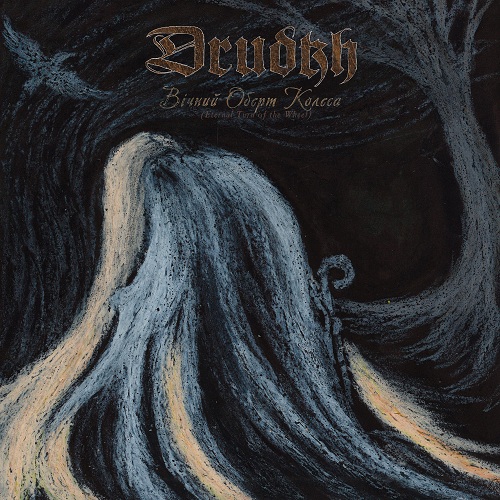
Another year, another Drudkh album. It’s something we’ve come to expect from a band that’s pumped out 9 full length albums in the past decade. Their last release, Handful of Stars, was pretty universally denounced as their weakest album to date, and perhaps there is something to be said for the fact that they skipped over 2011 without a new one. Eternal Turn of the Wheel makes a clear shift away from the direction they had been heading in, returning to a style more in keeping with their earlier releases.

Breath of Cold Black Soil

The question is what they gained from that transition. The sound is certainly in touch atmospherically with the old vibe fans have been clamoring for a return to. If you’ve been following Drudkh from the get-go, there is definitely something refreshing about this one. I am instinctively inclined to engage it, whereas Handful of Stars kind of lost me and I never gave it the proper listening time a Drudkh album deserves.

But that’s not to say they’ve gotten better, nor that they were getting progressively worse before. Drudkh have always had their ups and downs. When you come close to releasing an album every year for a decade, it’s bound to happen. It’s difficult as a fan to even keep up with them. If the music doesn’t strike me pretty readily I put it off for a bit, and by the time I do get around to it the next release is already in the mail.

Eternal Turn of the Wheel will gain some attention because it presents at the surface what people have been looking for for a while now. I think if Drudkh had, alternatively, stuck to the same general sound all along, this one would be pretty readily forgotten.

Night Woven of Snow, Winds and Grey-Haired Stars

Beneath the surface, it’s just a little lacking in creative song writing. It’s quite nice by the standard of average atmospheric black metal, but from Drudkh I tend to expect a little bit more. On Swan Road and Blood in Our Wells especially they managed to merge this sound with absolutely superb song writing, and the latter was the selling point that really projected them from just another Ukrainian black metal band to legends of the genre.

I think the Microcosmos haters heard a stylistic watershed and immediately cashed in their opinions. The shift didn’t phase me at the time, because I think the song writing that really propels them was present in full form. The further changes on Handful of Stars were a bit more of an immediate turn-off, but I’ll venture to make the potentially bogus claim that the song-writing, not the style, ultimately accounts for my having never given it a good and thorough listen.

I’d argue that the song-writing on Eternal Turn of the Wheel is really not appreciably better, but in returning to an old school Drudkh sound they at least compelled me to leave it on repeat for a day. Don’t expect any of the tracks to overwhelm you the way Eternity or Solitude do, or Ars Poetica for that matter. It’s pretty cut-and-dry, generic Drudkh, and it’s crucially lacking any sort of subtle Ukrainian folk undertone. I would be lying if I pretended to not appreciate their return to black metal, but all in all this album is nothing special… at least by Drudkh standards. It will still rightfully go down as one of the better releases of 2012.

October Music Series: Nokturnal Mortum – Lastivka


And so my month of folk and folk/pagan/black metal indulgence comes to an end. Of course they’re the styles I listen to the most throughout the year, but October always holds a somewhat special status for the genres. It marks the height of fall and the coming of winter, the commencement of the six months of the year I enjoy most, and also the start of the holiday season. Halloween is something of the anti-holiday–an all-encompassing celebration of everything that is not modern Christian/Muslim/Jewish culture. It’s that one break in year-round social norms where people can dress and act in ways that, despite representing the human experience for the vast majority of our species’ existence, are strictly taboo in the today’s world. Sure, plenty of pagan practices may have lurked their way into Christmas and Easter. Sure Thanksgiving, despite its name, remains a fairly uncompromised belated harvest festival. But on Halloween we sugar-coat nothing but the candy, sending our children down the streets as ghouls and ghosts and all sorts of counter-cultural guises, embracing primal human nature with no need for repentance. It might be highly consumer-centric, but a little unrestrained gluttony seems thoroughly appropriate for the occasion. From death and the old gods to vampires and zombies, everything falling beyond the accepted sphere of modern religion has its day on October 31st.

Lastivka, alternatively titled Swallow, is a rather ridiculous rendition of what I gather is a traditional Ukrainian folk song. It first appears on Nokturnal Mortum’s Marble Moon ep, released in 1997. Enjoy.

Happy Halloween Shattered Lens.

October Music Series: Piorun – Nadbuanski Wit


Here’s a song that captures bizarre pagan ritual at its most Dionysian. Barely coherent woodwinds teeter on the brink of madness, spurred on by seductive, primitive drumming and the string drone of what I’m guessing is a hurdy-gurdy. Piorun are a folk and ambient band from Poland, which is not a particularly active country in the pagan metal scene, but it should come as no surprise from the brand of folk they play that the band has ties to Nokturnal Mortum.

It’s not particularly easy to dig up information on these guys. What’s available to me had to be plugged through Google Translator from Polish, but I gather Stajemy Jak Ojce, the 2004 release on which Nadbuanski Wit is the opening track, is their only full-length album.

I’m a bit confused as to just how “Polish” Piorun really is. The references I saw to “ties with Nokturnal Mortum” are a bit of an understatement; Knjaz Varggoth, Saturious, and Munruthel are all a part of the line-up, amounting to half of the band and all of the folk elements. Of the band’s three presumably Polish members, two are only credited with vocals. One, and possibly all three, were members of the now defunct Polish black metal band Archandrja. (I’ve not heard them save a few youtube samples just now.)

At any rate, Stajemy Jak Ojce is an absolutely brilliant album when the folk is allowed to shine. When the ambient takes more primacy it leaves a little to be desired. Nadbuanski Wit falls firmly in the former. Whether you choose to hear it as chilling and demented or as ritualistic and reverent, it’s bound to leave a lasting impression.

October Music Series: Natural Spirit – Внукам Даждь-Бога


Here’s a song I thought fit the season rather nicely. Natural Spirit is a folk/pagan metal band from Ukraine, and Внукам Даждь-Бога (To The Grandchildren of Dazhd-God, at least as Encyclopaedia Metallum translates it) appears on their original 1999 demo Star Throne. The band have released three albums since, most recently in 2011, but this is the only one I’ve heard, so I can’t speak for what they sound like these days.

I’m always a sucker for that cheap, almost SNES-sounding keyboard you find especially on Ukrainian pagan metal albums (Nokturnal Mortum’s cover of “Sorrow of the Moon” by Celtic Frost could be straight out of Secret of Mana or Soul Blazer at times). Of course there’s nothing authentic about it, but its primitive sound in comparison to other synth puts it in a unique position to sound both ancient and entirely unnatural. It’s both reverently pagan and haunting in a dark, fantasy-themed way, uniting visions of Tolkienic landscapes with conjurations of long forgotten gods.

The name in the title, Dazhd-God, refers to the Slavic sun god Dažbog, son of the fire god Svarog. The frequent references to Slavic mythology in Eastern European folk and folk metal are always revealing, if only for the lack of attention this pantheon receives. Translations of the Prose and Poetic Eddas are a dime a dozen, and most people who have the slightest passing interest in mythology have probably read at least some segments of them. History and Germanic Studies departments around the world specialize in them. As diligent as metal bands have been in preserving tales of the Norse gods, the historical texts are there to be had with or without them. With no Slavic Snorri Sturluson to fall back on, Eastern European bands interested in preserving and resurrecting the past share less company. They are far more uniquely responsible for my having ever even heard these names. It is perhaps a consequence of this that lends Slavic pagan metal a stronger affinity with mysticism, often coupled with an almost violent, desperate sense of pride. Внукам Даждь-Бога avoids the latter, but it definitely presents Dažbog in an otherwordly, supernatural light that you won’t find much of in Norse-centric metal beyond Burzum.

October Music Series: Nokturnal Mortum – Cheremosh


Nokturnal Mortum is a name one should only ever drop with caution. They are unfortunately the flagship band of the Ukrainian white supremacist nsbm scene. One might expect idiotic ideas to lead to pretty dim-witted music, but Nokturnal Mortum broke the mold. In fact, they’re one of the most talented bands I have ever heard. Knjaz Varggoth has a seemingly unshakable knack for infusing his music with the all of the pride and hatred that his ideology implies. From 1996 up to the present they have remained on the cutting edge of the folk/pagan metal scene, like it or not.

Cheremosh is conveniently a track with no ideological strings attached. Appearing initially on the 1997 Marble Moon ep and then in slightly more refined form on To the Gates of Blasphemous Fire in 1998, Cheremosh is an instrumental song. The name refers to the Cheremosh river in western Ukraine. With a distinct build-up and climax characteristic of many of their finest songs, Cheremosh transitions from a secluded scene of the river rolling along to some convincing and bizarre pagan ritual. The folk is mostly keyboards–Nokturnal Mortum did not begin to employ traditional instrumentation extensively until the following year on NeChrist. (NeChrist, I recently discovered, is a pun. “Nechist” are evil spirits in Russian folklore.) Nokturnal Mortum did a pretty impressive job of inventing their own folk sound through synth though, and their first three albums gain a lot from it. If you can stomach their ideology, Nokturnal Mortum present some of the most compelling pagan metal on the market, and this isn’t the last time I’ll be featuring them this month.

October Music Series: Тарас Компаніченко – Танець


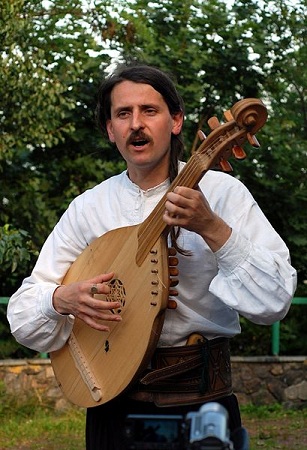
Here’s an obscure one for you. I don’t have much time to write today, so I’ll keep it short. Тарас Компаніченко (Taras Kompanichenko) is a Ukrainian early music and folk musician born in 1969. Wikipedia describes him as “an influential kobzar, bandurist, lutenist, lira player”, and I’ll leave those terms for you to investigate. The world of Ukrainian folk is vast, both unique in its own right and a major participant in the greater sphere of Eastern European music. It seems like over the last twenty years especially the former Soviet-dominated nations have exploded in a renaissance of music and tradition. If you like what you’re hearing here, dig around a bit for more. It might be hard to find at first, but when you learn where to look there’s a wealth of it out there.

Review: Ygg – Ygg


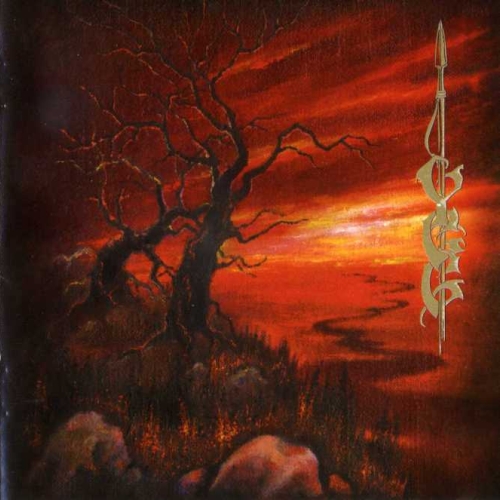
I don’t know if I’m just a big fan of the Ukrainian metal scene so I’m inclined to notice or if that country really is popping out more bands than anywhere else in the world, but it seems like a year doesn’t go by that I can’t talk about a new band, probably from Kharkiv, releasing an impressive debut album. Ygg is comprised of three musicians from other bands you may have heard of–Nokturnal Mortum, Khors, and Святогор/Svyatogor to name a few–but I wouldn’t call it a side project. Members of that scene collaborate to such an extent that there’s next to no musician you can associate with only one act. The influences are thus a little more engrained, and it would be kind of silly for me to describe Ygg as sounding like a mix of other bands; they sound like Ukrainian metal. And they sound awfully good.

…Знаю, Висел Я В Ветвях На Ветру…(…I know, I hung in the branches in the wind…)

The album kicks off with one of the more effective intros I’ve heard in a while. Alone it might incline you to expect a pretty elementary album. Simple ambient synths, the overlapping sounds of wind blowing and waves crashing (or are those rustling leaves?), and a jew’s harp that they don’t so much play as randomly wank on amounts to something anyone could create in one take given a keyboard and a sufficiently grim, frostbitten basement.

What I’ve come to find over the course of a couple listens though is that the rest of the album is persistently faithful to the mood it sets. I wouldn’t have even noticed the continued presence of that wind and water effect buried beneath the distortion of the first metal track if the intro hadn’t brought it to my attention, and the jew’s harp bleeds into the next song as well. Over the course of the remaining six tracks these effects fade to be replaced by others, but in a way that maintains consistency from song to song.

YGG

So they’re not really switching gears here. They’re presenting the same scene as the intro from a metal perspective. The trance-like mix of tremolo chords and a moderate steady beat certainly maintains that particular ambient feel, and it’s executed in a way that should make any Drudkh fan happy.

The other elements are perhaps a little less accessible though. The kind of wavy, kind of bubbly keyboard sound would seem a bit out of place for me if Nokturnal Mortum hadn’t used the exact same thing so effectively on Weltanschauung. There is already precedence for associating it with paganism, so the sort of futuristic vibe I originally got from it isn’t an issue here. I imagine if I hadn’t listened to specifically Weltanschauung so many times before it might throw me for a loop.

The most obviously distinguishing feature of the album, the vocals, also require a little consideration. It’s a style very seldom used, and I imagine it would inevitably come off as pretty cheesy on first encounter. Previous bands that have employed it have tended to aim for an effect of pure hatred or insanity, for which it’s probably better suited. I don’t really think that fits Ygg’s picture though. Their sound focuses on nature and paganism, at least as I hear it. The track/album/band name is itself one of the many traditional names for Odin, and the introductory track’s title approximates the opening line of the Rúnatal, a 13th century recording of Odin’s self-sacrifice to acquire the wisdom of the runes. No, the vocals aren’t trying to express insanity or hatred.

So I’m inclined to hear the singing as a sort of vocal reproduction of the howling wind in the introduction. I don’t know, maybe that’s a stretch, but it’s an interpretation that works for me. It’s a sound that’s a bit harder to pull off, because a less chaotic theme requires more precision. When his voice occasionally sounds a bit too human it’s more of a brief letdown for me than a poignant reminder of music’s theme. But at this point perhaps I sound so absurdly full of myself that I’m doing the album more harm than good. I’ll just stop. Suffice to say I really like this, and I think a lot more went into its conception than just three guys jamming black metal and landing on something nice. It’s a rewarding work that’s fairly complex in its simplicity, and I highly recommend it.