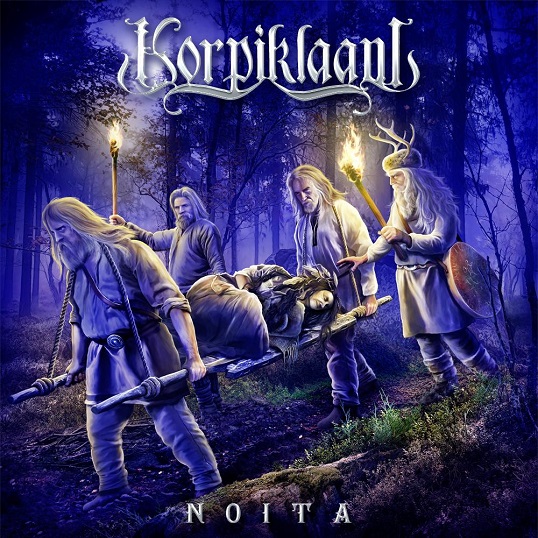
Review: Korpiklaani – Noita


Korpiklaani have been pretty heavily criticized over the years for what has been perceived as a highly “gimmicky” sound. That view has a faint shred of legitimacy, but it gets blown way out of proportion. With bands like Alestorm and Nekrogoblikon managing to pump out really impressive albums without the slightest hint that they take any of their music seriously, it is easy to falsely impose on the genre a spectrum ranging from hoax to serious. You’re either writing brutal pagan metal homages to Odin or you’re dressing up as a mutant snork and dancing a jig, right?

It doesn’t really work like that. Bands like Kalevala (Калевала) and Troll Bends Fir (Тролль Гнёт Ель) can come off as fun-loving boozers, but you can’t escape the impression that they have a deep respect for their cultural heritage. Finntroll sing about dim-witted fantasy monsters eating people, and they’re heavy as hell. Being light-hearted and fun certainly does not make a folk metal band “gimmicky”, as if all folk traditions are inherently morbid. Doing it for nine albums without showing much inclination towards anything but fun and relegating your only English language songs to tantrums about not having enough beer–well, that can tarnish an image. I do understand why people might see Korpiklaani as a having a one-track mind.

But it really shouldn’t, and they really don’t. Not if sounding the same means maintaining the quality that turned people to them in the first place while honing their musical talents along the way. Not when for every track devoid of lyrical content the listener writes off eight others as the same because they don’t speak Finnish. Korpiklaani were very well received when they first appeared with Spirit of the Forest back in 2003. Folk metal was still fairly new then, and Jonne Järvelä was a frontrunner, not a bandwagoner. He had contributed to Finntroll’s Jaktens Tid in 2001, and prior to changing his band’s name to Korpiklaani he had released folk metal under the monicker “Shaman” beginning in 1999. He was recording non-metal Finnish folk music earlier than that. As folk metal picked up steam, Korpiklaani’s pop-centric, lighter brand–characterized by very simplistic metal riffs underscoring catchy yolk vocals, accordion, violin, and an occasional whistle–came under fire. Why?

That’s an open question. I really don’t get it. My best guess is that people experienced Spirit of the Forest and Voice of Wilderness when folk metal was still a novelty. They didn’t really love the band; they just loved the direction that metal was heading in, and Korpiklaani were a prominent example of that. As the scene broadened and more variety became available, some people were quick to throw Korpiklaani under the bus because the band’s pop tendencies made them feel a little insecure in their metal manliness. Korven Kuningas (2008), Karkelo (2009), and Ukon Wacka (2011) got a lot of negative reviews. But to me, the band just kept getting better. Spirit of the Forest gave us “Pellonpeikko”, and “Wooden Pints” is certainly nostalgic, but the album had a lot of half-formed filler tracks too. It has all the feel of an early, less developed work in a band’s discography. They really started to nail the folk on Voice of Wilderness in 2005, and Jonne Järvelä’s distinctive yolk-style vocals–the band’s most unique traditional feature–really didn’t fully mature until Tales Along This Road (2006) and Tervaskanto (2007). Their next three albums took all the heat, but they were only guilty of not offering further development. They didn’t really need to. The band was in their prime.

Manala (2012) was the first and only Korpiklaani album that I had misgivings about. It was distinctly heavier, with folk instrumentation feeling subservient to metal guitar riffs rather than the other way around. For that, it actually got some positive feedback. Korpiklaani were abandoning that “folk gimmick” and getting back to their “metal roots”, or some nonsense like that, as if the band even had metal roots. My speculation was, I think, a bit more realistic: Long-tenured violinist Jaakko “Hittavainen” Lemmetty retired after Ukon Wacka. Short of digging the jewel case out from my basement, I can’t even find a clear answer as to who played violin when Manala was recorded in 2011. Teemu Eerola replaced Hittavainen on tour that year, and Tuomas Rounakari stepped in as the band’s permanent violinist shortly after. I have to believe that there is a direct correlation between Manala‘s lack of a strong folk component and the transitional state of the band’s lineup at the time.

Korpiklaani did not record another album for three years. That’s a long stretch by their standards, and in the meantime Juho Kauppinen, their accordionist since Tales Along This Road, left as well. Was the band doomed to drift ever further from their unique poppy folk sound into the cesspool of generic derivative heavy metal?

Not at all, as it turns out. Noita sounds strikingly successive, but in a way that works wonderfully. It takes Manala and drives it back into where the folk left off on Ukon Wacka. The first track, “Viinamäen Mies”, opens powerfully with a driving violin and a nice accordion accompaniment. Where the folk drifts out, the passages are brief enough to feel like a showcase of Jonne Järvelä’s vocals rather than a void in the content. The song is a total return to Korpiklaani’s poppy folk roots, and that feeling persists through the first two tracks.

Track: Lempo

The third song, “Lempo”, slows down the pace and stretches things out in a turn that is, for them at least, a bit on the heavy side. Unlike Manala though, the guitar is hardly alone in giving it an edge. The vocals are great, as always, and the folk instrumentation blends in and out of playing harmony to the plodding verses and busting out solos in really fluid form.

The rest of the album is a mix of these two approaches, and it is surprisingly the latter that comes out strongest. “Sahti” and “Luontoni” give us two more upbeat, fun songs that don’t feel remotely contrived, and then the album slows back down for the long haul. The violin on “Minä Näin Vedessä Neidon” is about as heavy metal as that instrument gets, and I was especially impressed on the closing track–“Sen Verran Minäkin Noita”–by how Tuomas Rounakari and Sami Perttula seem to have mastered improvisation over long, drawn out metal chords. Moreover, the rhythms on that song are way more diverse than we’re used to from Korpiklaani, tipping a hat to prog and viking metal. It’s one of the few songs in their catalog that don’t follow a standard verse-chorus-verse pattern. I can’t help but think “this is way too awesome to be Korpiklaani” when I listen to it. And I’m one of the people that never lost faith in the band.

It’s hard to imagine, listening to Noita, that Sami Perttula and Tuomas Rounakari were new to this band. Perttula totally gets their sound, and he brings a fiery spirit that wants to imbue anything and everything with rambling accordion harmonies. Rounakari offers much the same on violin, and also a great deal of thoughtfulness. In an English-language interview released by Nuclear Blast to promote the album, he explains each song quite articulately. He even points out cultural relevance in “Sahti”, a song that turns out to be about (surprise!) drinking. (It’s kind of funny, because Järvelä and Perttula’s bad English cater to every negative stereotype surrounding them. I write this song because I like get drunk!) If you didn’t know any better, you would think Korpiklaani had been Rounakari’s baby all along. Hittavainen was a hard man to replace, but I’m not complaining about who they found.

The album does have one very unfortunate, glaring flaw, and it’s called “Jouni Jouni”. “Jouni Jouni” is a cover of Billy Idol’s cover of Tommy James and the Shondells’ mind-numbingly stupid hit classic “Mony Mony”, and it appears right smack in the middle of the damn album. You know what makes even less sense? Noita has a “hidden” bonus track, “Antaja”, and that song sounds totally normal. Instead of putting “Antaja” in the main mix and relegating “Jouni Jouni” to the end of the line after a few minutes silence (or better yet, deleting all record of its existence), they cram it smack in the middle between “Minä Näin Vedessä Neidon” and “Kylästä Keväinen Kehto”. Bad Korpiklaani! Bad!

But this album is great. In fact, I think it’s their best. Yep. Noita: my new favorite Korpiklaani album. Pick up your copy via Nuclear Blast.

(Nuclear Blast is being a bit douchey about youtube samples, but if you want to check out some of the better tracks before you buy and can find them, I recommend “Kylästä Keväinen Kehto” and “Sen Verran Minäkin Noita”.)
necromoonyeti’s 10 Favorite Songs of 2011


I want to hop on the bandwagon. It would be a little silly for me to post my real top 10; for one thing, it would include four Krallice tracks. That aside, nearly everything I’d put on it I’ve either posted on this site as a Song of the Day or included in both my review of its album and my top albums post. So to make this a bit different from my past posts, I’m going to limit myself to one song per band, stick to stuff that I imagine might appeal to people who aren’t interested in extreme metal, and keep it on the catchy side. I’ll list a more honest top 10 at the end.

10. Powerwolf – Son of a Wolf (from Blood of the Saints)

As such, my tenth place selection is about as metal as it’s going to get. Powerwolf’s Blood of the Saints might be simple and repetitive, but it’s about the catchiest power/heavy metal album I’ve ever heard. It indulges the same guilty pleasure for me as Lordi and Twisted Sister–two bands that inexplicably pump me up despite being entirely tame. It also offers some amazing operatic vocals and Dracula keyboards, the cheesiness of which can be easily forgiven. Son of a Wolf might be one of the more generic tracks in a sense, but it’s the one most often stuck in my head.

9. Alestorm – Barrett’s Privateers (from Back Through Time)

The only thing I love more than traditional folk and sea chanties is folk punk and metal. When the latter covers the former, I’m in bliss. Alestorm are emerging as the sort of Dropkick Murphys of metal with all their covers lately, and I hope they keep it up. I loved Barrett’s Privateers before what you’re hearing ever happened, and the metal version delights me to no end.

8. The Decemberists – Rox in the Box (from The King is Dead)

The Decemberists really toned it down this year. Where The Hazards of Love could be described as an epic rock opera, The King is Dead sticks to simple, pleasant folk. But Colin Meloy thoroughly researches pretty much every subject he’s ever tackled, and The King is Dead pays ample homage to its predecessors. Rox in the Box incorporates Irish traditional song Raggle Taggle Gypsy with delightful success.

7. Nekrogoblikon – Goblin Box (from Stench)

With a keen eye towards contemporary folk metal like Alestorm and Finntroll, melodic death classics like In Flames and Children of Bodom, and much else besides, former gimmick band Nekrogoblikon really forged their own unique sound in the world of folk metal in 2011. At least half of the album is this good. Stench is the most unexpected surprise the year had to offer by far.

6. Korpiklaani – Surma (from Ukon Wacka)

Korpiklaani almost always end their albums with something special, and 2011 is no exception. The melody of Surma is beautiful, and Jonne Järvelä’s metal take on traditional Finnish vocals is as entertaining as ever.

5. Turisas – Hunting Pirates (from Stand Up and Fight)

I couldn’t find a youtube video that effectively captured the full scope of Turisas’s sound in such limited bitrates, but believe me, it’s huge. Go buy the album and find out for yourselves. Unlike Varangian Way, not every track is this good, but on a select number Turisas appear in their finest form. Adventurous, exciting, epic beyond compare, this band delivers with all of the high definition special effects of a Hollywood blockbuster.

4. The Flight of Sleipnir – Transcendence (from Essence of Nine)

Essence of Nine kicks off with a kaleidoscope of everything that makes stoner metal great, while reaching beyond the genre to incorporate folk and Akerfeldt-esque vocals. A beautifully constructed song, it crushes you even as it floats through the sky. I could imagine Tony Iommi himself rocking out to this one.

3. Boris – Black Original (from New Album)

From crust punk to black metal, there’s nothing Boris don’t do well, and 2011 has shown more than ever that there’s no style they’ll hesitate from dominating. I don’t know what’s been going on in the past few years with this popular rise of 80s sounds and weird electronics. I don’t listen to it, so I can’t relate. But if I expected it sounded anything nearly as good as what Boris pulled off this year I’d be all over it.

2. Tom Waits – Chicago (from Bad as Me)

Bad as Me kicks off with one of my favorite Tom Waits songs to date. It’s a timeless theme for him, but it feels more appropriate now than ever, and his dirty blues perfectly capture the sort of fear and excitement of packing up and seeking out a better life.

1. Dropkick Murphys – Take ‘Em Down (from Going Out in Style)

In a year just begging for good protest songs, Flogging Molly tried really hard and fell flat. Dropkick Murphys, another band you’d expect to join the cause, released perhaps their most generic album to date (still good mind you, but not a real chart topper). Take ‘Em Down is kind of out of place on the album, but it’s DKM to the core, and as best I can gather it’s an original song, not a cover of a traditional track. If so, it’s probably the most appropriate thing written all year. (The video is fan made.)

If you’re interested in my actual top 10, it runs something like this:

10. Falkenbach – Where His Ravens Fly…
9. Waldgeflüster – Kapitel I: Seenland
8. Liturgy – High Gold
7. Endstille – Endstille (Völkerschlächter)
6. Blut aus Nord – Epitome I
5. Krallice – Intro/Inhume
4. Liturgy – Harmonia
3. Krallice – Diotima
2. Krallice – Telluric Rings
1. Krallice – Dust and Light

And that excludes so many dozens of amazing songs that it seems almost pointless to post it.

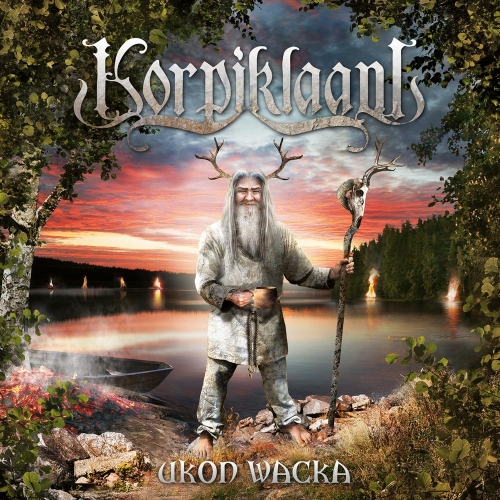
Review: Korpiklaani – Ukon Wacka


I just found out that Jaakko Hittavainen Lemmetty left Korpiklaani last month. According to the band’s official statement, “his personal health issues made the constant touring and recording impossible.” That might come as no surprise, considering Korpiklaani are one of the most prolific bands on the market. During his tenure they managed to release seven albums in nine years, and in 2010 alone they performed live approximately 100 times. I know I certainly wouldn’t be able to keep up.

His departure lends a sort of heightened significance to Ukon Wacka. Hittavainen might not have been their frontman, but he was responsible for all violins and woodwinds on all seven albums. In other words, half of what really made Korpiklaani folk metal is gone, and however well his replacement, Teemu Eerola, fills the void, their next album is bound to be different. Ukon Wacka might be the last of its kind.

Change is a pretty foreign concept to Korpiklaani, both in their sound and in their line-up. That is a point I’ve always appreciated about them. If it’s not broke, why fix it?


Louhen Yhdeksäs Poika

Ukon Wacka is no different. As always, the album makes no attempt at an introduction. It just kicks off from the get-go as quintessential Korpiklaani. Jonne Järvelä goes on rolling out incomprehensible lines at a break neck pace to a constant melody of accordion and violin, brought to life by standard metal instrumentation that’s designed to accent the folk, not compete with it. Throw in an awesome violin solo towards the end, and you’ve got a song that’s entirely unique to the band and entirely to form with everything else they’ve written. The stylistic monotony is hardly a fault, what with nearly all of their 80+ songs accomplishing a distinct and addictive melody. I probably get more Korpiklaani songs stuck in my head than any other band out there; I just might be at a loss to put a name or album to them.


Tequila

One of many long-standing traditions Ukon Wacka upholds is the booze track. Not that every song isn’t designed for copious consumption, there’s always been at least one song that requires no knowledge of Finnish to convey its lyrics. With Wooden Pints on Spirit of the Forest, Beer Beer on Voice of Wilderness, Happy Little Boozer on Tales Along This Road, Let’s Drink on Tervaskanto, Vodka on Karkelo, and now Tequila, Korven Kuningas remains the only album that doesn’t really fit that mold. And like all of those others, Tequila stands out as one of the album’s most memorable songs.


Surma

When it comes to closing songs, the band has been a little more diverse in their selection. But, aside from on Tales Along This Road, they’ve always seemed to save their most reflective or otherwise inspiring song for the end. Surma might not match Karkelo’s Kohmelo or Tervaskanto’s Nordic Feast, but it’s certainly the high point of Ukon Wacka as far as I’m concerned.

There’s not much I can say about the album really, because it sounds just like all of their others. I suppose Korpiklaani might be regarded as a bit shallow, at least in so far as most of their songs, especially in the absence of any understanding of the predominantly Finnish lyrics, are just fun and fairly thoughtless numbers about partying and getting drunk. But there’s also a sort of authenticity to that which renders them significantly more enduring than comparable acts like Finntroll. While I don’t think any particular Korpiklaani album holds a candle to Nattfödd or even Nifelvind, in the long run I always end up listening to them more. A lot of folk bands that don’t take themselves very seriously can only really be appreciated in their own right. Korpiklaani, on the other hand, extend beyond themselves, presenting a sort of continuity. I can’t really speak of them imitating or incorporating Finnish folk because, much like Irish punk and metal bands, they’re more the modern continuation of a long-standing tradition than an attempt to resuscitate it. I’ve never seen them live (they’re about to kick off a North American tour with Arkona that I might give in to a five hour drive across the state for), but I imagine their show incites a lot more dancing than headbanging, if you know what I mean. Authentic folk really implies community participation, and that’s the sort of thing Korpiklaani cater to, on Ukon Wacka as strongly as on anything else.