Retro Television Review: Malibu CA 2.26 “Three Dudes And A Baby”


Welcome to Retro Television Reviews, a feature where we review some of our favorite and least favorite shows of the past!  On Thursdays, I will be reviewing Malibu CA, which aired in Syndication in 1998 and 1999.  Almost the entire show is currently streaming on YouTube!

Yes, this is from the first season. I don’t care. I refuse to waste my time looking for a second season advertisement.

All good things must end.

And so must all bad things.

Episode 2.26 “Three Dudes And A Baby”

(Dir by Gary Shimokawa, originally aired on May 20th, 2000)

It’s over!

After two seasons and over 50 episodes, Malibu, CA is over!

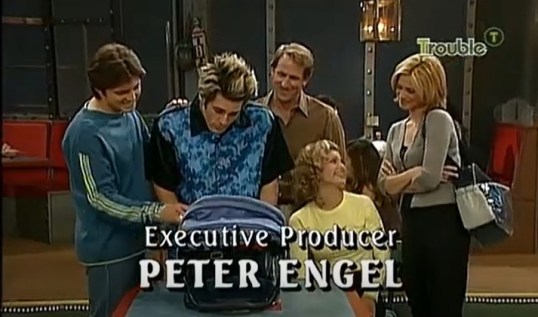
As opposed to the other Peter Engel shows that I’ve reviewed on this site, Malibu CA doesn’t get a real finale.  Instead, the final episode is just another stupid 22 minutes that signify nothing.  When waitress Stacie (Kristen Miller) goes out of town, Murray, Jason, and Peter take care of her baby.  Awwwww …. wait a minute.  Why would anyone leave their baby with those idiots?

When the three men find out that Stacie is getting divorced from her husband, all three try to step up.  Murray asks Stacie to marry him.  So does Jason.  Peter offers to adopt her.  Stacie reveals that she and her husband have decided to stay together.  Are you sure, Stacie?  Murray is like really rich.

Meanwhile, Lisa (the character, not me!) gets upset because her little sister is a fan of Traycee’s television show and is thinking of quitting college so she can become an actress.  Lisa blames all of this on Traycee which is weird because 1) Traycee didn’t force Lisa’s sister to do anything and 2) Traycee has found a lot of success as an actress and if Traycee can do it, why can’t Lisa’s sister do it?

This is a typical Lisa story.  Lisa (the character, not me!) acts like a total bitch, whines nonstop, and blames everything on Traycee, even though none of it is really Traycee’s fault.  Adding the character of Lisa was one of the biggest mistakes that was Malibu CA made during its second season.  The first season was pretty dire but, in the end, it was actually better than the second season and that’s entirely because the first season did not feature Lisa (the character, not me).  I don’t want to be too hard on the actress who played her because it’s not exactly as if she was being given great material to work with.  That said, Lisa was a poorly-written character who basically was portrayed as always being annoyed with something.  The fact that the finale of the show focuses on her as opposed to wrapping up the stories of Jason and Scott says a lot about why this show was the most forgettable of all of the Peter Engel-produced sitcoms.

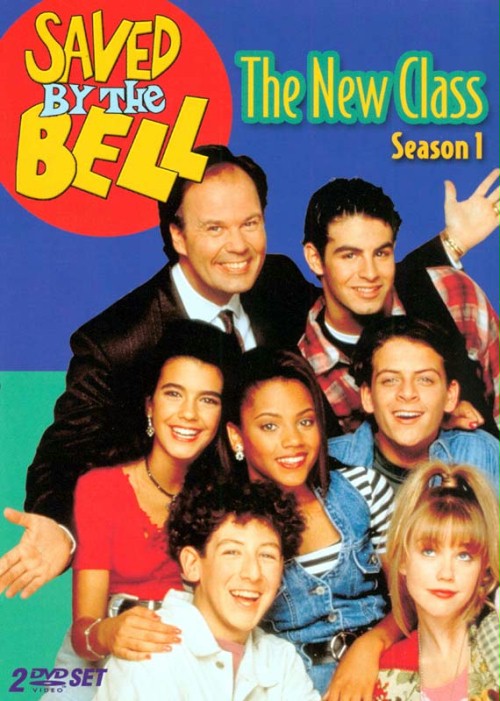
And so, Malibu CA comes to a close and there’s really not much to say about it.  Peter Engel tried to work his Saved By The Bell/California Dreams/Hang Time magic but the show never really found a consistent tone and neither of the Collins brothers were particularly likable protagonists.  It’s really not a shock that neither Jason Hayes nor Trevor Merszei went on to have acting careers after this show ended.

On a positive note, Brandon Brooks and Priscilla Inga Taylor were consistently amusing, if just because they were smart enough to embrace the oddness of their characters.  And Ed Blatchford had his moments as the father figure.  Otherwise, this was a forgettable sitcom that signified the end of an era.

Next week, something new will be coming to TSL in this timeslot.  What will it be?  We’ll find out next Thursday!

Retro Television Reviews: Dragnet 1966 (dir by Jack Webb)


Welcome to Retro Television Reviews, a feature where we review some of our favorite and least favorite shows of the past!  On Sundays, I will be reviewing the made-for-television movies that used to be a primetime mainstay.  Today’s film is 1969’s Dragnet 1966!  It can be viewed on YouTube!

“This is the city….”

So begins Dragnet, a television movie version of the classic cop show that was the Law & Order of it’s day.  Dragnet began as a radio program in 1949 before making it’s way over to television in 1951.  Each episode starred (and the majority were directed by) Jack Webb, who played a no-nonsense cop named Joe Friday.  Friday narrated every episode, dropping trivia about the history of Los Angeles while also showing viewers how the cops went about catching criminals.  Despite what is commonly believed, Joe Friday never said, “Just the facts, ma’m,” but he did investigate each case with the cool determination of a professional who kept his emotions under control.  The majority of Dragnet’s episodes were based on actual cases that were worked by the LAPD, hence the opening declaration of, “The story you are about to see is true.”

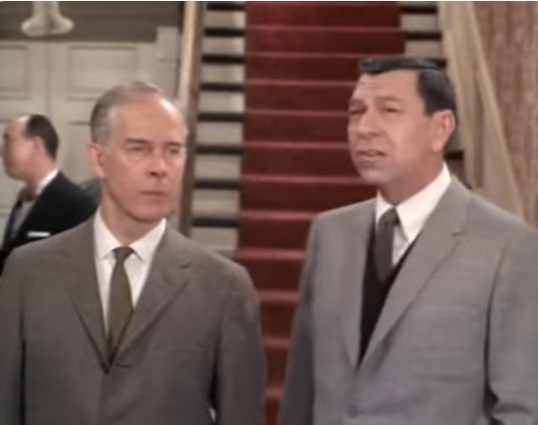
On television, Dragnet originally ran from 1951 to 1959, during which time Dragnet also became the first television series to be adapted into a feature film.  Jack Webb decided to relaunch Dragnet in 1966 and he produced a made-for-television movie that followed Friday and his latest partner, the far more talkative Bill Gannon (Harry Morgan), as they worked multiple cases over the course of one long weekend.  The pilot movie did lead to a new show, one that lasted from 1967 to 1970 and which is today fondly remembered for scenes of Friday and Gannon debating the merits of the legal system with hippies.  However, for whatever reason, the 1966 pilot movie was not actually aired until 1969.

The made-for-TV movie features Friday and Gannon searching not for LSD dealers and draft dodgers but instead for a crazed photographer (Vic Perrin) who hires women to pose for him and then ties them up and takes their picture right before her murders them.  The photographer is based on real-life serial killer Harvey Glatman and Perrin is perfectly creepy in the role.  Though Friday never loses his composure, his disgust at the photographer and his crimes is palpable and it adds an extra charge to the scene where, in the middle of a drenching rain storm, Friday tries to sneak up on the trailer where he believes the photographer is holding his latest victim.  It’s actually a pretty exciting scene and definitely one that will take by surprise anyone who thinks of the 60s Dragnet as just being a campy exercise in establishment resentment.

Of course, catching a serial killer is not all that Friday and Gannon deal with.  It’s a long weekend so Friday and Gannon end up investigating the murder of a French tourist and Friday helps a younger, black detective deal with a racist criminal.  (The scene where Friday stands up to the racist was obviously meant to answer those who claimed the LAPD was a racist organization.)  At the start of the film, Joe almost gets collared into working security for a visiting Russian diplomat and the Russian’s paranoid security team is contrasted to the level-headed and capable men of the LAPD.  Some of these scenes are better than others.  The French tourist subplot features some truly risible acting and the scene with the racist is well-intentioned but still feels a bit condescending in its portrayal of the black detective needing Friday to help him deal with the suspect.  That said, I did enjoy listening to Bill Gannon talking about his plans for retirement and how working for the LAPD was destroying his teeth.  Harry Morgan’s folksy humor was always the perfect counterpart to Jack Webb’s perpetually rational Friday.

Finally, I appreciated that the movie featured a scene with Friday and Gannon went undercover at a lonely hearts club.  If you’ve watched the 1960s version of Dragnet, you know that, for all the times that Friday and Gannon went undercover, they never really put much effort into it.  I mean, they didn’t ever bother to take off their jackets!

Though I was disappointed by the lack of hippies, Dragnet 1966 was still not only a good police procedural but also a fun time capsule of its era.