4 Or More Shots From 4 Or More Films is just what it says it is, 4 shots from 4 of our favorite films. As opposed to the reviews and recaps that we usually post, 4 Shots From 4 Films lets the visuals do the talking!
Today, the Shattered Lens wishes a happy birthday of one of the most important and independently minded filmmakers of the past 40 years, Jim Jarmusch!
It’s time for….
4 Shots From 4 Jim Jarmusch Films
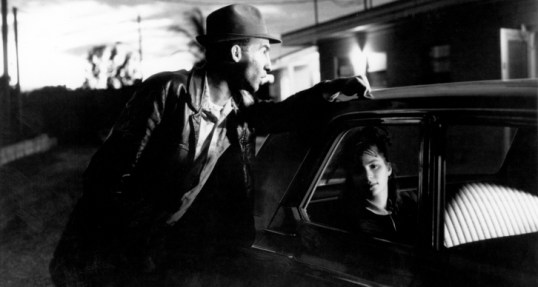
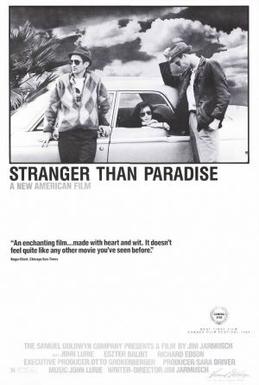
Stranger Than Paradise (1984, dir by Jim Jarmusch, DP: Tom DiCillo)
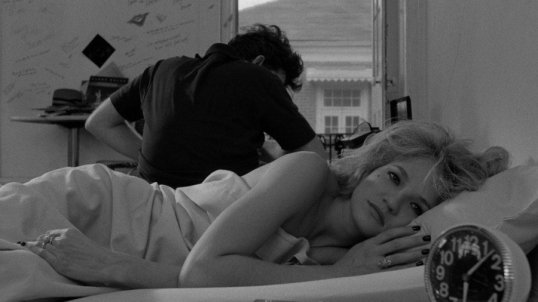
Down by Law (1986, dir by Jim Jarmusch, DP: Robby Muller)
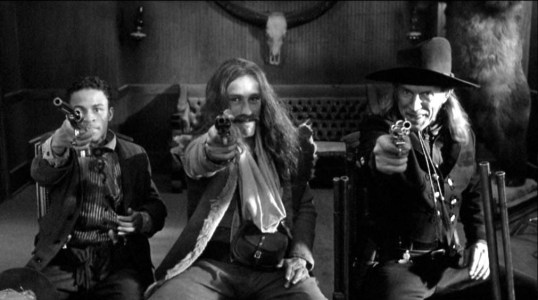
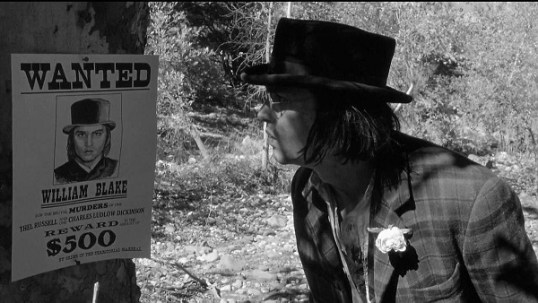
Dead Man (1995, dir by Jim Jarmusch, DP: Robby Muller)
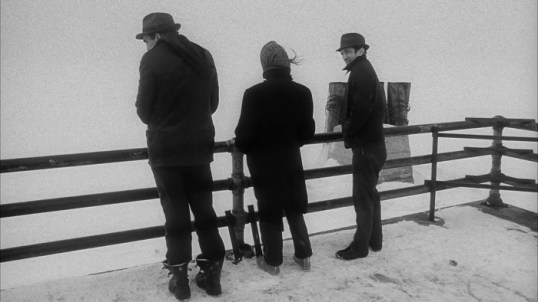
The Dead Don’t Die (2019, dir by Jim Jarmusch, DP: Frederick Elmes)
As we all know, this year’s Sundance Film Festival started yesterday.
To me, Sundance has always signified the official start of a new cinematic year. Not only is it the first of the major festivals but it’s also when we first learn about some of the films that we’ll be looking forward to seeing all year. It seems like every year, there’s at least one successful (or nearly successful) Oscar campaign that gets it start at Sundance. For instance, it is probable that Past Lives will receive an Oscar nomination for Best Picture on Tuesday and its campaign started with how it was received at the 2023 Sundance Film Festival.
My plan for this year is to spend the last few days of January looking at some of the films that have won awards or otherwise created a splash at previous Sundance Film Festivals.
Like 1995’s Living in Oblivion for example….
Living in Oblivion centers around the filming of an independent movie called, appropriately enough, Living in Oblivion. The film is being directed by Nick Reve (a youngish and, I’ll just say it, hot Steve Buscemi), a filmmaker whose indie cred does not protect him from the difficulties of shooting a movie with next to no budget. His cinematographer is Wolf (Dermot Mulroney), who is talented but pretentious and who is dating the first assistant director, Wanda (Danielle von Zerneck). The film stars Nicole (Catherine Keener), a struggling actress who is best known for appearing in a shower scene in a Richard Gere movie. Also appearing in the movie is Chad Palomino (James LeGros), an up-and-coming star who is appearing in Nick’s film to build up his critical reputation. (He also assumes that Nick is friends with Quentin Tarantino.)
We don’t really learn much about the plot of the film-within-a-film. It appears that Nicole is playing Ellen, a woman who is trying to come to terms with her abusive childhood and her romantic feelings towards her friend, Damien (played by Chad Polomino). The scenes of the film that we see alternate between being insightful, melodramatic, and pretentious. We see Ellen confronting her mother about her abusive childhood but we also see a dream sequence in which Ellen, who is dressed as a bride, attempts to grab an apple from Tito, a person with dwarfism (played, in his film debut, by Peter Dinklage).
To talk too much about the film’s narrative structure would be to spoil one of Living In Oblivion‘s most clever twists. What I can safely say is that, much as with Truffaut’s Day For Night, Living In Oblivion is more concerned with the production than the film that’s being shot. Nick struggles to keep his cool. Nicole struggles with her fear that she’ll always just be known as the “shower girl” and with the difficulty of keeping her performance fresh through multiple retakes. Wolf makes a point of wearing an eyepatch after claiming Wanda injured his eye and turns sullen when Nick says he doesn’t want to shoot a scene with a hand-held. A smoke machine first produces too little smoke and then too much. When Chad does show up on set, he is passive-aggressively tries to change the blocking of one of the film’s most important scenes. As for the dream sequence, it’s threatened when Tito denounces the scene and his role in it as being an indie film cliche. Throughout, director Tom DiCillo contrasts the studied structure of a finished film with the chaotic reality that goes into shooting.
Living In Oblivion is an affectionate satire, one that pokes fun at the indie film scene while also celebrating all of the hard work and different personalities that are involved in making a movie. Steve Buscemi and Catherine Keener give heartfelt performances as two people who understand that every movie could be their last while Dermot Mulroney scores some of the biggest laughs as the self-important Wolf. James LeGros is hilariously shallow and vain as a character who is rumored to be based on one of the biggest movie stars of the past 30 years. (“I want an eyepatch!” Chad declares while looking at Wolf.) Living In Oblivion is a movie that celebrates the beautiful madness of trying to shoot an important film for next to no money in a grubby warehouse. Throughout the film, the film’s crew is forced to compromise but, at the same time, there are also the small and unexpected moments that make it all worth it.
Living In Oblivion‘s witty script deservedly won the Waldo Salt Screenwriting Award at the 1995 Sundance Film Festival. Living in Oblivion is a celebration of both cinema and independence.
4 Or More Shots From 4 Or More Films is just what it says it is, 4 shots from 4 of our favorite films. As opposed to the reviews and recaps that we usually post, 4 Shots From 4 Films lets the visuals do the talking!
Today, the Shattered Lens wishes a happy birthday of one of the most important and independently minded filmmakers of the past 40 years, Jim Jarmusch!
It’s time for….
4 Shots From 4 Jim Jarmusch Films
Stranger Than Paradise (1984, dir by Jim Jarmusch, DP: Tim DiCillo)
Down by Law (1986, dir by Jim Jarmusch, DP: Robby Muller)
Dead Man (1995, dir by Jim Jarmusch, DP: Robby Muller)
Coffee and Cigarettes (2003, dir by Jim Jarmusch, DP: Tom DiCillo)
The Sundance Film Festival is currently taking place in Utah so, for this week, I’m reviewing films that either premiered, won awards at, or otherwise made a splash at Sundance! Today, I take a look at 1984’s Stranger Than Paradise, which won the Special Jury Prize at the 1985 Sundance Film Festival.
‘You know it’s funny. You come to someplace new, and everything looks just the same.’
— Eddie in Stranger Than Paradise (1984)
Stranger Than Paradise tells the story of three friends.
Willie (John Lurie) lives in a small apartment in New York City’s Lower East Side. He likes to go to the movies. He likes to watch TV. He likes to gamble, putting bets on horses and cheating at poker. He was apparently born in Hungary, though he doesn’t speak with an accent and, whenever he has to deal with a relative, he always tells them, “Speak English.” When his best friend asks him about why he never mentioned that he was Hungarian, Willie replies that he’s just as American as anyone.
Eva (Eszter Balint) is Willie’s cousin. She’s travels to America from Budapest. The plan is for her to live with her Aunt Lotte (Cecillia Stark) in Cleveland but, because Lotte is in the hospital, she begins her life in America by spending ten days in Willie’s cramped apartment. Eva enjoys the music of Screamin’ Jay Hawkins. When she’s walking to Willie’s apartment, I Put A Spell On You blares from the large tape player that she always carries with her.
And then there’s Eddie (Richard Edson). Eddie may not be too smart but he’s always smiling and easy-going. Unlike the somewhat churlish Willie, Eddie always seems to be enjoying himself. When Eddie first meets Eva, most viewers will probably expect them to eventually become a couple. That doesn’t happen, of course. That’s not the type of film that this is.
The first thing you notice about Stranger Than Paradise is the look of the film. As one might expect from a film that reportedly had a budget of $10,000, the film looks cheap but there’s a beauty in that cheapness. The harsh black-and-white magnifies every detail of the film’s locations. When we watch Eva walking through New York City, the street may look desolate but it’s an exquisite desolation.
Directing his second film, Jim Jarmusch shoots nearly the entire film in single long takes and refuses to indulge in any of the usual tricks that movies often use to force an audience to identify with its main characters. The camera rarely moves and every scene ends with a blackout. It’s a technique that casts the audience as observers. Willie, Eva, and Eddie may all be outsiders but, while watching the film, so is the audience. Willie, Eva, and Eddie win us over because of the charm of the actors playing them and the deadpan humor of their dialogue but, at the same time, the film never lets us forget that we’re merely watching their lives unfold.
The humor in Stranger Than Paradise comes less from what these characters do and more from what they don’t do. When Eva arrives in New York, Willie never offers to show her around. There’s no trip to Broadway or the Statue of Liberty or anything else that we, as an audience, have been conditioned to expect whenever a stranger comes to New York for the first time. Instead, Willie and Eva sit in Willie’s apartment and watch TV. When Eddie asks Eva if she wants to join him and Willie at the movies, Willie tells Eva to stay in the apartment and not go outside. Eva eventually wins Willie over by shoplifting dinner.
During the film’s second act, Willie and Eddie decided to visit Eva in Cleveland, despite not being sure where Cleveland is. They ask one random guy standing on a street corner how to get there. “I’m waiting for a bus,” the guy snarls back. Later, as they drive drown a highway, Eddie asks Willie if they’re in Ohio yet. “I think we’re in Pennsylvania,” Willie replies. When they finally do get to Ohio, it turns out to be a frozen wasteland. After meeting up with Eva, Willie and Eddie spend most of their vacation watching TV with Lotte. Eventually, they visit Lake Erie. It’s frozen but Eva, Willie, and Eddie still dutifully stand at the railing and stare down at it while a freezing wind howls around them.
Eventually, all three of them end up in Florida. Instead of visiting Walt Disney World or Miami, they end up sitting in a cheap motel room. Eva goes to the beach, which — when shot in black-and-white — looks just as desolate as Ohio in winter. Eventually, all three of them stumble into money but that’s just a set up for the film’s final joke…
It’s a deliberately slow-moving film but it’s never less than watchable. Lurie, Edson, and Balint all give such wonderfully deadpan performances that they’re a joy to watch even when they aren’t actually doing anything. Stranger Than Paradise was Jim Jarmusch’s second film and also one of the first independent American films to receive widespread attention and acclaim. (The National Society of Film Critics named it the best film of the year.) 34 years after it was first released, the film is an idiosyncratic joy to behold and definitely one that needs to watched by anyone who loves cinema.



 Through the Shattered Lens