Treasury agent Pat Doyle (John St. Polis) is sent to investigate a counterfeiting ring in Wyoming but ends up getting kidnapped by gang leader Sharpe (Karl Hackett) instead. With Doyle’s daughter, Joan (Suzanne Kaaren), demanding that the government rescue her father and generating all sorts of bad publicity for the Secret Service, the decision is made to send in Tim Hayes (Tim McCoy). Hayes, who will be working undercover, is selected because he’s not a “city boy.” He’s a cowboy, through and through. If you want to tame the west, you have to send a cowboy.
Phantom Ranger is a low-budget, 56-minute western from Monogram Pictures. The plot is nothing special but the film itself still interesting because it’s a western that takes place in the 1930s. Tim Hayes may ride a horse and wear a cowboy hat but he also works in a Washington D.C. office building and he interacts with a woman dressed like a flapper. In this movie, the frontier has not caught up with the modern world but the modern world has also forgotten what life is like away from civilization.
The movie has the usual collection of B-western stalwarts. Karl Hackett, John Merton, Charles King, Frank Ellis, Herman Hack, and Horace B. Carpenter are all present and accounted for. Tim McCoy, a former rodeo performer and army officer, plays the hero and brings a lot of natural authority to the role. McCoy was not only one of the first western heroes but he was also one of the best.
There’s no phantoms to be found in Phantom Ranger. It’s still a good western.
RUN OF THE ARROW opens up on April 9th, 1963, with confederate sharpshooter O’Meara (Rod Steiger) shooting a Union lieutenant named Driscoll (Ralph Meeker). This turns out to be the final shot fired in the Civil War as General Lee is in the process of surrendering to General Grant. It also turns out to be Driscoll’s lucky day, as a slight warping of the bullet causes O’Meara’s aim to be off just enough for him to survive. With no more war to fight and with a heart full of hate for the Yankees, O’Meara declares himself to be a man without a country and decides to head out west towards the land of the Indians. As part of his travels he happens across Walking Coyote (Jay C. Flippen), an aging, renegade Sioux scout who’s headed back home to die. Walking Coyote takes O’Meara under his wing and teaches him the Sioux language, as well as many of their customs. When they’re captured by a band of Sioux warriors led by Crazy Wolf (H.M. Wynant), and are being prepared to be killed, Walking Coyote invokes the “run of the arrow”, a ritualistic game that could save their lives. Unfortunately, no one has ever survived the run of the arrow. But today, it seems there’s a first time for everything, as O’Meara survives just long enough to be found, hidden, and saved by the beautiful Indian squaw Yellow Moccasin (Sarita Montiel). Yellow Moccasin nurses him back to health and presents him to her tribal chief, Blue Buffalo (Charles Bronson), who spares his life since he survived the run. Blue Buffalo also welcomes O’Meara into their tribe and allows O’Meara and Yellow Moccasin, who have fallen in love, to get married and adopt the mute orphan boy, Silent Tongue, as their own son. Things seem to be going well until Sioux Leader Red Cloud (Frank DeKova) and Army General Allen (Tim McCoy) reach an agreement that allows for an Army Fort to be built in a narrowly defined area. While the construction of the fort is entrusted to an honest man of integrity named Captain Clark (Brian Keith), the agreement is ultimately sabotaged by the murderous Crazy Wolf, and then further by the Indian hating Captain Driscoll… yes, that same Union soldier that O’Meara shot on the last day of the war! When the fighting starts again, will O’Meara prove himself to truly be a Sioux warrior willing to kill American army soldiers, or is a part of his heart still with his country?
Director Samuel Fuller’s RUN OF THE ARROW is a movie about the damage that occurs when human beings allow their hearts to be so filled with bitterness and hate that they quit caring about other people. It’s also about what happens when those same people run into rational people of good will, and we find out if they’re still capable of even considering the possibility that their own hate has blinded them from the truth. In other words, it’s a film that’s possibly more relevant today than it was when it was made in 1957. Bitterness and hate is represented by the characters of O’Meara (Steiger), Crazy Wolf (Wynant), and Lieutenant Driscoll (Meeker). O’Meara hates Yankees, Crazy Wolf hates the white man, and Driscoll hates the Indians. The rational people of good will are the characters of Yellow Moccasin (Montiel), Blue Buffalo (Bronson), and Captain Clark (Keith). Yellow Moccasin saves O’Meara, when everyone else would have just let him die. Blue Buffalo engages in honest conversation with O’Meara and even welcomes him into their tribe. Captain Clark shows O’Meara an empathetic ear and kindness when so many others have told him to just get over himself. The actions and fates of the characters play out against this dynamic of hatred versus humanity, with the results underscoring just how tragic it is when people focus on the things that separate us rather than the things that unite us. It’s all so unnecessary, but it’s also a realistic vision of the world we live in. The film also struck me as particularly violent for a 50’s western, which also underscores that reality.
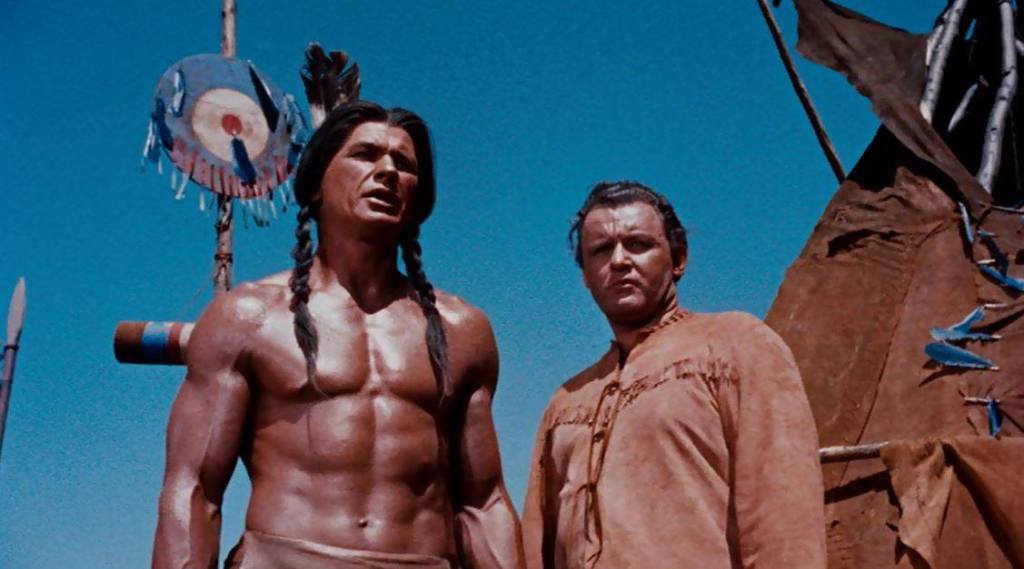
Some of the performances are very effective in the film. Rod Steiger’s Irish, confederate Sioux is an interesting character and the actor gives it his all as you’d expect. I’m a big fan of Steiger and his performance here only solidifies my respect for him. Brian Keith’s Captain Clark arrives fairly late in the proceedings and comes across as a tough, but honest man of integrity at a point when the movie really needs him. He has an excellent scene with Steiger where he debates the old confederate’s reasons for renouncing his citizenship with both sound logic, empathy, kindness and a hint of likable sarcasm all at the same time. It’s one of the best scenes in the film. And likewise, Charles Bronson, the most buff Hollywood Indian to ever strip down to a loincloth, comes across as a reasonable and kind tribal chief in his dealings. Bronson had played Indians before, but he was usually more of the renegade, warpath variety, so it was nice seeing him as a good guy here. H.M. Wynant took the renegade Indian role here which you might have expected for Bronson at the time. He’s suitably fierce but one-dimensional. The same can be said for Ralph Meeker as Lieutenant Driscoll. He’s pretty much just a stereotypical jerk. He’s good at being a jerk though! And Sarita Montiel, voiced by Angie Dickinson, is quite the beauty as Yellow Moccasin. We discussed H.M. Wynant and RUN OF THE ARROW with author Steven Peros on the “This Week in Charles Bronson Podcast.” Check out that interview below:
I’ve recently heard RUN OF THE ARROW compared to Kevin Costner’s DANCES WITH WOLVES, and there are definitely many similarities. I won’t go into all of those here, but one of the things I appreciated the most about RUN OF THE ARROW is the fact that the movie makes its feelings known about politics. In a movie filled with characters who have had their lives upended by the various decisions of political leaders, director Samuel Fuller has crafted a story that focuses most sharply on defining the quality of men based on what’s in their “hearts.” When it’s all said and done, oftentimes the only control we have is the way we respond to the events in our lives, and that’s not politics, it’s personal. To drive this home, in one of their conversations, Walking Coyote tells O’Meara that he could have been a chief if he had wanted to be. When O’Meara pushes the old scout on why he didn’t want the position, Walking Coyote responds with, “Because I hate politics!” On that point, I couldn’t agree more.
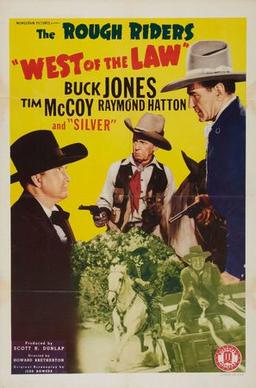
In the mining town of Gold Creek, an outlaw gang has been hijacking shipments of gold. Newspaper publisher Rufus Todd (Milburn Morante) has learned that the head of the gang is saloon owner Jim Rand (Harry Woods). Todd is planning on publishing a story identifying Rand as the outlaw leader on the front page of his newspaper so Rand’s secret partner, businessman John Corbett (Jack Daley) arranges for Rufus’s printing press to be blown up.
Rufus calls in his old friend, Marshal Buck Roberts (Buck Jones). Buck arrives in town with his fellow Rough Riders, Tim McCall (Tim McCoy) and Sandy Hopkins (Raymond Hatton). As usual, everyone is working undercover. Buck pretends to be an outlaw named Rocky Sanders. Tim claims to be a preacher who is not afraid to draw his gun and force everyone in the saloon to put down their drinks and listen while Rufus identifies Rand as being an outlaw. Sandy is the new undertaker and his coffins prove useful for smuggling in some much needed equipment.
The eighth Rough Riders film trods familiar ground. Once again, Buck is framed for a crime he didn’t commit and, as always, the villains are a businessman and a saloon owner. Still, I enjoyed seeing Tim to pretend to be a preacher and Sandy had some funny moments are the town’s garrulous undertaker. As always, McCoy, Roberts, and Hatton possessed an authentic western toughness that made them compelling heroes even in B-westerns like this one.
Since Tim McCoy reenlisted in the U.S. Army following Japan’s attack on Pearl Harbor, this was the last Rough Riders film to feature the original three riders and their chemistry and friendship are as strong as when the series first began. The movie ends with the promise that the Rough Riders would ride again but sadly, it was not to be. Though West of the Law doesn’t break any new ground, it’s still a decent finale for the original team.
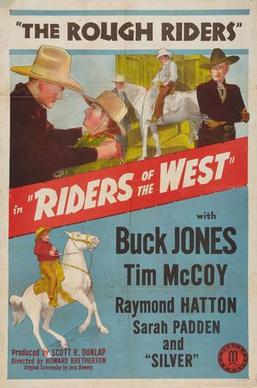
In a frontier town, a gang of rustlers are stealing cattle as a part of a plot to force cash-strapped ranchers to take out exorbitant mortgages on their ranches. Ma Turner (Sarah Padden) summons her old friend, Marshal Buck Roberts (Buck Jones), to come to town and take on the rustlers. When the town’s corrupt banker is murdered and Ma Turner’s son, Steve (Dennis Moore), is framed for the crime, Roberts calls in his fellow Rough Riders, Tim McCall (Tim McCoy) and Sandy Hopkins (Raymond Hatton), to help him take down the gang.
In many ways, this is a familiar Rough Riders film, right down to the main bad guy being the owner of the town’s saloon and Charles King showing up as a member of the gang. What sets it apart from the film that came before it is that, this time, Tim pretends to be an outlaw while Buck sets himself up as the new law in town. Tim takes on the identity of Tim Steele, a sarsaparilla-drinking ne’er do well who has just gotten out of prison. Jones and McCoy both seem to enjoy getting to switch their typical roles. As for Sandy Hopkins, he goes undercover as a peddler of snake oil and provides the comic relief. Riders of the West is a typical B-western but the chemistry between the three leads continues to shine through.
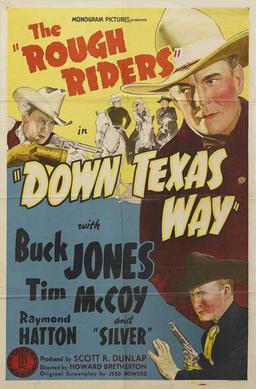
The sixth entry in the Rough Riders series finds Marshal Tim McCall (Tim McCoy) traveling from Wyoming to Texas so that he can help Sandy Hopkins (Raymond Hatton) celebrate his birthday. When he arrives, he discovers that the birthday celebration is on hold because Sandy has been accused of murdering his best friend, John Dodge (Jack Daley). Dodge was the richest man in town and the townspeople think that Sandy murdered him as a result of a disagreement over a card game. What they don’t know is that Sandy and Dodge were only pretending to be mad at each other as a practical joke.
Dodge was really murdered by Bert Logan (Harry Woods), an outlaw who has hired an actress named Stella (Lois Austin) to pretend to be Dodge’s long-lost wife. When all of Dodge’s property is given to Stella, Stella will then give it all to Dodge. While Tim tries to keep the sheriff (Glenn Strange) from prosecuting Sandy, Marshal Buck Roberts (Buck Jones) goes undercover and infiltrates Logan’s gang.
After five previous films that just featured the Rough Riders talking about what their lives were like when they weren’t chasing outlaws, Down Texas Way shows us Sandy Hopkins’s life in Texas. It’s about what you would expect. Sandy likes to spend his time playing cards and hanging out in the lobby of his hotel. It seems like an nice life, at least until Bert Logan tries to frame him for murder. Luckily, the other Rough Riders are always there to have his back. Down Texas Way is not one of the better Rough Riders films because Bert’s scheme never makes much sense but Hatton is relaxed and engaging and McCoy and Jones are their usual tough selves. As with the previous film, the appeal of this Rough Riders film is the Rough Riders themselves and the way that they always stick together and have each other’s back. That’s especially true in Down Texas Way, in which both Tim and Buck show that they’ll travel across several states if it means helping out a friend in a jam.
One final note, the town’s sheriff is named Trump, though I assume he’s no relation. Glenn Strange, who played Sheriff Trump, would later play Frankenstein’s Monster in the last of the Universal horror movies.
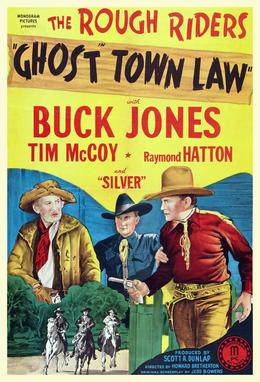
When two U.S. marshals are ambushed and killed while searching for a group of outlaws in a nearly deserted ghost town, Marshal Tim McCall (Tim McCoy) leaves his ranch in Wyoming to investigate the crime. He was friends with the two murdered men, making this case personal. Of course, McCall’s two fellow Rough Riders ride into town to help McCall out. Buck Roberts (Buck Jones) and Sandy Hopkins (Raymond Hatton) arrives separately and pretend to be prospectors. Their investigation leads to the outlaws (led, as usual, by Charles King), a corrupt member of the community, and a network of underground tunnels that might lead to a gold mine. As with all of the Rough Rider films, Ghost Town Law features a younger secondary protagonist who was there to appeal to audiences who didn’t remember Jones, McCoy, and Hatton from their silent and pre-code era heyday. Virginia Carpenter plays Josie Hall, who comes to the town to search for her grandmother and brother.
Starting with the two marshals getting gunned down in the line of duty, this is one of the more violent of the Rough Riders films. Since the Rough Riders are as interested in getting revenge as they are in getting justice, the Rough Riders themselves are quicker on the draw than usual. The identity of the main villain will not be a shock to anyone who has watched any of the other Rough Rider films but the use of the underground tunnels adds a new element of danger to the movie. For once, the outlaws and the Rough Riders seem evenly matched. The film also features the very lovely and likable Virginia Carpenter, making the last of her five film appearances.
As always, the main appeal is watching Jones, McCoy, and Hatton acting opposite each other. Due to the nature of the case, all three of them are more serious than usual in Ghost Town Law but it is still enjoyable to watch them discuss what’s been happening at their ranches since the last movie.
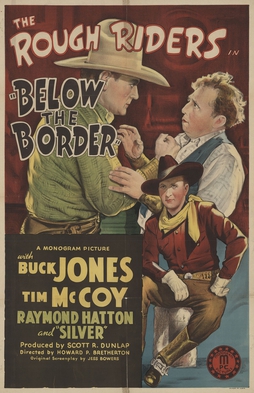
In the fourth Rough Riders film, the boys head down to Mexico City to defend the Garcia Ranch from a gang of cattle rustlers who are also planning on stealing the Garcia Family Jewels. (Would the Rough Riders have any legal jurisdiction in Mexico?) This time, Buck Roberts (Buck Jones) assumes the identity of a well-known outlaw who deals in stolen goods, Tim McCall (Tim McCoy) pretends to be a cattle buyer, and Sandy Hopkins (Raymond Hatton) gets a job sweeping up the local saloon. As with almost all of the Rough Riders films, the owner of the saloon, Steve Slade (Charles King), is also the leader of the thieves. Slade is blackmailing a reformed outlaw named Joe (Dennis Moore) into helping Slade and Scully (Roy Barcroft) steal the family jewels. Joe is in love with Rosita Garcia (Linda Brent).
Below the Border has much in common with Forbidden Trails, the Rough Riders film that came before it, right down to a villainous saloon owner and a former outlaw being blackmailed to return to his old ways. As usual, the outlaws try to humiliate Sandy Hopkins, just for Tim McCall to show up at the saloon and turn the tables. Scully is a despicable bully and it feels good when McCall forces him to grab Hopkins’s mop and clean up the bar himself.
It’s not the strongest of the Rough Riders films. The plot is predictable, Linda Brent gives a terrible performance as Rosita, and even the action scenes are by-the-numbers. The main appeal of Below the Border is to watch the three Rough Riders themselves. Jones, McCoy, and Hatton all seem to have genuinely enjoyed working together and that comes through in their scenes together. You never have any doubt that, even though they live in different parts of the country, all it would take is one telegram for them to get back together. The highlight of each film is the final scene, where the Rough Riders tell each other what they’ve been up to between adventures. This time, Buck invites everyone to visit him in Arizona but Tim has to get back to Wyoming and Sandy’s running a hotel in Texas. They ride off separately but there’s little doubt they will reunite as soon as there’s a new rustler who needs to be brought to justice.
Marshal Buck Roberts (Buck Jones) has finally retired after a long and a legendary career. Two men who Buck arrested are not planning on allowing him to enjoy his retirement. Having served their sentence for robbing a stagecoach, Fulton (Charles King) and Howard (Bud Osborne) are released from prison and head to Yucca City, Arizona. They try to recruit their old partner, Jim Cramer (Dave O’Brien), into helping them get revenge on Buck but Cramer wants nothing to do with it. He’s gone straight and is running his own general store with his fiancée, Mary (Christine McIntyre). Cramer considers Buck to be a friend because Buck looked after Cramer’s children while Cramer was serving his sentence.
Fulton and Howard ambush Buck and nearly kill him. With the help of his horse, Silver (of Lone Ranger fame), Buck is able to escape but he’s seriously injured. His two fellow rough riders, Sandy Hopkins (Raymond Hatton) and Tim McCall (Tim McCoy), head down to Arizona to bring Fulton and Howard to justice. (Sandy even rides away from his own wedding when he hears that Buck has been injured.) While the Rough Riders search for Fulton and Howard, saloon owner Ed Nelson (Tris Coffin) works with the outlaws to steal a shipment of goods.
The third of the Rough Riders film, Forbidden Trails is memorable for acknowledging that the three Rough Riders were older than the most of the other contemporary western stars. Buck Jones, Tim McCoy, and Raymond Hatton were all veteran stars who began their careers during the silent era and who transitioned to B-movies in the sound era. At a time when their contemporaries were retiring, they were still appearing before the camera and riding the range. Like the actor playing him, Buck Howard has reached the age when most people retire but he cannot escape his past. Neither can Jim Cramer, who can’t live the law-abiding life that he desires as long as Fulton and Howard are free. While Cramer has to escape from his former friends, Buck is lucky to have friends like McCall and Hopkins. The movie showcases their loyalty and their friendship together and leaves no doubt that will never change, no matter how old the Rough Riders get. Along with showcasing the friendship of its three stars, the movie is full of chases and gunfights. The scene where Buck is ambushed is exiting and there’s also a good saloon shootout. Jones and McCoy are as authentically western as ever.
Dave O’Brien and Christine McIntyre both appeared in the previous Rough Riders film but they’re playing different characters here. Tris Coffin also played a similar crooked businessman in the first Rough Riders film, Arizona Bound.
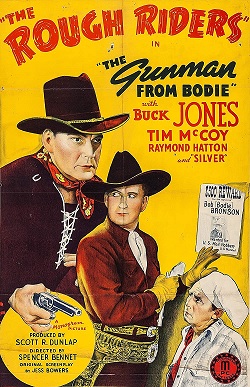
The second of the Rough Riders films opens with Bob “Bodie” Bronson (played by Buck Jones) seeking shelter from a storm and coming upon a house. Brodie enters the house, just to discover two dead bodies, a crying baby, and a note that says that the house was attacked by rustlers. After the storm passes, Bodie takes the baby to a ranch owned by Alice Boden (Christine McIntyre) and her boyfriend, Joe (David O’Brien). Alice and Joe agree to look after the baby while Bodie heads into town.
Anyone who has seen Arizona Bound or any of the Rough Riders films that came out after The Gunman From Bodie will know that Boodie Bronson is actually Marshal Buck Roberts and that he’s working undercover. His partner, Marshal Sandy Hopkins (Raymond Hatton), is already working as a cook at the ranch. Soon, the third rough rider, Marshal Tim McCall (Tim McCoy), shows up with a wanted poster for Bodie. It’s all a plan, of course, to help Bodie ingratiate himself with the actual rustlers.
The Gunman From Bodie is considerably darker than Arizona Bound. Because of the murder of the baby’s parents, the Rough Riders aren’t just looking to uphold the law. They’re looking to avenge a terrible crime and to dispense some frontier justice. Buck Jones and Tim McCoy both give grim and determined performances that leave you with no doubt that you don’t want to get on their bad side. While Alice and Joe tug at the audience’s heartstrings by becoming parents to the orphaned child, the Rough Riders do what they have to do to prevent any more children from losing their parents. I especially liked the scene where Marshal McCall graphically described what happens when someone is executed by hanging, describing each detail until the actual murderer freaks out and reveals himself. The Gunman From Bodie is quick-moving western for adults that features Buck Jones, Tim McCoy, and Raymond Hatton at their best.
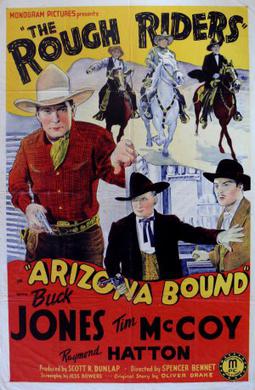
The town of Mesa City, Arizona has a problem. A gang of thieves are holding up stagecoaches and shooting the drivers. Stagecoach lines are removing Mesa City from their list of destinations and the town is having to depend on the services of corrupt businessman Steve Taggert (Tristram Coffin). After the death of her father and the shooting of her boyfriend, Ruth Masters (Launa Walters) takes over her family’s stagecoach line and is determined to keep it running. But who will drive her coaches?
Cattle salesman and former marshal Buck Roberts (Buck Jones) rides into town and volunteers to drive the next stagecoach. Because the stagecoach is carrying a gold shipment, everyone suspects that it will probably be targeted by the thieves. Volunteering to help Buck is another cattleman named Sandy Hopkins (Raymond Hatton) and the town’s newly arrived preacher, Parson McCall (Tim McCoy). McCall has already run afoul Taggert because of his crusade to close down Taggert’s saloon. What Taggert and the other citizens of Mesa City don’t know is that Buck, Hopkins, and McCall are the Rough Riders, undercover government agents who have a plan to both protect the gold and to reveal the identities of the culprits.
Arizona Bound was the first of seven films about the Rough Riders. While the plots were never anything special, these films stood out because they paired Buck Jones and Tim McCoy, two B-western mainstays who had been active since the silent era and who both brought a good deal of authentic toughness to their performances. In Arizona Bound, both Jones and McCoy don’t hesitate to show that they’re not going to put up with any nonsense from Taggert and his men. There’s a great scene where McCoy proves that even a preacher can outdraw and intimidate an entire saloon full of roughnecks. Jones, McCoy, and Hatton made a good team, though world events would come together to prevent the Rough Riders from having too many adventures. After the U.S. entered World War II, McCoy volunteered for active duty. Meanwhile, Jones died in a tragic night club fire. Raymond Hatton continued to play Sandy Hopkins in other films but none with the original Rough Riders.
 Treasury agent Pat Doyle (John St. Polis) is sent to investigate a counterfeiting ring in Wyoming but ends up getting kidnapped by gang leader Sharpe (Karl Hackett) instead. With Doyle’s daughter, Joan (Suzanne Kaaren), demanding that the government rescue her father and generating all sorts of bad publicity for the Secret Service, the decision is made to send in Tim Hayes (Tim McCoy). Hayes, who will be working undercover, is selected because he’s not a “city boy.” He’s a cowboy, through and through. If you want to tame the west, you have to send a cowboy.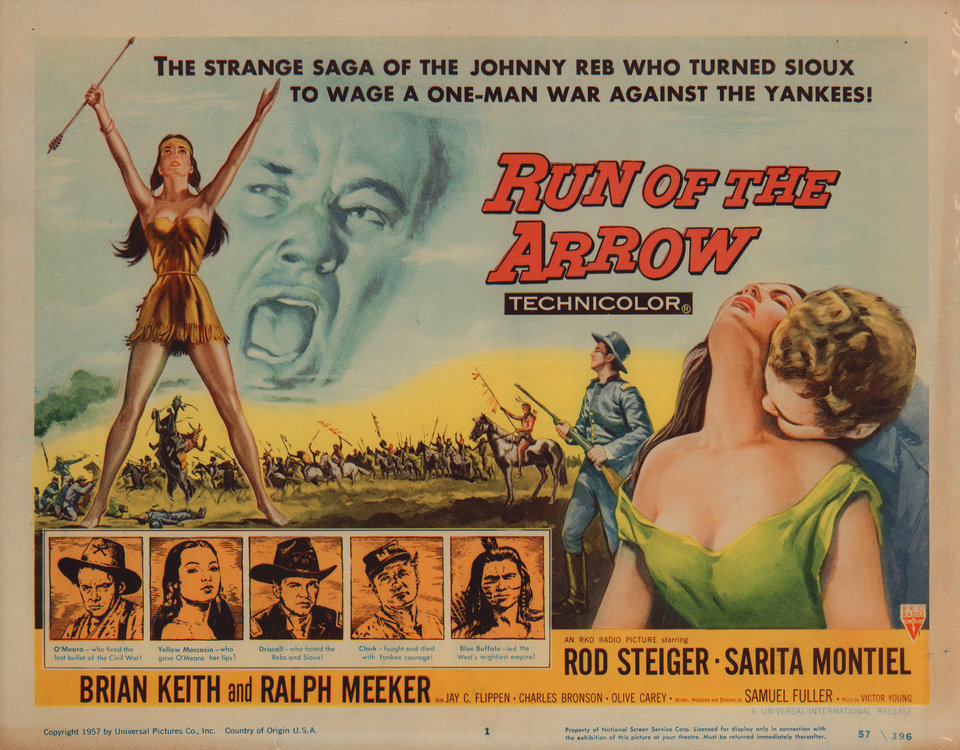

 Through the Shattered Lens