4 Shots From 4 Films is just what it says it is, 4 shots from 4 of our favorite films. As opposed to the reviews and recaps that we usually post, 4 Shots From 4 Films lets the visuals do the talking!
104 years ago today, the great Japanese actor Toshiro Mifune was born in Qingdao, Shandong, China, which was under Japanese occupation at the time. After working as a photographer and as an assistant cameraman, Mifune made his acting debut in 1947, playing a bank robber in Snow Trail.
Mifune would go on to become an international superstar, appearing in hundreds of films before his death in 1997. Sixteen of those films would be directed by Akira Kurosawa and Mifune’s performances in Kurosawa’s yakuza and samurai films would go on to inspire actors the world over. When Sergio Leone adapted Yojimbo into A Fistful of Dollars, Clint Eastwood based his performance on Mifune’s performance in the original. George Lucas would later create the character of Obi-Wan Kenobi with Mifune in mind.
In honor of the man and his career, here are
4 Shots From 4 Films
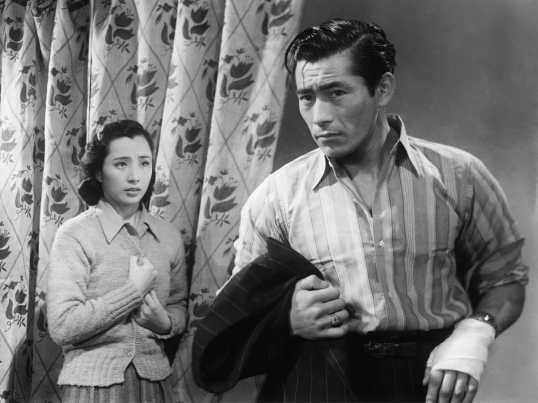
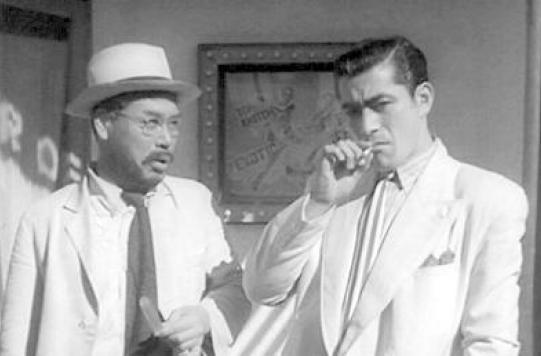
Drunken Angel (1948, directed by Akira Kurosawa)
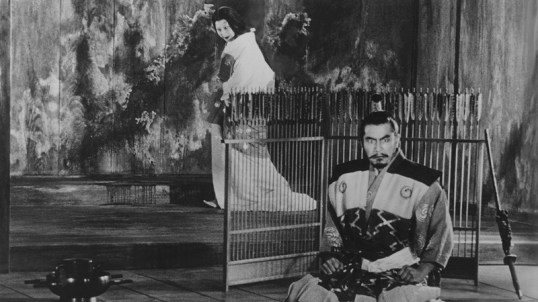
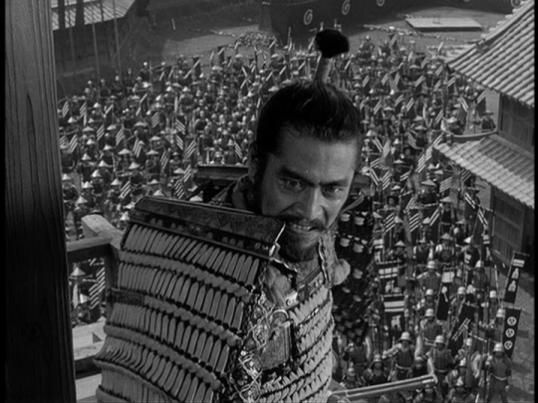
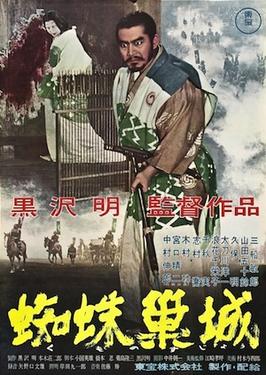
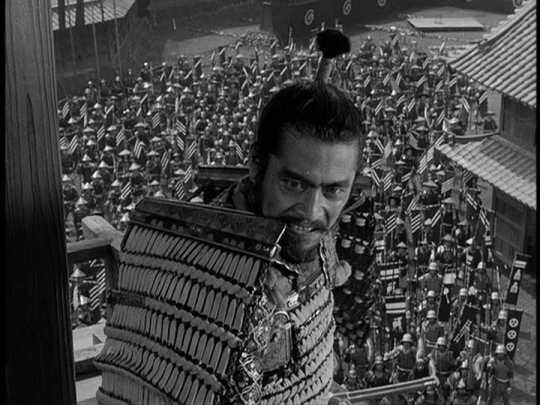
Throne of Blood (1957, directed by Akira Kurosawa)
4 Or More Shots From 4 Or More Films is just what it says it is, 4 shots from 4 of our favorite films. As opposed to the reviews and recaps that we usually post, 4 Shots From 4 Films lets the visuals do the talking!
Today, the Shattered Lens honors both the birth and the legacy of the great filmmaker, Akira Kurosawa! It’s time for….
4 Shots From 4 Akira Kurosawa Films
Throne of Blood (1957, dir by Akira Kurosawa, DP: Asakuza Nakai)
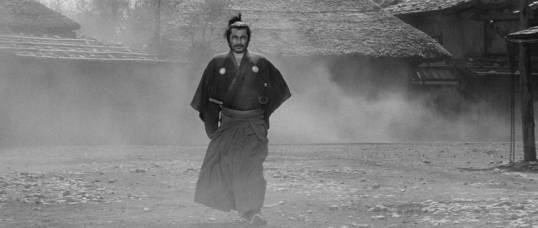
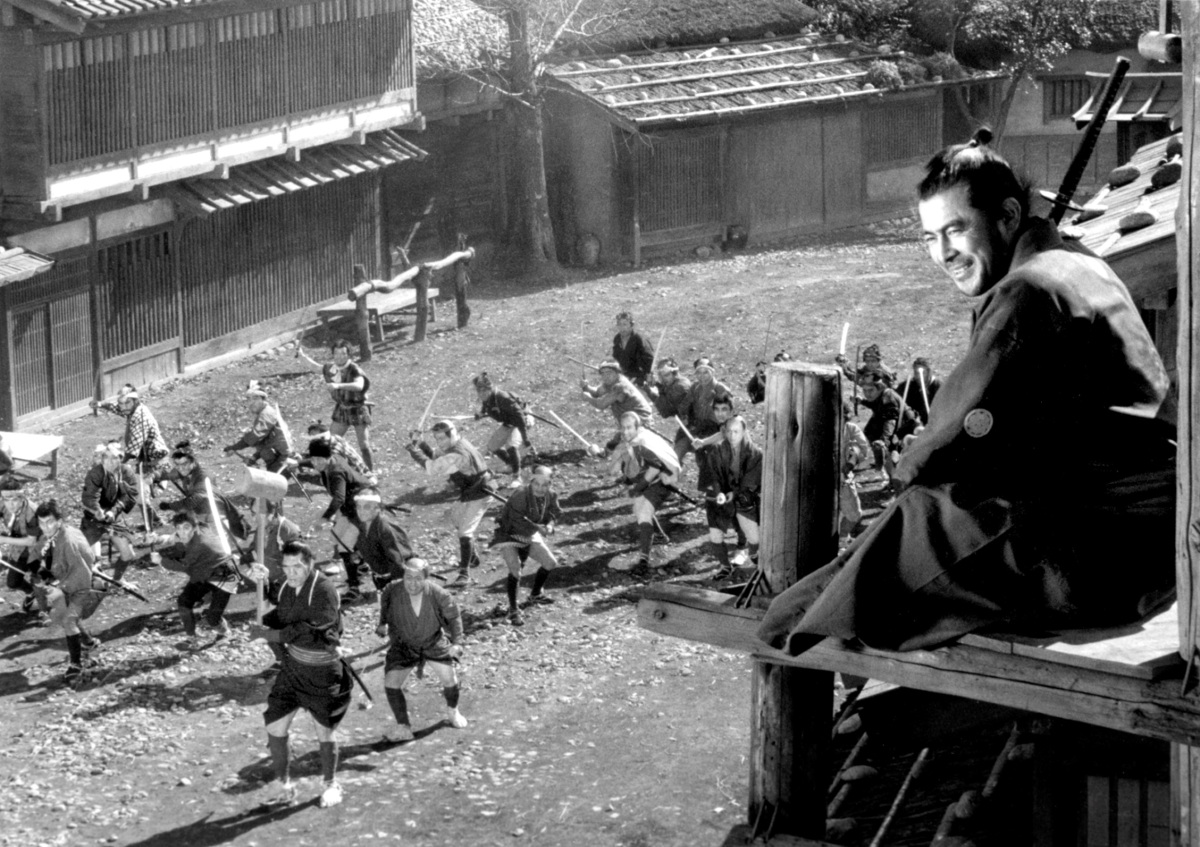
Yojimbo (1961, dir by Akira Kurosawa, DP: Kazuo Miyagawa)
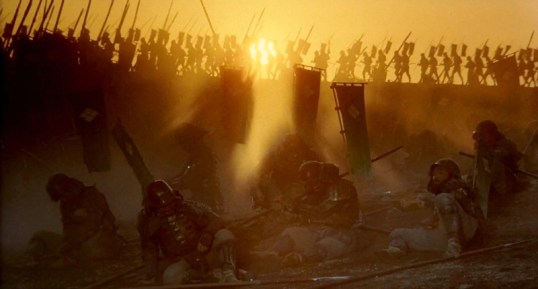
Kagemusha (1980, dir by Akira Kurosawa, DP: Takao Saito and Masaharu Ueda )
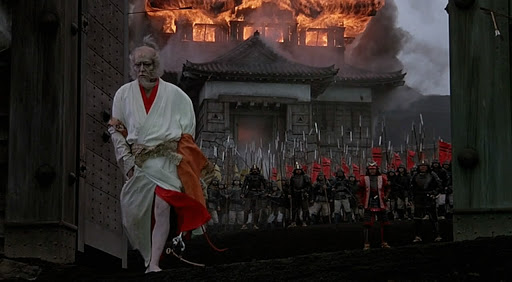
Ran (1985, dir by Akira Kurosawa, DPs: Takao Saito, Masharu Ueda, and Asakazu Nakai)
In feudal-era Japan, two great Samurai commanders, Miki (Akira Kubo) and Washizu (Toshiro Mifune) stumble upon a mysterious spirit (Chieko Naniwa) who tells them both their futures. Though her prophecies are cryptic, it appears that she is predicting that, some day, Washizu will become the “Lord of the Spider Web’s Castle” and that he will eventually be succeeded by Miki’s son. When Washizu later returns to his wife, Asaji (Isuzu Yamada), he tells her about the prophecy. The ambitious Asaji encourages to make the prophecy come true by murdering the local lord, Lord Tsuzaki (Hiroshi Tachikawa)….
Does this sound familiar? The 1957 Japanese film, Throne of Blood, is a version of Macbeth, with the action moved from Scotland to Japan and the three witches replaced by one spirit. It’s an enthralling film, though it probably does help to already be familiar with the plot of Macbeth before watching the film. Director Akira Kurosawa keeps the action moving at a quick pace and he doesn’t always stop to carefully explain everyone’s motivations. That’s not a complaint, by the way. Kurosawa emphasizes the confusion of living in a world of constant war and constant scheming. As envisioned by both Shakespeare and Kurosawa, the worlds of Macbeth and Thrones of Blood are worlds where violence is a part of life and the only thing certain is that everyone is going to die eventually. To try to deny fate is to be destroyed by it.
The world of Throne of Blood seems to be covered in a constant fog. Perhaps it’s the fog of war or maybe it’s the fog of an uncertain future but, for me, the defining image of Throne of Blood is one of armored and bloody men emerging from a thick mist. The viewer is never sure who might be hiding in the mist and, even more importantly for both those watching the movie and those existing inside of it, it’s impossible to see what might be waiting down the road. The only person who can see through the mist is the Spirit but, just as in Shakespeare’s play, people tend to only hear what they want to hear when the Spirit speaks. In the world of Throne of Blood, even those who have eyes have been rendered blind.
It’s a world where you can change the present but you can never escape the past. Asaji finds herself vainly trying to wash the blood off of her hands. Washizu finds himself haunted by the ghost of the man that he killed. Even while Washizu shouts at a ghost that only he can see, it’s obvious that those around him are already plotting the best way to get him out of the way. There is no real loyalty in Throne of Blood and it all leads to death and more death. It’s hard to say that anyone really achieves any sort of victory in Throne of Blood. That’s just not the way the world works.
Throne of Blood is basically a filmed nightmare, one that takes place in a world that’s drenched with blood and duplicity. Toshiro Mifune gives another great performance in the role Washizu, though the film is ultimately stolen by Isuza Yamada as Washizu’s wife, who pushes her husband to murder and then finds herself driven to insanity by his actions. Throne of Blood is both a superior Shakespeare adaptation and a great Kurosawa film.
4 Shots From 4 Films is just what it says it is, 4 shots from 4 of our favorite films. As opposed to the reviews and recaps that we usually post, 4 Shots From 4 Films lets the visuals do the talking!
100 years ago today, the great Japanese actor Toshiro Mifune was born in Qingdao, Shandong, China, which was under Japanese occupation at the time. After working as a photographer and as an assistant cameraman, Mifune made his acting debut in 1947, playing a bank robber in Snow Trail.
Mifune would go on to become an international superstar, appearing in hundreds of films before his death in 1997. Sixteen of those films would be directed by Akira Kurosawa and Mifune’s performances in Kurosawa’s yakuza and samurai films would go on to inspire actors the world over. When Sergio Leone adapted Yojimbo into A Fistful of Dollars, Clint Eastwood based his performance on Mifune’s performance in the original. George Lucas would later create the character of Obi-Wan Kenobi with Mifune in mind.
In honor of the man and his career, here are
4 Shots From 4 Films
Drunken Angel (1948, directed by Akira Kurosawa)
Throne of Blood (1957, directed by Akira Kurosawa)

 Through the Shattered Lens