4 Shots From 4 Films: Special Michael Anderson Edition


4 (or more) Shots From 4 (or more) Films is just what it says it is, 4 (or more) shots from 4 (or more) of our favorite films. As opposed to the reviews and recaps that we usually post, 4 (or more) Shots From 4 (or more) Films lets the visuals do the talking.

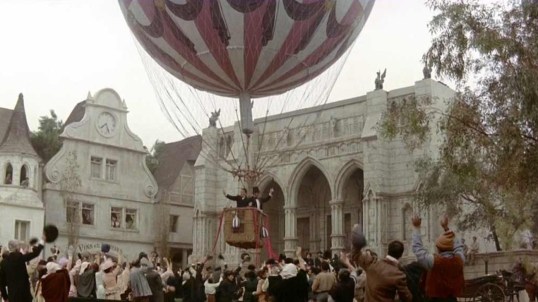
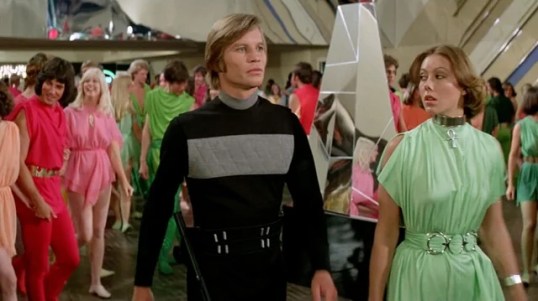
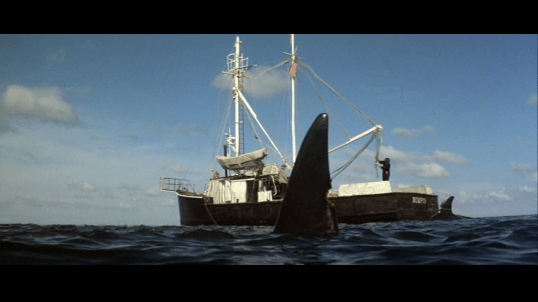
105 years ago today, Michael Anderson was born in London.  Anderson may have never become a household name but he directed some memorable movies.  Around The World in 80 Days proved that audiences love spectacle and celebrity cameos and it won the Oscar for Best Picture of 1956.  (Though Anderson was nominated for best director, the award went to George Stevens for Giant.)  However, I think that Anderson’s best-remembered film is probably Logan’s Run.  Whenever I shout, “I hate outside!” or I reply to a simple question with, “There is no sanctuary,” people always seem to automatically know which film I’m referencing.  Anderson followed up Logan’s Run with Orca, which is one of the better Jaws rip-offs.

Today, we honor the career and legacy of Michael Anderson with….

4 Shots From 4 Michael Anderson Films

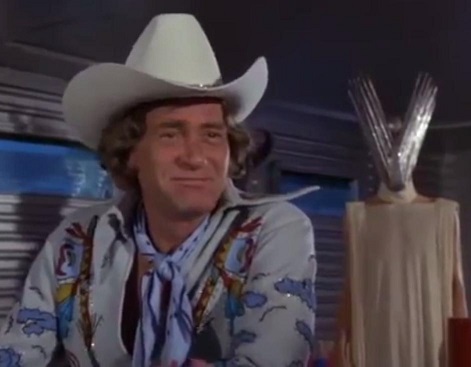
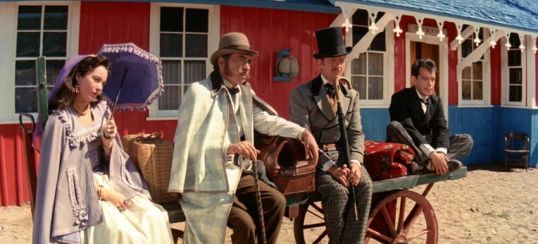
Around The World in 80 Days (dir by Michael Anderson, DP: Lionel Lindon)

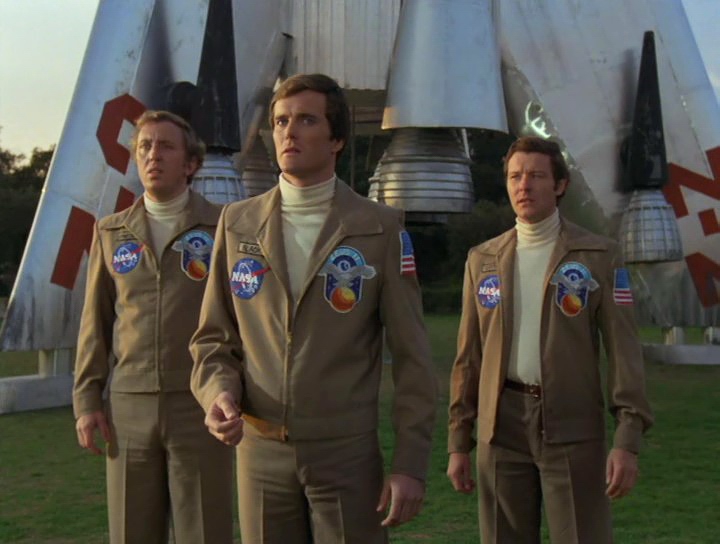
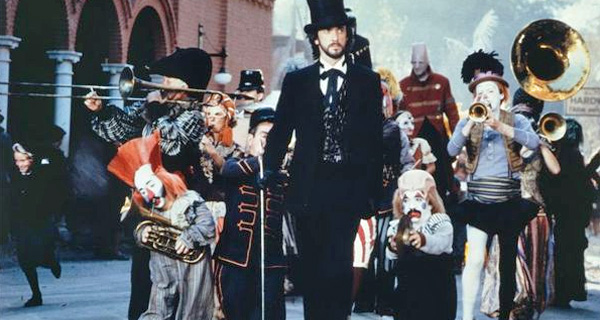
Logan’s Run (1976, dir by Michael Anderson, DP: Ernest Laszlo)

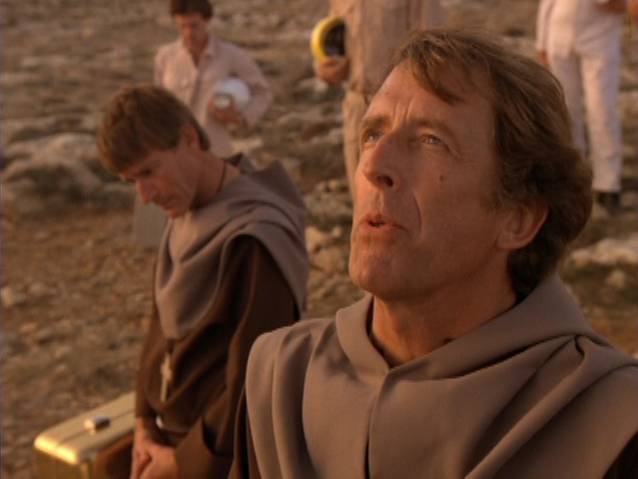
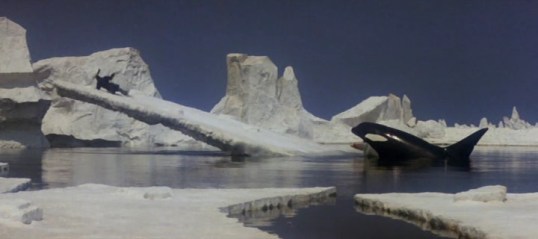
Orca (1977, dir by Michael Anderson, DP: J. Barry Herron and Ted Moore)

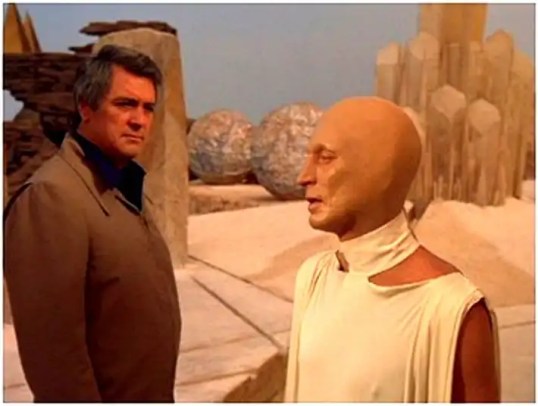
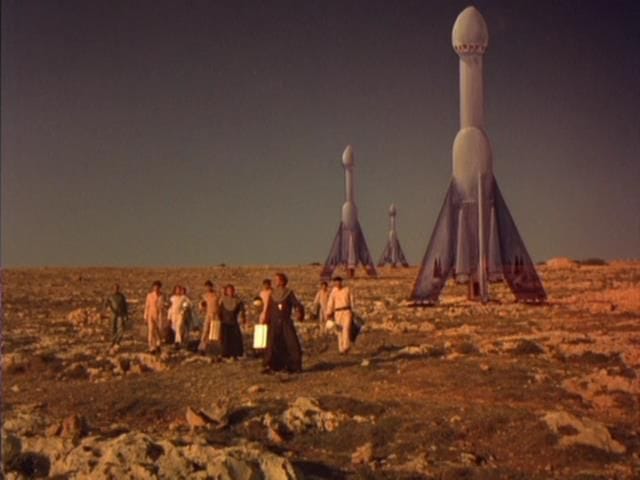
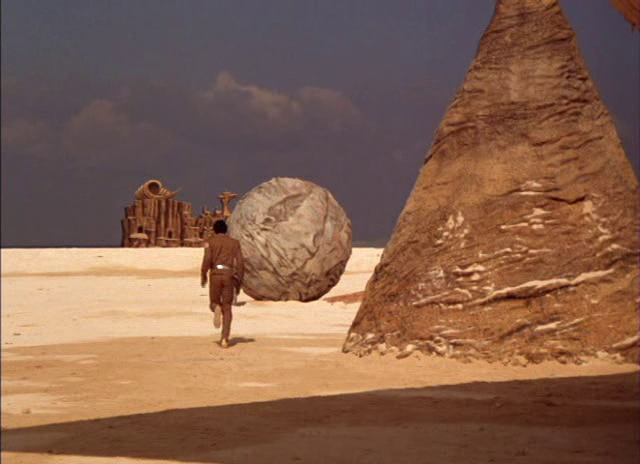
The Martian Chronicles (1980, directed by Michael Anderson, DP: Ted Moore)

The Martian Chronicles: Episode 3: The Martians (1980, directed by Michael Anderson)


Episode 2 of The Martian Chronicles ended with Sam Parkhill (Darren McGavin) helplessly watching as Earth was consumed by nuclear fire.  Episode 3 opens with Col. John Wilder (Rock Hudson) returning to Earth in 2006 and discovered that the entire planet is dead.  He had hoped to find his brother and rescue him but instead, all Wilder finds is a video of his brother being vaporized by an atomic blast.

Back on Mars, the planet is nearly deserted.  Most of the human colonizers were ordered to return to Earth before the war broke out and, as a result, they died in the atomic inferno.  Only a few humans remain on Mars.  One of them, Ben Driscoll (Christopher Connelly), is excited to discover another survivor named Genevieve (Bernadette Peters) but he abandons her when he discovers that she’s too high-maintenance for him.  He decides he’d rather live alone.  (Too mean-spirited to really be funny, this was the weakest short story in Rad Bradbury’s collection and it’s also the weakest segment of the miniseries.)  Wilder and Father Stone (Roddy McDowall) visit another survivor, a scientist named Peter Hathaway (Barry Morse).  Peter lives with his devoted wife and daughter but when he dies of heart attack, they barely notice because they’re robots.

The first hour of the final episode of The Martian Chronicles is considerably weaker than the two episodes that proceeded it.  After the effective scenes of Wilder exploring Earth, the series is suddenly taken over by Christopher Connelly, playing a character that we’ve never seen before and who isn’t very likable.  The Ben and Genevieve sequence is weak and never that funny, despite Peters’s skill with comedy.  The sequence with Dr. Hathaway and the robots feels like a dry run for something Ray Bradbury would have written for The Twilight Zone.

Fortunately, the final segment of The Martian Chronicles swoops in to save the series.  Col. Wilder and his family spend the day camping at the same ancient Martian city where, during the first episode, Spender tried to convince Wilder not to allow Mars to be colonized.  While walking around the ruins of the city, Wilder meets what is either the ghost or the future projection of a Martian.  They have a friendly and philosophical conversation.  They talk about how The Martian doesn’t know if he’s from the past or if he’s from the future but it doesn’t matter.  Returning to his family, Wilder looks at their reflection in Briggs Canal and he say that, with Earth gone, they are now the Martians.  With Earth in ruins and only a few humans left, it’s up to the survivors to combine the ways of Earth with the ways of Mars and create a new world.  Though Hudson is usually held up as being the epitome of a stuff actor, when he made The Martian Chronicles, he had the right amount of gravitas to make the final scenes work.

The Martian Chronicles is an uneven miniseries.  The first episode is so good that the two that follow struggle to keep up.  But just, as in Bradbury’s book, the ending is perfectly realized and it still work, ever after all these years later.

The Martian Chronicles: Episode 2: The Settlers (1980, directed by Michael Anderson)


The first episode of The Martian Chronicles ended with a dying Jeff Spender (Bernie Casey) warning John Wilder (Rock Hudson) that humans settling on Mars would be the worst thing that could ever happen to the once powerful red planet.

The second episode, called The Settlers, sets about to prove Spender right.  By 2004, humans are desperately leaving the war-torn Earth for a new home on Mars.  They rename all of the Martian landmarks, honoring the men who died exploring the planet.  In one of the few deliberately funny moments of this entire miniseries, it’s revealed that the canal that Briggs threw his beer cans in was eventually named Briggs Canal.  There’s one unfortunate shot of a line of miniature space ships that are supposed to be orbiting Mars and waiting for their chance to land.  The episode then gets down to showing what the settlers do to Mars.

It’s nothing good.  The main town looks like a traveling carnival, full of bars and crime.  Many of the people who come to Mars are people who are fleeing something on Earth and Col. Wilder has his hands full trying to keep the peace.  All of the Martians are believed to be dead but it turns out that there are still a few out there.  Using their mental powers, they disguise themselves as humans.  A large part of the second episode deals with a Martian who approached an elderly couple, disguised as their dead son.  Even though they know that he’s not really their son, they allow him to live in their home.  But, when the Martian goes to the city, he becomes overwhelmed by all the thoughts that bombard his mind.  Everyone sees him as being someone that they care about.  Even the local priest, Father Peregrine (Fritz Weaver), sees the Martian as being Jesus.  (That’s no big deal today but that had to have been controversial in 1980.)  Eventually, the Martian becomes so overwhelmed that he dies while a group of humans gawk at him.

As for Father Peregrine and Father Stone (Roddy McDowall, who spent most of his later years appearing in miniseries like this one), they explore the Martian mountains, searching for three lights that have been reported as hovering in the sky.  When they find the lights, the lights explain that they are ancient Martians who long ago abandoned their corporeal bodies.  They also somewhat implausibly say that they worship the same God as the two priests.  In a departure from Bradbury’s original short stories (in which Bradbury was skeptical about the idea of bringing religion to the Mars), Father Peregrine commits to building a church so that, even on the Red Planet, people can worship.

Finally, Sam Parkhill (Darren McGavin) has achieved his dream of building a restaurant on Mars.  He says that, as soon as more Earthlings arrive, he’ll be rich because every trucker will stop off at his place for a bite to eat.  When a Martian suddenly shows up in the diner, Parkhill panics and shoots him.  When more Martians show up, Parkhill flees.  It’s only when the Martians catch up to him does he learn that they’re giving him a grant for half the land on Mars.  “Tonight’s the night,” they tell him, “Prepare.”  Old Sam Parkhill’s pretty excited until he looks through a space telescope and sees that Earth, the home of his future customers, is now glowing with the sure sign of nuclear fire.  I can’t remember how old I was when I first saw this episode on late night Baltimore TV but I do remember being thoroughly freaked out by the scene where Sam watches as a fiery glow encircles the Earth and the planet’s green surface turns brown.  It’s the most powerful moment in the miniseries and a fitting visualization of Bradbury’s concerns about the nuclear age.

As for the rest of The Settlers, it’s good but it’s not as strong or as cohesive as the first episode.  The Martin shapeshifter story is good but the two priests in the mountains felt like they were included to keep religious viewers happy and their segment takes too many liberties with Bradbury’s original material.  Then, Darren McGavin returns to the story. dressed like a cowboy and getting chased by a Martian sandship and The Martian Chronicles goes back to being one of the coolest miniseries to ever be broadcast.

With Earth dead, would Mars follow?  That was the theme of the next episode of The Martian Chronicles, which we’ll look at tomorrow.

The Martian Chronicles: Episode 1: The Expeditions (1980, directed by Michael Anderson)


In 1980, NBC adapted the Ray Bradbury short story collection, The Martian Chronicles, into a three-part miniseries.  Though Bradbury’s original book featured short stories that were only loosely connected by two shared locations (Earth and Mars), the miniseries connected most of the stories through the character of Colonel John Wilder (Rock Hudson), the NASA project director who headed up the project to colonize Mars and who later regretted his decision after it became clear that humanity was going to treat Mars just as badly as they treated their previous home.  The miniseries was adapted by Richard Matheson and directed by Michael Anderson.

Unfortunately, the miniseries itself was not a hit with critics, who complained that the story moved too slowly.  Audiences, having just experienced Star Wars and Close Encounters of the Third Kind, were not impressed with the special effects, in which miniatures were used to simulate spacecraft flying through space.  Despite all of that, though, The Martian Chronicles has built up a cult following.  I can remember first catching the miniseries playing late at night on one of the local station in Baltimore.  I’ve always liked it.  It’s not as good as Bradbury’s original collection, of course.  But the miniseries still has its strengths, despite the miniatures.

The first and best episode of the miniseries was The Expeditions.  Starting with a recreation of Viking 1 landing on Mars in 1976, the episode jumps forward to the far future of 1999!  The first manned spacecraft lands on Mars and the two astronauts aboard are promptly killed by the first Martian that they meet, an angry husband who thinks that one of the astronauts is going to have an affair with his wife.
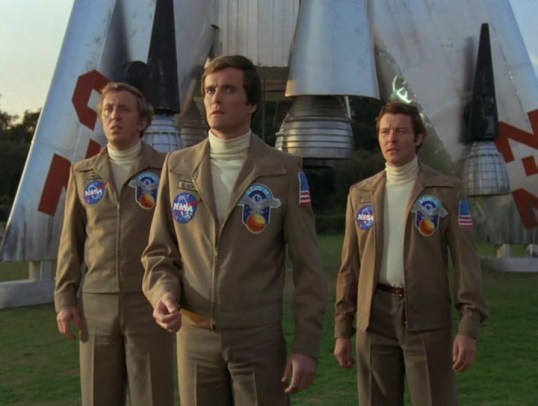
The second expedition is led by Captain Arthur Black (Nicholas Hammond, best-know for playing Spider-Man in the late 70s TV series).  When they land on Mars, they discover that the formerly Red Planet now looks like Black’s childhood home of Green Bluff, Illinois.  All of their relatives are waiting for them!  Falling into the belief that they’ve returned to the past, the astronauts are killed by their “families” that night.  It turns out that the Martians were using Black’s memories to set a trap for them.  As the Martian who disguises himself as Black’s brother explains it, they’ve seen, in the minds of the astronauts, what the humans are doing to their own planet and they can’t allow that to happen to Mars.  “Forgive us,” the Martians says, “we were once an honorable race.”  In one of the best scenes in both the book and the miniseries, the Martians still have an Earth-style funeral for the men that they’ve killed because they too got sucked into the world that they created and came to care about the men they felt they had to kill.

Years later, a third expedition arrives.  This one takes up the majority of the episode.  It’s led by Colonel Wilder himself and includes Sam Parkhill (Darren McGavin), Jeff Spender (Bernie Casey), Briggs (John Cassady), and McClure (Peter Marinker).  Almost all of the Martians have apparently died, the victims of the Earth germs that were brought to the planet by the second expedition.  While Parkhill plots to open a barbecue joint and Briggs gets drunk and tosses his empty beer cans into a waterway that he christens, “Biggs Canal,” Spender investigates a deserted Martian city.  Unlike the others, Spender is in awe of the Martian civilization and angry that it’s been so casually destroyed.  When Spender returns, he declares himself to be “the last Martian” and tries to kill the members of the expedition.
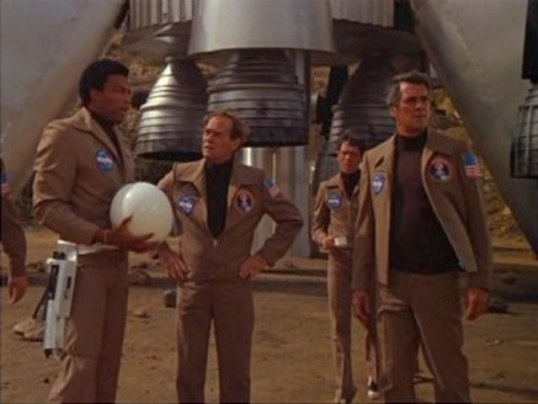
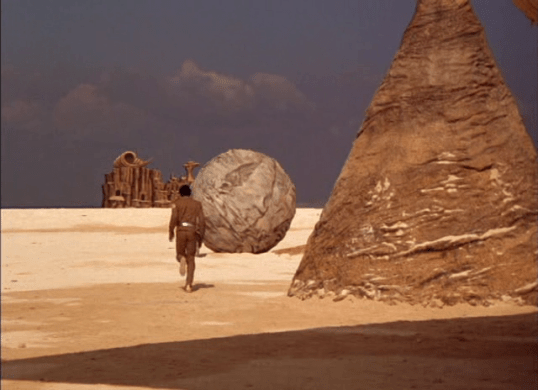
Of the three episodes, The Expeditions is the one that sticks closest to the stories on which it was based, in both content and theme.  Not surprisingly, it’s also the best of the miniseries, with each vignette working as both a separate story and a part of a larger whole.  It’s the episode that sticks closest to what Bradbuy himself was going for in his original collection.  While the miniature spaceships are a distraction, the desolate Martian landscape is sharply realized and the first episode is full of striking shots, from the Martian husband walking through the red desert to “greet” the first expedition to the funeral for the second expedition to the final battle between Spender and the survivors of the third expedition.  Among the members of the cast, Nicholas Hammond and Bernie Casey are the stand-outs but everyone plays their part well.  Darren McGavin is always a welcome presece in any miniseries and John Cassady is so obnoxious as Briggs that it’s impossible not to see where Spender is coming from.  (Back when the IMDb still has message boards, every message on Cassady’s board was someone posting about Briggs Canal.)  Rock Hudson is as stiff as ever but it’s appropriate for his character.  The scene where he and Bernie Casey debate whether humanity is worthy of a planet like Mars is well-acted by both actors, with the different opinions of their characters reflected in the different performing styles of the two actors.  Though the miniseries never explicitly states it, it is perhaps not a coincidence that Spender, as the only black character in the miniseries, is the only one to truly understand what humans colonizing Mars could lead to.

The Expeditions ends with Spender warning that humans will destroy Mars if they’re allowed to colonize it.  The next episode would explore whether he was correct.  We’ll take a look at The Settlers tomorrow.
4 Shots From 4 Films: Special Michael Anderson Edition


4 (or more) Shots From 4 (or more) Films is just what it says it is, 4 (or more) shots from 4 (or more) of our favorite films. As opposed to the reviews and recaps that we usually post, 4 (or more) Shots From 4 (or more) Films lets the visuals do the talking.

101 years ago today, Michael Anderson was born in London.  Anderson may have never become a household name but he directed some memorable movies.  Around The World in 80 Days proved that audiences love spectacle and celebrity cameos and it won the Oscar for Best Picture of 1956.  (Though Anderson was nominated for best director, the award went to George Stevens for Giant.)  However, I think that Anderson’s best-remembered film is probably Logan’s Run.  Whenever I shout, “I hate outside!” or I reply to a simple question with, “There is no sanctuary,” people always seem to automatically know which film I’m referencing.  Anderson followed up Logan’s Run with Orca, which is one of the better Jaws rip-offs.

Today, we honor the career and legacy of Michael Anderson with….

4 Shots From 4 Michael Anderson Films

Around The World in 80 Days (dir by Michael Anderson, DP: Lionel Lindon)

Logan’s Run (1976, dir by Michael Anderson, DP: Ernest Laszlo)

Orca (1977, dir by Michael Anderson, DP: J. Barry Herron and Ted Moore)

The Martian Chronicles (1980, directed by Michael Anderson, DP: Ted Moore)

4 Shots From 4 Films: Fahrenheit 451, The Illustrated Man, The Martian Chronicles, Something Wicked This Way Comes


Happy birthday, Ray Bradbury.

4 Shots From 4 Films

Fahrenheit 451 (1966, directed by Francois Truffaut)

Fahrenheit 451 (1966, directed by Francois Truffaut)

The Illustrated Man (1968, directed by Jack Smight)

The Illustrated Man (1968, directed by Jack Smight)

The Martian Chronicles (1980, directed by Michael Anderson)

The Martian Chronicles (1980, directed by Michael Anderson)

Something Wicked This Way Comes (1983, directed by Jack Clayton)

Something Wicked This Way Comes (1983, directed by Jack Clayton)


Appreciating Ray Bradbury’s The Martian Chronicles


the-martian-chroniclesFirst published in 1950, Ray Bradbury’s The Martian Chronicles is a collection of 28 short stories about humans exploring and colonizing Mars while those left behind on Earth destroy each other in a never-ending atomic war.  When I first read it back in middle school, it blew my mind.  When I reread it this weekend, I discovered that it still holds up.  65 years after first being published, The Martian Chronicles is still a classic of American literature.

When Ray Bradbury died in 2012, many obituaries called him a “science fiction writer.”  Bradbury always resisted that label, saying in one interview, “First of all, I don’t write science fiction. I’ve only done one science fiction book and that’s Fahrenheit 451, based on reality. It was named so to represent the temperature at which paper ignites. Science fiction is a depiction of the real. Fantasy is a depiction of the unreal. So Martian Chronicles is not science fiction, it’s fantasy. It couldn’t happen, you see? That’s the reason it’s going to be around a long time – because it’s a Greek myth, and myths have staying power.”  There is very little science to be found in The Martian Chronicles.  Humans travel between Earth and Mars via rockets and the trip only takes a matter of days.  Characters frequently ride boats down the water-filled Martian canals.  Humans have little trouble breathing on Mars and only occasionally complain about the thin atmosphere.  Bradbury is not interested in Mars as a real place.  Instead, he uses Mars as a way to explore what humanity would do if given a second chance.

The humans who come to Bradbury’s Mars all have one thing in common.  All of them are fleeing an imperfect Earth.  Some, like the members of the first three expeditions, come to Mars as explorers.  Some, like the troubled Jeff Spender, seek to learn from Martian civilization.  Others, like Sam Parkhill, come to Mars to make money.  Fathers Peregrine and Stone come to Mars in search of a new world in which to spread the word of God.  Mr. Stendahl comes to Mars to escape government oppression.  Others come to escape the wars of Earth.  Throughout The Martian Chronicles, characters deal with issues that are just as relevant today as they were in 1950.  Bradbury’s vision of human society is not a positive one, especially when compared to his Martians.

martianchronicles2All of the short stories are linked by the human characters’ struggle to come to terms with Martian society.  After killing the members of the first three expeditions, the Martian race is wiped out by chicken pox, a disease that did not exist on Mars until the arrival of the humans.  Only a few survive and go into hiding, watching as human move into their old cities and set up their own civilization.  Ghost-like, the Martians and their dead society haunt every story in The Martian Chronicles.

There are a few stories in The Martian Chronicles that have not aged well.   The Silent Towns, in which a man named Walter Gripp is horrified to discover that one of the last women left on Mars is overweight, is a mean-spirited and unpleasant story to read.  But the collection’s best stories — And The Moon Be Still As Bright, The Third Expedition,  Usher II, The Off Season, The Million-Year Picnic, Night Meeting, and especially There Will Come Soft Rains — still hold up as entertaining and thought-provoking works of speculative fiction.

In 1980, The Martian Chronicles was turned into a miniseries.  I will be watching and reviewing it later this week.