How about a little adventure?
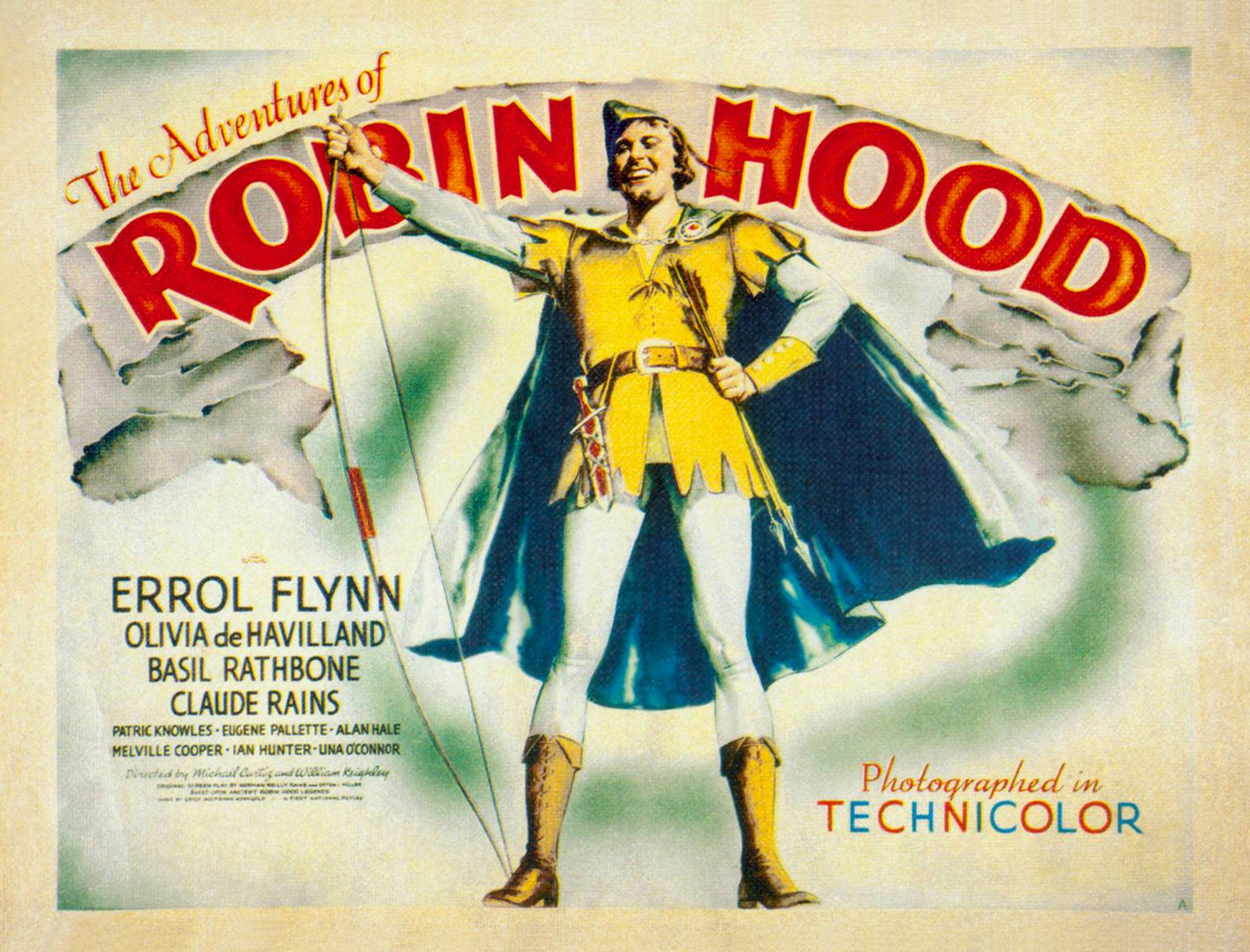
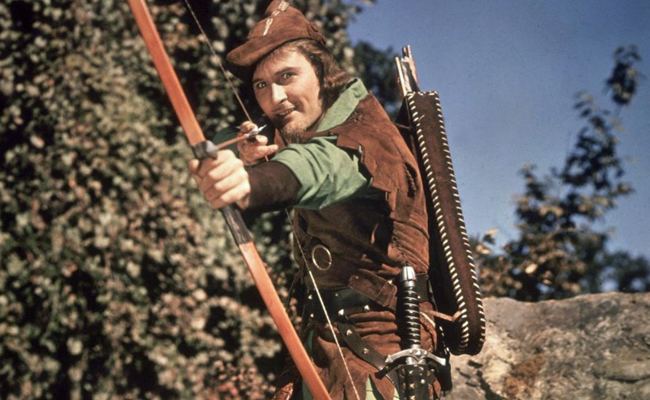
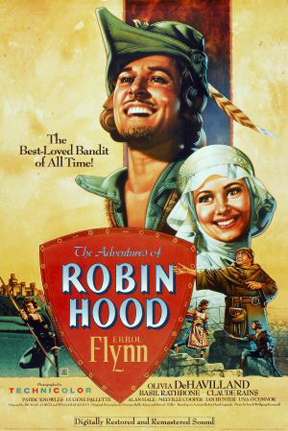
Today’s song of the day, from 1938’s The Adventures of Robin Hood:
4 Shots From 4 Films is just what it says it is, 4 shots from 4 of our favorite films. As opposed to the reviews and recaps that we usually post, 4 Shots From 4 Films lets the visuals do the talking.
December 24th is not just Christmas Eve! It’s also the anniversary of the birth of Michael Curtiz! Michael Curtiz was born in Budapest in 1886 and, after getting his start making silent films in Hungary, he eventually came to the United States and became one of the most important directors of Hollywood’s Golden Age! Curtiz mastered every genre and worked with every star and the end result was some of the greatest films ever made.
Today, we honor the legacy of Michael Curtiz with….
4 Shots From 4 Michael Curtiz Films
Ah, the 1930s. America was mired in the Great Depression. FDR was plotting to pack the courts. The American public, sick of playing by the rules and getting little in return, began to admire gangsters and outlaws. The horror genre became the new way to vent about societal insecurity. In Europe, leaders were trying to ignore what was happening in Italy, Spain, and Germany. As for the Academy, it was still growing and developing and finding itself. With people flocking to the movies and the promise of an escape from reality, the Academy Awards went from being an afterthought to a major cultural event.
And, of course, the snubs continued.
1930 — 1931: Crime Doesn’t Pay For Little Caesar and The Public Enemy
When people think about the 1930s, gangsters are probably one of the first things that come to mind. In the 30s, audiences flocked to movies about tough and streetwise criminals who did what they had to do in order to survive during the Depression. Unfortunately, the Academy was not always as quick to embrace the gangster genre. Though The Public Enemy did pick up a nomination for its screenplay, both it and Little Caesar were largely ignored by the Academy. Not only did the films fail to score nominations for Best Picture but neither James Cagney nor Edward G. Robinson would be nominated for bringing their title characters to life. It’s a crime, I tells ya.
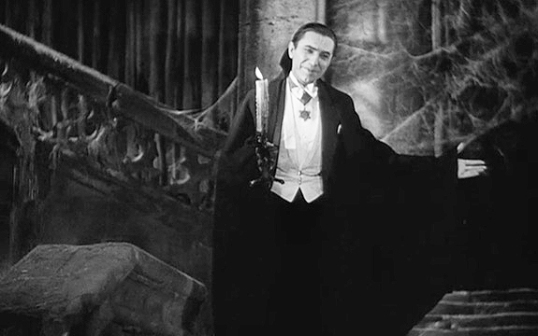
1930 — 1931: Bela Lugosi Is Not Nominated For Best Actor For Dracula
Admittedly, the 1931 version of Dracula is a bit of a creaky affair, one that feels quite stagey to modern audiences. But Bela Lugosi’s performance in the title role holds up well, despite the number of times that it has been parodied. Unfortunately, from the start, the Academy was hesitant about honoring the horror genre.
1931 — 1932: Boris Karloff Is Not Nominated For Best Actor For Frankenstein
Again, the Academy snubbed an iconic horror star. Not only was Boris Karloff not nominated for Frankenstein but the film itself was not nominated for Best Picture, despite being infinitely better than at least one of the 8 films that were nominated. (That film, by the way, was Bad Girl. When is the last time that anyone watched that one?) In fairness to the Academy, they did honor one horror film at that year’s awards. Fredric March won Best Actor for Dr. Jekyll and Mr. Hyde. Of course, he also tied with Wallace Beery, who was nominated for The Champ. Obviously, the Academy still had to work out its feelings towards the horror genre, a process that continues to this very day.
1932 — 1933: King Kong Is Not Nominated For Best Picture
Oh, poor King Kong. Film audiences loved him but the Academy totally ignored both him and his film. Unfortunately, back in 1933, the Academy had yet to introduce a category for special effects.
1932 — 1933: Duck Soup Is Ignored By The Academy
King Kong was not the only worthy film to be ignored at the 1932-1933 Oscars. The Marx Brothers’s greatest film also went unnominated.
1934: The Scarlet Empress Is Not Nominated For Best Picture
Josef von Sternberg’s surreal historical epic was totally ignored by the Academy. Not only did it miss out on being nominated for Best Picture but the sterling work of Marlene Dietrich and Sam Jaffe was ignored as well. How was the opulent set design ignored? How did it not even pick up a nomination for costume design? My guess is that Paramount chose to promote Cleopatra at expense of The Scarlet Empress. Either the way, the Best Picture Oscar was won by one of my favorite films, It Happened One Night.
1935: Fred Astaire and Ginger Rogers Are Not Nominated For Top Hat
Top Hat scored a best picture nomination but the film’s two stars went unnominated.
1936: My Man Godfrey Is Nominated For Everything But Best Picture
My Man Godfrey, a classic screwball comedy, was nominated for Best Actor, Best Actress, Best Supporting Actor, Best Supporting Actress, Best Director, and Best Screenplay but somehow, it was not nominated for Best Picture. It’s a shame because My Man Godfrey, along being a very funny movie, is also a film that epitomizes an era. Certainly, it’s far more entertaining today than the film that won Best Picture that year, The Great Ziegfeld. (Interestingly enough, William Powell played the title role in both Godfrey and Ziegfeld.)
1937: Humphrey Bogart Is Not Nominated For Best Supporting Actor in Dead End
Dead End featured one of Bogart’s best gangster roles. As a gangster who returns to his old neighborhood and is rejected by his own mother, Bogart was both menacing and, at times, sympathetic. Like Cagney and Robinson, Bogart definitely deserved a nomination for his portrayal of what it was like to live a life of crime. Unfortunately, Bogart was an actor who was taken for granted for much of his career. It wasn’t until he played Rick Blaine in Casablanca that the Academy would finally nominate him.
1938: Errol Flynn Is Not Nominated For Best Actor In The Adventures of Robin Hood
This is truly one of the more shocking snubs in Academy history. Errol Flynn’s performance as Robin Hood pretty much set the standard for every actor who followed him. Russell Crowe is undoubtedly a better actor than Flynn was but Crowe’s dour interpretation of Robin could in no way compete with the joie de vivre that Flynn brought to the role.
Agree? Disagree? Do you have an Oscar snub that you think is even worse than the 10 listed here? Let us know in the comments!
Up next: 1940s, in which Hollywood joins the war effort and the snubs continue!
4 Shots From 4 Films is just what it says it is, 4 shots from 4 of our favorite films. As opposed to the reviews and recaps that we usually post, 4 Shots From 4 Films lets the visuals do the talking.
December 24th is not just Christmas Eve! It’s also the anniversary of the birth of Michael Curtiz! Michael Curtiz was born in Budapest in 1886 and, after getting his start making silent films in Hungary, he eventually came to the United States and became one of the most important directors of Hollywood’s Golden Age! Curtiz mastered every genre and worked with every star and the end result was some of the greatest films ever made.
Today, we honor the legacy of Michael Curtiz with….
4 Shots From 4 Films
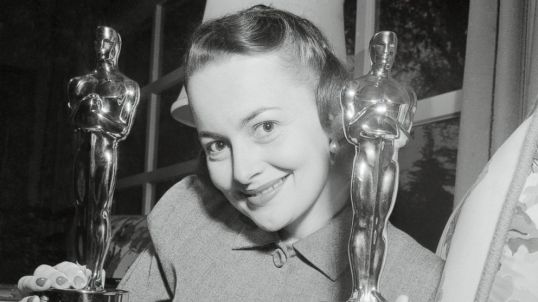
I woke up today to the news that Olivia De Havilland, the last of the great Golden Age stars, had died. She was 104 years old and she spent all of those years as the epitome of a type of grace and class that we really don’t see much nowadays. Her famous feud with her sister Joan Fontaine aside, it’s impossible to imagine an actress like Olivia de Havilland getting caught up in a silly twitter fight.
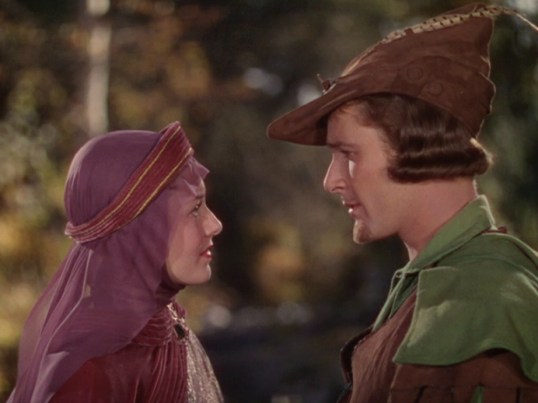
Here she is with one of her most frequent co-stars, Errol Flynn. This short but sweet scene is from The Adventures of Robin Hood.
Olivia de Havilland, R.I.P.
4 Shots From 4 Films is just what it says it is, 4 shots from 4 of our favorite films. As opposed to the reviews and recaps that we usually post, 4 Shots From 4 Films lets the visuals do the talking!
Today, I’m thrilled to wish a happy birthday to two of my favorite people!
First off, let’s all wish a happy birthday to Patrick Smith! Along with being a contributor here on the Shattered Lens, Patrick is also a Snarkalec in good standing and one of the founders of the Late Night Movie Gang! I’ve been happy to call Patrick a friend for several years now and I’m thankful to have him as part of a team here on the Shattered Lens! Happy birthday, Pat!
Also born on this day was the one and only Olivia de Havilland. Olivia is 104 years old today, one of the last remaining stars of Hollywood’s golden age. Olivia de Havilland, whose career spanned 53 years and who co-starred with everyone from Errol Flynn to James Stewart to Michael Caine, currently lives in Paris and I can’t wait to celebrate her 105th birthday next year.
In honor of a legendary career and life, here are….
4 Shots From 4 Films
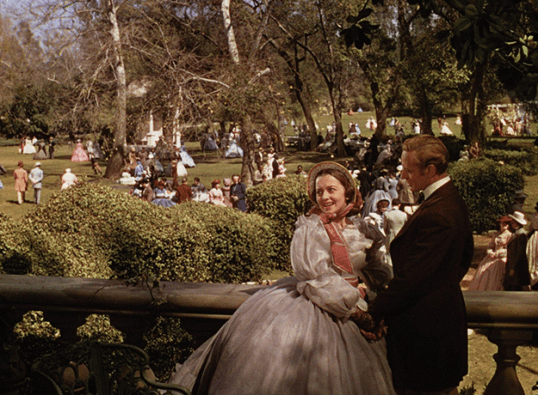
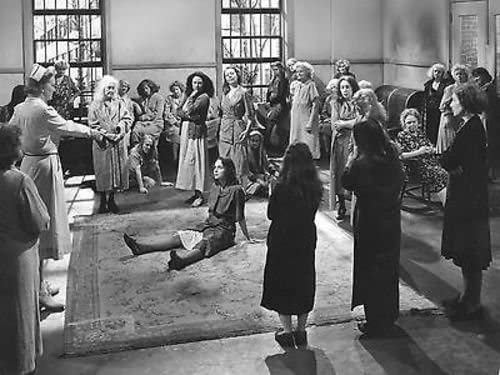
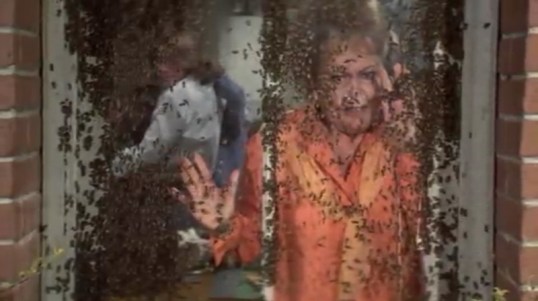
4 Shots From 4 Films is just what it says it is, 4 shots from 4 of our favorite films. As opposed to the reviews and recaps that we usually post, 4 Shots From 4 Films lets the visuals do the talking. Hollywood royalty Olivia de Havilland is alive & well, and celebrating her 102nd birthday today! In her honor, here are 4 shots from the films of Olivia de Havilland:

The Adventures of Robin Hood (1938; D: Michael Curtiz)

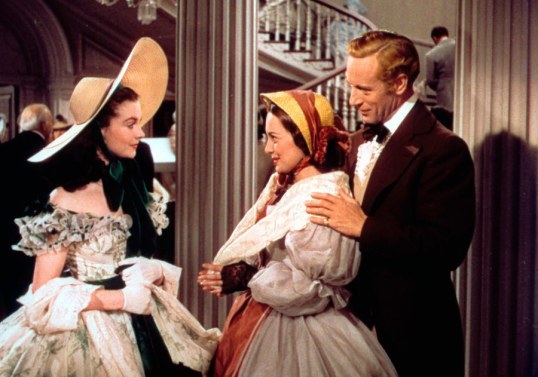
Gone With The Wind (1939; D: Victor Fleming)

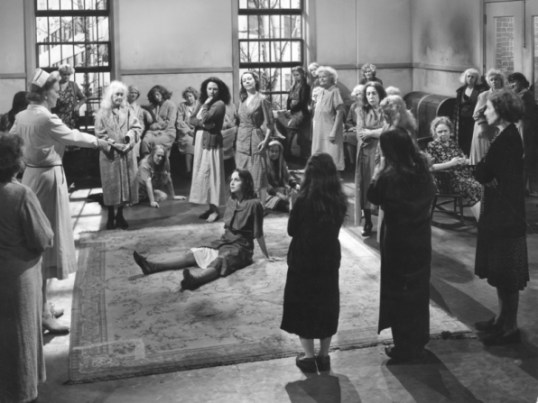
The Snake Pit (1948; D: Anatole Litvak)

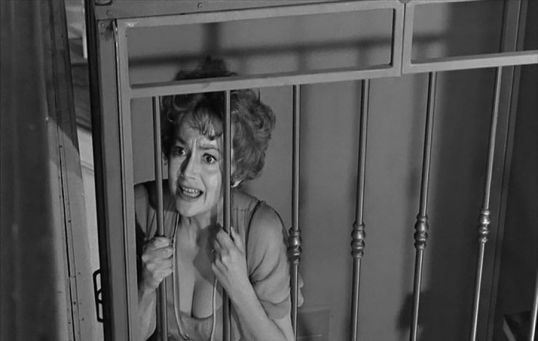
Lady in a Cage (1964; D: Walter Grauman)
Readers of this blog know CASABLANCA is my all-time favorite movie, but THE ADVENTURES OF ROBIN HOOD is definitely in the Top Ten, maybe even Top Five (I’d have to think about it… sounds like a future post!). The story’s been told on-screen dozens of times, from the silent 1922 Douglas Fairbanks swashbuckler to Disney’s 1973 animated version to the recent Russell Crowe/Ridley Scott offering. But it’s this 1938 classic that remains definitive, thanks to a marvelous cast, breathtaking Technicolor, and the greatest cinematic swordfight in history.
You all know the legend of Robin Hood by now, so no need for a recap. Instead, I’ll go right into what makes this film so great, starting with Errol Flynn as the brave Sir Robin of Locksley. Flynn was at the peak of his career here, after starring in such action-packed hits as CAPTAIN BLOOD , THE CHARGE OF THE LIGHT…
View original post 685 more words
(For those following at home, Lisa is attempting to clean out her DVR by watching and reviewing 38 films by this Friday. Will she make it? Keep following the site to find out!)
Flamboyant. Athletic. Joyous. Determined. Handsome. Outspoken. Bigger than life. Revolutionary. Anarchist. Sexy. Libertarian. Is there any doubt why Errol Flynn remains the definitive Robin Hood?
And. for that matter, is there any doubt why the 1938 film The Adventures of Robin Hood remains not only the definitive Robin Hood film but also one of the most influential action films in history?
The Adventures of Robin Hood tells the story that we’re all familiar with. The King of England, Richard The Lionhearted (Ian Hunter), is captured while returning from the Crusades. His brother, King John (Claude Rains, in full autocratic villain mode), usurps the throne while Richard is gone and immediately raises taxes. He claims that he’s only doing this to raise the money to set Richard free. Of course, the real reason is that John is a greedy tyrant.
The only nobleman with the courage to openly oppose John is Sir Robin of Locksely (Errol Flynn). Sir Robin protects his fellow citizens from John’s main henchman, Sir Guy of Gisbourne (Basil Rathbone, also in full autocratic villain mode). In fact, Robin is so brave that, on multiple occasions, he even enters Sir Guy’s castle so that he can specifically tell King John and Sir Guy that he has no use for their laws. This, of course, always leads to Robin having to make a dramatic escape while arrows flies and swords are unsheathed all around.
And through it all, Robin Hood keeps smiling and laughing. He’s a wonderfully cheerful revolutionary. He may be fighting a war against a ruthless and unstoppable enemy and he may be the most wanted man in England but Robin is determined to have fun. One need only compare Robin to his humorless foes to see the difference between freedom and bureaucracy.
(We could use Errol Flynn’s Robin Hood today, though I suspect our government would just blow him up with a drone and then issue a statement about how, by stealing money from the rich and giving it to the poor, Robin was keeping the government from being able to rebuild bridges and repair roads.)
When Robin isn’t exposing the foolishness of organized government, he’s hanging out in Sherwood Forest. He’s recruiting valuable allies like Friar Tuck (Eugene Pallette) and Little John (Alan Hale, Sr.) He’s playing constant pranks and promoting revolution and, to his credit, he’s a lot more fun to listen to than that guy from V For Vendetta. He’s also romancing Maid Marian (Olivia de Havilland) and good for him. Two beautiful people deserve to be together.
Even better, he’s doing it in glorious Technicolor! There’s a lot of great things about The Adventures of Robin Hood. The action scenes are exciting. The music is thrilling. The film is perfectly cast. Errol Flynn may not have been a great actor but he was a great Robin Hood. But what I really love about the film is just the look of it. We tend to take color for granted so it’s interesting to watch a film like The Adventures of Robin Hood, one that was made at a time when color film was something of a novelty. For those of us who spend a lot of time talking about how much we love old school black-and-white, The Adventures of Robin Hood is a film that says, “Hey, color can be great too!”
But what I mostly love about The Adventures of Robin Hood is just the pure joy of the film. Just compare this Robin Hood to the grimly tedious version played by Russell Crowe.
(True, nobody in The Adventures of Robin Hood shouts, “I declare him to be …. AN OUTLAAAAAAAAAAAAWWWWWWWW!” Actually, now that I think about it, Ridley Scott’s Robin Hood would have worked much better if Oscar Isaac and Russell Crowe had switched roles.)
The Adventures of Robin Hood was nominated for best picture and it probably should have won. However, the Oscar went to Frank Capra’s You Can’t Take It With You.
So, what did you do on Sunday night?
Myself, I watched The Adventures of Robin Hood on TCM. There I was, watching the film and posting comments on twitter about how superior Errol Flynn’s Robin Hood was to Russell Crowe’s when suddenly I realized that a lot of very strange tweets were appearing on my timeline.
One person tweeted, “WHAT THE FUCK, GAME OF THRONES!?”
Another tweeted: “OMG! #GoT”
And my personal favorite: “no, no, no, no, no #GameOfThrones.”
Later, I discovered that these people were reacting to the Red Wedding on Game Of Thrones. I have been using twitter since 2009 and I have never before seen so much anger and sadness as I did last night after the Starks were massacred on HBO.
Don’t get me wrong. I enjoy Game Of Thrones and I DVR every episode but, at that moment, I was really happy to be watching The Adventures of Robin Hood.
Whenever I watch The Adventures of Robin Hood, I think about one of my favorite Monty Python skits, the story of Dennis Moore, the highwayman who attempts to steal from the rich and give to the poor and discovers that the redistribution of wealth isn’t as easy as he originally figured.
Or, as the Dennis Moore theme song puts it: “He steals from the poor and gives to the rich … Stupid bitch!”
In honor of The Adventures of Robin Hood, I figured why not share this classic skit? If nothing else, maybe a little absurdist comedy is just what the doctor ordered for those of you who still haven’t recovered from the Red Wedding…