Doctor Who — Invasion of the Dinosaurs (1974, directed by Paddy Russell)


Fresh from defeating an attempt by a Sontaran to disrupt British history, the Third Doctor (Jon Pertwee) and his newest companion, reporter Sarah Jane Smith (Elisabeth Sladen), return to present-day London and discover that it has been transformed into a ghost town.  Dinosaurs are roaming the streets.  The Doctor teams up with UNIT to try to figure out who has been monkeying with time but what he doesn’t know is that the trusted Captain Yates (Richard Franklin) is working with the people responsible for the dinosaur invasion.

Invasion of the Dinosaurs was the second serial of the 11th season.  Like The Sea Devils, this was another case where I read the novelization long before I got a chance to see the actual serial.  Well-written by Malcolm Hulke, the novelization really got me excited to watch Invasion of the Dinosaurs.  It did not prepare me for how fake the dinosaurs would look.

It was to be expected, though.  Classic Doctor Who was never known for its wonderful special effects.  Instead, it was known for rubber monsters, torn costumes, and alien landscapes that were often made out of cardboard.  For many of us, that was a part of its charm.  The dinosaurs in this serial look like toys that have been unleashed on a still photo of London.  I’ve read that the serial was criticized for its bad dinosaur effects when it originally aired 1974 and that was long before Jurassic Park made everyone take the idea of seeing a realistic dinosaur for granted.


Despite the very fake dinosaurs, Invasion of the Dinosaurs still has one of the better scripts of the Pertwee era.  The villains aren’t the typical evildoers who usually showed up on Doctor Who.  Instead, they are people who have convinced themselves that the only way to save humanity is to dial back time to what they consider to be the “Golden Age,” before technology and industry blighted what they believe to be the ideal landscape.  Of course, they plan to take only the very best among the population to their golden age with them.  The villains are elitist environmentalists, convinced that they and only they know what is best.  This may be the first episode of Doctor Who where the main antagonist, Sir Charles Grover (Noel Johnson), is a member of Parliament.

Captain Yates’s betrayal of UNIT and the Doctor adds some emotional depth to this story.  While Yates was never as important a character as the Brigadier or Sgt. Benton, he was still present for almost all of the Third Doctor’s adventures and the small scenes where he would flirt with Jo Grant were some of the most awkward moments of the Pertwee era.  Captain Yates was a loyal member of the Third Doctor’s entourage and his betrayal was motivated not by greed or resentment but instead by a desire to make the world a better place.  The novelization made it clear that it was actually the terrible things that Yates saw as a member of UNIT that convinced him that time needed to be turned back.

This was the final Jon Pertwee story to be set entirely on Earth and, though Yates and the Brigadier would return for Pertwee’s final serial, it was the last true UNIT story of the Pertwee years.  Jon Pertwee had already decided that the 11th season would be his last.  The 12 season would feature a new Doctor.  And while the BBC considered actors like Graham Crowden, Bernard Cribbins, and Jim Dale for the role, the Fourth Doctor was ultimately be played by Tom Baker, an actor who was working as a construction worker when Invasion of the Dinosaurs first aired.

Doctor Who would never the same.

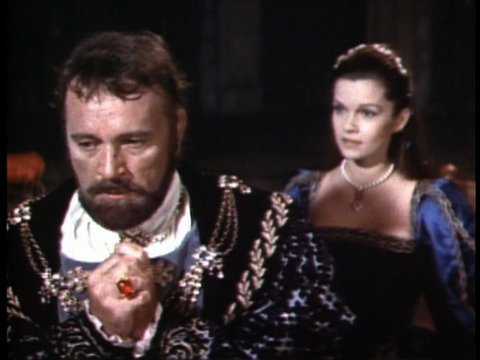
Cleaning Out The DVR, Again #8: Anne of the Thousand Days (dir by Charles Jarrott)


Anne

After I finished writing my review of Rolling Thunder, I continued the process of cleaning out my DVR by watching the 1969 film, Anne of the Thousand Days.  How does a film like Anne of the Thousand Days compare to a film like Rolling Thunder?

They might as well have been conceived, written, directed, and released on different planets.

I recorded Anne of The Thousand Days off of TCM on March 26th.  The main reason that I set the DVR to record it was because Anne was a best picture nominee.  It may seem strange to think that this rather conventional film was nominated the same year as Butch Cassidy and the Sundance Kid, Z, and Midnight Cowboy.  It gets even stranger when you consider what wasn’t nominated that year: Medium Cool, If…, Last Summer, They Shoot Horses, Don’t They?, Alice’s Restaurant, The Wild Bunch, Once Upon A Time In The West, and a long list of other films.  In fact, if I wanted to, I could probably spend this entire review listing all of the 1969 films that feel like a more appropriate best picture nominee than Anne of the Thousand Days.

And yet, Anne was nominated for best picture.  In fact, it received a total of 10 Oscar nominations, the most of any film that year.  Tellingly most of the nominations were in the technical categories and the only Oscar that it won was for its costumes.  Genevieve Bujold received a nomination for playing the title character and Richard Burton became the third actor to receive a nomination for playing King Henry VIII.

As for the film, Anne of the Thousand Days tells the oft-told story of King Henry VIII and his marriage to Anne Boleyn.  Told in flashback as both Henry and Anne wait for her to be executed on charges of adultery, the film shows us how middle-aged Henry VIII first met and fell in love with 18 year-old Anne Boleyn.  Standing in the way of Henry’s pursuit of Anne was the fact that 1) Anne intensely disliked him, 2) Anne was already engaged, 3) Anne’s sister was already Henry’s mistress, and 4) Henry was already married to Catherine of Aragon (Irene Papas).

Fortunately, Henry happens to be king and being king comes with its perks.

For instance, as king, he can order Anne and her fiancée to break up.  As king, he can casually dismiss his former mistress.  And, as king, Henry has the power that Anne finds to be the ultimate aphrodisiac.  At first, Anne merely loves the fact that Henry is obsessed with her.  But slowly, she comes to love Henry as a man as well…

The only problem is that Henry is still married and Catherine is still popular with the people.  Even after Henry divorces her and marries Anne, the common people refuse to accept Anne as their queen.  When Sir Thomas More (William Squire) refuses to recognize Anne as queen, Anne demands that More be executed.  When Henry initially shows reluctance, Anne announces that she will not sleep with him until More is dead.

Needless to say, Thomas More is quickly executed.

However, Henry’s attention has already moved on to Jane Seymour (Lesley Paterson) and, desperate to get Anne out of his life, he arranges for Cardinal Cromwell (John Colicos) to frame Anne on charges of adultery and incest.  With Anne facing a humiliating trial and the possibility of execution, Henry makes her an offer.  If she agrees to an annulment, he’ll free her.  However, their daughter — Elizabeth — will lose her claim to the throne…

It’s telling that Charles Jarrott did not receive an Oscar nomination for his work as Anne of the Thousand Day‘s director.  There are a lot of technically good things about Anne of the Thousand Days but, despite all of the melodrama and sex and historical detail to be found in Anne, it never comes to life as a movie.  The costumes are to die for, the sets are impressive, and the cast is full of talented British character actors but the whole movie just feels oddly flat.  Try as it may, it can never convince us that either Henry VIII or Anne Boleyn is worth all the trouble.

Anne of the Thousand Days was obviously a big production, which probably explains all the Oscar nominations.  But otherwise, it’s one of the more forgettable best picture nominees.