4 Shots From 4 Films is just what it says it is, 4 shots from 4 of our favorite films. As opposed to the reviews and recaps that we usually post, 4 Shots From 4 Films is all about letting the visuals do the talking.
Happy birthday, Dario Argento!
4 Shots From 4 Films
Deep Red (1975, dir by Dario Argento)
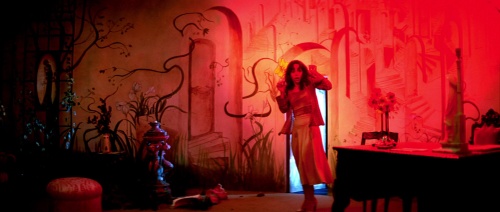
Suspiria (1977, dir by Dario Argento)
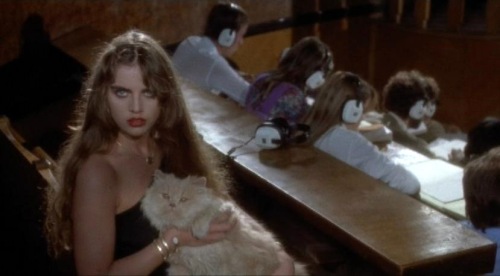
Inferno (1980, dir by Dario Argento)
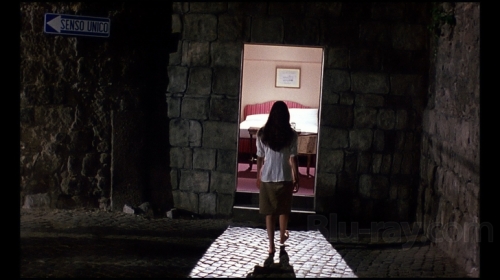
The Stendhal Syndrome (1996, dir by Dario Argento)
So, as I mentioned earlier, I was in the mood for some late night horror and I decided to rewatch Dario Argento’s Three Mothers trilogy. I started watching Suspiria at midnight and, after that, I moved on to Argento’s 1980 follow-up, Inferno.
Having just finished watching Inferno, I now realize that it’s almost time for me to start getting ready for my day, which means that I may have to hold off on watching the third film in the trilogy, The Mother of Tears. That’s really quite frustrating because I think I may be the only person in the world who thinks that Mother of Tears is actually a good film.
Oh well! Such is life, right?
But before I hop in the shower and get dressed and all that good stuff, I did want to share a scene that I love from Inferno.
So, instead, I’ll share a scene that comes shortly after Irene’s famous swim. In the scene below, Irene’s brother, a music student who is played by a somewhat forgettable actor named Leigh McCloskey (reportedly, Argento wanted to cast a young James Woods in the role and he would have been awesome, too), is sitting in class and attempting to read a letter from his troubled sister.
And that’s when he finds himself being subtly menaced by the Mother of Tears.
The Mother of Tears is played by the beautiful Ania Pieroni, who lovers of Italian horror will immediately recognize as both the mysterious housekeeper in Lucio Fulci’s House By The Cemetery and the doomed shoplifter from Argento’s Tenebrae.
To me, this scene is Argento at his best. Not much happens in the scene. McCloskey attempts to read a letter and finds himself unnerved by Pieroni’s intense stare. And yet, it’s a scene that’s full of menace and atmosphere. It’s a scene that leaves the viewer with no doubt about the power of the Three Mothers.
Watch the scene below. And then, if you haven’t, be sure to watch Inferno because it’s a wonderful and underrated horror film, one that I would argue is even better than Suspiria. And, while you’re watching the scene and considering the wonders of Italian horror cinema, I’ll be busy getting ready for my Friday!
(Unless, of course, you’re reading this on a day other than today and at a time other than 4:35 am.)
Hi there! I’m in the mood for some late night horror so I’m currently watching Dario Argento’s Three Mothers Trilogy! I just finished Suspiria and, before I started Inferno, I figured I would devote a hundred or so words to sharing one of my favorite scenes from Suspiria.
As you probably guessed from the title of this post, that scene is the famous “Names that start with S” scene. This is the scene in which dance student Suzy Banyon’s new roommate explains that names that start with S are often the names of snakes! Suzy’s new BFF, Sarah, disagrees.
When I first saw Suspiria, this was a scene to which I, as a dance student, could immediately relate. As odd as the dialogue may have sounded and as silly as the two students may have appeared to be, it actually felt very authentic. By nature, dancers are competitive and we are dramatic. If anyone is going to accuse you of having the name of a snake, it’s probably going to be dancer.
Admittedly, no one ever told me that I had the name of the snake. But there was the girl who told me that I was “soooooo pretty,” or at least I would be pretty if I got the nose job that I obviously required if I ever had any hope of being happy or successful. “But,” she added as she turned away from me, “I guess you’d have to figure out how you could possibly pay for it.” Of course, she was also quick to explain that she was only telling me the truth and that she had the best of intentions. I had about the same reaction to her advise as Sarah has to be calling a snake.
(Sarah stuck out her tongue. I may have said something about her boyfriend not having any issue with the size of my nose when he was hitting on me the night before. But basically, it was pretty much the same reaction…)
This scene made such an impression on me that, in the months after I first saw Suspiria, I would often randomly launch into the name of snakes monologue. Unfortunately, I had failed to take into account that I was literally the only student at my high school who would actually take the time to watch an Italian horror film from the 1970s. As such, no one knew what I was talking about and I lost a few friends named Susan and Sarah as a result.
Oh well!
Anyway, you can watch the scene below! Pay special attention to the way Jessica Harper reacts to being caught in the middle of the conversation. Dario Argento will probably never be known as a great director of actors but Jessica Harper is great in Suspiria!
It’s also Dario Argento’s 75th birthday! And what better way to celebrate the maestro‘s birthday than with a scene that I love?
The opening of Argento’s 1977 masterpiece, Suspiria, is about as perfect an opening as one could hope for. American ballet student Suzy Banyon (Jessica Harper) arrives in Frieburg, Germany. Both Argento and Harper perfectly portray Suzy’s confusion as she makes her way through the airport and, as torrential rain drenches her, attempts to hail a taxi and get a ride to the dance academy. (What Suzy doesn’t know, of course, is that the dance academy is home to the ancient witch known as Our Mother of Sighs.) With this opening scene, Argento both immediately establishes the off-center, nightmarish atmosphere of Suspiria and establishes Suzy as a character who we, as the audience, relate to and care about. Suspiria is a great film and it all begins with this brilliant opening.
As I’ve mentioned before, Dario Argento’s Suspiria is one of my favorite horror films and any quick search around the Internet will reveal that I’m hardly alone in that. There’s a lot of reasons why Suspiria remains so popular: there’s Goblin’s iconic score, Jessica Harper’s performance in the lead role, and Dario Argento at the peak of his powers.
While most critics and fans always cite the film’s infamous “window scene” as its most effective set piece, I happen to think that the scene below is actually a bit more effective. While it’s certainly more low-key than some of the film’s other death scenes, this scene is the one that still leaves me uneasy no matter how many times I see it. Maybe it’s the way that Argento isolates the blind pianist in the middle of the square or perhaps it’s the way that he positions the camera in order to keep the audience uncertain of where exactly the true threat is coming from.
Then again, it could just be because I’m scared of dogs in general…
It’s time for the latest installment of Lisa Marie’s Favorite Grindhouse and Exploitation trailers and, continuing with October’s theme, they are once again all horror trailers. This week, I set out to prove that Argento’s a master and everything’s scarier in German. Let’s begin:
There’s no way I could possibly get through October without including at least one Friday the 13th trailer. I went with this one in order to specifically prove that everything’s scarier in German.
2) Paganini Horror (1989)
The trailer for this Italian horror film is in German as well and I have to be honest that, despite being a fourth German, I speak the language like not at all. Then again, considering that this is one of Luigi Cozzi’s films, it’s probably for the best that I can’t understand the trailer. All I know is that the killer’s mask is creepy and who doesn’t love Venice? Seriously, I went there the summer after I graduated high school and there’s no other place I’d more want to be stalked by Klaus Kinski. One more piece of trivia (and don’t quote me on this), I think that Cozzi may have attempted to sell this film as a part of Dario Argento’s Three Mothers trilogy.
Speaking of Dario Argento’s Three Mothers trilogy, here’s the U.S. trailer for the film that started it all, Suspiria. While you can probably guess that Suspiria is one of my favorite horror films, it’s also one of my favorite ballet movies as well. In fact, the ballet aspect of Suspiria is largely responsible for me discovering my love of Italian horror because, if not for the fact that it took place at a cursed dance academy, I doubt I would have paid as much attention to the movie the first time I saw it.
While Suspiria is definitely more fun, I still think that the second part of the trilogy — Inferno — is a better horror film. Seriously, the underwater sequence at the start of this film still freaks me out.
Twenty-seven years after Inferno, Argento finally concluded the trilogy with Mother of Tears. A lot of horror fans practically foam at the mouth going on and on about how much they hated this film. I happened to have enjoyed it. So there.
Continuing on the Argento theme, here’s a classic trailer for a classic film. George Romero may have directed the American version of Dawn of the Dead but the European version (known as Zombi) was put together by Argento and guess which one is superior? Anyway, this trailer is for the Romero version:
I will be the first to admit that I can occasionally be a little moody but tonight, as I sit here typing, I am in such a good, extremely hyper mood. Maybe it’s because I’m wearing my beloved black Pirates shirt. Or it could be because, for once, this house is neither too cold nor too warm. Then again, it could just be because it’s time for me to bring you another edition of Lisa Marie’s Favorite Grindhouse and Exploitation Trailers!
This is a trailer for a “double feature of horror,” featuring I Dismember Mama and The Blood-Splattered Bride. When I’ve spoken with other grindhouse movie fans on the web, this trailer is often cited as being a favorite. Personally, I think it goes along for about a minute too long but I can understand why it’s so popular. For one thing, it’s nothing like the trailers that are currently playing in theaters across America in that it’s a short film in itself. By the way, the trailer for Blood-Splattered bride sans I Dismember Mamma can be viewed here.
From the wonderful nation of Italy comes this example of the odd little grindhouse genre known as nunsploitation. I can probably count the number of good nunsploitation films on one hand. And yet when confronted with a film like this, I cannot look away. Maybe it’s because I was raised in the Catholic church. Or it could just be because the totally hot and lickable Joe Dallesandro is in so many of them. Along with Dallesandro, Killer Nun features Anita Ekberg of La Dolce Vita fame and Alida Valli of Third Man, Suspiria, and Inferno fame.
(Sidenote: Once when I was going to Catholic school, this really mean, fat girl was jealous of me because I was prettier than her so she whacked me in the face with a ruler so hard that it actually broke the skin right over my right eye and I had to get 3 stitches to close the cut and I’ve still got this little scar and sometimes, when I wink or seductively arch my right eyebrow, it still hurts a little. I hope somebody eventually went all Killer Nun on that girl…)
When I showed my sister Erin this trailer, she said, “You’re not going to jump up and start trying to do any of that stuff yourself, are you?” “Uhmmm…no,” I replied but, to be honest, I was totally about to do it. I don’t know much about Angela Mao but just, on the basis of this trailer, she’s my hero. This trailer is just infectious and, as I watched, I wondered, “How difficult can it be?” Well, apparently, it’s very difficult but that’s a story for a different time.
4) The Bullet Machine (1969)
“He can hack it!” Uhmmm….well, yes, okay then. At first, I thought I had actually found a trailer that was more violent than the trailer for Massacre Mafia Style but, upon careful reflection, I have to say that Massacre Mafia Style is still the king. The two hitmen in Massacre Mafia Style may not fire as many bullets but they still manage to kill everyone else in the trailer. Whereas The Bullet Machine is constantly shooting his gun but doesn’t really seem to accomplish much as a result. Plus, the mafia hitmen had style whereas the Bullet Machine just seems to be kind of a prick. If ever I have to prove the thesis that most men use guns as a substitute for their own limp penis, this trailer will be exhibit one.
I don’t know much about this film other than it’s obviously an Italian attempt to capitalize on the success of the original Alien and it is not — as I originally assumed — the same film as Luigi Cozzi’s Alien Contamination. One of the things that I love about Italian exploitation cinema is just the pure shamelessness of it all. I imagine there had to have been about a thousand remakes of Alien in the early 80s but only the Italians would have the balls to actually name a film Alien 2.
As for this trailer, it has its slow spots but seriously, stick with it for the final shot. And remember — you could be next!
(On the plus side, a young Michele Soavi is in this film. YAY!)
I’m in such a good mood right now that I’m just going to have to end this latest entry with a little Jean Rollin. Now, just in case anyone out there is unfamiliar with the unique cinematic vision of Jean Rollin, you should understand that this trailer is far more explicit than any of the other trailers featured in this post. In fact, I’m surprised that Youtube hasn’t taken it down yet. So, if you’re easily offended, I don’t know why you would be visiting this site in the first place. But anyways, if you’re easily offended, consider yourself warned.
As for Fascination, it’s actually one of the more accessible of Jean Rollin’s vampire films. The image — seen towards the end of this trailer — of Brigittie LaHaie with a scythe has become iconic.
Suspiria is one of my favorite films for many reasons: the pre-Black Swan combination of horror and ballet, Dario Argento’s pop art-influenced direction, the infamous close-up of that beating heart, the “s is for snakes” conversation, and Alida Valli’s ferocious performance as the instructor from Hell. (That said, I would have gladly taken lessons from her because I think she would have inspired me to be more disciplined about dancing.)
And, of course, I love the music. As many critics have pointed out, the film’s soundtrack (composed by Goblin) provides this film with a structure that it might otherwise lack. Plus, it’s one of the few film soundtracks that’s actually scary if you listen to it around 3 in the morning with all the lights turned out. I speak from personal experience.
So, in honor of one of my favorite films of all time, today’s song of the day is Goblin’s brilliant Suspiria.
(The Suspiria soundtrack is apparently out-of-print in the U.S. However, it’s included in Anchor Bay’s 3-disc, 25th anniversary DVD. The DVD also comes with a featurette about the making of the soundtrack. It’s actually pretty interesting. Goblin’s Claudio Simonetti proves to be a charming and interesting interview subject.)
The final 15 minutes or so of Black Swan are so intense and exhilarating that, after I watched them, I ended up having an asthma attack. The movie literally left me breathless.
I saw this movie last Saturday at the Plano Angelika and I’ve been trying to figure out just how exactly to put into words my feelings about this movie. Why is it so much easier to talk about movies we hate than the movies we love? Perhaps it’s because we all know what a bad movie looks like but a great movie is something unique and beautiful. I fear that any review I write it going to cheapen this experience.
However, I’m going to try. And if my words can’t convince you then just see the movie yourself. You’ll either love it or you’ll hate it. As with all great works of art, there is no middle ground. Unfortunately, I don’t see any way for me to talk about this film without talking about a few key plot points that could be considered spoilers. So, if you haven’t seen the movie yet, read on with caution.
This year, there’s been two types of filmgoers. There’s been those who have spent 2010 waiting for The Social Network and then there are people like me who have been waiting for Black Swan. There’s a lot of reasons why I had been so looking forward to seeing this movie. First off, it’s directed by Darren Aronofsky, one of my favorite directors. Requiem for a Dream is a personal favorite of mine and I thought The Wrestler was one of the best films of 2008. Secondly, the movie stars Natalie Portman, a great actress who rarely ever seems to get parts worthy of her talent.
However, the main reason was a personal one. Black Swan takes place in the world of ballet and, for several years, ballet was literally my life. My family used to move around a lot but whether we were living in Ardmore, Oklahoma or Carlsbad, New Mexico or Dallas, Texas, ballet always remained my constant. Every town we ended up in, my mom tracked down the closest dance studio and enrolled me. I’ve loved all types of dance (and still do) but ballet is what truly captured my heart. It provided structure for my otherwise chaotic life. Ballet was something that I knew not everyone could do and when I danced, I felt special. I felt like I was something more than just an asthmatic girl with a big nose and a country accent. I felt beautiful and strong and special. When I danced, I felt alive.
As much as I dreamed of being a prima ballerina, I always knew that I wasn’t really that good at it. I’ve always danced with more enthusiasm than technique and, if forced to choose between perfect execution and just having fun, I almost always chose to have fun. My body also conspired me against me as I’ve been a D-cup since I was 14 and while boobs don’t necessarily make ballet impossible, they don’t exactly help. Of course, my main problem was that I was (and still am) a klutz. When I was 17 years old, I tripped, fell down a flight of stairs, and broke my ankle in two places. And so ended my ballet career.
To a certain extent, falling down those stairs is the best thing that ever happened to me because it forced me to explore a life outside of the idealized fantasy of ballet. It forced me to consider ambitions that don’t necessarily have to end the minute one turns 30. It allowed me to realize how much I love to write and how much I love to watch movies. Still, I do miss ballet. While I still love to dance, it’s just doesn’t feel the same. I still have fun but it no longer makes me feel special.
I guess I was hoping that Black Swan would remind me of that feeling that I had lost. And it did.
But enough about me. Let’s talk about Black Swan.
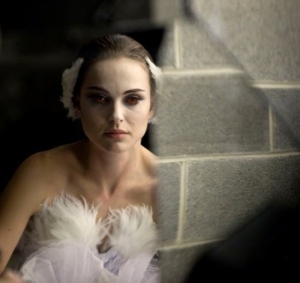
Natalie Portman plays Nina, a veteran ballerina who, despite being young enough to still live with her mother (and, it’s hinted, to still be a virgin), is also approaching the age when she’ll be considered too old to ever be a prima ballerina. She is a member of a struggling New York dance company that is run by Thomas (Vincent Cassel, turning up the sleaze level to 11). Thomas has decided that the company’s next show will be Tchaikovsky’s Swan Lake and that it’s time to replace the company’s prima ballerina, Beth (played by Winona Ryder), with a younger dancer. Nina begs for the chance to be Beth’s replacement but Thomas rejects her, claiming that her dancing is technically perfect but has no passion. He then attempts to kiss her which leads to Beth biting his lip and, apparently, convincing him that she has passion after all. Thomas soon announces that Nina will dance the lead in Swan Lake.
Unfortunately, even before winning the role, Nina is obviously unstable. Whether she’s obsessively stretching in her hideously pink bedroom, forcing herself to vomit up the contents of her stomach, or seeing shadows down every corridor, Nina’s every action and thought seems to be obsessed with finding the idealized perfection that ballet demands and life seldom affords. No matter how much she and her controlling mother (Barbara Hershey) cut her nails, she still wakes up with mysterious scratch marks across her back. Even worse, as she gets deeper and deeper into the role, she finds herself strangely drawn to and fearful of Lilly (Mila Kunis), a younger, free-spirited dancer who may, or may not, have her eye on taking Nina’s place.
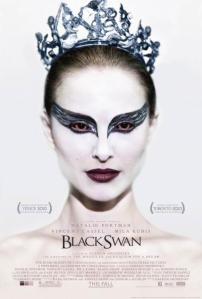
Along with being an homage to such classic films as Repulsion, Suspiria, and All About Eve, Black Swan is also a modern-day reinterpretation of Swan Lake. Swan Lake tells the story of Odette, a princess who has been cursed by an evil sorcerer. As a result of the curse, Odette is only allowed her human form at night. During the day, she exists only in the form of a white swan. A prince named Siegfried meets Odette in her human form and falls in love with her so Rothbart tricks the prince by transforming his own daughter, Odile, into the Black Swan, a seductress who looks just like Odette except she wears black. One reason why the lead role in Swan Lake is so coveted is because the same ballerina plays both the innocent and fragile White Swan and the seductive and uninhibited Black Swan. As such, the two roles are presented as opposite sides of the same coin. (I’ve always thought of the White Swan as representing what men idolize and the black swan representing what men actually desire.) The challenge is to be convincing in both roles while still perfectly executing the idealized movements of ballet.
Over the course of Black Swan, Nina is continually told (by Thomas) that she is perfect for the role of the innocent and sheltered White Swan but that she doesn’t have what it takes to be the sexy and uninhibited Black Swan. At one point, Thomas gives her a homework assignment for the role, ordering her to go home and touch herself. (Nina eventually does so just to suddenly realize, right when she’s on the verge of bringing herself to climax, that her mother is sleeping in the exact same room. This sudden shot of Barbara Hershey sleeping in that chair both made me jump and laugh at the same time.)
Thomas also suggests that Nina study that way that Lilly dances. In many ways, Lilly appears to be the exact opposite of Nina. (Though wisely, Aronofsky emphasizes how much Portman and Kunis — not to mention Ryder and Hershey — all resemble each other physically, therefore creating the feeling that we’re seeing four different versions of the same basic human being.) Whereas Nina’s every dance move appears to be the product of rigorous training, Lilly dancing follows her emotions. While Nina’s expression while dancing is always one of a grimly obsessive dedication, Lilly smiles and enjoys the moment. Whereas Nina is scared of sex and can barely bring herself to look a man in the eye, Lilly is openly flirtatious with both men and women. In short, Lilly is Nina’s Black Swan.
Even as Nina studies Lilly, Lilly starts to pursue Nina, even showing up at her apartment and inviting Nina out for a night on the town. Desperate to escape her controlling mother (whose goal seems to be to keep Nina as the innocent White Swan for the rest of her life), Nina goes out with Lilly. They hit the clubs, Lilly convinces Nina to drink a spiked drink, and soon Nina is making out with random men in corners and eventually with Lilly in a taxi cab.
Now, I know this is something that a lot of people are wondering about so I’ll just confirm it. Yes, Mila Kunis does go down on Natalie Portman in this film. And yes, it’s hot. But even more importantly, it works as something more than just a juvenile male fantasy of what we girls do when you guys aren’t around. When Nina touches Lilly, she is reaching out for and accepting the side of her personality that she’s previously tried to deny. She’s accepting what she knows could destroy her.
(SPOILERS BELOW READ CAREFULLY)
And sure enough, after her encounter with Lilly (which Lilly subsequently claims never happened), Nina’s world grows more and more distorted. She looks at the paintings that line her mother’s room and she sees a hundred faces laughing at her. On the subway, men leer at her. And suddenly, Thomas seems to be paying more attention to Lilly (who is named as her alternate) than to her. Lilly visits Beth in the hospital where Beth is recovering from a car accident. Beth responds to Lilly’s presence by mutilating herself with a fingernail file. And so things go until the film reaches its climax in a dizzying mix of dance and blood.
Much like ballet itself, Black Swan presents a very stylized view of existence and, in order for the film to work, the performances have to be perfect. I’m happy to say that everything you’ve heard about Natalie Portman in this film is correct. She gives a brilliant performance. The film doesn’t provide a definite explanation as to what lies at the root of Nina’s mental instability but the clues are all there in Portman’s subtle but effective performance. Perhaps even more importantly, Portman is convincing in the ballet sequences. She captures perfectly the rigorous and often times painful dedication that ballet demands. In the movie’s finale, as she dances on stage while her fragile world collapse around her, she was suddenly creating my own fantasy of what it would be like to be a true prima ballerina. Watching her, I felt her every move as if I was on the stage dancing the role. It left me exhausted and breathless and I have to admit that after the movie, I foundd myself crying for a solid hour as I realized that would truly be as close as I would ever get to living my old teenage fantasy.
Portman pretty much dominates the entire film but still leaves room for Hershey, Cassell, and especially Mila Kunis to give impressive performances. Alternatively loving and spiteful, Hershey is the stage mother from Hell. Cassell’s character is almost too sleazy for his own good but Cassell still has fun with the role and even adds a few notes of ambiguity. However, Mila Kunis is the true standout among the supporting players. Playing a role that requires her to be both likable and vaguely threatening, Kunis holds her own with Portman and proves here that she actually can act. Her character also provides the film with a few much-needed moments of humor. Lilly gets all the best one-liners and Kunis delivers them flawlessly.
So, I’m sure many people might be saying at this point, “That’s great that you loved it, Lisa Marie. But you’re like all convinced that this film is actually about you. What about us normal people who don’t really care about ballet? Is there anything here for us?”
That’s not an easy question for me to answer precisely because I do love ballet and I did relate a lot of this film to experiences — both good and bad — from my own life. It’s also an issue that Aronofsky acknowledges in a rather clever scene where Nina and Lilly flirt with two frat boy types who react to Nina’s talk of ballet with boredom. However, I do think that this film can be seen and appreciated by those who aren’t into ballet for the exact same reason why I loved The Wrestler despite being interested in professional wrestling like not at all.
I’ve always felt that ballet — and by that, I mean the whole experience of both the dancing and all the stuff that goes on before and after the actual dance — was in many ways the perfect metaphor for life.
For instance, in my experience, there were always two separate cliques in any dance school or company.
There was the group of dancers who had spent their entire lives preparing for the one moment they would become a prima ballerina. These were the girls who spent hours obsessing over their technique and who minutely examined every performance for the least little flaw. These were the girls who risked their health to maintain perfect dancer bodies. They obsessed over everything they ate, which struck me as strange since they usually just threw it all back up a few minutes later anyway. They had parents who not only spent the money to make them the best but who, unlike the rest of us, actually had the money to spend in the first place. These were the girls who knew every move they were supposed to make but they never knew why.
And then, there was the group that I was always a part of. We were the girls who never worried about perfect technique. We would laugh when we missed a step and we joked about our mistakes. When we danced, we followed our emotions and if that meant breaking a rule, so be it. The perfect girls hated us because, for the most part, we were more popular than they were because we allowed ourselves to be real as opposed to perfect. And we hated the perfect girls because we knew that they would eventually have the life that we fantasized about.
I used to think that was unique to ballet and certainly, in Black Swan, it’s clear that Portman would be one of the perfect girls and Kunis would be one of us. However, once my life was no longer solely about ballet, I realized that everyone was either a part of the perfect group or a part of the real group. It wasn’t just ballet. It was life, the conflict between those who try to create an idealized fantasy and those who simply take advantage of the randomness of everyday life. And, when I watched Black Swan, it was obvious that Aronofsky recognizes this as well.
Ballet is all about creating perfection, of telling a story through exactly choreographed movements. As the film progresses, it become obvious that the root of Nina’s psychosis is that the reality has not lived up to her idealized worldview. Nina hides from the real world because the real world, unlike ballet, is not messy. Movement in ballet is controlled but movement in reality is random and often frightening. However, by submerging her identity into ballet, Nina has fallen into another trap because, as a prima ballerina, her every movement has to be perfect. There’s no room for error. There’s no room for her to break free of Thomas’s choreography. Her every move has been dictated for her and not a single mistake can be tolerated.
And I guess that’s truly why this film got to me because who hasn’t felt like that? Who hasn’t felt as if the world is watching and waiting to pounce on you for failing to live up to their ideal? While I’m not suggesting that men don’t face unique pressures of their own, this theme especially hit home for me as a woman. Everyday, I wake up knowing that I’m being expected to live up to some sort of societal concept of perfection that was set up long before I was born by people I’ll never actually meet. Every day, I wake up knowing that I’m always look my best without flaunting it in a way that would suggest that I know I look my best, to find a husband and devote my life to the agonizing pain of childbirth, to suffer my period in respectful silence, to always be weak when I want to be strong, and certainly to never, ever view sex as anything other than a duty. It’s the type of expectation that leads every woman to consider embracing her own black swan. Some of us are brave enough to do it. And others, scared of being rejected as imperfect, simply try to pretend that they never saw it in the first place.
For me, that’s what Black Swan is truly about. It’s not about ballet and it’s not about Mila Kunis bringing Natalie Portman to orgasm. It’s about finding the courage to live life regardless of how scary it might be. Much as Aronofsky used pro wrestling to tell the story of everyone who ever refused to be anonymous and forgotten, Black Swan is the story of every one who ever struggled to reconcile the demands of society with the realities of existence.
Since this is an Aronofsky film, viewers will either love it or hate it. As exhilarating as I found that film’s finale to be, I can already hear other viewers saying, “What!?” As a director, Aronofsky has always been willing to walk that thin line between art and excess and you’re reaction to him will probably depend a lot on where you personally draw that line. Throughout the film, Aronofsky comes close to going over the top. However, he also directs the film in such a way as to make it clear that we’re not meant to be watching an exact recreation of reality. Instead, we view most of the film’s events through the prism of Nina’s own unstable mind and both the film’s grainy cinematography and the deliberately odd camera angles perfectly capture the feel of a mind losing its grip on reality.
Again, I should admit that I’m bipolar and, as such, I reacted very sympathetically to Nina’s struggle to distinguish the real world from the world created by her own paranoid fears because I recognized much of it from my last major manic episode. Now, would I have had a different reaction if not for my own personal experiences? The honest answer is that I don’t know. All I know is that Darren Aronofsky gets it right.
The film’s ending will surely be the root of not a little controversy. (Again: MAJOR SPOILER WARNING) Much like the end of the The Wrestler we’re left to wonder whether our main character has truly triumphed or if she’s been defeated. Is Aronofsky celebrating self-destruction or is he celebrating the individualistic impulse that leads people to pursue their passions no matter what the end result? Has Nina found true perfection and freedom or has she been destroyed by her own demons?
Aronofsky leaves it up to the viewer to decide and a lot of people won’t like that.
However, for me, Black Swan is the best film of 2010.




 Through the Shattered Lens