Deadly Companion starts with John Candy sitting in a mental institution and snorting cocaine while happily talking to his roommate, Michael Taylor (Michael Sarrazin). Michael has been in the institution ever since the night that he walked in on his estranged wife being murdered. Because of the shock, he can’t remember anything that he saw that night. When his girlfriend Paula (Susan Clark) comes to pick Michael up, Michael leaves the institution determined to get to the truth about his wife’s murder. Once Michael leaves, John Candy disappears from the movie.
Michael suspects that his wife was killed by her lover, Lawrence Miles (Anthony Perkins) but there is more to that night than Michael is remembering. Deadly Companion is a typical low-budget shot-in-Toronto thriller from the early 80s, with familiar Canadian character actors like Michael Ironside, Al Waxman, Kenneth Welsh, and Maury Chaykin all playing small roles. Michael Sarrazin is a dull lead but Anthony Perkins gets to do what he did best at the end of his career and plays a thoroughly sarcastic bastard who gets the only good lines in the film.
What’s interesting about Deadly Companion isn’t the predictable plot and it’s certainly not Michael Sarrazin. Instead, what’s strange is that several cast members of SCTV show up in tiny supporting roles, though none of them get as much of a chance to make as big an impression as John Candy. Deadly Companion is a serious thriller that just happens to feature Candy, Joe Flaherty, Eugene Levy, Catherine O’Hara, and Dave Thomas. It’s strange to see Michael Sarrazin trying to figure out who killed his wife while Eugene Levy loiters in the background. It leaves you waiting for a punchline that never comes.
The SCTV people are in the film because it was directed by George Bloomfield, who also directed several episodes of SCTV. Since this film was made before SCTV really broke into the American marketplace, it was probably assumed that no one outside of Canada would ever find the presence of John Candy in a dramatic murder mystery distracting. Of course, when Deadly Companion was later released on VHS in the late 80s, Candy and the SCTV crew were all given top billing.
The time and the place is the old west. Growing up, Chuck Jarvis (Rock Hudson) and Billy Massey (Dean Martin) were best friends. When the lovely Kate (Susan Clark) chose Chuck over Billy, the two of them go their separate ways. Billy becomes a notorious train robber. Chuck becomes the sheriff of their hometown. After Billy returns home, it is up to Chuck to not only capture him but to also protect him from not only his former partners but a gang of vigilantes as well.
There’s nothing surprising about Showdown, a strictly by the numbers western that, if not for a few bloody gunshot wounds and some dialogue about cattle “humping,” could have just as easily been released in 1953 as 1973. The only thing that makes Showdown special is that it was the last western made by both Rock Hudson and Dean Martin. Dino is his usual fun-loving, half-soused self but Rock Hudson looks absolutely miserable here. If Rock’s role had been played by Frank Sinatra (or even Peter Lawford), Showdown would probably be remembered as a minor classic. As it is, it’s for Dean Martin completists only.
A week ago, I had a very odd dream, one that was more disturbing than frightening. I saw myself walking down a fog-covered street in London. Simply by the way I was dressed and the distant sounds of horses crossing cobblestone streets, I knew that this was towards the end of the 19th century. I walked down the street, aware that there were people near me who I could hear but couldn’t see because of the thick fog. Finally, I reached a shabby-looking boarding house. As I watched myself starting to open the front door, I realized that, in my dream, I was Mary Kelley, the final victim of Jack the Ripper. And, by stepping into that boarding house, I was heading towards my own death. That’s when I woke up.
Over on my twitter profile, I describe myself as being a “sweet little thing with morbid thoughts.” I guess my fascination with the mystery of Jack the Ripper is an example of those morbid thoughts. Out of all of the Ripper’s victims, Mary Kelley has always been the one that I’ve felt “closest” to. She was murdered on November 9th, 1888. I was born on November 9th, 1985. Like me, she was a fallen Irish Catholic. Like me, she had red hair. While the other Ripper victims were all in their 40s, Kelley was only 25 years old and, for the longest time, I believed I was destined to die between my 25th and 26th birthdays. (I’m 25 years old so hopefully, that was just my imagination working overtime.) I think what truly made Kelly’s murder stand out in my mind is that she was killed in her own room, probably attacked while she was either asleep or passed out. Being attacked while asleep has always been one of my phobias, one of the reasons why I’m often happier with insomnia than sleep.
Still, until my dream, I had given much thought to Jack the Ripper or any of his victims for quite some time. After the dream, I ordered a copy of The Jack The Ripper Encyclopedia from Amazon and then I rewatched my personal favorite of all the Jack the Ripper films, Bob Clark’s Murder By Decree.
Released in 1979, Murder by Decree mixes the facts of the Ripper case and the fictional characters of Sherlock Holmes and Dr. Watson with the same Royal Conspiracy theory that lies at the heart of the better known film From Hell. Unlike From Hell, Murder By Decree is an almost bloodless film. Instead of emphasizing the savagery of the Ripper murders, Clark chose to focus on creating an oppresively grim and paranoid atmosphere. Whether it’s the ominous image of the Ripper’s carriage slowly moving through the London fog or Holmes’ visit to a nightmarish insane asylum, Clark’s London is a grim and forbidding dreamscape that almost seems to have sprung from some lost example of German expressionism.
Into this dark and oppressive atmosphere, Murder By Decree drops the familiar and comforting characters of Holmes and Watson (played, respectively, by Christopher Plummer and James Mason). I have to admit that I’ve never actually been able to bring myself to read any of the Holmes stories (though I’ve tried) but the characters are both so iconic that I feel as if I had. Both Holmes and Jack the Ripper are characters that everyone feels they knew about even if they’re not sure when they first heard of them. Though this might sound rather gimmicky to have these two characters meet, a good deal of the film’s strength comes from the contrast between the nostalgic innocence of Holmes and Watson and the harsh reality of Jack the Ripper’s London. By the end of the film, when Holmes’ voice cracks as he describes the conspiracy behind the Ripper movies, he’s gone from being an icon to being a stand-in for everyone who has ever been disillusioned by what they previously believed in.
Plummer makes for a surprisingly physical Holmes but he does a good job with the role, bringing a surprising vulnerability to the detective. James Mason, meanwhile, makes for a perfect sidekick and he and Plummer both have the type of chemistry that Robert Downey, Jr. and Jude Law could only dream about. The rest of the cast is made up of familiar English and Canadian character actors and they all give memorable performances. Donald Sutherland is excellent as a haunted psychic but my favorite supporting performance probably comes from David Hemmings who plays a shadowy police inspector. This is because every time I see Hemmings on-screen, I’m reminded of Dario Argento’s Deep Red.
If I do have any issues with this film, it’s that it promotes the long discredited Royal/Masonic Conspiracy as a solution. (This theory will be familiar to anyone who has seen or read From Hell.) However, of all the various solutions that have been offered up in an attempt to explain and understand Jack the Ripper, the whole political conspiracy angle is undoubtedly the most cinematic and Clark makes good use of it here. This is a film in which a growing sense of paranoia and unease seems to pervasively fill every scene just as surely as the London fog. The viewer, in the end, is thankful to actually have the familiar characters of Holmes and Watson to identify with because otherwise, the worldview of Murder By Decree is almost unbearably dark.
By the way, the role of Mary Kelley in this film is played by a fellow redhead, the Canadian actress Susan Clark who tended to show up in a lot of low-budget, Canadian movies in the 70s. Though she doesn’t have many scenes, she is sympathetic presence and Plummer’s reaction to his inability to save her from Jack the Ripper is a scene that has haunted me since the first time I watched this movie and every time since.
 Deadly Companion starts with John Candy sitting in a mental institution and snorting cocaine while happily talking to his roommate, Michael Taylor (Michael Sarrazin). Michael has been in the institution ever since the night that he walked in on his estranged wife being murdered. Because of the shock, he can’t remember anything that he saw that night. When his girlfriend Paula (Susan Clark) comes to pick Michael up, Michael leaves the institution determined to get to the truth about his wife’s murder. Once Michael leaves, John Candy disappears from the movie.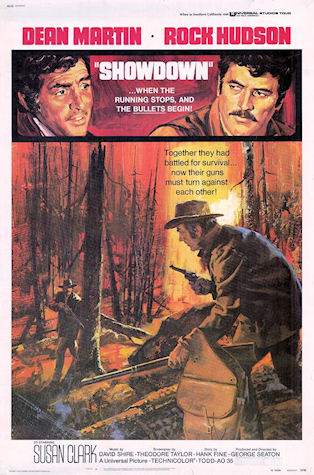
 Through the Shattered Lens