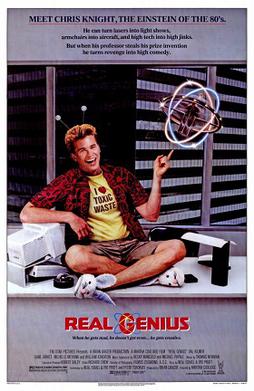
 Mitch Taylor (Gabriel Jarrett) is a teenage genius who is recruited by Prof. Jerry Hathaway (William Atherton) to study at Pacific Tech University. The real reason why Hathaway has recruited Mitch is because Chris Knight (Val Kilmer), another genius, has been slacking on developing the power source for an experimental laser called “crossbow.” Hathaway hopes that Mitch can get Chris to take his work seriously and to focus on the project. Instead, Chris teaches Mitch that he has to learn how to enjoy life or his great intelligence will become a burden and he’ll end up burned out and living in the tunnel underneath the university. That’s what happened to Laszlo Holyfield (Jon Gries). That’s what nearly happened to Chris. Chris is determined not to let it happen to Mitch.
Real Genius combines college hijinks with a serious examination of the pressures of being a “real genius.” Mitch knows everything about laser physics but he still misses his parents and cries after getting yelled at by Prof. Hathaway. He’s just a kid, no matter how smart he is. Chris proves himself to be a good friend, encouraging Mitch to relax and enjoy life. Just because you’re a genius doesn’t mean that you can’t have fun. As played by Val Kilmer, Chris Knight is the best friend that everyone wishes they could have, whether they’re a genius or not. Even when the film gets sophomoric, Kilmer plays his role seriously and never loses sight of Chris’s humanity or why it’s so important to Chris that Mitch not become consumed by the pressure of being smarter than almost everyone else in the room. This is one of the early Val Kilmer performances that showed just how good an actor he truly was. With Chris’s encouragement, Mitch pursues a romance with Jordan Cochran (Michelle Meyrink) and gets revenge (more than once) on the arrogant Kent (Robert Prescott).
Eventually, Chris and Mitch realize that their research is being used to construct a weapon for the CIA and this leads to the film’s famous ending. Ever since this movie came out, there’s been a debate over whether or not a laser could be used to make popcorn and, even more importantly, whether or not a gigantic amount of popcorn could actually destroy someone’s house. I don’t know the answers to those questions but I’d like to think that Real Genius got it right and I have no interest in any evidence that suggests otherwise. Sometimes, you owe it yourself to believe in the power of lasers and popcorn. The next person who takes advantage of your hard work, destroy his house with popcorn and then sing Everybody Wants To Rule The World. Learn the lessons of Real Genius.
Finally, when I was growing up, Real Genius was one of those films that seemed to be on HBO all the time. Somehow, I always turned it on right when the popcorn started popping. That popcorn-filled house, followed by Everybody Want To Rule The World, was a huge part of my childhood. Real Genius will always bring back good memories for me.
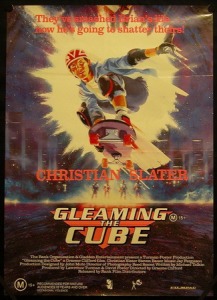 Brian Kelly (Christian Slater) is a California skater with a rebellious attitude and an adopted Vietnamese brother named Vinh (Art Chudabala). When the movie starts, all Brian cares about is not selling out and finding empty pools to skate. He even hires an airplane to fly him and his friends over Orange County so they can get a bird’s-eye view of the layout. Vinh is more worried about his job with the Vietnamese Anti-Community Relief Fund. The fund has been set up to send medical supplies to Vietnam but, when Vinh comes across a discrepancy in the shipping records, he realizes that something else is going on. When Vinh turns up dead in a hotel room, everyone else may believe that it is suicide but Brian knows that his brother was murdered. With the help of his fellow skaters and a sympathetic cop (Steven Bauer), Brian sets out to bring his brother’s killers to justice.
 Through the Shattered Lens