
This was a sad week, as far as television goes. Due to the PBS pledge drive, I didn’t get to watch any of my usual British sitcoms. Plus, Baywatch came to an end so now I have to find a new old show to binge.

202ONE U.S. Olympic Trials (Friday Night, NBC)
I watched the gymnastics trials on Friday night. Simone Biles is amazing. That said, I’m cringing at “202ONE.” Rethink this, NBC.
That said, I’m definitely looking forward to the Olympics this year. I am an Olympics fanatic and I make no apologies for it. (I do, however, prefer the winter games just because of the curling and the skating.) Especially when compared to some people, I managed to stay pretty positive last year but I did get pretty upset when they had to cancel the games.

The Bachelorette (Monday Night, ABC)
The Bachelorette was very emotional this week but, of course, The Bachelorette is emotional every week. Katie isn’t going to put up with any drama or fights this season but fights and drama are kind of the main reason for watching this show. Oh well. Thanks to all the brave internet sleuths out there, I already know how things are going to end. Personally, I think Katie made the right decision, assuming the spoilers I’ve seen are correct.
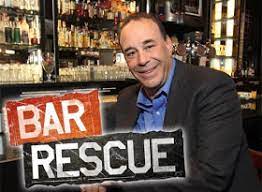
Bar Rescue (Monday Morning, Paramount)
John Taffer is helping bars survive the Corona Pandemic by yelling at their owners. I hope that strategy works. Watching the latest episode, it occurred to me that the show is currently in a strange place. The whole appeal of Bar Rescue has always been the chance to watch Taffer act like a dick. But it’s not as much fun to watch Taffer yell at people when those people are on the verge of losing their livelihood due to a pandemic. As a result, Taffer has been trying to balance being belligerent with being a nice guy. The end result, so far, has been kind of awkward.

Baywatch (Weekday Evening, H&I)
My Baywatch binge came to an end this week as H&I reached the end of the series and started over again from the start. Here’s my thoughts on how this oddly addictive show wrapped things up.
On Sunday, Mitch and the lifeguards went to Australia! Wait a minute, what? Yes, they actually did This is not a joke. It was a two-part episode called Baywatch: Down Under. After Jake, a lifeguard who had never previously appeared or been mentioned on the show, learned that he had a son in Australia, he went to meet him and Jake’s best friends — who, again, never before mentioned this Jake over the course of the previous 9 seasons of the show — accompanied him. The majority of the two episodes focused on Jake and a bunch of new Australian lifeguards. That’s because Baywatch: Down Under was actually a pilot for a Baywatch spin-off that didn’t happen. It was also kind of a wasted two parter, though the Australian scenery was lovely.
The first of Monday’s episodes featured Mitch and Cody rescuing a violinist who was being held prisoner on a boat. What’s odd is that the episode opened with Cody mentioning that he had broken up with his girlfriend Lani (who was played by Carmen Electra during the previous season). However, since Cody had already been seen flirting with and dating other women all through season 9, that would seem to suggest that either Cody and Lani were already broken up or Cody was just a no-good, dirty cheater. I’m going to guess that, for whatever reason, season 9’s episodes were shown out of production order. As if to prove my theory, the next episode featured Hobie living back at home with Mitch despite the fact that he had moved away to live with his mother earlier in the season. Did the Baywatch producers just not care about continuity? No wonder the show only lasted 11 seasons!
On Tuesday, the recently returned Neely Capshaw tried to 1) seduce Hobie, 2) get Mitch fired, and 3) drug Alex with sleeping pills. This would have all been fun if Gena Lee Nolin was still playing the role of Neely but, for Season 9, Baywatch replaced Nolin with another actress who just have didn’t the same skill when it came to making evil entertaining. Needless to say, Neely did not get away with it. The second episode featured George Hamilton playing himself and really, what more did you need? Well, how about Manny getting paralyzed as a result of a lifeguard accident? After it happened, Manny was bitter but, this being Baywatch, he eventually made peace with his new circumstances.
On Wednesday, season 9 ended not with a bang but with a whimper. The episode was split between Cody searching for a missing boat and Alex trying to figure out who was making elaborate sand castles on the beach. David Hasselhoff and Michael Newman, the two mainstays of the show, were barely featured. As Season 9 came to an end, so did H&I’s collection of Baywatch episodes. Seasons 10 and 11 were rebranded Baywatch Hawaii and, apparently, they were not included in the syndication package. So, the second of Wednesday’s episode was the first episode of season 1, which I really didn’t have much interest in rewatching.
So, I’m done with Baywatch for now. The two seasons of Baywatch: Hawaii are, of course, available on Prime but …. eh. Nine seasons in five months was enough for me, at least for now. Baywatch was an entertainingly dumb show and I’m sure I’ll occasionally catch an episode whenever I’m bored and I want to see some ocean scenery or maybe Cody in a speedo. For now, though, I’m ready to move on and binge another old show.

Court Cam (Wednesday, A&E)
Plenty of drama in the court this week! Court Cam is such a ludicrous show but it’s also rather addictive. Between the showy but shallow editing and Dan Abrams’s breathless narration, it’s hard not to crack a smile while watching.

Hell’s Kitchen (Fox, Monday Night)
The current season of Hell’s Kitchen feels like some sort of demented boomer fantasy. Take the most emotionally fragile 20 year-olds you can find and force them to work for the most abrasive man on television. I’m just waiting for one of the chefs to mention needing a trigger warning.
Anyway, both the red and the blue teams screwed up this week so Chef Ramsay sent two chefs home and then reorganized the teams. I hope it helps because the diners at Hell’s Kitchen deserve the best food possible.
Intervention (Monday Night, A&E)
As soon as Intervention started on Monday night, there was a loud boom of thunder outside, followed by lightning and then pouring rain. Looking around the house, I realized that I wasn’t sure where Doc was so, naturally, I assumed he was outside in the storm. Panicking, I ran out to the backyard and stood there, in my bathrobe, and yelled, “DOC! DOC!” There was no sign of Doc so I ran back inside, grabbed a flashlight, and ran back outside. Shining the light around the backyard, I continued to call for the cat even as I got more and more soaked.
Getting no response and fearing that my beloved cat had been swept away by the storm, I turned to reenter the house and that’s when I saw Doc, sitting inside on a kitchen counter, and watching me through the window with a somewhat bemused expression on his face. (Trust me, cats can be bemused!)
I stepped back inside and, once I finally dried off and changed clothes, Intervention was nearly over. However, the end title cards informed that me that both Nicholette and her father have been sober since 2018 so good for them.

The Love Boat (Sunday Evening, MeTV)
The Love Boat crew goes to Australia! Julie is getting married! Captain Stubing is on the verge of having an affair with Katharine Helmond! Gopher and Doc are competing to impress the new cruise director! Isaac is making drinks while Vicki sacrifices her childhood to essentially do slave labor on a cruise ship! Meanwhile, special guest star Jose Ferrer has captured the missing link and has chained him in a cage that’s been kept in the cargo bay …. wait a minute, what!? Yes, it was a strange episode. Australia looked great, though!

Mom (Friday afternoon, Paramount TV)
I watched four episodes of this long-running commercial for the recovery industry on Friday. Actually, I don’t know if I really watched them as much as I just had them on for background noise. This is probably one of my least favorite shows ever, a 30-minute exercise in 12-step propaganda. Every episode I see of this show, I just find myself wondering if the title characters have ever met anyone whose life isn’t a depressing hellsack. That said, it’s obvious that some people like this show because it’s been on for what feels like 40 years

The Office (Comedy Central, Friday Evening)
I watched the final four episodes of season 4 (Did I Stutter, Job Fair, and the two-part Goodbye Toby) and Season 5’s Weight Loss premiere. Out of that set, Job Fair was probably the weakest, just because it had an entire subplot involving Jim and Andy golfing with a potential client. Jim begging the guy for his business was just cringey and Andy — who was always the most inconsistently written character on the show — was portrayed as being such a cartoonish idiot that it was difficult to watch. Much better was Goodbye Toby (in which Andy was a much more likable character) and Weight Loss (featuring that iconic proposal scene). Did I Stutter is one of the best and most underrated episodes of The Office, with the final conversation between Michael and Stanley being one of the show’s strongest moments.

Sons of Sam: A Descent Into Darkness (Wednesday and Thursday, Netflix)
I reviewed this Netflix docuseries here.
The Vow (HBO2, Saturday)
The Vow, which originally aired last year, was HBO’s lengthy docuseries about the NXIVM cult. This show started with great fanfare and acclaim, the majority of which tapered off as it became clear that The Vow was produced by a bunch of former cult members who were trying to make themselves look better and more innocent than they actually were. The Vow is famous for a scene in which former NXIVM dude Mark Vicente rages that anyone can get sucked into a cult. That may be true but, judging from The Vow, it helps to be intellectually shallow and emotionally needy. Since it doesn’t take much research to discover that Vicente was far higher-up in NXIVM than The Vow acknowledges and that he financially profited from the cult’s pyramid scheme-inspired structure, it’s hard not to feel that Vicente doesn’t really have the moral standing necessary to portray himself as being just another NXIVM victim.
Anyway, HBO2 aired the entire series on Saturday. I rewatched a few episodes and I have to say that I was kind of surprised to discover that Mark Vicente and Sarah Edmondson came across as even more unlikable and disingenuous that second time I watched than they did the first time. Supposedly, there’s a second season of The Vow on the way so I guess we’ll get even more chances to listen to Mark Vicente brag about co-directing What The Bleep Do We Know.
That’s it for this week! Next week, I’ll be selecting new shows to binge!
 Through the Shattered Lens