The much-missed Gary Loggins always shared this song on Thanksgiving, on both this site and his own personal site. I’m happy to honor his memory by continuing that tradition.
The much-missed Gary Loggins always shared this song on Thanksgiving, on both this site and his own personal site. I’m happy to honor his memory by continuing that tradition.
Today’s song of the day comes from the American Anthem soundtrack.
Steve Tevere has thrown a tripus!
I defy anyone to listen to today’s song of the day without dancing.
RIP, Jimmy Cliff.
Today’s song of the day is The Harder They Come, taken from the soundtrack of the 1972 Jamaican film of the same name. This film and Jimmy Cliff’s performance and the soundtrack are all often credited with introducing reggae to the rest of the world.
Well they tell me im a pie up in the sky
Waiting for me when i die
But between the day your been and when you die
They never seem to hear or even cry
So as sure as the sun will shine
im going to get my share now of whats mine
And then the harder they come the harder they’ll fall
One and all
Ooh the harder they come the harder they’ll fall
One and all
Well the oppressors are trying to keep me down
Trying to drive my underground
And they think that they have got the battle won
I say forgive them lord, they know not what they done
Cause as sure as the sun will shine
Im gonna get my share now of whats mine
And the harder they come the harder they fall
One and all
Ooh the harder they come the harder they fall
One and all
And i keep on fighting for the things i want
Though i know when your dead you cant
But id rather be a free man in my grave
Than living as a puppet or a slave
So as sure as the sun will shine
Im going to get my share now whats mine
And then the harder they come the harder they fall
One and all
Ooh the harder they come the harder they fall
One and all
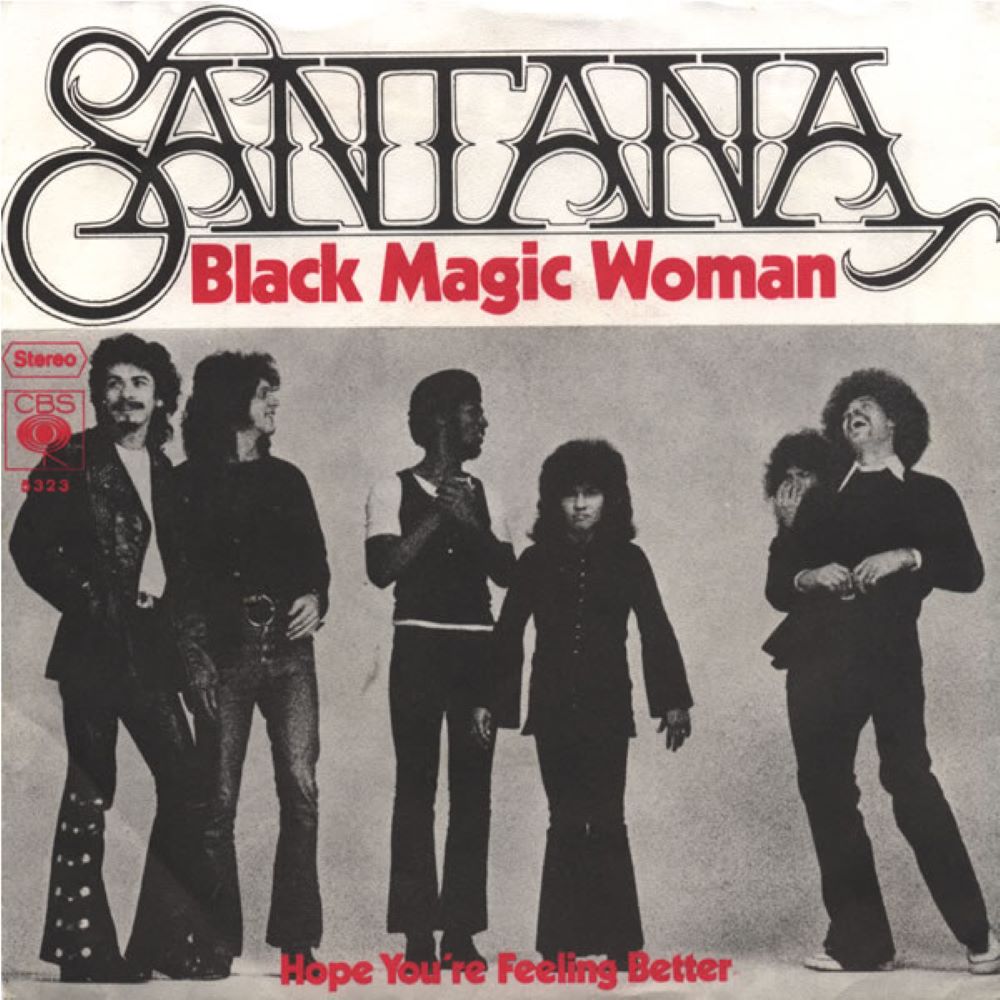
Carlos Santana’s song “Black Magic Woman” is a timeless tune that hooks you right from the start, but it’s that guitar solo that really makes it unforgettable and that is what make it our latest “Song of the Day.” The solo kicks in around 2 minutes and 24 seconds into the track. What’s great about Santana’s solo is how it feels like a conversation rather than just fast playing. His guitar almost sounds like it’s telling a story, with smooth, soulful notes that seem to sing. It’s not about shredding or showing off; it’s about playing each note with feeling and attitude, making you want to listen over and over.
What really stands out in the solo is how Santana uses bends and vibrato — which means he gently raises the pitch of the notes and adds a slight shake. This gives the solo a warm and emotional feel, almost like a human voice expressing deep feelings. The smooth back-and-forth flow between notes keeps it easy to follow, so even if you’re not a guitarist, you can feel the emotion. Plus, the mix of Latin rhythms shines through, giving the solo a unique flavor that sets Santana apart from other guitarists and adds some groove to the song.
The solo in “Black Magic Woman” is what really grabs listeners and keeps them hooked. It’s not about playing a million notes fast, but about making every sound count and really feeling the music. Santana’s guitar almost talks and sings with a warm, inviting voice that pulls you into the mood of the song. His unique blend of smooth, flowing notes with just the right amount of grit and emotion makes the solo stand out as something special and timeless. Instead of flashy showmanship, it’s the deep connection you feel through the guitar that keeps the solo memorable and moving for generations of listeners. This soulful approach is what turns a simple guitar solo into a truly magical moment in the song.
Black Magic Woman
Got a black magic woman
Got a black magic woman
I’ve got a black magic woman
Got me so blind I can’t see
That she’s a black magic woman
She’s tryin’ to make a devil out of me
Don’t turn your back on me, baby
Don’t turn your back on me, baby
Yes, don’t turn your back on me baby
Stop messin’ around with your tricks
Don’t turn your back on me baby
You just might pick up my magic sticks
[guitar solo]
Got your spell on me baby
Got your spell on me baby
Yes you got your spell on me baby
Turning my heart into stone
I need you so bad – magic woman
I can’t leave you alone
Great Guitar Solos Series
Today, we continue to celebrate the birthday of Martin Scorsese with a song that has appeared in countless Scorsese films! When Scorsese made his Rolling Stone documentary, nonetheless than Mick Jagger commented on how odd it was that this was the first Scorsese film to not feature Gimme Shelter.
From the Rolling Stones and Merry Clayton, here is today’s song of the day.
Since today’s scene came from Over the Top, it seems only appropriate that today’s scene should come from it as well.
Every moment returns again in time
When I’ve got the future on my mind
Know that you’ll be the only one
Meet me halfway
Across the sky
Out where the world belongs
To only you and I
Meet me halfway
Across the sky
Make this a new beginning of another life.
In a lifetime
There is only love
Reaching for the lonely one
We are stronger when we are given love
When we put emotions on the line
Know that we are the timeless ones
Meet me halfway
Across the sky
Out where the world belongs
To only you and I
Meet me halfway
Across the sky
Make this a new beginning of another life.
[Instrumental interlude]
Meet me halfway
Across the sky
Out where the world belongs
To only you and I
Meet me halfway
Across the sky
Make this a new beginning of another life.
I’ve just always loved this piece of music. And since it’s my birthday, it only seems right to make it today’s song of the day!
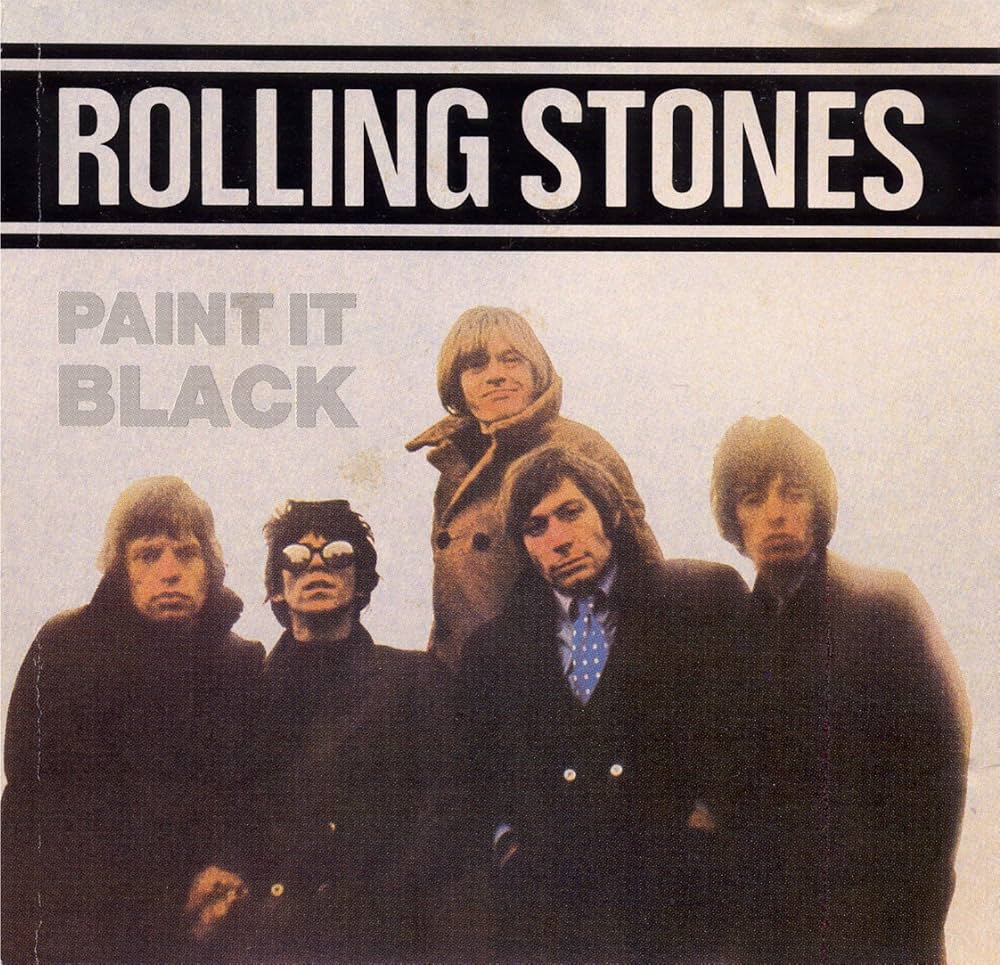
You ever notice how “Paint It Black” doesn’t really start so much as it unfolds—that strange sitar riff creeping in like a bad dream you can’t quite shake? The Stones captured something that feels less like heartbreak and more like a total emotional blackout. The sound is restless, paranoid even, like someone pacing around inside their own thoughts at 3 a.m. That’s what makes it such a sharp symbol of depression: it’s not just sadness, it’s this all-consuming fog where color, joy, and even meaning itself disappear.
The thing that always strikes me is how the song turns that private darkness into a worldview. The singer doesn’t only feel grief—he wants the whole world to match how he feels inside. That line between self and everything else completely breaks down. You can hear it in the drumming, that pounding rhythm chasing itself in circles, or the sitar’s looping melody that never resolves. It’s like he’s trapped in motion, unable to stop thinking or feeling, stuck in a spiral that makes sense only to him. It’s haunting because it sounds familiar to anyone who’s been that low.
And that’s why, even decades later, “Paint It Black” still feels so alive—so uncomfortably modern. Underneath the 60s cool, it taps into that quiet nihilism a lot of people still wrestle with today: the idea that maybe there’s nothing left worth looking at, so you might as well black it all out. But there’s something cathartic in that honesty. The song doesn’t try to fix anything or offer redemption; it just sits in the darkness. And sometimes, that’s what makes it hit harder than any happy ending could.
Paint It Black
I see a red door
And I want it painted black
No colors anymore
I want them to turn black
I see the girls walk by
Dressed in their summer clothes
I have to turn my head
Until my darkness goes
I see a line of cars
And they’re all painted black
With flowers and my love
Both never to come back
I’ve seen people turn their heads
And quickly look away
Like a newborn baby
It just happens everyday
I look inside myself
And see my heart is black
I see my red door
I must have it painted black
Maybe then, I’ll fade away
And not have to face the facts
It’s not easy facing up
When your whole world is black
No more will my green sea
Go turn a deeper blue
I could not foresee this thing
Happening to you
If I look hard enough
Into the setting sun
My love will laugh with me
Before the morning comes
I see a red door
And I want it painted black
No colors anymore
I want them to turn black
I see the girls walk by
Dressed in their summer clothes
I have to turn my head
Until my darkness goes
I wanna see it painted
Painted black
Black as night
Black as coal
I wanna see the sun
Blotted out from the sky
I wanna see it painted, painted, painted
Painted black, yeah
There’s always been something very annoying about the cult surrounding Che Guevara. Because his face looked good on a poster and his execution was probably carried out by the CIA, a lot of people have deified a shallow-minded rich kid whose main accomplishment was executing several of his fellow countrymen and then totally failing in his attempts to overthrow the government of Bolivia.
Thankfully, there’s a song that tells the truth. From Ola Fresca, here is El Chacal.
 Through the Shattered Lens