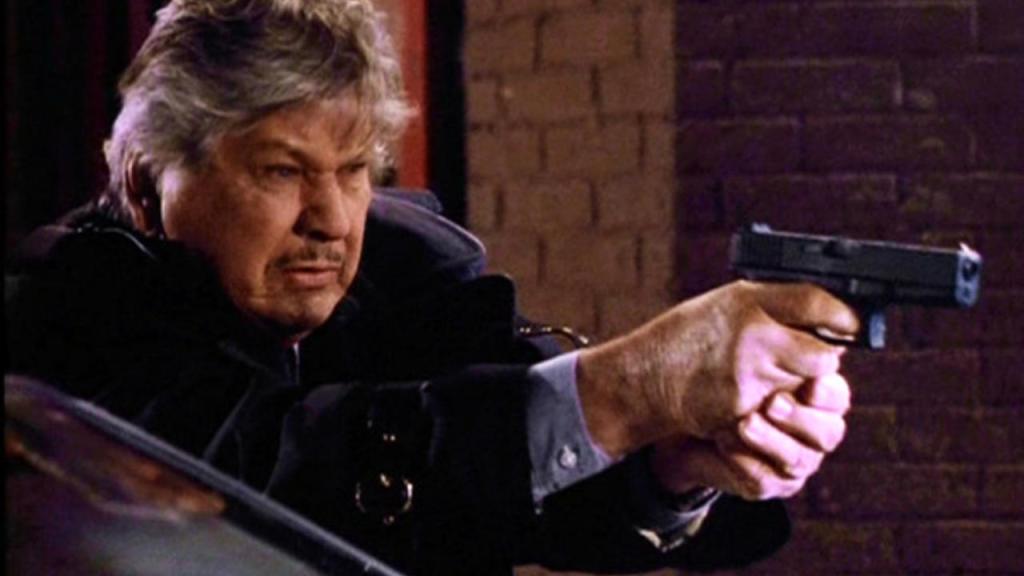
Brad reviews FAMILY OF COPS III: UNDER SUSPICION (1999) – Charles Bronson’s final film! 


Legendary actor Charles Bronson ended his five-decade career by starring in a series of made-for-TV movies, FAMILY OF COPS (1995), BREACH OF FAITH: A FAMILY OF COPS II (1997), and FAMILY OF COPS III: UNDER SUSPICION (1999). I was in my mid-twenties as this series played out, and I enjoyed each of the installments. Today, I’m going to take a look at the final film in the series, and the final film in Charles Bronson’s career.

FAMILY OF COPS III: UNDER SUSPICION opens with Milwaukee Police Inspector Paul Fein (Charles Bronson) and his detective son, Ben Fein (Joe Penny), investigating the double murder of a wealthy banker, Phillip Chandler, and his wife. Their initial suspect, the couple’s son Evan Chandler (Greg Spottiswood), is later found murdered, so they have to keep digging. They eventually uncover a money laundering scandal involving the current Chief of Police (Sean McCann) that may go all the way up to the Mayor (Art Hindle)! As usual, this series includes additional storylines involving other members of the family. One of the subplots involves Paul’s youngest son Eddie (Sebastian Spence), who’s racked with guilt over a S.W.A.T. raid gone wrong. Unable to open the warehouse door at the appropriate time, Eddie blames himself for the deaths of two cops. The other primary subplot involves Paul’s oldest daughter Kate (Barbara Williams), who finds herself pregnant with the child of her social worker boyfriend. Determined to have the baby whether her boyfriend hangs around or not, Kate must navigate their relationship and all the family drama while preparing for the possibility of being a single mother. 

As far as I’m concerned, the fact that this is Charles Bronson’s final film should make it a must watch for any person who considers themselves to be a fan of the icon. Making his debut in 1951 in the Gary Cooper film YOU’RE IN THE NAVY NOW, because he could “belch on cue,” Bronson’s final film would debut on CBS on January 10th, 1999, when he was 77 years old. At such an advanced age, Bronson still commanded the screen even though he was at the end of his career, and as time would tell, near the end of his life. He would be diagnosed in 2001 with Alzheimer’s disease and would pass away on August 30th, 2003. I savor every moment of this film, and while it makes me sad in some ways, in other ways I consider it my favorite of the series. Joe Penny steps up and takes a co-lead role in the film. He’s tough and sensitive, which adds another layer of depth to the foundation that Bronson had established in the first two movies. The series wouldn’t get another movie without Bronson, but I would have definitely been down for a Joe Penny led follow-up! This movie has a stronger sense of humor than we’ve seen in the earlier films, and I also like the main story as Paul Fein and his son take on systemic corruption in Milwaukee. While it’s still formulaic, I found the primary storyline to be more interesting than the generic crime stories in the first two installments. The subplots involving Eddie and Kate add some depth to the Fein family dynamics, but other than the fact that Kate is determined to keep her baby with or without her boyfriend’s help, the subplots didn’t make much of an impact for me. Also, there is one major departure in this installment, as Angela Featherstone does not return as the youngest daughter, Jackie Fein. Nicole de Boer steps into the role, and while she’s cute as a button, the character isn’t given much to do.

Overall, while FAMILY OF COPS III: UNDER SUSPICION is not in the same league as the great films made during Charles Bronson’s prime, it’s still a respectable close to his iconic career. It features good, committed performances, especially from Bronson and Joe Penny. The final shots of Charles Bronson looking over his movie family and smiling as they enjoy each other and share a meal together is a fitting end to his movie career, and one final celluloid glimpse into the man underneath the legendary facade.
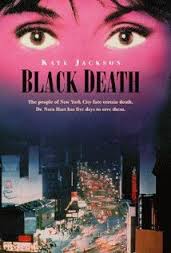
Quiet Killer (1992, directed by Sheldon Larry)


When wealthy teenager Sarah Dobbs (Kathleen Robertson) vomits up blood and then drops dead in the middle of New York City, the coroner’s office is baffled as to what killed her.  As far as anyone knows, Sarah has just been suffering from the flu, which she apparently contracted when she was recently overseas.  However, there is one doctor in New York who thinks that she knows what’s happening.  Dr. Nora Hart (Kate Jackson) takes one look at Sarah’s case and decides that the Black Death — the same plague that wiped out half of the world’s population in 54 AD — has come to New York!

Nora wants to shut down the city immediately but Mayor Carmichael (Al Waxman) says that would not only lead to mass panic but it would also an economic disaster.  Working with a team of other doctors (including Jerry Orbach, who is always a welcome presence in New York films), Dr. Hart tries to track down everyone who Sarah came into contact with and quarantine them before both a panic and a pandemic breaks out.  Unfortunately, one congressman (Howard Hesseman!) doesn’t want to go into quarantine because that would mean admitting that he was in Manhattan to visit his mistress.  Despite everyone’s best efforts, mass panic follows.

Quiet Killer (which is also known as Black Death) is a made-for-TV movie that used to show up on late night television throughout the 90s.  It’s a typically overwrought disaster film and it’s easy to laugh at some of the dialogue and some of the acting.  (Kate Jackson is particularly wooden in the lead role.)  The first time I saw it, I thought the most interesting thing about it was that it featured Howard Hesseman as a congressman.  For those who know Hesseman best for playing characters like Dr. Johnny Fever on WKRP, it’s strange to see him playing a member of the establishment.  Hesseman isn’t bad in the role but it never makes sense that he wouldn’t be able to think of a way to explain away his presence in Manhattan.  You would think a politician would be better at coming up with an alibi or that he could have pulled some strings to keep it from being revealed that he had been quarantined.  Instead, he decides to just run off and potentially infect the entire nation.  That’s not what I pay my tax dollars for.

Quiet Killer is a good example of how real-life events can shape how we view a film.  Up until just a few months ago, this would have seemed like just another cheesy disaster movie.  Watch it today and it feels prophetic.  Hopefully, by this time next year, it will be back to just being cheesy.

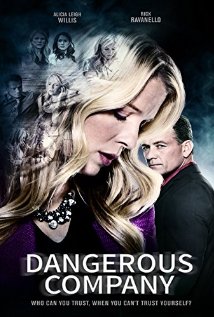
Adventures in Cleaning out the DVR: Dangerous Company (dir by Sheldon Larry)


dc

Continuing in my efforts to clean out the DVR (as well as post a review of every single film that premiere on Lifetime, LMN, or the SyFy network this year), I just watched Dangerous Company.  Dangerous Company originally aired on LMN on August 15th, 2015.

Alicia Leigh Willis plays Pauline, the CEO of Wendy Blue Fashion.  Pauline inherited the company from her mother, who, years earlier, died of dementia.  Pauline took care of her mother in her final days and still resents the fact that her sister, Deanna (Susan Slome), was not there to help.  Pauline also lives in fear that she will someday follow in her mother’s footsteps.

At the movie begins, it appears that Pauline’s fears may be coming true.  She is frequently forgetful and keeps losing her cell phone.  Her husband, Aaron (Rick Ravenello), has to frequently remind her what their nightly plans are.  Eventually, her assistant — Elizabeth (Melissa Marty) — confesses that she’s been covering up a lot of Pauline’s mistakes.  When Pauline starts to tell Elizabeth about her mother, Elizabeth reveals that Pauline has told her this story many times in the past.

Finally, when Pauline goes to see a doctor (David Alan Graf), she suddenly freaks out in the examining room and, when a man claiming to be her husband shows up to pick her up, the terrified Pauline claims that she does not know who he is.  Finally, she’s given a sedative and, when she wakes up, Aaron tells her that the man she didn’t recognize was him.

And, at first, both Aaron and Elizabeth seem to be so concerned and helpful but, as the movie progresses, you start to wonder about both of them.  They are both just a little bit too eager for Pauline to say in bed and remove herself from running the company.  Whenever Pauline says that she’s okay, Aaron replies with, “Your mother used to say that.”  And then, of course, there’s a controversial business proposal that will result in Wendy Blue Fashion shipping jobs overseas.  Aaron is all for it.  Pauline is opposed.

(WAY TO STAND UP FOR AMERICA, PAULINE!  USA! USA! USA!)

For the first hour or so, Dangerous Company keeps you guessing.  Is Pauline really suffering from dementia or is this all just an elaborate Gaslight-like plot?  Alicia Leigh Willis does a great job portraying Pauline’s fear and confusion and director Sheldon Larry keeps the viewers off-balance.  Of course, since this is a Lifetime movie, we shouldn’t be shocked to discover that it all actually is a plot to steal Pauline’s company but still, Dangerous Company is very good at doing what it does.

Incidentally, my favorite character was Elizabeth, the duplicitous administrative assistant.  I’ve always been of the opinion that all of us office administrators could secretly rule the country if we wanted to and I have to give full props to Elizabeth for proving me right!  You go, girl!