Retro Television Reviews: Houston, We’ve Got A Problem (dir by Lawrence Doheny)


Welcome to Retro Television Reviews, a feature where we review some of our favorite and least favorite shows of the past!  On Sundays, I will be reviewing the made-for-television movies that used to be a primetime mainstay.  Today’s film is 1974’s Houston, We’ve Got A Problem!  It  can be viewed on YouTube!
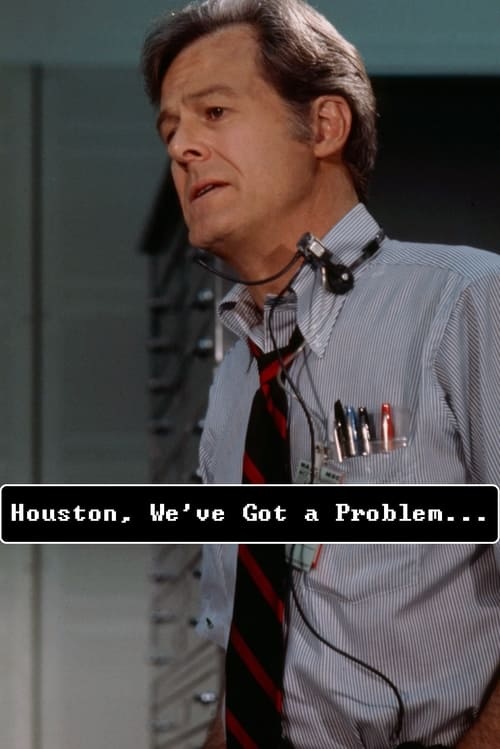
The year is 1970 and Apollo 13 is the latest manned NASA mission into space.  The head of the mission of Jim Lovell and the destination is the Moon.  Unfortunately, the American public has gotten so used to the idea of men going to the Moon that hardly anyone is paying attention to Apollo 13.  That changes when Lovell contacts mission control in Houston and utters those famous words, “Houston …. we’ve had a problem.”  An oxygen tank has exploded, crippling the spacecraft and leaving the three men in danger.  If Houston can’t figure out how to bring them home, Apollo 13 could turn into an orbiting tomb.

Yes, this film tells the story of the same crisis that Ron Howard recreated in Apollo 13.  The difference between Houston, We’ve Got A Problem and Apollo 13 (beyond the fact that one was a big budget Hollywood production and the other a low-budget made-for-TV movie), is that Apollo 13 largely focused on the men trapped in space while Houston, We’ve Got A Problem is totally Earthbound.  In fact, Jim Lovell does not even appear in the ’74 film, though his voice is heard.  (The film features the actual communications between the crew and Mission Control.)  Instead, the entire film follows the men on the ground as, under the leadership of Gene Kranz (Ed Nelson), they try to figure out how to bring the crew of Apollo 13 home.  Houston, We’ve Got A Problem is a far more low-key film than Apollo 13, one that features narration from Eli Wallach to give it an effective documentary feel but one that also lacks the moments of wit and emotion that distinguished Apollo 13.  

NASA cooperated with the making of the film and it works best when it focuses on the men brainstorming on how to solve the biggest crisis that the American space program had ever faced to that date.  The film is less effective when it tries to portray the effects of the men’s work on their home lives.  Sandra Dee is wasted as the wife who can’t understand why her engineer husband (reliably bland Gary Collins) can’t spend more time at home.  Clu Gulager plays the guy who fears he’s missing out on time with his son.  Robert Culp plays the man with a heart condition who places his hand over his chest whenever anything stressful happens.  Steve Franken has to choose between his religious obligations and his obligation to NASA.  The melodrama of those fictional moments are awkwardly mixed with the based-in-fact moments of everyone calmly and rationally discussing the best way to save the crew.  Jim Lovell, as a matter of fact, complained that Houston, We’ve Got A Problem did a disservice to the flight controllers by presenting them all as being hopelessly inept in their lives outside of mission control.  (Lovell was reportedly much happier with Apollo 13.)

Because it features the actual conversations between the crew and Mission Control, Houston, We’ve Got A Problem is interesting as a historical document but it never escapes the shadow of Ron Howard’s better-known film.
The TSL’s Horror Grindhouse: A Name For Evil (dir by Bernard Girard)


So, this is an odd one.

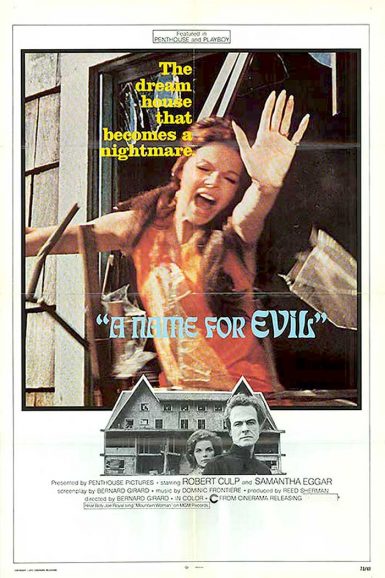
First released in 1973 but reportedly filmed several years before, A Name For Evil tells the story of John Blake (Robert Culp) and his wife, Joanna (Samantha Eggar).  John is a successful architect who lives in the big city.  He used to be a passionate rebel but now he’s just a boring corporate man.  Even his wife is bored with him.  John knows that he has to make some changes.  Since this movie was made in 1973, those changes start with throwing a TV out of a window.

(Trust me.  If you watch enough films from the early 70s, you will see so many TVs get tossed through so many windows that it will no longer surprise you.  Apparently, being a rebel in 1973 meant destroying a TV.  According to Wikipedia, the top five TV shows in 1973 were, in order, All In The Family, Sanford and Son, Hawaii 5-0, Maude, and the NBC Sunday Night Mystery Movie.  I choose to believe that the NBC Saturday Night Mystery Movie is what drove everyone over the edge.  Anyway…)

Anyway, John decides to quit his high-paying job and instead move up to New England and live in his grandfather’s mansion.  (His grandfather, by the way, was known as The Major.)  Joanna is reluctant to accompany him and she’s even more upset when it turns out that 1) the house is a total wreck and 2) the last tenant died under mysterious circumstances.

John, however, grows somewhat obsessed with the house.  This is despite the fact that John doesn’t seem to really like the house or the inhabitants of the nearby town that much.  For instance, there’s a scene — which might be a dream — in which John crashes the funeral of a local boy who died in Vietnam and he starts to laugh uncontrollably when the minister praises the boy for sacrificing himself for his country.  I think we’re supposed to like John during this scene but John laughs so long and so hard and he just keeps going and going that, by the end of it, I think even the most dedicated peace activist would look at him and say, “What an asshole.”

At the house, John keeps seeing strange shadows and hearing weird noises.  Occasionally, he sees someone who looks like the long-dead Major riding a white horse.  He hears voices coming from the walls and he accuses Joanna of being behind it.  Joanna tells him that he’s being paranoid.  Of course, Joanna herself is slowly coming to appreciate the house, especially after a ghost kisses her hand…

Suffering from ennui, John does what anyone in 1973 would do.  He tracks down the local hippies and he takes part in a down-with-the-establishment orgy.  Are the hippies real or are they figments of his imagination?  Is the house real or is it a figment of John’s imagination?  Is John real or is he just a figment of his imagination?  A Name For Evil does not seem to really know but you can be sure that we’ll get another shot of that TV falling out of that window before the movie ends.

On the one hand, A Name For Evil is a standard haunted house/spiritual possession type of film.  But, on the other hand, it’s obvious that A Name For Evil was trying to make some sort of grand statement about life in America in 1973.  How else do you explain the hippies, the funeral scene, and that TV flying out the window?  Robert Culp spends the entire movie so pissed off that there’s no way he wasn’t meant to be some sort of generational spokesman.  It makes for a very strange, only-in-the-70s hybrid type of film.

Now, I should mention that I actually did a little research before writing this review.  I discovered that A Name for Evil was originally produced by MGM but it spent years on the shelf until Penthouse (the magazine) bought the film and re-cut it for theatrical release.  Apparently, the first version was clear about being an attempt at social satire with a little horror and nudity thrown in.  The version that was actually released was edited to emphasize the horror and the nudity.  That probably explains why the film feels like such a strange mishmash of genres and attitudes.

If you ever get the chance, I’d recommend watching A Name For Evil.  It’s not that good but it’s just too strange not to watch.