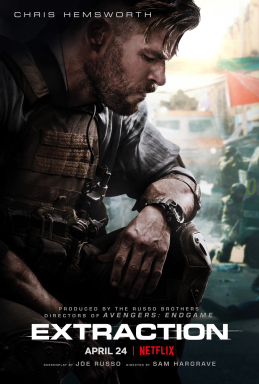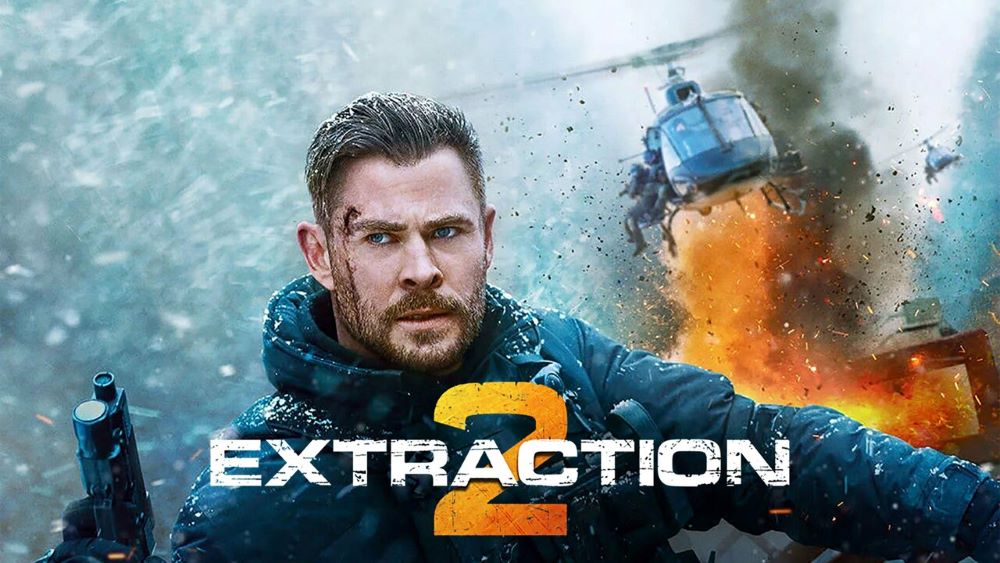
Review: Extraction 2 (dir. by Sam Hargrave)


“I will not stop.” — Tyler Rake

Extraction 2 drops you right into the thick of things, cranking the intensity way past the first film. To quickly recap, the original Extraction introduced Tyler Rake, a gritty mercenary with a troubled past played with undeniable grit by Chris Harmsworth. The story was simple but effective—a high-stakes rescue of a kidnapped boy in Dhaka, Bangladesh, filled with edge-of-your-seat action and those now-iconic, almost balletic long-take fight sequences. It was raw, realistic, and emotionally grounded. Harmsworth’s portrayal anchored the chaos in human vulnerability, helping the film stand out from the typical action fare.

Now, the sequel’s aim is clear—it wants to go bigger, bloodier, and more relentless, and it pulls that off in many ways. The standout here is definitely the action choreography. Sam Hargrave, the director, really flexes his muscle with several jaw-dropping sequences, especially a breathtaking 21-minute continuous take that makes you feel like you’re running alongside Rake, dodging bullets and throwing punches in real time. It’s an impressive technical feat but, more importantly, it’s incredibly immersive. The fights have that gritty realism where each blow counts, and the camera work lets you see every tense moment clearly instead of hiding behind shaky cuts.

Chris Hemsworth, once again, owns the role. This time around, you can see a bit more of the toll the mercenary life has taken on Rake. Hemsworth brings a subtle layer of weariness mixed with fierce determination. His physicality is on full display—he’s convincing in those brutal hand-to-hand combats without ever feeling like a stuntman stand-in. He does it all, and it’s clear he’s not just punching air; this is a man fighting for something beyond just survival. The emotional beats land a bit more naturally this time around, helped by Hemsworth’s grounded performance, which balances the nonstop action with moments of quiet reflection.

Visually, the film is a significant step up. The settings shift from humid, congested streets to icy, oppressive Georgia, and the cinematography makes the most of this change. The chilly, bleak palette fits perfectly with the film’s mood—harsh, unforgiving, and tense. The camera work is bold yet measured; it takes its time to show us the fights fully, letting the choreography breathe without rushing or confusing the viewer. This clarity turns the action scenes into mini-masterpieces, where every movement, every shot, and every punch feels deliberate and impactful.

That said, not everything clicks perfectly. The plot plays it safe with familiar revenge and rescue-mission beats, and the supporting characters don’t get much development beyond their utility to the story. Golshifteh Farahani steals a few scenes as Nik, adding fresh energy and complexity as a tough and capable ally, but others around her mainly exist to get the body count up. There’s a formulaic feel to the storyline—with plenty of high-stakes tension but little in the way of surprise. If you go in looking for deep storytelling or rich character arcs, you might be left wanting.

The film truly embraces the “bigger is better” mantra, and in many ways, it pays off spectacularly with larger, more intricate action sequences and expanded scale. This escalation brings a fuller, more thrilling spectacle that keeps you hooked from start to finish. However, this increase in scope leads to a trade-off: the narrative feels more convoluted and sometimes weighed down by its own ambition. The plot introduces multiple new characters and intersecting agendas, which lengthens the storyline unnecessarily and complicates what could have been a more straightforward mission. This convolution makes the story not only more formulaic but also harder to follow, detracting from the lean storytelling charm that made the first movie so effective.

Tone-wise, the movie trades some of the first film’s grounded grit for a flashier, more stylized look and feel. Some sequences stretch believability—Rake’s near-indestructibility and certain stunt setups can pull you out of the moment. Still, if you’re willing to accept that and enjoy the ride, the movie delivers on adrenaline and spectacle in full force.

One of the most refreshing things about Extraction 2 is how well it balances raw, physical combat with moments of emotional depth. Between the intense fight scenes, there are small windows into who Tyler Rake is and what drives him. These touches give the film a heartbeat beneath all the explosions and punches. Rake is no cookie-cutter action hero; he’s a broken man clawing his way toward redemption, and that gives the film a surprising amount of emotional weight for a movie mainly about violence and chaos.

Ultimately, Extraction 2 isn’t reinventing the wheel, but it doesn’t need to. It knows its audience and delivers exactly what it promises: high-octane, impeccably executed action sequences tied together by a thread of humanity. Hemsworth’s portrayal elevates it beyond just a flashy romp, lending it a gritty soul. The villains feel suitably menacing, and the stakes are convincingly high, which keeps the tension ticking throughout.

If you loved the first Extraction for its mix of brutal realism and emotional punch, the sequel will feel familiar but amplified—more intense, more expansive, and a bit louder. If you’re new to the series, Extraction 2 still stands solid on its own as a showcase of what well-choreographed action cinema looks like today—raw, precise, and emotionally resonant with just enough story to keep you invested without dragging you down.

In short, Extraction 2 is a wild, thrilling ride with a surprisingly human heart beating beneath all the chaos. It’s a film that knows how to entertain, showcasing Chris Harmsworth at his physical and emotional best and proving that action movies can still push creative boundaries while keeping viewers hooked. The movie brings bigger and bolder set pieces that truly live up to the “bigger is better” slogan, but this comes at the cost of making the plot more convoluted and overly complicated than it needed to be. While the intricate story layers may strain some viewers, the explosive action and solid performances make it a must-watch for any fan of visceral, edge-of-your-seat thrillers. If you want a no-nonsense blockbuster with a pulse, Extraction 2 delivers in spades.
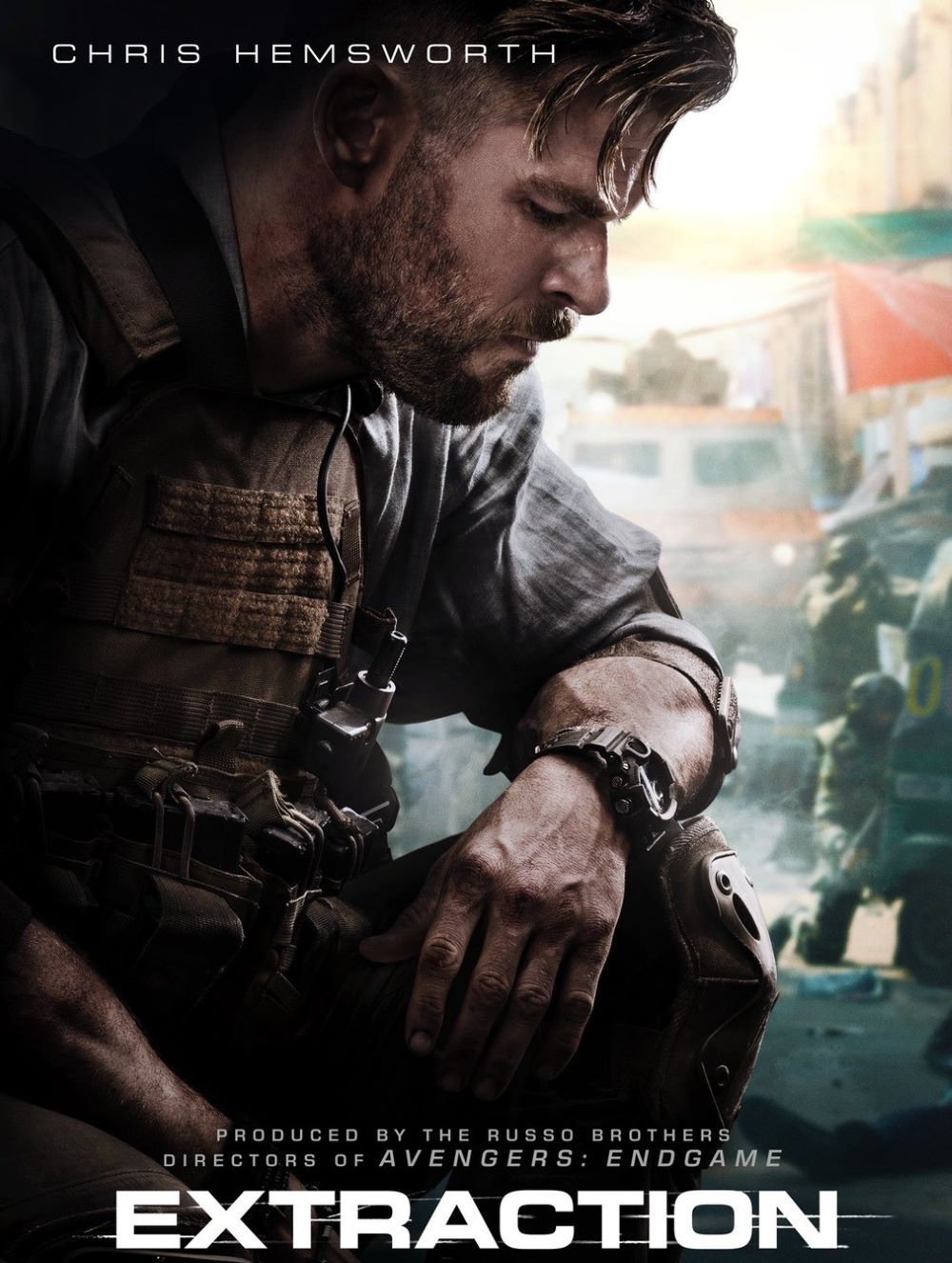
Review: Extraction (dir. by Sam Hargrave)


“Move fast. Stay low.” — Tyler Rake

Extraction (2020) is an action film directed by Sam Hargrave and written by Joe Russo, centering on a high-stakes rescue mission led by Chris Hemsworth’s character, Tyler Rake. The story comes from the graphic novel Ciudad, following Rake, a hardened mercenary tasked with rescuing Ovi Mahajan—the kidnapped teenage son of a Mumbai drug lord—from a rival gang in Dhaka, Bangladesh.

The biggest highlight of the film is undoubtedly the action. Sam Hargrave’s background as a stuntman and stunt coordinator heavily shapes the film’s visceral, grounded fight scenes and chase sequences. Before directing Extraction, Hargrave worked extensively in Hollywood, doubling for Chris Evans as Captain America in several Marvel movies like Winter Soldier and Endgame, and choreographing stunts for The AvengersPirates of the Caribbean, and The Hunger Games. This experience shows in the film’s impressive physicality and well-structured action set pieces.

One of the film’s standout moments is a roughly 15-minute continuous shot that follows Rake through escalating fights, car chases, and shoots without cuts, putting the audience right in the middle of the chaos. Cinematographer Newton Thomas Sigel maintains great clarity during this complex sequence, making it easy to follow the action without losing tension or momentum.

Chris Hemsworth’s Tyler Rake is a mix of toughness and quiet emotion. While Rake is the typical stoic, skilled mercenary with a haunting past, Hemsworth brings enough charisma and subtlety to keep him interesting. Rudhraksh Jaiswal’s Ovi balances vulnerability and resilience, and their relationship adds some emotional depth to an otherwise action-heavy film.

The setting of Dhaka plays a significant role in creating tension. The crowded streets and claustrophobic urban spaces add a feeling of danger and urgency. The production design and score contribute to this gritty atmosphere, making the world feel lived-in and tense.

Violence in Extraction is brutal and unflinching, not shying away from the grim realities of its story. The R rating is earned through graphic fights, gun battles, and some harsh moments involving bystanders, including children. This unrelenting approach to violence adds a raw edge to the film but can also feel overwhelming at times.

However, the movie’s major drawback comes from its story and character development, which are fairly thin and formulaic. The plot is straightforward: a mercenary protecting a kidnapped kid while fighting off enemies. Most of the supporting characters are underdeveloped, with the villain Amir portrayed as a one-dimensional bad guy without much backstory or nuance. Although Randeep Hooda’s character Saju adds some tension and complexity, other roles feel functional rather than memorable.

The film attempts to add emotional weight through Rake and Ovi’s bond, but the effort sometimes falls flat. Key moments meant to build character feels like typical exposition, and some plot points are rushed or underexplored. A subplot involving David Harbour’s character feels tacked on and doesn’t quite fit into the narrative flow.

Pacing also hinders the film, especially in the middle act, where the story slows down and struggles to balance action with character moments. This section can feel tedious compared to the rest of the film’s adrenaline-fueled sequences.

The ending, while action-packed and satisfying in terms of spectacle, also features a somewhat questionable twist and a final shot that feels like a cheat, leaving some ambiguity that may frustrate viewers seeking clear resolution.

In summary, Extraction delivers on what fans of intense, well-executed action expect. It’s a showcase for Hargrave’s stunt expertise and Hemsworth’s physical performance but falls short when it comes to storytelling and character depth. The film is a gripping, high-energy ride with brutal, creative fight and chase scenes—but if you’re looking for a nuanced plot or fully fleshed-out characters, it’s lacking. Fans of pure action films like John Wick or The Raid will find much to enjoy here, but others may find the story too simplistic and the constant violence numbing over time.

The Films of 2020: Extraction (dir by Sam Hargrave)


Extraction is a good example of a film that most viewers and critics probably would have overlooked if not for the COVID-19 pandemic.

I mean, don’t get me wrong.  It’s not a bad film.  It’s an unapologetic action movie and it definitely gets the job done.  The fight scenes are exciting.  The car chases will get your heart pounding.  There’s an extended chase/fight scene that appears to have been filmed as one long, continuous shot and it’s unbelievably exciting to watch.  (I will admit that a friend of mine complained that some of the extras in the scene didn’t seem to be reacting realistically to all of the destruction happening around them but I was so caught up in the breathless intensity of the scene that I didn’t notice.)  Chris Hemsworth gives an effective performance in the lead role, proving that he can be a good and believable action hero even when he’s not playing the Norse God of Thunder.

The film tells the story of what happens when Ovi (played by Rudhraksh Jaiswal), the son of an Indian drug lord, is kidnapped by his father’s rivals.  Tyler Rake (played by Hemsworth) is the mercenary who is hired to rescue Ovi and return him to his father.  Rescuing Ovi isn’t much of a problem but it turns out that Ovi’s father has no intention of paying Tyler for his services  Instead, he orders his operative, Saju (Randeep Hooda), to kill Tyler’s men and save Ovi himself.  It all leads to a chase through the city of Dhaka in Bangladesh.  There’s a lot of fights.  A lot of people get shot.  Ovi and Tyler get to bond a little bit.  It’s basically a typical action film but it’s done very well.

To the film’s credit, Saju is not a typical henchman.  Instead, he’s a man with a family and he knows that if he fails in his mission, Ovi’s father will kill his family.  Indeed, I think it can be argued that the film’s heart — and, despite all of the violence, the film does have one — is with Randeep Hooda.  He’s not evil.  He’s just trying to do his job and Hooda gives an excellent performance as Saju.  Hemsworth is a likable action hero and he’s fun to watch but Randeep Hooda is the one who you really find yourself thinking about.  If Saju succeed, Tyler dies and Ovi is returned to his evil father.  If Tyler succeeds, both Sajua and his family die.  It’s a dilemma that gives Extraction a little bit more depth than the typical action movie.

Ultimately, though, the main reason that Extraction proved to be such a hit (at least with Netflix audiences) had to do with timing.  It was released on April 24th, at a time when a lot of people were still struggling to get into the new lockdown routine.  At a time when people like me were still shell-shocked at the idea of not being able to go out to a theater and see a new movie every weekend, we were glad to have a real movie to watch.  We could watch Extraction and marvel at the big screen-worthy action sequences and we could pretend like nothing had changed.  Though it may have ultimately just been another well-made action film, Extraction provided an entertaining escape from the reality of life under lockdown.

Extraction, of course, is still on Netflix, just in case we all need to escape yet again.