Bastion!


A short while back, I got a message from a friend of mine. He urged me to download a game available on the XBox Live Arcade called Bastion. Actually, it was more like he demanded. Well, I acquiesced. And I could not possibly be more pleased that I did. Bastion is going to cost interested parties $14.99 (US currency) and is available for the XBox 360 and for PC gamers as well via the Steam network. I have heard no word about it being available (now or in the future) on the Playstation Network.

So what is Bastion?

Well, it’s an action RPG in the tradition of games such as Diablo. You control a character who is known only as the Kid, who makes his way through a city and world that have been ruined by an apocalyptic event referred to as the Calamity. The Calamity not only destroyed the magnificent city of Caelondia – where the Kid hails from – but also seemingly everything nearby, including the home of the Ura… a superstitious warrior tribe who had often been at odds with the Caelondians. Unfortunately for the Kid, he has no idea how this transpired, or what to do in a world where everything has been smashed to bits. Helping him on his way is a low-voiced narrator who guides the Kid – and, by extension, the player – through the game’s action. The story is told (almost) entirely through the narrator’s quips, which come one line at a time. Rather than having to read through large blocks of text, we instead are treated to a consistent flow of short quips from the narrator. He remarks on almost literally everything… from the progress of the story, to the different perks the Kid equips as he levels up, to the Kid’s choice in weapons… and, of course, on every piece of junk that the Kid finds lying around the burnt-out wreckage of their former home.

As a result of this narration, I would say the story of Bastion is considerably richer than that of many other action-style RPGs – Diablo springs prominently to mind. However, the story is also fairly simple, despite a couple of twists, and there is a dearth of developed characters. It doesn’t play with the same richness as some of the all-time greats in the genre (like some of the Legend of Zelda games). I should, however, note that the casting of newcomer Logan Cunningham as the voice of the narrator does a lot to give this game a style all of its own. Not only does he seek to bring this world alive for us, but he imparts some significant emotion into the games’ heavier moments.

Gameplay takes place over a series of beautifully rendered worlds which are restored a bit at a time (in the form of terrain pieces, both the actual surface of the world and the details accompanying it) recalled from the aether beyond. A variety of enemy types inhabit this world, each with their own quirks. The Kid equips two weapons (and while a melee and ranged weapon are strongly encouraged for ease of use, these weapons can be any pair you desire), a shield which can be used to both block and reflect enemy attacks, as well as a spell chosen from a list of at least 25 such spells (in earnest, I didn’t count. I suspect I missed a few anyway). In addition, the Kid can carry a number of health potions and black potions which restore health and power spells, respectively. Using these implements, the Kid fights his way across a dozen or more chunks of the world, interspersed with ‘Proving Grounds’ for each weapon, where the Kid is called on to complete an extraordinary task with each weapon for big rewards. Between missions, he’ll return to the last safe haven of Caelondia, called the Bastion. In the Bastion, the Kid can purchase upgrades (ten for each of the game’s 11 weapons!), equip spirits (of the 80+ proof kind) that give him significant bonuses, and select his weapon loadout. The player can also make the game more challenging by equipping idols (similar to equipping skulls in the Halo game franchise).

The single player will take perhaps 8 hours to complete (more if you’re extra thorough or big on using idols) and is followed by a New Game+ mode.

I really can’t recommend this one enough. Even at the (seemingly) hefty price tag of $15, it delivers as much content as some newer games which have the gall to charge a full $60~ retail.
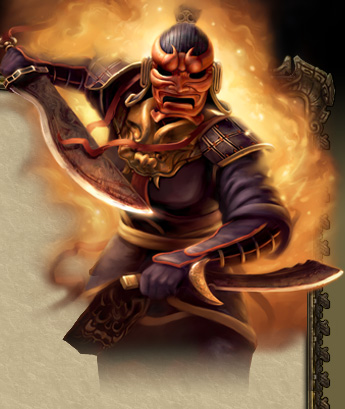
What I Played Today: Jade Empire


Every so often – because I like old games better than I like new ones, or so I’m told – I like to revisit a classic game. I’m sure, if you read my columns often, you’ve noticed that by now. Continuing this month’s theme of BioWare inundation (spurred, of course, by the release of Dragon Age II and the Arrival DLC) today I decided once again to play a little Jade Empire. Longtime WRPG fans will remember the title from its 2005 debut. Newcomers to BioWare’s camp may have missed this jewel. In the interests of saving the integrity of the game for anyone who never played the original release, I’m going to avoid serious game spoilers here, even though the game has been out for six years now.

The first thing I’ll say is that this game holds up better than most other original XBox titles with graphics that are bearable, at least, and smooth play on the XBox 360. I never played the game when it was originally launched on XBox, and only got into it after a friend recommended that I fork over the cash to buy it on the XBox Originals in Marketplace. Smooth emulation aside, I immediately fell in love with the title. Jade Empire offers a highly interactive game-play experience (more on this later) that is settled on the solid foundation of classic BioWare RPG structure. We slowly accumulate a group of loyal followers, whose personal story develops through conversation options between major plot developments in the overall story. Although many of these characters follow what we might call the “BioWare Rules” in terms of their personality archetypes (although Dawn Star is unconventional, she still reeks of Carth Onasi, doesn’t she?) they’re predictably detailed, with a diverse set of backgrounds and motivations. In this respect, I hardly think that Jade Empire is the gold standard for WRPGs. Its relatively simple story progression doesn’t lend toward diverse side missions undertaken in far-off locales.

The game’s outstanding feature, however, is not the party members, the story, the voice acting, the graphics… or even the interesting-in-theory morality system of competing philosophies. Unfortunately, while the idea of two philosophies competing against one another (Open Palm and Closed Fist) sounds compelling, and a refreshing departure from someone merely being good or evil, light or dark side, it amounts to the same thing. The complex motivations that would drive a practitioner of the Closed Fist according to the game’s story ultimately don’t matter; points are accrued by being a jerk, just as always. Sliding scale morality systems are always going to be imperfect in general, of course, while we’re on the subject… but I almost feel as if Jade Empire could have benefitted from a dual system; having both a good vs. evil slider, as well as competing philosophies (in this scenario, we might wish for more than two that are so diametrically opposed). Oh, and why can’t we ever have a philosophy of neutrality in these games? Wouldn’t that be fun? Maybe not.

The reason I keep revisiting Jade Empire, attempting to jump off for the third time, is because of the interactive game-play system. Even Mass Effect with its shooter based game-play doesn’t explore the potential as deeply as Jade Empire, which plays successfully like some kind of action game, only with distinct RPG elements. It lacks the elaborate combos that we might see from Devil May Cry or similar games, but it interweaves level-ups and equipped items just like a more traditional RPG. Unlike latter-day BioWare offering Dragon Age, we are truly rewarded in Jade Empire for dodging, and knowing when (and from where) to use our different martial arts styles and their different unique powers. Now, of course, those who are traditionalists and would rather have the stats decide things (this also includes people who just aren’t that good at action games) I suppose this is probably frustrating. I personally think it’s mild enough that once you get the hang of it almost anyone could have fun with the system and be successful in the game. For me, this outstanding combat system makes the game incredibly easy to just drop in to and play. In fact, every time I load it up and play, I angst over how much fun it is… and how it’s the one game amongst all of BioWare’s RPGs that never got a sequel.

Oh, yeah, and as a side bonus, the game features a 2-D scroller style airplane game where you pilot your airship and fire your weapon straight up toward a variety of aerial enemies and hazards that cross the screen and generally try to ruin your day. All of these sequences but the first one are optional, but they provide a nostalgic element for me…  and completing them provides a bunch of XP within the game, too.

And hey, maybe if enough people realize what a great game Jade Empire was… we’ll get that sequel after all.