San Jose’s The Syndicate of Sound reached #8 on the Billboard Hot 100 in 1966 with their proto-punk hit, “Little Girl”:
The band was formed in 1964 by members of Lenny Lee and the Nightmen and The Pharaohs as a San Jose supergroup: Don Baskin (lead singer/guitars), Larry Ray (lead guitar), Bob Gonzalez (bass), John Sharkey (keys), and John Duckworth (drums). Two years later, “Little Girl” became a local radio smash, and Bell Records picked it up for national distribution. Baskin’s snarling vocals and the speed-freak jangling guitar sounds got teens movin’ and groovin’, and the song today is considered one of the progenitors of the punk movement of the 1970’s.
Bell demanded an album from the boys, and after Ray was replaced by Jim Sawyers, the Syndicate cranked one out in three weeks that’s a garage rock classic. Besides their hit and five other originals, the group performed covers…
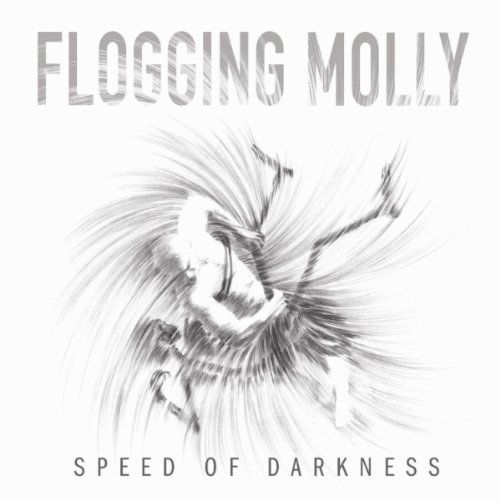
Dave King, the frontman to Flogging Molly, is going to turn 50 in two months, and the band’s debut studio album is barely a decade old. King has a long musical history pre-dating Swagger, playing in various bands that included former members of Motörhead and Krokus, and he was actively involved in writing and performing Irish folk music by at least 1993. So while Speed of Darkness might only be the band’s fifth studio album, spanning only six years, it’s something of a late career effort.
Float disappointed me. It had nothing of the immediate appeal of Swagger, Drunken Lullabies, or Within a Mile of Home. Though the music and lyrics might have been appealing after a few reflective listens, I never felt compelled to put in the effort. What I liked most about the band was missing and I frankly didn’t have the time in 2008 to dig deeper. The thought immediately came to me that their first three albums had been the product of a lifetime of creative creations that had simply not been fully developed into recorded songs, and that on Float, in contrast, for the first time Flogging Molly had to produce new material from scratch. Given King’s age, perhaps the four years between Within a Mile of Home and Float just weren’t sufficient to really develop something noteworthy.
But again, 2008 was an off year for me in general. Speed of Darkness I am at more liberty to assess.
Speed of Darkness
What I noticed immediately was a more explosive sound. The opening song kicks off with a sort of energy that I never picked up on passively listening to Float. It definitely grabbed my attention. But while a part of me was excited by this return, the actual content of the song had me worried. It seemed a bit too heavy for its own good. That the song is meant to be a little more dark than usual might be implied by its title, but really, what Irish folk song isn’t dark? In a style so permeated by a morbid sense of humor, the song’s serious tone just felt shallow. The folk takes second stage to the punk/hard rock, and the sort of anger King expresses is neither particularly poignant nor encased in music sufficiently care-free to drive its point home.
It lacked the means by which Irish folk conveys such a heightened feeling of sincerity. I didn’t feel like whatever King had to say got through. This sort of shallowness, not of thought necessarily, but at least of its conveyance, would be my watchword for the rest of the album.
Revolution
I didn’t have to look far. Revolution probably wasn’t the best choice of songs to follow up Speed of Darkness, because it only served to confirm my suspicions. The whole power to the proletariat theme permeating the album is presented so narrowly that it seems a century distant from reality, never mind that the issues they wish to confront are quite active. This song attempts to tap into sentiments that may have stood strong in the industrial age, but I question whether their target audience, in spite of being able to relate to the problems King addresses, really view their hardships in terms of a simple class struggle. Americans aren’t starving in the streets of Detroit, reading Marx, and forming up political discussion groups. Times are tough, but the issues manifest elsewhere, and “I lost my job, it’s time for a revolution,” is an absurdly shallow (if anything counterrevolutionary) solution to modern concerns.
I’m not picking sides or calling Flogging Molly out on anything, I’m just saying that the lyrical theme which appears on Revolution and continues to surface throughout the album isn’t nearly so inspiring as they would like it to be, and as, given another year of brainstorming before entering the studio, I think they could have made it.
Hand in hand, the music is a bore.
The Power’s Out
But my negative remarks take precedence only because their previous albums were so good and because they seem to be trying so hard. Speed of Darkness is not a dead weight; it’s a mish-mash. That initial impression on the opening song–that feeling that something of their old energy was back–was not a complete illusion. The Power’s Out is at least one song entirely on par with their old material. The sort of shallowness I sense in the album’s overarching message is entirely forgiven when given to lyrics and music that are effectively moving. What I hear in this song that Speed of Darkness and Revolution lack is earnest conviction. This is the sort of song where you can feel King’s passion. He’s speaking from the heart, not just regurgitating rhetoric, and the whole band seems to feed off of it. The lines are better composed, the music better written, the delivery more convincing… There’s a central spark igniting their real talent.
A Prayer for Me in Silence
And while I think it safe to call Speed of Darkness their most rock-oriented album to date, snubbing the folk side of their sound far more than I would have liked, there are a number of nice little acoustic numbers filling the gaps that serve well to warm an otherwise bleak collection of songs.
Speed of Darkness is one of those textbook average albums. It’s never “bad” but frequently bores, pays ample homage to the generic, struggles lyrically to live up to its own standards, but does occasionally break into something above the bar. As I said, Dave King is about to turn 50, and to call it a disappointment would overlook the fact that he has a long, successful career behind him. It can be hard to accept this, given that they’ve only released five albums, but in context it’s perhaps unfair to even compare this to the likes of Swagger. I mean no one says of a new Iron Maiden album “It’s got nothing on Number of the Beast,” or refuses to enjoy it on those grounds. There comes a certain point in an artist’s career where average becomes appreciable, and you have to respect him for at least trying to keep it real.
But this is a band, not a one-man project, and furthermore I have no insight into King’s state of mind. If he still feels like his musical peak has yet to come and he has something to prove, and the rest of the band is with him, then I challenge him to do better. If they’re just out there having fun and aren’t trying to surpass their finer hours, then Speed of Darkness is a respectable work. Just nothing special.
Recently, I’ve been reading Clinton Heylin’s history of punk rock, Babylon’s Burning: From Punk To Grunge. Not surprisingly, one of the main characters in this book is John Lydon (a.k.a. Johnny Rotten). Along with detailing Lydon’s time as the lead singer for the Sex Pistols, the book also examines Lydon’s subsequent career as the frontman for Public Image, Ltd. The book also inspired me to track down and listen to one of PIL’s earliest efforts, a song that was originally called Death Disco (though it was also released under the name Swan Lake for reasons that become obvious once you listen to the song).
Death Disco was written after and in response to the death of Lydon’s mother. Though the song is now over 30 years old, it remains a powerful and cathartic cry of pain and loss.
As an added bonus, here’s two interviews with Lydon, one from the late 70s that was recorded shortly before he formed Public Image, Ltd. (and in which he looks so incredibly young and, dare I say it, rather adorable in his bratty way) and one from 2007 in which he discusses the meaning of life.


 Through the Shattered Lens