Decade of last.fm scrobbling countdown:
46. Agalloch (653 plays)
Top track (147 plays): Odal (Demo), from The End Records Sampler: At the End of Infinity [Echoes & Thoughts of Wonder] (2002)
Featured track: Limbs, from Ashes Against the Grain (2006)
Throughout the first decade of this century, Agalloch stood at the forefront of some of the most progressive movements in metal. They were the product of a new generation of musicians exceptionally well informed on musical trends happening outside of their own genre. Citing such diverse influences as Katatonia, Ulver, and Godspeed You! Black Emperor, they endowed their first major release, Pale Folklore in 1999, with an entirely unique sound. Bleak neofolk guitar and piano merged with black metal as the two most dominant styles to paint a beautiful and desolate snowy landscape that demands the listener’s full attention from start to finish. The folk felt, to me at least, just as influenced by neofolk artists far beyond the metal spectrum like Current 93 and Death in June as by Ulver’s Kveldssanger.
The Mantle in 2002 took this diversity a step further, incorporating post-rock proper as a central structural theme for most of the album. But it was Ashes Against the Grain, in 2006, that really solidified their place as one of the most significant metal bands of the era. It got back to the heavier influences that The Mantle had left behind, offering a seamless fusion of folk, post-rock, and metal that would inspire dozens of bands in the years to follow. As a band first born of black metal, their developed sound helped pave the way for a new era in experimental bm that broke the restraints of the 1990s. These restraints, of course, had long been shattered by Ulver, with Enslaved and ex-Emperor frontman Ihsahn following close behind, but these artists’ credentials as legendary musicians were well established while formulaic black metal was still the norm. Agalloch, alongside Alcest, appeared to me as the next generation, born into a much broader gene pool of music and taking full advantage of their situations. As the seven years since Ashes Against the Grain have shown, progressive and post-black metal was the new wave–and perhaps one of the most outstanding waves in the history of metal in general. I can’t tell you whether Agalloch directly influenced the bands that followed them or not, but their open-minded ability to appreciate black metal for its unique sensory qualities without giving in to the corpse-paint drenched exclusiveness of its accompanying culture drastically expanded the genre’s exposure.
I would say today that Pale Folklore is my favorite Agalloch album, though Ashes struck me the most when I first heard it. The version of the song I’ve played the most in Agalloch’s library though does not appear on any of their albums. It was the first track I ever heard by the band–an edited pre-release version of Odal from The Mantle that The End Records had featured on a free sampler cd. The song is not appreciably different from its studio album variant, but it cuts out sizable chunks of the intro and outro to create a much more repeatable track. Odal immediately struck me as deliciously similar in atmosphere to Matt Uelmen’s Tristram from the Diablo series, and I am often inclined to put the two on repeat together. I’ll leave you with a video of the finalized cd version of the song:
Decade of last.fm scrobbling countdown:
48. Opeth (640 plays)
Top track (26 plays): The Devil’s Orchard, from Heritage (2011)
When I saw Opeth was coming up next, I got pretty excited about what the top track would be. Would my really oldschool Opeth credentials shine with a song like The Twilight is My Robe or Advent topping the charts, or could nothing hope to match Demon of the Fall? A Heritage track was the last thing I ever expected. It’s easy to forget, in the onslaught of relatively poor reviews, how much I actually enjoyed that album when it came out. Oh, it wasn’t love at first listen, but for me it was a breath of fresh air after years of diminishing faith in Akerfeldt’s song-writing ability. Opeth was one of the first metal bands I ever listened to, and, nostalgia aside, I really do think their first three albums were by far their best. A void, beginning subtly with Still Life and expanding more drastically after Blackwater Park, had grown between my personal tastes and the direction Akerfeldt was steering the band. This coupled with what I perceived as an overinflated ego to completely erode my interest in the band for a long time. Ghost Reveries and Watershed only managed four and three listens respectively before I yawned and moved on.
I am not much of a progressive rock fan, but with Heritage I did start to feel like Akerfeldt was coming back to earth and keeping it real again. I don’t know about his whole “I’m done with metal” mentality; it seems to me like he’s exactly where he needs to be to start composing the sort of metal I can enjoy again. But even if prog rock is all that’s going to appear under the Opeth moniker for a long time to come, his decision to tone things down has successfully resurrected my interest. The Devil’s Orchard is my most played Opeth song because these charts do not begin until 2003; a few years earlier and the statistics would reflect something quite different. But suffice to say I do think this is the best Opeth album since Blackwater Park.
I’ll leave you with a classic Opeth track of the sort that made these guys, for a pre-last.fm period of four years or so, my favorite band in the world:
This is embarrassing. Here it is 2013, and my 2012 collection consists of only 38 albums, the majority of which I’ve listened to twice at best. I never heard the new Neurosis. I never heard the new High On Fire. Hell, forget metal, I didn’t even listen to the new Shins and Godspeed albums. I can’t offer an experienced, informed opinion now the way I could at the end of 2011. But I’ve been posting up some sort of album of the year list somewhere for over a decade now, and I’ll be damned if I let the fact that I didn’t really listen to any albums in 2012 stand in my way.
Or something like that. Here we go.
10. Dawnbringer – Into the Lair of the Sun God (track: IV)
It’s not often I get into a standard heavy metal album, but Dawnbringer did everything right in 2012. The songs rock along with a bit of an Iron Maiden drive to them, the power and black metal tendencies are tastefully incorporated to enhance the drive without altering the vibe, and the vocals know their limit. If it sounds a bit generic, don’t let that fool you. Not too many bands can pull this off without giving into the temptation to be more “epic” or “extreme” than they really are. Dawnbringer pull it off without the flare–without ever going over the top–and their accessibility places Into the Lair of the Sun God among the best of the year.
9. Korpiklaani – Manala
I wouldn’t say Hittavainen was the heart and soul of Korpiklaani, but he was an essential component. The band would be at a total loss without Jonne Järvelä, and their consistent line-up over the years has contributed enormously to their success, but Juho Kauppinen’s accordion aside, the folk instrumentation was almost all a product of Hittavainen. When he left due to health issues after Ukon Wacka in 2011, I feared it was the end of an era. Korpiklaani never missed a beat recovering from the loss in 2012. In addition to picking up the highly qualified Tuomas Rounakari as their new violinist, Jonne Järvelä stepped up to fill in the void by recording the mandolin, flute, and whistle tracks. I think I can hear some nuance differences between his and Hittavainen’s playing style, but it might just as well be in my head; Manala sounds like a Korpiklaani album through and through. I don’t like it as much as Karkelo and Ukon Wacka–it’s a bit heavier, too much so for my taste in folk metal–but in the greater sphere of Korpiklaani’s discography it is certainly composed and performed to par.
8. Ensiferum – Unsung Heroes
Ensiferum took a lot of slack for this album. I think a lot of people wanted to hear the over-the-top bombast that worked so effectively on Victory Songs, but in my opinion that was already growing stale on From Afar. Unsung Heroes is down to earth in a way they haven’t been since the 2001 self-titled debut, and I love it. They’re heading in exactly the direction I’d hoped for, and with the exception of the ugly mistake that is the album’s 17 minute closing track, Power Proof Passion, Unsung Heroes does not sound at all like a band past their prime. If they continue to push in the direction of tracks like Pohjola, they’re in position to trump Victory Songs and follow up Unsung Heroes with their best album to date.
7. Wodensthrone – Curse
I wish I’d taken the time to review this album earlier in the year, because I haven’t listened to it since the summer, and their flavor of epic black metal isn’t the sort of thing you can fully absorb in a quick last-minute listen. This is an album that can move nowhere but up in my charts over the months to follow, but for the time being I am content to place it somewhere in the middle. While busting out black metal that’s just as grim and unforgiving as the 1990s greats, Wodensthrone manage to infuse a tremendous amount of emotion that speaks of something beautiful hidden beneath the chaos. It’s buried a bit deeper than say, Femundsmarka by Waldgeflüster last year, but the feeling is similar.
6. Vattnet Viskar – Vattnet Viskar EP (song: Weakness)
If someone were to ask me what black metal sounded like in 2012, I might hand them this EP. It’s kind of cool getting to say that, because one of their members is a regular at the music forum where I get most of my recommendations. I wouldn’t have guessed back in March that they would be signed to Century Media by the end of the year, but I’m stoked to hear it. The whole notion of post-black metal has taken on a number of different flavors in these formative years, and Vattnet Viskar expand the genre by incorporating a lot of the all-encompassing guitar tones I associate with post-rock acts like Mono and This Will Destroy You. Top-notch stuff that’s really at the forefront of an emergent genre I’ve been anticipating for years.
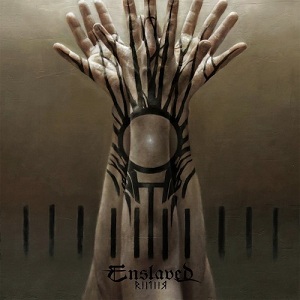
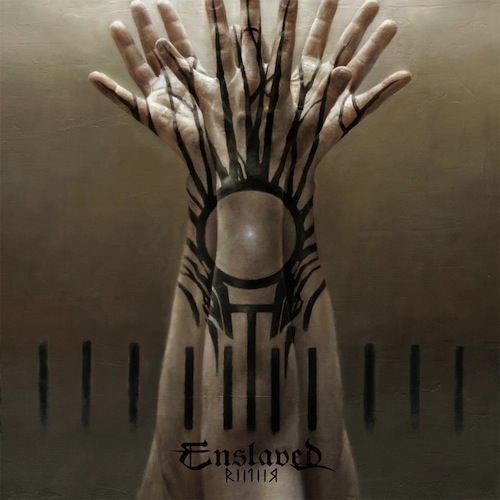
5. Enslaved – RIITIIR
How Enslaved have aged so well is beyond me, but their last three albums have been their best three albums, and 22 years after the formation of this band they remain at the forefront of metal. Their viking-infused progressive black sound of late has done as much to shape the future of the genre as any new-found participant in the current popular trend towards black metal that has been taking shape over the past four years. RIITIIR is another outstanding output by the one classic early 90s black metal band that has managed to weather the ages unscathed.
4. Blut aus Nord – 777: Cosmosophy
The review I wrote of 777: Cosmosophy last month was one of the most thorough I’ve done all year, and there is nothing I care to say about the album that I haven’t said already. It is outstanding in its own right, but it does not feel like an entirely complete finale to their already classic 777 series. The first and third tracks, breathtaking though they may be, don’t seem to sufficiently progress from where the second album in the trilogy, The Desanctification, left off. The second track moreover, Epitome XV, is the weakest link on all three albums. The last two tracks compensate greatly by concluding in proper form, and I certainly think Cosmosophy is excellent. It can only be said to have “shortcomings” in so far as I expected it to be the best album of 2012. Fourth place isn’t too bad.
3. Torche – Harmonicraft (song: Reverse Inverted)
Calling Torche metal at this point is really pushing the limits of the definition. Since their early days writing crushing stoner anthems, they have evolved into a bizarre amalgamation equal parts metal and pop. But it’s not just the uniqueness of the happy, smiley-face hammers Harmonicraft beats you down with that makes it so appealing. Torche have become by all rights the heirs of the 1990s. These guys have more in common with the Smashing Pumpkins than they do with any of their stoner metal contemporaries. This is the sort of thing that 15 years ago we could have just labeled “alternative rock” and gone on enjoying without any need for classifications. While forging an entirely unique, original sound of their own, Torche have managed to capture a song-writing ethos that has been dead for a generation, and Harmonicraft is the cleanest breath of fresh air I’ve inhaled in years.
2. Krallice – Years Past Matter (song: Track 2)
Krallice is my favorite band making music today, and I dare say last year’s Diotoma might be my favorite album by any band ever. Seldom if ever has a band followed up such a masterpiece with something of equal worth, and I was shocked that Krallice had the energy left to release anything at all this year. Years Past Matter is an outstanding post-black metal outing in the vein of Dimensional Bleedthrough. The tracks took longer than usual to grow on me, and usual for Krallice entails dozens of listens, but the payout is always worth the time, and the slow process of appreciation is enjoyable in its own right. Mick Barr and Colin Marston’s dual tremolo is the grand ultimate ear-candy, and so long as they never compromise their commitment to that they will probably remain my favorite band. (Track 3 is my favorite song on Years Past Matter so far, but it was not available on youtube. Track 2 is a worthy substitute.)
1. Panopticon – Kentucky (song: Killing the Giants as They Sleep)
The fact that I didn’t review this album is almost embarrassing, because much like Aesthethica by Liturgy last year, it is an album that absolutely demands a thorough investigation to properly appreciate. I can’t easily tell you why I placed it this high, because frankly I don’t know yet myself. When I first read that a Louisville, Kentucky-based band called Panopticon had released a bluegrass black metal album, all sorts of thoughts ran through my head. Kentucky sounds like none of them. Do ignore the cliche “blackgrass” labels; while Austin Lunn listened to plenty of bluegrass in the process of recording this, he does not actually incorporate the genre as we might think of it. Instead he interweaves traditional Appalachian folk–not bluegrass particularly–as distinct tracks separated from the black metal. What folk does emerge in the bm is more akin to Waylander, and certainly far from “bluegrass”. That’s not a bad thing, just an–I think–important distinction to be made, because otherwise we might be left searching for genre stereotypes which simply aren’t present here. What Kentucky really accomplishes is a merging of a musical themes which perfectly juxtapose a beautiful landscape and a totally destitute human condition. The first half of “Killing the Giants as They Sleep” for instance generates landscape imagery with a degree of effectiveness similar to Femundsmarka by Waldgeflüster. (Have I referenced that album twice now? I think it’s time I paid it another visit.). You take a look around, take a deep breath, and really appreciate the natural beauty that surrounds you. About half way through the dialogue begins, and the explosion around 9:15 serves to draw you fully into the atrocities taking place here, both in the exploitation of workers and the desecration of the environment.
I don’t think Austin Lunn intended to make any sort of political statement here, but in succeeding so comprehensively to depict elements of Appalachia and its outskirts, he effectively did so. At a time when the working class of America is inexplicably becoming staunch supporters of big capital, this album hits a bulls-eye on all of the thoughts that have been forefront on my mind of late. His bleak renditions of union anthems like “Which Side Are You On?”, recently covered with such optimism by the likes of Dropkick Murphys, strike me as a painfully realistic reminder that the entire notion of equality as an American ideal is becoming antiquated.
But that might be seen as secondary. Wherever our ideas may lead us, Kentucky is the sort of album that inclines us to form them. It’s an album that makes me think. Like Aesthethica by Liturgy and Diotima by Krallice last year, it forces me to set aside my mundane daily routines and really engage the human experience. That alone, all other considerations aside, suffices to render it my favorite album of 2012.
Norway’s Enslaved formed as a black metal band in 1991. That means Grutle Kjellson and Ivar Bjørnson have been playing together for at least 21 years. Most–I’d say the vast majority–of bands are pretty washed up by the 20 year mark. But Enslaved is a fluke. An anomaly. They stand on the cutting edge of the metal scene today, and their last three albums have been phenomenal.
Thoughts Like Hammers
Maybe some of it stems from their age. Bjørnson and Kjellson were 13 and 17 respectively when they began releasing demos as Enslaved. It’s hard to imagine a 20+ year old band whose founding members are in their mid-30s, but that’s what you get here: two artists in their creative prime.
RIITIIR’s aptly-named opening track, “Thoughts Like Hammers”, starts out with a bit of incoherent chaos before busting into a crushing viking metal plod that immediately answers any question as to whether RIITIIR is going to follow the same path as Vertebrae and Axioma Ethica Odini. The relatively new viking-prog-black mix they’ve landed on is faultless, and about the only thing they could do wrong is change it. RIITIIR picks up right where Axioma Ethica Odini left off.
It would be kind of odd to speak of post-viking metal when so few bands have defined the original style in the first place. But what makes Enslaved perhaps the best metal band to ever make a late-career venture into the world of progressive rock is their impeccable ability to maintain all of their heavy metal credentials. Kjellson’s growls are some of the most distinct and cutting in the scene, and there can never be any question about the band going soft. The lofty progressive movements are lush with sound in just the sort of way that has made viking metal bands like Enslaved and Týr consistently great throughout the years. Their juxtaposition of uplifting musical sweeps and crushing, dark passages transition flawlessly, with none of the grating clash of styles that you might hear in bands inclined to force the issue.
RIITIIR
As for how RIITIIR matches up to Vertebrae and Axioma Ethica Odini, I think RIITIIR maintains the much needed improvement in production quality that distinguished Axioma from its predecessor. The major riffs and choruses are just as instantly memorable. I think Axioma had perhaps a stronger black metal side to it, but the difference is slight. What I really feel in RIITIIR more than the other two is the consistent drive–a sort of all-embracing power that gives the album no down time to speak of. Even the slowest folk interludes are exceptionally well constructed to fit the context of their songs and maintain a tense, brooding atmosphere.
My immediate impression of RIITIIR is that it’s the best album to date from a band that has at this point thoroughly proven their standing among perhaps the top ten metal bands making music today. I don’t really need to go into exceptional detail on this one; it’s exactly what they did on their last two albums, only even better. Don’t let this year-end contender pass you by.
Do you know how many albums I’ve reviewed in 2012 so far? One. Comparing that to 2011, when I had pumped out well over 40 by this point in the year, you might say I am a bit behind. It was somewhat inevitable this year, with my video game music project taking up the grand bulk of my free time, but it’s not too late to catch up where I can.
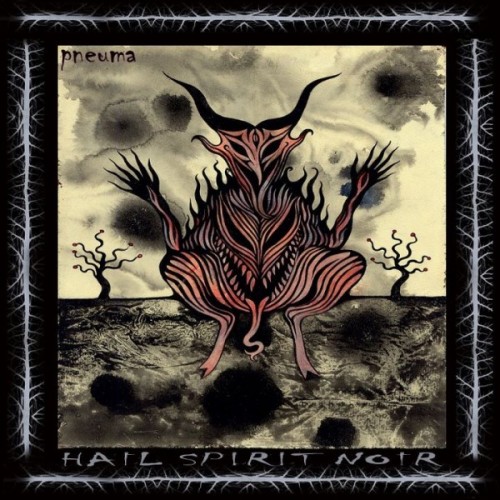
And why not start with the obscure? Hail Spirit Noir is a band from Thessalonika, Greece. The person who introduced me to this album described it as “progressive psychedelic black metal”, which I don’t necessarily agree with but should certainly uh… pique your curiosity.
Mountain of Horror
My apologies for this video. I wanted to include the opening track, and the only copy of it on youtube commits the double idiocy of presenting a fake music video and cutting off the last 30 seconds of the song. While it actually syncs up with the music quite nicely, I have no reason to believe it is anything but a fan project, and it should be duly ignored.
I think there is a general bias among metal fans to label anything black which possesses the slightest traces of the sub-genre. To call Pneuma black metal is a bit of a stretch. The elements of black metal it incorporates are all on the fringe of the genre, and at the end of the day it is far too broad to place any single label on. What you get in “Mountain of Horror” is a combination of that “black and roll” vibe that Peste Noire perfected on Ballade cuntre lo Anemi francor, a heavy dose of 70s prog keyboards, and a progressive black break that falls firmly within the sort of sound Ephel Duath pioneered–more avantgarde than “progressive black” in the sense that recent Enslaved and Ihsahn might call to mind.
Against the Curse, We Dream
And what do you know, another fake music video. Oh well. What you might start to notice as this album progresses is a semblance of stylistic consistency underlining the disorganized madness. Black and roll meets traditional black metal meets psychedelic/70s prog meets avantgarde doodling, mouthful though it may be, is definitely the order of the day.
The Peste Noire vibe is definitely the selling point for me, and in Against the Curse, We Dream it syncs up particularly nicely with the prog synth. The Ephel Duath-esque avantgarde bits leave a lot to be desired, but really, when does avantgarde music ever not leave a lot to be desired? Its presence is at least relatively minimal in the broad range of Pneuma’s sounds. The disorganized nature of the songs is also not particularly problematic, in so far as a standard rock beat sustains to hold the vast majority of it together.
The only thing that kills it a bit for me is the lack of dynamics. From the most break-neck blast beats to the calmest, coolest prog grooves, the album maintains pretty much the exact same level of intensity. It is very much even keel from start to finish. That is more a vice of prog music, which Hail Spirit Noir ultimately choose to place above the metal side of their sound. Much like practically all prog that I have encountered prior to the past ten years, it never opts to overwhelm, feeling relatively dispassionate at the moments where intensity is in highest demand. Consider the staccato break at 5:34 in this video, and how much it could benefit from the level of tension System of a Down applied to similar passages in their early albums. The aggression which follows is somewhat lost to the vibe-killer that the previous passage did not necessarily need to invoke. The avantgarde outro is a disappointing end to a relatively creative song that, enjoyable though it may be, fails to move me to the extent that I feel like it ought to have. This is, of course, to place some unfair stipulations on the band; that the overall atmosphere isn’t what I would have chosen doesn’t mean it fails to capture the vibe Hail Spirit Noir were aiming for.
Haire Pneuma Skoteino
The closing song, Haire Pneuma Skoteino, is by far the most accessible song on the album, and I was pretty surprised by how well I remembered it, having only heard the song one time before, when I first picked up the album half a year ago. I suppose a poppy, catchy outro track is well in keeping with Hail Spirit Noir’s consistent inconsistencies.
At the end of the day, I have mixed feelings about Pneuma. It falls victim to being the first new release I’ve listened to in the better part of a year, and I’m no doubt being a lot more critical than I would have been this time last year, but I just feel like the execution leaves a lot to be desired. On the other hand, it is definitely an impressive and well-informed debut from a band on an obscure label from a country not exactly famous for its metal scene, and the shortcomings I hear suggest I am instinctively holding them to a much higher standard than I would other bands with similar backgrounds. Pneuma isn’t an album I’m likely to revisit, but it has convinced me that this band is a world of potential. I’ll be keeping an eye out for their future releases.
October has always been my favorite month. It marks the beginning of a seasonal reclamation of man by the world, in which civilization’s mask of sensibility begins to slip away. Tasteless architectural symbols of control over nature digress to their more appropriate forms, as frail refuge against forces beyond our control or comprehension. It is, to misappropriate Agalloch, “a celebration for the death of man… …and the great cold death of the Earth.”
Last year I posted a six part series on some of my favorite black metal, folk metal, and related genres for the season. I had intended to do something similar this year, but time just did not allow for it. I never got around to coming up with a central concept on which to focus. Perhaps it is no coincidence that the two bands I have listened to the most this month, Opeth and Summoning, both defy all standards of classification.
I would like to showcase both, but I can’t imagine doing so properly without embarking on a project way beyond the scope of my time and desire to write at the moment. So I will keep this short and sweet, featuring only Opeth’s Orchid (1995) and Summoning’s Let Mortal Heroes Sing Your Fame (2001), and perhaps in the process still introduce you to some amazing music you had not heard before.
Opeth – The Apostle in Triumph
Everyone has heard Opeth, right? Their fame is fairly unprecedented among metal bands that are actually worth a damn. Yet, out of touch with what is and is not popular today as I am, I still get the impression that what I think of as Opeth is just as relatively obscure as it had been when I first heard them well over a decade ago.
Opeth as a popular band, in fact, is entirely foreign to me. Their first album to make the US charts, Damnation, came out right around the time I stopped listening to them altogether, and long after my interest had begun to wane. I was introduced to Opeth, like everyone around the turn of the century, via Demon of the Fall. My Arms Your Hearse was one of the most emotionally charged and breathtaking albums I’d ever heard. At the time, if you wanted to hear more, you had to look backwards, to Orchid and Morningrise, both of which were very different beasts. With them, if no one reminded you of the distortion and growled vocals, you might forget, amidst Akerfeldt’s soft, subtle lamentations, that you were listening to metal at all.
It took both a long time to grow on me. It’s not that they were inaccessible, but that peculiar teenage ability to focus in on a single masterpiece with no appreciation whatsoever for its surroundings had hold of me. There I was covering My Arms Your Hearse from start to finish on my new guitar (sure wish I could still do so now), and I’d listened to Morningrise maybe five times. Orchid never broke through the cellophane. I finally turned to them just barely in time to soak them up before history left them in the dust, a last minute love affair I was conscious of at the time. They ended up becoming my two favorite Opeth albums, and still are.
Even though My Arms Your Hearse was, alongside Blind Guardian’s Nightfall in Middle-Earth, easily the most influential album in my life, Orchid and Morningrise are the two I look back on most nostalgically, and their melancholy beauty always reverberates the sensation.
Opeth – The Twilight is My Robe
So maybe Orchid isn’t really Opeth’s best album. Perhaps I am biased beyond reconciliation. But at any rate, my obsession with it certainly isn’t some subconscious desire to show I am an “old school” fan–the sort of accusation I tend to see on those rare occasions that the album is mentioned at all. Whether you find my placement of it at the top of Akerfeldt’s discography unjust or not, I encourage you to give The Apostle in Triumph and The Twilight is My Robe long hard listens. Agalloch being a decidedly winter-oriented band, I have experienced no music which captures the melancholy side of the autumnal season better than this.
Summoning – A New Power is Rising
I obsessed over The Hobbit as a child, the Lord of the Rings as a teen, and The Silmarillion in my earliest adult years. J.R.R. Tolkien pretty well haunted most of the formative years of my life, and I am forever indebted to him. A few months ago I picked up one of his books for the first time in perhaps a decade, committed to reading them all, but time simply did not allow for it. As with all undertakings though, it influenced my taste in music for the time at hand. I spent much of the summer re-exploring Summoning–a band I’d never actually encountered until Oath Bound in 2006. Thus they were readily at hand at the start of October, and since then they’ve comprised over half of everything I have listened to.
I dare say no single author has had more impact on music than Tolkien, and while I will always regard Nightfall in Middle-Earth as the greatest relevant triumph, Summoning’s discography is a close second. The one band I know of which has taken Tolkien as their lyrical and musical muse pretty much exclusively, they have forged an entirely new style of music over the years that captures that feeling I always got reading him to perfection.
Summoning – South Away
Summoning emerged from black metal, but from the very beginning they stood apart. By Let Mortal Heroes Sing Your Fame in 2001, my favorite album of theirs, this connection had dwindled to little more than the vocals and some tremolo guitar. The constant use of keyboards (often set to replicate brass) and the heavily reverberated, slow drumming are what characterize them best, along with frequent spoken vocal loops.
Perhaps they intend to sound fairly sinister, with lyrics focused more often than not on the darker forces of Tolkien’s tales, but the effect for me is nothing of the sort. The drums paint a vast, diverse landscape of mountains, forests, rivers and plains that are entirely neutral–dangerous to be certain, but more enticing than aversive. They beckon you out to explore the unknown, steeped in mystery–a fantasy world which is here Middle-Earth, but could just as soon be your own back yard on an autumn day, when the changes at hand call on you to leave humanity behind and wander off into the amoral wilderness.
Summoning – Runes of Power
I love black metal, horror, and everything of the sort, but I think the word “neutral” best describes what I have been tapping into this Halloween season. No real glorification of evil for its own sake, nor any embrace of bygone cultures and values here. Orchid and Let Mortal Heroes Sing Your Fame both tap into the individual’s relation to the world absent civilization’s presumptions and impositions–to the mystery of nature and the manifold possibilities within it which mundane daily life denies–be the experience melancholy or thrilling.



 Through the Shattered Lens