4 Shots From 4 Films: Special Veronica Lake Edition


4 Or More Shots From 4 Or More Films is just what it says it is, 4 shots from 4 of our favorite films. As opposed to the reviews and recaps that we usually post, 4 Shots From 4 Films lets the visuals do the talking!

Today, we celebrate the birth of one of my favorite Golden Age actresses, Veronica Lake!  It’s time for….

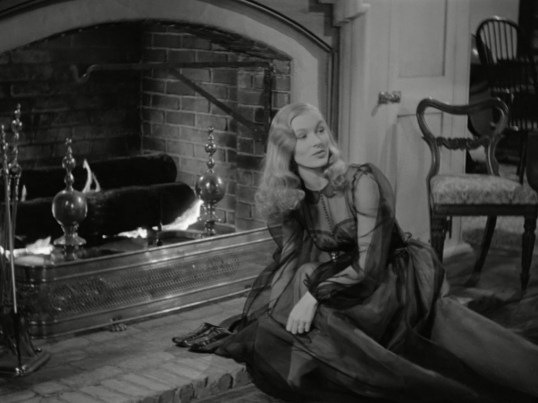
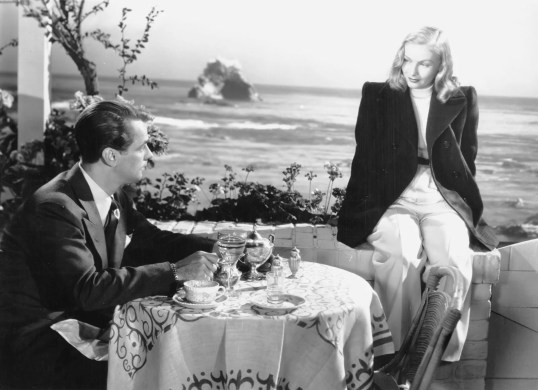
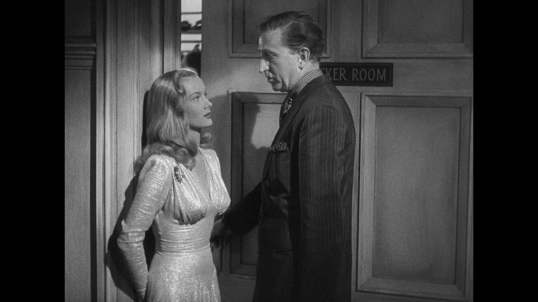
4 Shots From 4 Veronica Lake Films

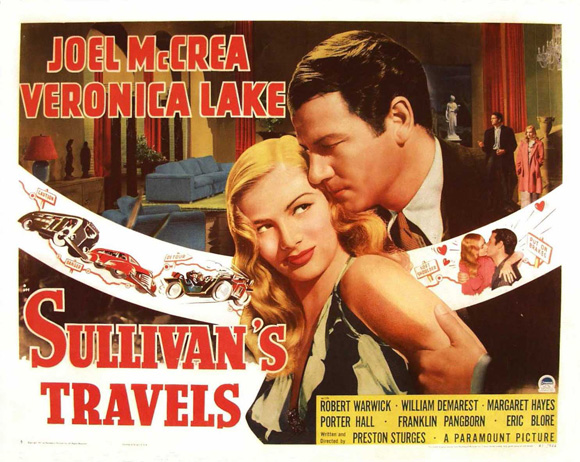
Sullivan’s Travels (1941, dir by Preston Sturges, DP: John Seitz)

This Gun For Hire (1942, dir by Frank Tuttle, DP: John Seitz)

I Married A Witch (1942, dir by Rene Clair, DP: Ted Tetzlaff)

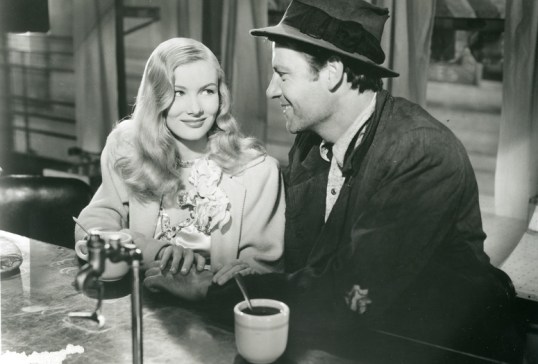
The Blue Dahlia (1946, dir George Marshall, DP: Lionel Lindon)


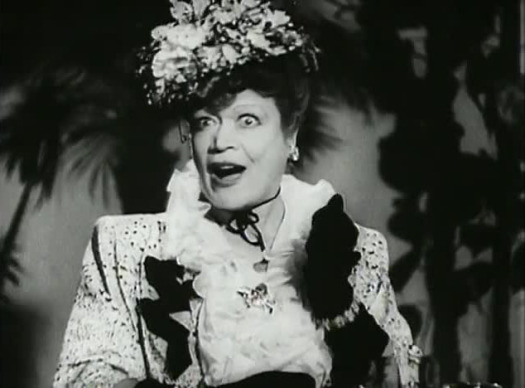
Familiar Faces #3: Esther Howard, Grand Dame of Film Noir


gary loggins's avatarcracked rear viewer

Esther Howard (1892-1965) graced the screen in over 100 appearances, but it’s her work in the shadowy world of film noir for which she’s best remembered. A deft comedienne, Esther was also a member in good standing of Preston Sturges’ stock company, cast in seven of his films. Her matronly looks and acting talent allowed her to play a rich, haughty dowager or drunken old floozy with equal aplomb. Esther may not have been a big star, but her presence gave a lift to any movie she was in, big or small.

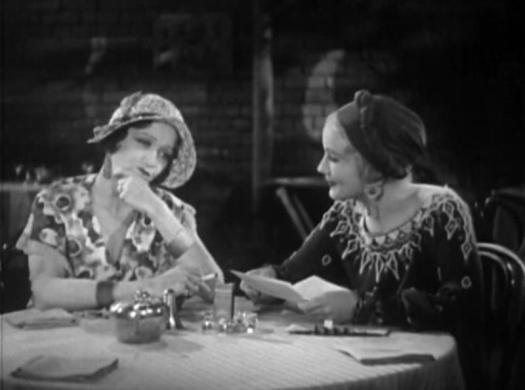
Esther in 1931’s “The Vice Squad” (w/Judith Wood)

She was already an established stage actress when she entered movies in 1930. Talkies were all the rage, and Esther began her screen career appearing in Vitaphone shorts opposite the likes of Franklin Pangborn. Her first feature was 1931’s THE VICE SQUAD, a Pre-Code drama starring Kay Francis and Paul Lukas…

View original post 534 more words

Cockeyed Caravan: SULLIVAN’S TRAVELS (Paramount 1941)


gary loggins's avatarcracked rear viewer

sul1

I’m no expert on Preston Sturges, having seen only two of his films, but after viewing SULLIVAN’S TRAVELS I now have a craving to see them all! This swift (and Swiftian) satire on Hollywood stars Joel McCrea as a successful slapstick comedy director yearning to make important, socially conscious films who gets more than he bargained for when he hits the road to discover what human misery and suffering is all about.

John L. “Sully” Sullivan sets his studio bosses on their collective ear when he tells them he wants to film an adaptation of ” O Brother, Where Art Thou?”, a serious novel by ‘Sinclair Beckstein’. The head honcho balks, wanting Sully to do another comedy, but Sully’s not dissuaded, deciding to see what life among the downtrodden is first-hand. He dresses in rags and sets out on his quest, followed by a gaggle of PR flacks in a bus. Somehow he…

View original post 558 more words

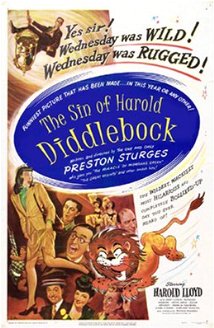
The Fabulous Forties #43: The Sin of Harold Diddlebock (dir by Preston Sturges)


Film1947-TheSinOfHaroldDiddlebock

The 42nd film in Mill Creek’s Fabulous Forties box set was a 1947 comedy called The Sin of Harold Diddlebock.

As a classic film lover, I really wish that The Sin of Harold Diddlebock was better than it actually is.  The film was a collaboration between two of the biggest names in cinematic comedy history: director/writer Preston Sturges and legendary actor Harold Lloyd.  In fact, this was the first film that Sturges directed after leaving the studio system so that he could make bring his unique brand of satire to life without having to deal with interference.  He managed to convince Harold Lloyd to come out of retirement to star in the movie and the film even works as a quasi-sequel to one of Lloyd’s most beloved silent comedies, The Freshman.  In a perfect world, The Sin of Harold Diddlebock would have been a comedy masterpiece that would have perfectly shown off the talents of both men.

Unfortunately, that’s really not the case.  The Sin of Harold Diddlebock is consistently amusing but it’s never quite as funny as you want it to be.  This is one of those films that sounds like it should be hilarious but, when you actually watch it, you see that the film is oddly paced and Lloyd never seems to be fully invested in his role.  I suppose the natural inclination would be to blame this on interference from the notoriously eccentric Howard Hughes, who co-produced the film with Sturges.  After Harold Diddlebock failed at the box office, Hughes withdrew it and spent three years personally reediting the film before re-releasing it under the title Mad Wednesday.  However, by most reports, Hughes wasn’t really the problem.  If Wikipedia is to be believed (and God do I hate starting any sentence with that phrase), Lloyd and Sturges did not have a good working relationship.  As sad as that is, it’s also understandable.  Geniuses rarely work well together.

The Sin of Harold Diddlebock does get off to a good start, seamlessly incorporating the last reel of The Freshmen with footage shot for Harold Diddlebock.  (Somewhat sweetly, the film starts with a title card informing us that the what we are about to see was taken from The Freshman.)  After college freshman Harold Diddlebock scores the winning touchdown in a football game, impressed advertising executive J.E. Waggleberry (Raymond Walburn) offers Harold a job.  However, Harold wants to finish college so Waggleberry tells Harold to look him up in four years.

Four years later, recently graduated Harold goes to Waggleberry for a job and discovers that J.E. Waggleberry has totally forgotten him.  Harold ends up working in the mailroom but is told that, as long as he is ambitious and smart, he will easily move up in the company.  22 years later, Harold is still working in the mailroom.  He is secretly in love with Miss Otis (Frances Ramsden).  Of course, he was also in love with each of Miss Otis’s six older sisters, all of whom worked at the company before the current Miss Otis.  Harold bought an engagement ring when the oldest Otis sister was with company.  Years later, he’s still carrying it with him and dreams of giving it to the current Miss Otis.

However, that might be difficult because Harold has just been fired.  J.E. Waggleberry feels that Harold’s unambitious attitude is setting a bad example.  As severance, Harold is given a watch and $2,946.12.

The normally quiet and reserved Harold reacts to losing his job by doing something very unusual for him.  He goes to a bar and, with the help of a con man (Jimmy Conlin) and a bartender (Edgar Kennedy), he gets drunk.  The bartender even creates a special drink called the Diddlebock.  Harold drinks it and wakes up two days later, wearing a huge cowboy hat and owning a bankrupt circus…

And it only gets stranger from there….

While The Sin of Harold Diddlebock doesn’t quite work, I appreciated the fact that it not only created its own surreal world but that it just kept getting stranger and stranger as the film progressed.  It was Harold Lloyd’s final film and there’s even a scene where he and a lion end up on the edge of a skyscraper that’s almost as good as the famous comedic set pieces from his silent classics.  It’s a pity that the film doesn’t really come together but I’d still recommend seeing it just for history’s sake.
Shattered Politics #6: The Great McGinty (dir by Preston Sturges)


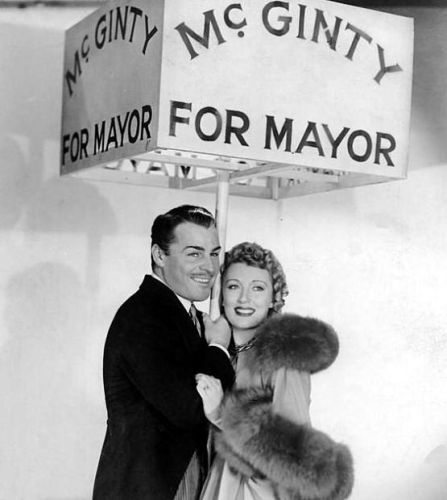
donlevy-angelus-mcginty_opt-1

 “This is the story of two men who met in a banana republic. One of them never did anything dishonest in his life except for one crazy minute. The other never did anything honest in his life except for one crazy minute. They both had to get out of the country.”

— The Great McGinty (1940)

For today’s final entry in Shattered Politics, we take a look at how elections are won north of the Mason-Dixon Line.

The Great McGinty begins in a bar located in an unnamed country in South America.  Tommy Thompson (Louis John Heydt) attempts to shoot himself but is stopped by philosophical bartender Dan McGinty (Brian Donlevy).  Tommy explains that he can never return to the United States because, in one moment of weakness, he stole some money.  McGinty replies that he can never return to the U.S. either.  Why?  “I was the Governor of a state, baby…” McGinty replies.

In flashback, McGinty explains how he came to power.  One day, while standing in a soup line, the homeless McGinty was approached by a local political operative (William Demarest) and offered $2.00 on the condition that he vote for a certain mayoral candidate.  McGinty agrees and then proceeds to vote 37 times.  When McGinty demands $74.00 for his efforts, he’s taken to the headquarters of the Boss (Akim Tamiroff, giving a wonderfully comedic performance).

The Boss is impressed with McGinty and, despite the fact that the two of them are constantly getting into fights with each other, he employs McGinty as a collector.  Eventually, he also arranges for McGinty to be elected alderman and then, running as a reform candidate, mayor.

Along the way, the Boss arranges for McGinty to get married.  McGinty’s wife (Muriel Angelus) originally has little respect for McGinty but, after they marry, she starts to realize that McGinty is not quite as bad as she originally assumed.  Eventually, she’s even impressed enough that she even stops seeing her boyfriend, George (Allyn Joslyn).

Meanwhile, the Boss arranges for McGinty to be elected governor.  However, once McGinty has won the election, he declares that he’s going to run an honest administration.  How does that turn out?  Well, it should be noted that the film opens with McGinty tending bar in South America…

The Great McGinty is a lot of fun and it’s interesting to think that this unapologetically sardonic look at American politics came out just a year after Mr. Smith Goes To Washington.  Imagine if Mr. Smith Goes To Washington had been told from the point of view of Edward Arnold’s Boss Taylor and you can guess what The Great McGinty is like.

If nothing else, The Great McGinty serves as a great reminder that political cynicism existed long before any of us cast our first vote.

http://www.youtube.com/watch?v=Nari4b23l6A