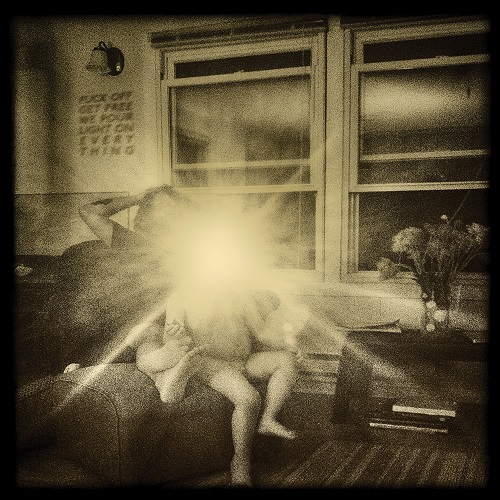
Review: Thee Silver Mt. Zion Memorial Orchestra – Fuck Off Get Free We Pour Light on Everything


I don’t normally step beyond the threshold of metal these days, but I was no stranger to post-rock in the late 90s and 2000s. It and indie were the defining musical genres of the last decade, and I gobbled them up for a time. I lost touch with ex-Godspeed You! Black Emperor legends A Silver Mt. Zion shortly after Horses in the Sky (2005), though “God Bless Our Dead Marines” was my favorite song by them until now.

I guess that wasn’t a very subtle hint of what’s to come. I picked up Efrim Menuck and company’s newest album because of its name. (Not the band name, presently on its fifth incarnation as “Thee Silver Mt. Zion Memorial Orchestra”.) Their seventh LP, released this January, is titled Fuck Off Get Free We Pour Light on Everything. That was just too delicious to pass up.

http://www.youtube.com/watch?v=WfPXY6mtq4U

Thee Silver Mt. Zion Memorial Orchestra – Fuck Off Get Free, from Fuck Off Get Free We Pour Light on Everything

I stumbled into one of the most novel and delightful sounds I had heard since, well, the days of post-rock and indie. It is in effect a merger of the two, utilizing classic GY!BE post-rock instrumentation and techniques in songs with distinctly indie structures and vibes. The opening title track sold me instantly with its warbling, almost unidentifiable instrumentation fused to a rock beat. These are sounds you would expect in some 20-minute build-up from silence, and they sound totally unique in their new environment. I suppose A Silver Mt. Zion had been heading this way for a while, but this is the first time I’ve listened to them that they’ve fully embraced the merger.

It’s not just the sounds themselves that make this song so convincing. The lyrics are paramount, infusing a crafty title with a great deal of depth and rendering the sounds relevant to the message. It shouts a pseudo-cryptic political/social statement with a keen eye we haven’t seen since the 60s and a punk rebel’s spirit, rocked back at the haters with a power to counter Ted Nugent’s whole discography. It begs the establishment and their drones to hate it. Need some harsh, gravely vocals to waggle your cock to? Sorry, voices don’t get more sissy than Efrim’s. They slam “wide white men” where a country star cries “freedom”, and the rejection of coherent grammar and sentence structure from a group totally fluent in English is an affront to the many that view their proper American English with some odd sense of pride. And it has a cuss word in the title! *gasp*

It’s a totally harmless song with a positive message, but I know a lot of people who would feel really insulted by it, and you probably know some too. I could easily see my mother showcasing this song in one of her Sunday School lessons about the corruption of youth, totally oblivious to the fact that it’s pushing her buttons on purpose. It’s what this song is all about: not letting the outdated, self-serving values of the ruling class tone down a message of peace and equality. Fuck off. Get free. We pour light on everything we see.

And how about that drop down into a stoner metal chug at 6:40? Last thing I saw coming, and I love it.

Thee Silver Mt. Zion Memorial Orchestra – What We Loved Was Not Enough, from Fuck Off Get Free We Pour Light on Everything

The album never really drops the slack the whole way through. It’s edgy, it’s angry, it’s indie in spirit, it’s eclectic as hell, and the message is great. There is really no down time at all–not something you might expect from the descendents of post-rock’s favorite son. “Take Away These Early Grave Blues” is especially intense and makes compelling use of a melody that I have to think came from some old country western film. I’m not going to go into detail on any of it; it’s hard to even begin to describe what’s going on with their odd choices of instrumentation. Suffice to say the first 34 minutes of the album pass very quickly, holding my attention all the while. It all leads to a grand finale with “What We Loved Was Not Enough”. This song is mind-blowing. With the sort of lengthy, escalating waltz common to many indie album closing tracks, the build-up is glorious and the lyrics cut deep.

This song uses a lot of excessively dramatic, over-the-top lines that remind me of The Decemberists, only A Silver Mt. Zion’s purpose is not all tongue-in-cheek fun and games. It has an apocalyptic flare, positioning the band at some breaking point where modern society crumbles in self-destruction: We can try to teach people to be open and understanding–to abandon their bigotry and love one another–but this vision will never come to pass. “What we loved was not enough. The day has come when we no longer feel. All our cities gonna burn. All our bridges gonna snap. All our pennies gonna rot. Lightning roll across our tracks. All our children gonna die. And the west will rise again.”

The band has tried their best. They pour light on everything they see. But in the end, it is up to the masses to let go of their pride and embrace a future of peace and love. Efrim knows they won’t, and he calls upon them mockingly: “So goodnight vain children. Tonight is yours. The lights are yours, if you’d just ask for more than poverty and war.”

This is an album for those of us who want to make a difference but know we can’t do shit to dent a machine that has mastered every art of cultivating people’s fears and hatreds. It’s an album to make you feel good about yourself, and to let you know you aren’t alone. I like that. “Kiss it quick and rise again.”

Fuck Off Get Free‘s only shortcoming is that they plugged a seemingly pointless four minute post-finale track after “What We Loved Was Not Enough”. I can easily forgive that.

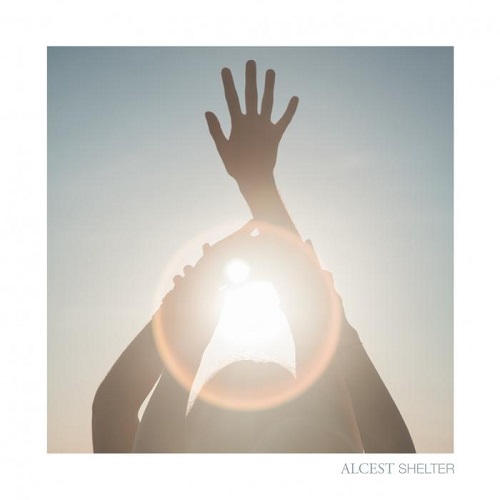
Review: Alcest – Shelter


I have a bad habit of failing to keep up with bands in the years after their big breakthrough albums. As a consequence, I tend to be caught off guard when I find an old band doing something drastically different from their old sound. That is not the case with Alcest. I have eagerly gobbled up everything Neige has thrown out there since Le Secret (2005), and I was well aware ahead of time that Shelter was not going to be a metal album. That did not phase me. Neige’s sound has evolved dramatically over the years, and as early as Souvenirs d’un autre monde (2007) you could not detect a residual shred of the style he presented on Tristesse Hivernale (2001). A dream pop/shoegaze/post-rock album was a reasonable thing to expect given the general direction his music had been going. I clicked play on Shelter fully convinced that I would enjoy it.

Alcest – Wings and Opale, from Shelter

If I was going to have doubts, they might have been about the level of external influence surrounding Neige’s music of late. Was it going to show? Would this not quite sound like Alcest? Neige claimed no knowledge of shoegaze music when he recorded Le Secret and Souvenirs d’un autre monde. I remember his publicized surprise when an early release of Souvenirs‘ title track got plastered with the genre label all over the internet. Since then, Neige has developed quite the fondness for those classic bands to which he was compared. Shelter even features a guest appearance by Neil Halstead of Slowdive. If Shelter was not going to be metal, there was certainly a chance we would hear a lot more of that influence in place of Neige’s self-derived affinity to the sound.

I don’t think that is an issue here at all. I can’t say I have heard much classic dream pop or shoegaze outside of Loveless, but if Neige had continued to boast total ignorance of the genres, I think I would have believed him. Shelter sounds deliciously like Alcest, whether the style is a departure or not. The album opens with the angelic, echoed vocal chant that by Les Voyages de l’Âme had become a staple Alcest sound. For the first minute and thirty seconds, there is nothing to distinguish Shelter from another Alcest black metal album. The instant familiarity is a pleasant relief for any fan that had major doubts. You might still wonder whether he could pull off a full 46 minute album of “soft” Neige without ever using metal to vary the dynamics, but that question dissolves into air a minute and a half in, as the first full track, “Opale”, kicks off. It’s so vibrant that your speculation seems a petty distraction in the face of the musical moment.

Alcest – Voix sereine, from Shelter

This feeling definitely persists through the third track, “La nuit marche avec moi”, and on it Neige’s trending toward post-rock, audible on “Opale”, becomes substantially more apparent. “Voix sereine”, 11 minutes into the album, is the first time things really calm down from a pretty jubilee to get your mind wandering again. It kicks off slow and simple, rather dull really, and I for one had a hard time remaining attentive for the first three minutes. Was this the sort of “down time” I ought to have feared could come with a complete abandonment of metal? Perhaps it is, but 3 minutes of bore could be easily forgiven from most musicians. At the three minute mark, the song transforms into something substantially more palpable, and my second thoughts are largely forgotten. Much to my delight, I do find out that Neige fibbed a bit about the album’s contents. We might not encounter any blast beats or gut-wrenching screams on this album, but he did not forget how to turn on the distortion altogether. As the song gets heavier and substantially more… substantive, the boredom of the build-up fails to hold. It becomes a really great song. On a re-listen, knowing that something fairly aggressive will come of it, the lull is easier to swallow.

Alcest – Délivrance, from Shelter

The next song, “L’éveil des muses”, finds a more interesting starting point, but another slow build-up gives me serious doubts for the first time. What holds post-rock in the moment is the knowledge that something earth-shattering will come of it all. Knowing that “Voix sereine” is likely as heavy as the album is going to get, and without the instant gratification of the opening dream pop tunes, I struggle to give the song 100% of my attention. Track six, “Shelter”, is a much needed return to something more upbeat. It opens with the sort of pitch shifting distortion made famous by My Bloody Valentine, and from start to finish it’s an enjoyable ride. “Away”, the track featuring Neil Halstead on vocals, is a beautiful composition that, I think, would have been a thousand times better with Neige singing. Halstead kind of kills it for me–not because of the quality of his singing but because it sounds totally out of place on an Alcest album.

And then we close with “Délivrance”. The longest track by far at 10 minutes, it carried the weight of my overall opinion of the album. Shelter had so far offered a lot of stellar moments, but at its calmest it dangled dangerously on the edge of boredom. “Délivrance” needed to be a pretty epic piece of post-rock. At 3 minutes, a really classic post-rock guitar kicks off to confirm my hopes–at least to a point. It’s where the song heads from here that really disappoints me. We’re building, and we’re building, and it’s definitely a fun ride, but then right when you expect the song to really cast its shell aside and go all-out…. did it just end? Not a ten minute song after all, “Délivrance” concludes with a three and a half minute toned down outro.

It’s not common for me to speak of a song being too short, but “Délivrance” feels so incomplete to me. I accepted the first 3 minutes because I assumed we were going somewhere. I loved the next 4 because we were going somewhere. But we never really got there. Neige is the guy who made post-black metal a reality in the first place. Granted the full-fledged, conscientious post-rock/black metal cross-overs came later, I guess I expected such a hero of modern metal to aim a bit higher when confronting a fairly traditional post-rock sound. I can try to enjoy “Délivrance” for what it does offer, but I can’t help but think that he failed to see how much further he could have taken it. It’s something that would have sounded appealing in the late 90s but seems incomplete to me today, when post-rock bands are a dime a dozen and competition is a bit more formidable. I can’t quite get over that enough to fully enjoy it.

In the end, I guess you might say Shelter disappoints me. Maybe that’s because I came into it with really high expectations, where a lot of fans might have set the bar low when they found out there would be no black metal element. The first three tracks boosted my expectations all the more by offering a really novel sound that grabbed me and held on. But that dream pop vibe did not last, and the more he got back to sounds you might expect from an Alcest album of old, the more they felt depleted of the old energy rather than infused with a new one. Where the post-rock kick would normally give way to a black metal rockout, here it just fizzes away. Tracks like “Opale” set a precedent for how I wanted the entire album to sound. I got half of that, and half something that just makes me hope he goes back to his roots on the next release.

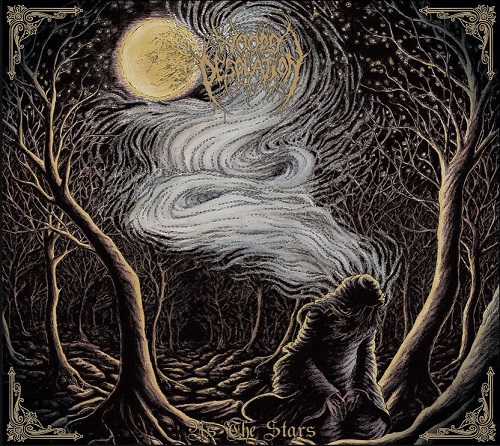
Review: Woods of Desolation – As the Stars


Has it really been two years since I’ve reviewed a new album? The fact came as a bit of surprise, but here it is late October and I’m staring at a massive horde of 2014 releases that I’ve barely cracked. I was a bit more diligent about keeping up with these when I actually took the time to write about them!

I hope to jump back into this business in force, but in case I fail, I’ll not put off the cream of the crop. My album collection is starting to get overrun by “Woods of” X artists; it seems to be the most popular black metal prefix after “Dark” these days. But one among them might be destined to distinguish itself with my #1 album of the year pick.

http://www.youtube.com/watch?v=ePHvl9vFmeo

Woods of Desolation – Unfold, from As the Stars

I spent a great deal of my late teens and early 20s basking in the polarizing glories of post-rock and black metal. The likes of Explosions in the Sky, Sigur Rós, Emperor, and Nokturnal Mortum pumped the residual poison of rock and roll out of my blood and raised me to higher expectations of musical fulfillment. I listened to them not with a care for technical precision or physical skill, but in search of an experience I did not fully understand. Both genres approached this through similar means, but fell short as social stigmata demanded modesty or brutality carry the day. As I grew into an adult, the ice was broken. Neige’s Le Secret whispered its meaning into my ears just as I was old enough to embrace it. He’d broken the Berlin wall of music, and what awaited beyond was strange and beautiful.

Post-black metal, shoegaze metal, “transcendental”, call it what you will. Ten years ago, this album–what the woefully uninformed all-purpose reviewers will write off as a Deafheaven copycat–was not possible. It emerged as many musicians with the same thoughts and greater talent than myself caught glimpse of that beautiful beyond and embraced it. You can name a dozen artists that might have influenced the Australian solo project known as Woods of Desolation, but this brave new genre demands our presence in the here and now. It calls on us to bask in glorious tremolo sweeps triumphant over entwined barricades of light and darkness. “Proud to be living in the echo–the mist of all things combined,” Krallice once wrote, and though they designed to crush it, we retain the luxury to return. When I hear a song this triumphant, that line always comes to me, and the albums that accomplish it are still few and far between. I still love Explosions in the Sky and their ilk, but they offer a different sort of grandeur. Theirs is an experience of climbing to the peak. Songs like “Unfold” allow us to explore the pinnacle at length, from start to finish.

http://www.youtube.com/watch?v=fh2n9kglppQ

Woods of Desolation – Like Falling Leaves, from As the Stars

To start at the summit and know where you stand. That might be post-black metal in a nutshell. What we can do there… that is still an on-going exploration. Where Liturgy and Primordial roar like lions into the jaws of death, “Like Falling Leaves” is something of the opposite. It accepts the end awaiting it. In this track we don’t hear any of the overarching optimism of “Unfold”. Instead, we’re accepting that something dear is gone forever, and we are held fast in that moment of realizing the fact’s finality. The bulk of the album seems in keeping with these two vibes, sometimes heightened, sometimes subdued, sometimes entwined. “Withering Fields” and “And If All the Stars Faded Away” seem peculiarly triumphant and longing simultaneously, while “Ad Infinitum” is pretty enough for a new Alcest album. Nearly every track bears a sufficiently memorable hook to sound familiar by the second or third play through, and at a mere 35 minutes, it does not waste much time dragging out build-up in between.

I don’t know that As the Stars will retain my #1 spot through the end of the year, especially if I start to pump out album reviews in force again. It is nothing remotely on par with my picks for the last three years, and it suffers from muddy production that can’t always do the song writing justice, but I stand by it as my favorite so far. This is one I’ll keep near and dear to me long after the bulk of my 2014 collection has been forgotten.

Song of the Day: The Rains of Castamere (by Sigur Rós)


maxresdefault

In season 3 of HBO’s Game of Thrones we saw a wedding come to a bloody conclusion as one of the five kings who were warring for the Iron Throne in the Seven Kingdoms of Westeros was finally brought low through betrayal and the machinations of the Lannister patriarch. It was an event that will forever be known to fans of both books and the show as “The Red Wedding”.

Tonight, we find ourselves in just the second episode of Season 4 of the show. With his power over the Seven Kingdoms pretty much solidified it was high time for King Joffrey to have his wedding to Margaery Tyrell to help cement the alliance which brought the powerful House Tyrell to the Lannister side of the war.

The wedding has been dubbed “The Purple Wedding” by fans of the books due to the color symbolizing the color of royalty and this wedding one of royal means. So, while season 3 had the shocking “Red Wedding” it looks like the fourth season will have the eventful and memorable “Purple Wedding” to get post-episode tongues wagging.

It is with this wedding event we have our latest “Song of the Day” and it’s another appearance by a very popular song from the show (outside of it’s opening theme song). “The Rains of Castamere” has already made an appearance before when it was sung by the group The National. Tonight’s version was sung by the Icelandic post-rock group Sigur Rós.

The Rains of Castamere

And who are you, the proud lord said,
that I must bow so low?
Only a cat of a different coat,
that’s all the truth I know.
In a coat of gold or a coat of red,
a lion still has claws,
And mine are long and sharp, my lord,
as long and sharp as yours.

And so he spoke, and so he spoke,
that lord of Castamere,
But now the rains weep o’er his hall,
with no one there to hear.
Yes now the rains weep o’er his hall,
and not a soul to hear.

Ten Years #18: Sigur Rós


http://www.youtube.com/watch?v=1dE564e1uz4

Decade of last.fm scrobbling countdown:
18. Sigur Rós (1,358 plays)
Top track (84 plays): Ný Batterí, from Ágætis Byrjun (1999)
Featured track: Hún Jörð, from Von (1997)

I made the claim in my last entry that indie rock was the defining musical style of the past decade. If that came across as a bit of a slap in the face to post-rock, rest assured that I listen to far more of the latter than the former. I don’t feel, however, that post-rock is the sort of style or movement that can be limited to its era of origin. Sure, Mono-esque local bands were fairly abundant in the mid-2000s, but the acts that really rose to stardom under the moniker varied wildly in both sound and artistic attitude. I first heard mention of post-rock in 1999 or 2000 in dual reference to f#a#oo by Godspeed You! Black Emperor and Ágætis Byrjun by Sigur Rós. Flood by Boris, Those Who Tell the Truth Shall Die, Those Who Tell the Truth Shall Live Forever by Explosions in the Sky, Oceanic by Isis, and One Step More and You Die by Mono successively joined the ranks to form a label I found easy to ascribe and virtually impossible to define. Post-rock was and remains a manner of abandoning traditional song structure, sound, lyric, and aesthetic, while retaining standard instrumentation. It can be applied to musicians who predate the term, it can function as a prefix to virtually every established musical genre, and no single property need be present to make it complete. No two bands that have really forged successful careers employing it sound much alike; Sigur Rós’s sound is certainly unique among the ranks.

That being said, I want to talk about this particular feature song and its uniqueness in their discography. Most people who know anything about music have heard a little Sigur Rós by now, and they’ve probably heard the newer material. Von remains an obscurity that was seldom mentioned when Ágætis Byrjun was in its prime of popularity, let alone today. Make no mistake; Ágætis Byrjun blew my mind when I first heard it, and if my last.fm charts had begun two or three years sooner I suspect it would have a thousand more plays to its credit. But my favorite song in the world at the time was “Hún Jörð”. Forget what you know about this band, because you’ll find no peaceful resolution in these seven minutes. Beginning with a static sound that seems to simulate rain, “Hún Jörð” introduces a brief, looping melody so acutely fragile that the listener is instantly drawn to a peak, emotionally wrenched by a vision of something beautiful tottering on the brink of collapse. You want to reach out and hold the melody tight–pull it in–keep it safe–but as the song progresses, that glimmering light tips into the plunge. As the maniacal laughter mocks your helplessness and Jónsi literally screams at the top of his lungs, the song culminates with one of the most gut-wrenching experiences of loss that music is capable of conjuring.

Suffice to say, this is not standard Sigur Rós fare. I used to think the song had been inspired by “Climbing Up the Walls”, but Von was actually fully recorded well before Radiohead released Ok Computer. The vision seems to have been unique to the band, and I did not hear anything approaching it again until the advent of post-black metal a decade later. I don’t know what compelled a band so inclined towards the soft and beautiful to take this child and smash it on the rocks, but by 2013 Von is so thoroughly forgotten that I think most Sigur Rós fans will be in for a shocking surprise.