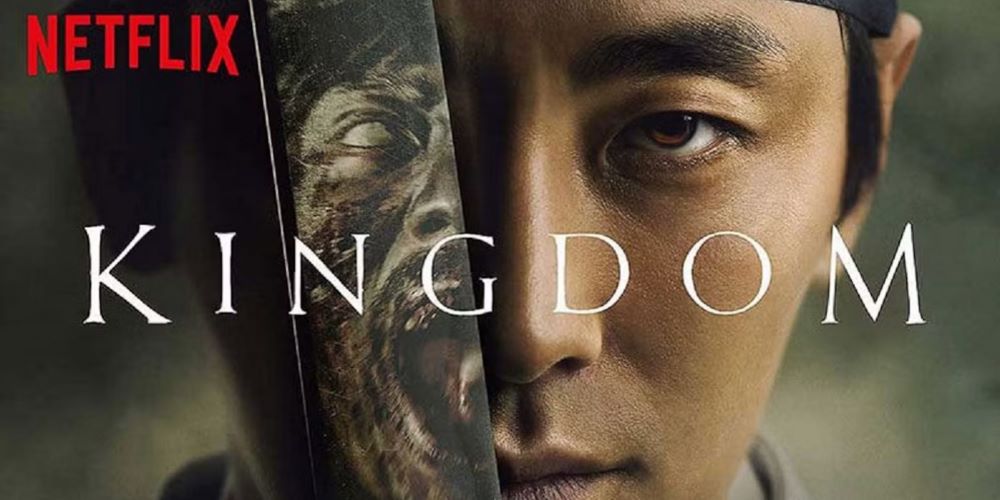
“In a world haunted by both the living and the dead, the true monsters are those who often wear the crown.”
Kingdom debuted on Netflix on January 25, 2019, riding the crest of the global Hallyu wave and building on the international success of Korean horror. The series followed a rich tradition of critically acclaimed films such as Train to Busan, The Host, A Tale of Two Sisters, and notably The Wailing. These works helped elevate South Korean horror on the world stage, blending supernatural terror with intense social and psychological themes that primed Kingdom for widespread interest.
The series was adapted by playwright and writer Kim Eun-hee from her own webtoon The Kingdom of the Gods, which she created alongside artist Yang Kyung-il. This blend of popular Korean cultural imports—webtoons and horror cinema—provided a strong narrative base for the live-action adaptation. Kingdom distinguished itself by marrying the zombie genre with historical drama, setting its epidemic in the Joseon dynasty—a period marked by frequent mass deaths and epidemics. This historical backdrop provided a plausible narrative foundation for a catastrophic outbreak, grounding the series’ supernatural horror in the real dread of past pandemics and social collapse.
The Joseon era was repeatedly struck by deadly outbreaks and famines that devastated communities and challenged social structures. While Kingdom doesn’t focus on specific historical records, the knowledge of these recurring calamities creates a realistic and haunting context that informs the series’ tension—the desperation of starving peasants, societal breakdown, and the government’s inability to maintain order under extreme crisis. This setting allows the zombie outbreak to function not just as a horror element but as a powerful allegory for historical suffering and institutional decay.
Kingdom centers on Crown Prince Lee Chang, who is thrust into a deadly fight against both undead hordes and court conspiracies after the king’s mysterious illness and death are covered up by Queen Consort Cho and her father. Their selfish decision to conceal the truth and use a resurrection plant to keep the king “alive” initiates the plague, demonstrating how corruption and obsession with power directly contribute to the kingdom’s fall. The series effectively exposes the deadly consequences of political deceit and unequal society—while nobles hoard resources and betray their subjects, peasants are left starving and vulnerable. Rival political factions further sabotage any chance of a unified response, showing that human ambition is as perilous as the zombie outbreak itself.
What sets the zombies in Kingdom apart from many earlier depictions is their unique behavior and characteristics, which elevate the horror and intensify the series’ kinetic action scenes. These zombies move swiftly and aggressively, unlike the sluggish, shambling undead common in Western lore. Their speed allows them to attack with terrifying suddenness, creating relentless tension and forcing characters into frantic, dynamic escapes and battles. Additionally, the zombies in Kingdom only awaken at night and seem to revert to dormancy during daylight hours, a nocturnal cycle which adds an eerie rhythm and strategically heightens suspense.
Moreover, the infection’s origin tied to a resurrection plant introduces a quasi-vampiric element, blending horror genres and expanding the mythos beyond traditional zombie tropes. This variation not only refreshes the genre but intensifies stakes for the characters, who must navigate a world where death is no longer certain and danger lurks in shadows. The fast-moving zombies enable spectacularly choreographed action sequences, elevating visceral thrills and maintaining an adrenaline-fueled momentum distinct from more lethargic zombie narratives.
The success of Train to Busan played a crucial role in reinvigorating the zombie genre, both in South Korea and internationally, and this revitalization was a significant advantage that the creators of Kingdom skillfully leveraged. Train to Busan injected new energy into zombie cinema with its frenetic, visceral depiction of zombies—fast, aggressive, and highly reactive—breaking away from the sluggish, shambling archetypes prevalent in older Western iterations. Its influence is evident in how Kingdom’s zombies behave; they move swiftly, attack relentlessly, and operate on a nocturnal cycle, which heightens the horror and intensifies the kinetic action sequences. These zombies are not mere mindless monsters but active participants in the chaos, embodying a new standard of terrifying, kinetic undead.
Furthermore, Train to Busan‘s impact extended beyond mere behavior. It was also a culturally resonant piece that connected deeply with Korean audiences by reflecting recent national trauma—most notably the Sewol Ferry disaster—and embedding social critique within a genre framework. This powerful contextualization allowed the film to function as more than entertainment; it became a symbol of societal failure and resilience. The film’s success created a template for how Korean cinema could adapt and localize the zombie mythos, blending horror with social commentary in a way that was both emotionally impactful and commercially successful globally.
Kingdom’s creators astutely drew on this momentum, adopting the highly kinetic, fast-moving zombie model popularized by Train to Busan, but adding their own spin through the behavior and cycle of their undead. These zombies only rise at night, stay dormant during the day, and exhibit contorted, unpredictable movements—something Yeon Sang-ho himself infused into his zombies through choreographed dance routines, emphasizing their frenetic and unnatural agility. Such innovations keep the horror fresh, heighten the visceral excitement of action scenes, and differentiate Kingdom from earlier zombie fare, making its undead both terrifying and uniquely emblematic of Korean horror’s modern renaissance.
This evolution of zombie behavior—fueled by Train to Busan’s successful reinvention—enabled Kingdom to stand out in an increasingly saturated genre. It seized upon the momentum of recent Korean horror cinema, using the distinct movement and cycle of its undead to heighten suspense and deliver a new level of kinetic energy. Through this approach, the series not only paid homage to the genre’s Western roots but also created a uniquely Korean expression of zombie horror that captured global attention, cementing Korea’s place at the forefront of contemporary zombie filmmaking.
Despite its many strengths, Kingdom is not without imperfections. The first season, which premiered on January 25, 2019, unfolds unevenly, at times slowed by a deliberate pacing that prioritizes intricate political set-up and exposition over constant action. This emphasis on explanatory dialogue—essential for unfamiliar viewers of Joseon society and its complex political dynamics—sometimes weighs down character development. Characters often act as instruments for delivering background information rather than revealing themselves naturally through interaction, which can lessen emotional engagement early on. Key information about the outbreak’s origins, political rivalries, and the resurrection plant’s properties is frequently conveyed through heavy-handed dialogue rather than action or subtlety, limiting moments of tension and organic story progression.
The second season, released on March 13, 2020, builds on the first by balancing its horror and dramatics more effectively. Stunning cinematography, immersive production design, and committed performances—from Ju Ji-hoon’s strong portrayal of Lee Chang to Bae Doona’s soulful Seo-bi—deepen the emotional core. More nuanced character work and escalating stakes make the political machinations and zombie horror increasingly compelling. The zombies themselves, with their terrifying speed and mysterious biology, deliver some of the most memorable and intense action scenes in contemporary zombie media.
Adding to the lore and depth of the series is Kingdom: Ashin of the North, a special feature-length episode released on July 23, 2021. This episode acts as a prequel and sidequel to the first two seasons, exploring the backstory of the mysterious character Ashin, played by Jun Ji-hyun. It reveals the origins of the resurrection plant and how it ties into the events that drive the main narrative forward. This special enriches the overarching storyline by providing critical context for the outbreak and weaving a deeper understanding of the motivations behind some of the series’ most enigmatic characters, strengthening the ties within the Kingdom saga as a whole.
Kingdom is a series that skillfully blends the intensity of period drama with the thrills of zombie horror. It offers complex political intrigue, rich historical atmosphere, and pulse-pounding suspense wrapped in strong performances and impressive production values. As such, it comes highly recommended for viewers who enjoy either genre—or both—providing a fresh and compelling experience that stands out within contemporary television drama and horror.

 Through the Shattered Lens