Horror Film Review: It! The Terror From Beyond Space (dir by Edward L. Cahn)


“Another name for Mars is …. DEATH!”

The 1958 sci-fi/horror hybrid, It!  The Terror From Beyond Space, opens with a NASA press conference.  The assembled reporters are reminded that, earlier in the year, America’s first manned mission to Mars was presumed to have been lost.  However, a second mission was sent to Mars and they discovered that the commander of the first mission, Edward L. Carruthers (Marshall Thompson), was still alive.

Unfortunately, all of Carruthers’s crewmates were dead.  Carruthers claimed that the murders were committed by a monster.  The commander of the second mission, Col. Van Heusen (Kim Spalding), instead suspected that Carruthers killed his crewmates when he realized they were stranded on Mars.  The ship had enough provisions to last the entire crew for one year or ten years for just one man.

The second mission is now on their way back to Earth, with Carruthers under house arrest.  While one crewman does believe that Carruthers’s story could be true, the others are convinced that Carruthers is a murderer.  What they don’t know is that the monster from Carruthers’s story is not only real but that it also snuck onto their ship during lift-off.  Tall and scaly with huge claws and a permanently angry face, the Monster — It, for lack of a more formal name — is lurking in the lower levels of the ship and hunting for food.

To state what is probably already obvious, It! is not a film that worries much about being scientifically accurate.  While it does explain how living on the surface of Mars caused It to develop into the predator that it is, this is also a science fiction film from 1958.  It’s a film where, instead of going to the Moon, the first manned spaceflight is to Mars.  It’s also a film where there’s no weightlessness in space, the two women on the ship serve everyone coffee, and a nuclear reactor is casually unshielded at one point in an attempt to destroy It.  Bullets are fired on the spaceship.  Grenades are tossed.  Airlocks are rather casually opened.

Fortunately, none of that matters.  Clocking in at a mere 69 minutes, It! is a surprisingly suspenseful horror film, one that makes good use of its claustrophobic locations (a lot of the action takes place in an air duct) and which features a surprisingly convincing and, at times, even scary monster.  It may be a man in a rubber suit but that doesn’t make it any less shocking when its claw bursts out of an an open hatch and starts trying to grab everything nearby.  The cast of It! are all convincing in their roles.  Watching them, you really do believe that they are a crew who have seen a lot together and it makes the subsequent deaths all the more effective,

It! was a troubled production,  The monster was played by veteran stuntman Ray Corrigan, who reportedly showed up drunk a few times and also managed to damage the monster suit.  Many members of the cast were not happy about being cast in a B-movie.  (Fortunately, their resentment probably helped their performances as the similarly resentful crew of the second mission to Mars.)  Marshall Thompson, who played Carruthers, was one of the few cast members who enjoyed making It! and, perhaps not surprisingly, he also gives the best performance in the film.

Troubled production or not, It! was not only a box office success but, along with Mario Bava’s Planet of the Vampires, it was later cited as one of the inspiration for Alien.  At its best, It! has the same sort of claustrophobic feel as Alien.  The scene where one of the crewman is found in an air duct brings to mind the fate of Tom Skerritt’s character in Alien.

It! is still a very effective work of sci-fi horror.  Remember, another name for Mars is …. DEATH!

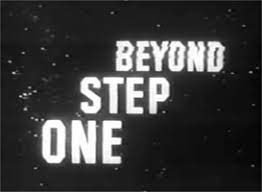
Horror on TV: One Step Beyond 1.8 “Premonition” (dir by John Newland)


In this episode of One Step Beyond, which takes place over the course of several years, Lisa Garrick lives in fear of a chandelier in her family’s  home.  For her entire life, she has had a premonition that she is going to die when the chandelier comes crashing down.  She refuses to stop into the room but eventually, both her father and her fiancé, insist that she conquer her fear and enter the room.

Seriously, if she doesn’t want to enter the room …. don’t make her enter the room!  I love chandeliers but they do make me nervous.  They always look like there about to come crashing down to me.

I like this episode because the main character is named Lisa.

This episode originally aired on March 10th, 1959.

30 Days of Noir #21: For You I Die (dir by John Reinhardt)


The 1947 film, For You I Did, opens with what would be the finale of many other crime movies, a daring prison break.

The psychotic Matt Guber (Don C. Harvey) has managed to escape from prison, along with a younger prisoner named Johnny Coulter (Paul Langton).  From listening to their dialogue as they flee the cops, it quickly becomes obvious that the escape was Guber’s idea and that Johnny is something of an unwilling accomplice.  Johnny only had a year left in his sentence but now, thanks to Guber, he’s a wanted man.  Making matters even worse is the fact that Guber killed a guard during the escape.  Johnny knows that if he turns himself in or if he’s captured, he’ll be considered an accessory to murder.

Guber tells Johnny to go to a nearby roadside diner and deliver a message to his girlfriend, Hope (Cathy Downs).  Guber says that he’ll come to the diner in a week to get them.  Johnny follows Guber’s orders but, when he reaches the diner, he discovers that Hope has changed her ways and no longer wants anything to do with Guber.  Using an assumed name, Johnny gets a job at the diner and soon, he and Hope are falling love.

Johnny gets to know the other workers and customers at the diner.  They include Hope’s kind but no-nonsense aunt, Maggie (Marion Kerby), and Hope’s flirtatious cousin, Georgie (Jane Weeks).  Working in the kitchen is Smitty (Roman Bohnen), an alcoholic with a tragic backstory.  There’s also Alec Shaw (Mischa Auer), a flamboyant con man, and two slow-witted cops (Charles Waldron, Jr. and Rory Mallinson) who always mention that Johnny looks familiar but they just can’t figure out where they’ve seen him before.  Johnny gets to know all of them as, for the first time in his life, he finds himself accepted as a part of a community.  However, even as Johnny finds happiness, he knows that the clock is ticking.  There’s only so long that he can hide his identity and Guber is due to show up at any moment….

Poverty Row is a term that was often used to describe the low-budget B-movies of the 40s and 50s and it’s certainly an apt description of For You I Die.  It’s not just the fact that the film is about poor and often desperate characters.  It’s also that the film itself looks like it was made for next to nothing.  However, the film’s cheap look is actually one of its greatest strengths.  Visually, the grainy black-and-white lends the film a gritty atmosphere and the limited and sparsely decorated sets serve to play up not only Johnny’s claustrophobia but to also remind us that, even if Johnny does find some temporary happiness, he still has nowhere to go.  That diner is both the beginning and the end of Johnny’s freedom.

Character actor Mischa Auer was probably the biggest name in the cast.  He was a well-known screen comedian, one who specialized in playing over-the-top eccentrics.  His comedic presence in this relatively somber film feels rather odd.  As well, Paul Langton is convincingly sullen in the role of Johnny but he’s not particularly compelling.  Far more impressive are Marian Kerby, Cathy Downs, and especially Jane Weeks.  As the gleefully amoral Georgie, Weeks steals almost every scene in which she appears while Marion Kerby is everyone’s ideal aunt.  Finally, Cathy Downs plays Hope and brings a poignant sense of regret to a role that, as written, could have just been a stereotypical “good girl.”  Hope is someone who has made her mistakes but who refuses to be defined for them.  In the end, Hope epitomizes …. well, hope.

For You I Die is a taunt and effective film noir and a reminder not to dismiss a film just because it came from Poverty Row.