Today, we wish a happy birthday to actor, director, and producer Warren Beatty.
In Alan J. Pakula’s 1974 film The Parallax View, Beatty plays a seedy journalist who goes undercover to investigate the links between the mysterious Parallax Corporation and a series of recent political assassinations. In the film’s most famous sequence, Beatty — pretending to be a job applicant (read: potential assassin) for the Parallax Corporation — is shown an orientation film that has been designed to test whether or not he’s a suitable applicant. The montage is shown in its entirety, without once cutting away to show us Beatty’s reaction. The implication, of course, is that what’s important isn’t how Beatty reacts to the montage but how the viewers sitting out in the audience react.
So, at the risk of furthering the conspiracy, here’s that montage.
In Alan J. Pakula’s 1974 film The Parallax View, Warren Beatty plays a seedy journalist who goes undercover to investigate the links between the mysterious Parallax Corporation and a series of recent political assassinations. In the film’s most famous sequence, Beatty — pretending to be a job applicant (read: potential assassin) for the Parallax Corporation — is shown an orientation film that has been designed to test whether or not he’s a suitable applicant. The montage is shown in its entirety, without once cutting away to show us Beatty’s reaction. The implication, of course, is that what’s important isn’t how Beatty reacts to the montage but how the viewers sitting out in the audience react.
So, at the risk of furthering the conspiracy, here’s that montage.
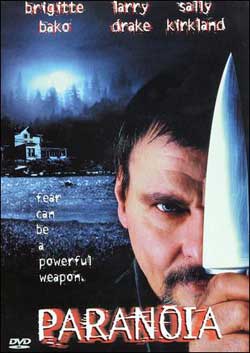
Interior designer Jana Mercer (Brigitte Bako) is haunted by the night that her entire family was murdered by serial killer, Calvin Hawks (Larry Drake). Even though Calvin was captured and imprisoned, she still fears that someday he’ll get out. Calvin, meanwhile, feels that he and Jana have a special bond because he decided to allow her to live. From his prison cell, he follows her life via the internet. He even sends her messages, which doesn’t do much for her state of mind. Finally, a former neighbor of hers invites her to return to her old neighborhood so that she can confront her fears. However, after serving 20 years in prison, Calvin has been released for good behavior. As a part of his parole, he is not allowed to go anywhere near Jana or any of the scenes of his crimes. Soon after getting released, Calvin decides to violate his probation. A serial killer violating probation? Who would have guessed?
Paranoia raises a few questions. What type of prison would allow a serial killer to have a laptop in his cell and access to the internet, let alone send out messages unsupervised? What type of legal system would sentence a serial killer to only 20 years in prison? Why wouldn’t the authorities make any effort to let Jana, as the sole survivor of Calvin’s crimes, know that Calvin is about to be released from prison? Why would Jana, a recluse who says she is incapable of trusting people, be so quick to accept an invitation to go to the country with someone that she barely knows? It makes no sense but the movie still somehow maintains enough suspense to work.
The best thing about Paranoia are the performances of Brigitte Bako and Larry Drake. Bako, who was one of the best of the 90s direct-to-video stars, brings some needed sass to the role of Jana while Larry Drake was a B-movie veteran who always made a good villain. Larry Brand, who also did Overexposed and The Drifter, wrote and directed Paranoia and, just as he did in those two previous films, Brand includes a lot of pop cultural references. It’s not every day that you see a direct-to-video B-movie that includes an inside joke about The Dick Van Dyke Show. Brand and his cast bring some unexpected style to the nonsensical story.
Watching Paranoia today, it’s hard not to get nostalgic. With a plot that hinges on email almost as much as the plot of Sleepless in Seattle, it’s a 90s film, through and through. They don’t make them like this anymore.
Even though it happened 22 years before I was born, I sometimes feel as if it was only yesterday that President John F. Kennedy was assassinated.
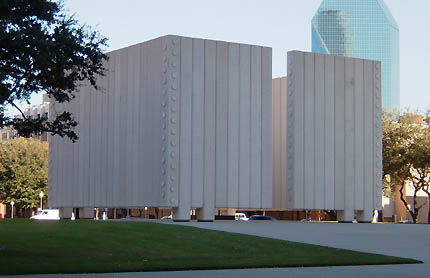
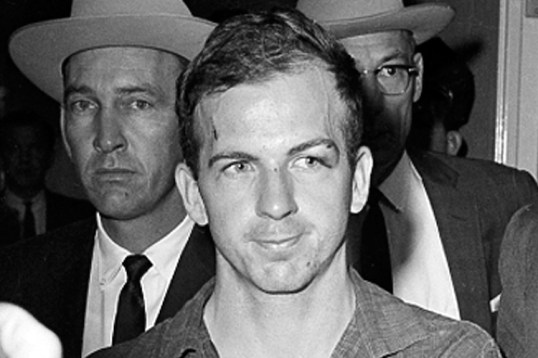
A lot of that is because I’m from Dallas. When I was born, my family lived in Oak Cliff, a few blocks away from where the accused assassin Lee Harvey Oswald once lived. I drive by the Kennedy Memorial several times a week. I’ve gone to the Sixth Floor Museum. I’ve made out on the Grassy Knoll. On a daily basis, I see tourists who have come down here from up north with their preconceived prejudices, their unwieldy copies of Stephen King’s 11/22/63, and their overactive sweat glands. (“How do you handle the heat!?” they ask when the temperature is barely above 90.) With the 50th anniversary of the assassination approaching, the Dallas Morning News has been running daily stories examining every detail of that terrible event.
The rest of the nation, of course, will never let us forget that JFK was assassinated in Dallas. Just last week, there was an idiotic and bitter opinion piece in The New York Times, written by James McAuley, in which he claimed that Dallas was a “city of hate” that should feel more guilt over the JFK assassination. As McAuley (who is studying history at Oxford and is not a resident of that city that he apparently feels qualified to judge) put it, “For 50 years, Dallas has done its best to avoid coming to terms with the one event that made it famous: the assassination of John F. Kennedy on Nov. 22, 1963.”
This, of course, is bullshit.
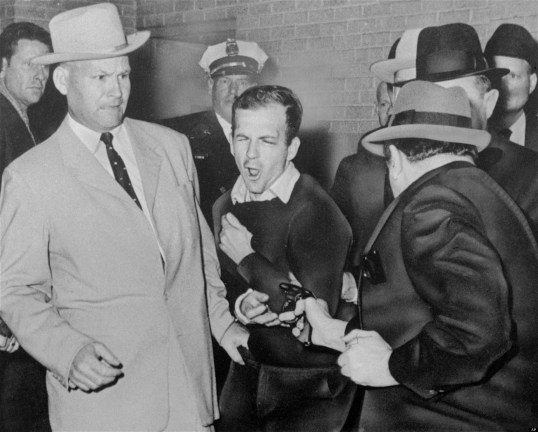
There are two competing schools of thought about the assassination of John F. Kennedy. One says that Lee Harvey Oswald was solely responsible. The other is that Kennedy was killed as the result of a complex conspiracy.
Let’s say, for the sake of argument, that Lee Harvey Oswald acted alone. Well, Oswald was born in New Orleans but he was raised up north in New York City. He was also a communist with a history of mental instability. Hence, if you accept that Oswald was the lone assassin than you also have to be willing to accept that Oswald would have tried to kill Kennedy regardless of what city he was living in.
Things get a bit more complicated if you believe that Kennedy was killed as the result of a conspiracy. But let’s consider the usual suspects that come up whenever people start talking about the possibility of conspiracy. The Mafia was based in the north. The CIA was based in Washington, D.C. The anti-Castroites were based in Miami. Again, all of these conspirators would have killed Kennedy regardless of what city he went to in November.
It’s easy for the rest of the country, in a fit of jealousy, anger, and delusion, to blame Dallas and Texas for the assassination of John F. Kennedy but, regardless of whether you believe in the lone assassin or a larger conspiracy, the truth is far more complex.
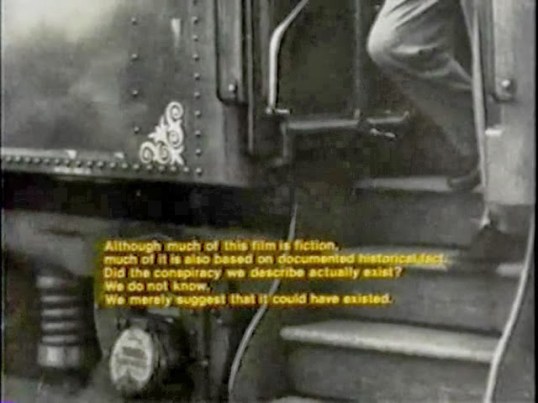
Over the next few days, as part of the 44 Days of Paranoia, I’ll be taking a look at some of the many films that were inspired by this assassination. Let’s start things off with one of the lesser known entries in the JFK genre, 1973’s Executive Action.
Executive Action opens with a series of grainy, black-and-white photographs of both America in the 1960s and the men who, over the course of the film, will be portrayed as having plotted and carried out the assassination of President Kennedy while a mournful piano plays in the background. It’s a low-key but eerily effective opening and it also lets the viewers know exactly what type of film they are about to see. As opposed to Oliver Stone’s far better known JFK, Executive Action is a low-key, almost deliberately undramatic film. Despite the fact that there are some familiar faces in the cast (or, at the very least, familiar faces to those of us who watch TCM), Executive Action almost feels as if it could have been a documentary.
As the film opens in 1963, we see a group of very rich men talking about the future of America. Ferguson (Will Geer) and Foster (Robert Ryan) are concerned that President Kennedy’s policies are going to destroy America. Foster is worried that Kennedy is planning on cutting back on military spending. Ferguson is upset by Kennedy’s support of the Civil Rights movement. (In one memorable scene, we see Martin Luther King delivering his Dream speech on TV before the camera pulls back to reveal Ferguson watching in disgust.) Their associate, the shadowy Farrington (Burt Lancaster), argues that the only way to stop Kennedy is to assassinate him and put the blame on a lone gunman.
With the support of Ferguson and Foster, Farrington recruits a group of gunmen (led by Ed Lauter and including Roger Corman regular Dick Miller) and works to set up the perfect patsy. A man (James MacColl) goes around Dallas, acting obnoxious and telling anyone who will listen that his name is Lee Oswald. At Ferguson’s insistence, a picture is doctored to make it appear as if Lee Harvey Oswald is posing in his backyard with a rifle. As all of this goes on, the date of November 22nd steadily approaches…
As I stated before, Executive Action is an almost obsessively low-key film. That, however, works to the film’s advantage. Ferguson, Foster, Farrington, and the other conspirators are chillingly believable because they are presented almost as being anonymous. Instead of being portrayed as being super villains, they are instead men who approach assassination as just another part of doing business. The impression one gets is that Kennedy isn’t the first leader they’ve had killed and he probably wasn’t the last. Director David Miller seamlessly mixes historical footage with film reenactments and the end result is a disturbingly plausible film.
Unfortunately, Executive Action is less well-known than some of the other films that have argued that a conspiracy was responsible for the assassination for John F. Kennedy. However, it may very well be the best.
In Alan J. Pakula’s 1974 film The Parallax View, Warren Beatty plays a seedy journalist who goes undercover to investigate the links between the mysterious Parallax Corporation and a series of recent political assassinations. The film is a masterpiece of a paranoia, the type of film that makes you want to check under your bed for listening devices before you go to sleep in the morning. In the film’s most famous sequence, Beatty — pretending to be a job applicant (read: potential assassin) for the Parallax Corporation — is shown an orientation film that has been designed to test whether or not he’s a suitable applicant. This film turns out to be a nightmarish montage of rage, insecurity, fear, Oedipal psychosis, and — oddly enough — comic book super heroes. The montage is shown in its entirety, without once cutting away to show us Beatty’s reaction. The implication, of course, is that what’s important isn’t how Beatty reacts to the film but how the viewers sitting out in the audience react.
So, at the risk of furthering the conspiracy, here’s that montage.

 Through the Shattered Lens