The setting is the Korean War. After getting information that American POWs are being tortured and brainwashed in North Korean prisoner-of-war camps, Major Hale (Harry Morgan) assigns Webb Sloane (Ronald Reagan) to go undercover. After parachuting behind enemy lines, Webb spots a group of POWs being marched through the snow and joins the group. From the minute that Webb joins the march, he begins to observe war crimes. The death march itself, with the POWs being forced to move in freezing weather, is itself a war crime. At the POW camp, Webb discovers the presence of an arrogant Soviet interrogator (Oscar Homolka) and a routine designed to break the POWs down until their ready to betray their native country. Some POWS, like Captain Stanton (Steve Forrest), refuse to break. Others, like cowardly Jesse Treadman (Dewey Martin), break all too quickly. Webb sends the information back to Hale and eventually tries to make his escape.
It’s not terrible. That the North Koreans and, later, the North Vietnamese tortured their POWs and forced some of them to denounce America is a matter of the historical record and, for a 1954 film, PrisonerofWar doesn’t shy away from the brutality of the torture that POWs were often subjected too. Of all of Reagan’s film, PrisonerofWar had the strongest anti-communist message, though Reagan himself feels miscast as a hard-boiled secret agent. (Reagan’s affability comes through even in a film set in a POW camp.) Sending someone undercover into a prisoner of war camp and then hoping that they’ll find a way to escape doesn’t sound like the most efficient way to determine if the Geneva Convention is being violated.
The film features a dog who is found by one of the POWs. Don’t get attached.
The 1967 film, The Happening, opens with two “young” people — Sureshot (Michael Parks) and Sandy (Faye Dunaway) — waking up on a Florida beach. The previous night, they attended a party so wild that the beach is full of passed out people, one of whom apparently fell asleep while standing on his head. (It’s a happening!) From the dialogue, we discover that, despite their impeccably clean-cut appearances, both Sureshot and Sandy are meant to be hippies.
After trying to remember whether or not they “made love” the previous night (wow, how edgy!), Sandy and Sureshot attempt to find their way off of the beach. As they walk along, they’re joined by two other partygoers. Taurus is played by George Maharis, who was 38 when this film was shot and looked about ten years older. Taurus is a tough guy who carries a gun and dreams of being a revolutionary and who says stuff like, “Bam! Et cetera!” Herbie is eccentric, thin, and neurotic and, presumably because Roddy McDowall wanted too much money, he’s played by Robert Walker, Jr.
Anyway, the four of them end up stealing a boat and talking about how life is a drag, man. Eventually, they end up breaking into a mansion and threatening the owner and his wife. Since this movie was made before the Manson murders, this is all played for laughs. The owner of the mansion is Roc Delmonico (Anthony Quinn). Roc used to be a gangster but now he’s a legitimate businessman. The “hippies” decide to kidnap Roc because they assume they’ll be able to get a lot of money for him.
The only problem is that no one is willing to pay the ransom!
Not Roc’s wife (Martha Hyer)!
Not Roc’s best friend (Milton Berle), who happens to be sleeping with Roc’s wife!
Not Roc’s former mob boss (Oscar Homolka)!
Roc gets so angry when he find out that no one wants to pay that he decides to take control of the kidnapping, He announces that he knows secrets about everyone who refused to pay any money for him and unless they do pay the ransom, he’s going to reveal them. We’ve gone from kidnapping to blackmail.
Along the way, Roc bonds with his kidnappers. He teaches them how to commit crimes and they teach him how to be anti-establishment or something. Actually, I’m not sure what they were supposed to have taught him. The Happening is a comedy that I guess was trying to say something about the divide between the young and the middle-aged but it doesn’t really have much of a message beyond that the middle-aged could stand to laugh a little more and that the young are just silly and kind of useless. Of course, the whole young/old divide would probably work better if all of the young hippies weren’t played by actors who were all either in their 30 or close enough to 30 to make their dorm room angst seem a bit silly.
It’s an odd film. The tone is all over the place and everyone seems to be acting in a different movie. Anthony Quinn actually gives a pretty good dramatic performance but his good performance only serves to highlight how miscast almost everyone else in the film is. Michael Parks comes across like he would rather be beating up hippies than hanging out with them while Faye Dunaway seems to be bored with the entire film. George Maharis, meanwhile, goes overboard on the Brando impersonation while Robert Walker, Jr. seems like he just needs someone to tell him to calm down.
But even beyond the weird mix of acting style, the film’s message is a mess. On the one hand, the “hippies” are presented as being right about the establishment being full of hypocritical phonies. On the other hand, the establishment is proven to be correct about the “hippies” being a bunch of easily distracted idiots. This is one of those films that wants to have it both ways, kind of like an old episode of Saved By The Bell where Mr. Belding learns to loosen up while Zack learns to respect authority. This is an offer that you can refuse.
In this episode of the Boris Karloff-hosted anthology series, Thriller, murders are being committed all over Europe. What do all of the murders have in common? They have all happened outside of the same traveling wax museum!
Is it a coincidence or are the wax figures coming to life and committing murder?
This episode was written by Robert Bloch of Psycho fame and originally aired on January 8th, 1962.
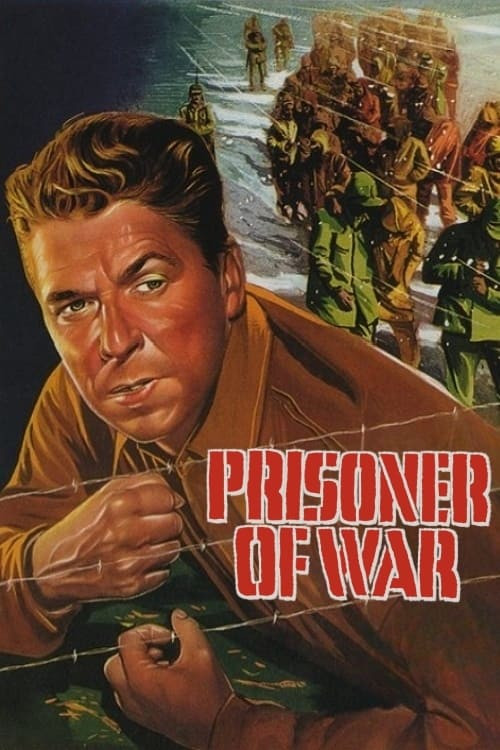 The setting is the Korean War. After getting information that American POWs are being tortured and brainwashed in North Korean prisoner-of-war camps, Major Hale (Harry Morgan) assigns Webb Sloane (Ronald Reagan) to go undercover. After parachuting behind enemy lines, Webb spots a group of POWs being marched through the snow and joins the group. From the minute that Webb joins the march, he begins to observe war crimes. The death march itself, with the POWs being forced to move in freezing weather, is itself a war crime. At the POW camp, Webb discovers the presence of an arrogant Soviet interrogator (Oscar Homolka) and a routine designed to break the POWs down until their ready to betray their native country. Some POWS, like Captain Stanton (Steve Forrest), refuse to break. Others, like cowardly Jesse Treadman (Dewey Martin), break all too quickly. Webb sends the information back to Hale and eventually tries to make his escape.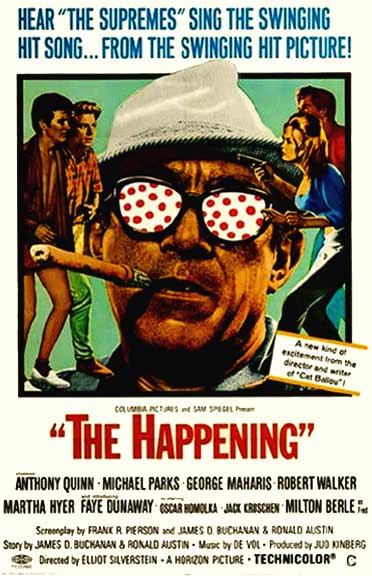
 Through the Shattered Lens