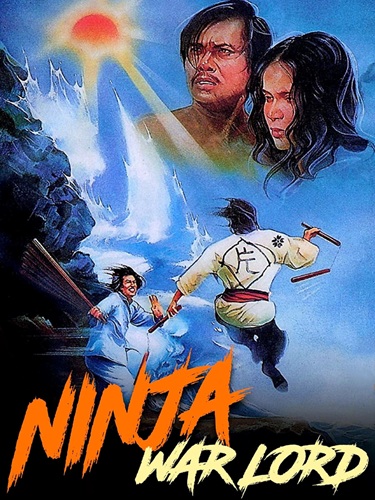
Also known as Ninja War Lord, 1973’s Rage of Wind takes place during the Japanese occupation of China during the Second World War.
A Chinese fishing village is controlled by the ruthless Taka (Yasuaki Kurata), who terrorizes the town with his Hawaiian-shirt wearing henchmen and who deals with dissent by hanging people in the town square and then refusing to allow their loved ones to take down the bodies. When boxer Chan Kwong (Chan Sing) returns to the village after pursuing a successful fighting career in the United States, the village rejoices. Finally, there is someone who can stand up to Taka! And the villages needs help because Taka has just instituted a new fishing tax!
Oh, Taka, you fool! Don’t you realize that raising taxes never solves anything? I realize that this film is taking place at a time when Milton Friedman was still working for the government and also long before the Laffer Curve was drawn on that napkin but still, raising taxes is always the last refuge of the unimaginative. When the people in the village express their displeasure at having to pay more in taxes, Taka decides to seize their boats. Hey, Taka, you dumbass commie — how are they going to make the money to pay your taxes if they don’t have their boats!? Fortunately, Chan Kwong isn’t going to let the taxman get away with this.
(It’s interesting that this film features a Chinese hero fighting on the side of free enterprise.)
Here’s a few things that I liked about Rage of Wind.
First of all, it didn’t waste anytime getting to the good stuff. The film’s first fight broke out within the first five minutes of its running time and, from that moment on, people were either fighting or preparing to fight. This film didn’t feature any slow spots. The fights were exciting to watch and, even more importantly, they distracted the viewer from asking too many questions about the plot. At times, it felt like everyone in the film would have been well-served to just stop fighting and negotiate but that wouldn’t have been as much fun to watch.
Second, Taka wore a cape. His henchmen may have dressed like tourists in Hawaii but Take wore a red cape! And what’s even more impressive is that Taka totally pulled off the look. Seriously, if someone can wear a cape and not look like an idiot, that’s when you know that person is a total badass.
Third, both the bad guys and the good guys got their own annoying sidekick. The bad sidekick was constantly popping up and laughing. The good sidekick had no teeth. Both sidekicks died, which is an example of this film giving the viewers what they want.
Fourth, the musical score was made up of stolen riffs from Pink Floyd and the Theme From Shaft. (I didn’t recognize the Pink Floyd riffs but everyone that I was watching the film with was like, “How did they get Pink Floyd!?”) Apparently, the film “borrowed” the music without paying. I love the shamelessness of old school Hong Kong cinema.
Fifth, the final fight between Taka and Chan Kwong is absolutely brutal! Seriously, when you’re watching a film about people who are incapable of settling their conflicts through talking, this is exactly the type of fight you want to see.
Finally, once again, all of the conflict could have been avoided if they hadn’t tried to tax everyone to death! I love films that are anti-taxation. Watching a double feature of Rage of Wind and Harry’s War might become my new Tax Day tradition!
 Through the Shattered Lens