Review: Ghost Bath – Moonlover


Gimmicks don’t always work out as intended. When I heard that Ghost Bath were not, as they once claimed, Chinamen from Chongqing Municipality, but rather well-mustached American hipsters, I believe my first question was “who?” But if this band’s efforts to fool fans before they actually had any comes off a bit less clever than stupid, my negative points end there. Moonlover is a pretty interesting work from its cover all the way to the closing track. Hailing from the far more obscure and frostbitten wasteland of North Dakota, Ghost Bath have forged a really solid sophomore LP that should stand among the better metal albums we hear this year.

https://www.youtube.com/watch?v=JEIitknNeSQ

Track: “Golden Number

After a brief, haunting intro track that definitely lends credence to their name, Moonlover makes an awkward but forgivable transition into a really uplifting number that has everyone on the internet comparing them to Deafheaven. With one of those explosions of emotional, half-heartbroken half-triumphant post-black metal glory that sounds more familiar every year, followed by a kind of punk lick underlined by passionate, poppy drumming straight off Amesoeurs’ Ruines Humaines and unearthly vocal shrieks, “Golden Number” is certainly in line with the trend of the day. It kind of feels like someone drug Woods of Desolation out of their basement and shoved them into a top-notch recording studio, and yes, the comparisons to Sunbather have their merit too. But if Ghost Bath are not necessarily pioneers, they are definitely refining the machine.

Much like post-rock, where you had a whole bunch of totally distinct bands making waves while everyone else ripped off Mono–and we could hardly complain about that–post-black metal is definitely developing a “standard” sound. “Golden Number” is that sound to a T, and I absolutely love the clarity with which Ghost Bath pull it off. This is a genre born of static noise. It was the realization that you could invoke a lot of emotion by hiding something pretty in an aural cesspool that really kicked off the scene, and even Deafheaven’s “Dream House”, for all its ability to swoon foreign audiences, was really heavily distorted. The noise carried the passion, but it was also limiting. Moonlover is a surprisingly clean album, and because of it the band can do subtle things that I don’t often hear. The tremolo at the beginning of “Golden Number”, for instance, is complemented by a second, barely audible guitar that’s tapping instead of picking. Maybe post-bm has gone that route before, but if so I never noticed it. The clarity on this song, at least relative to its genre, allows me to detect these things, and the end product feels so much more full of life for it.

“Ghost Number” ends with two minutes of piano, and “Happyhouse” picks the metal back up with a totally different feel from the song before it. Three minutes of melancholy plodding lead into a fresh vision of that ghostly guitar we heard in the intro track, and Dennis Mikula treats us to more of his otherworldly screams. Amesoeurs again comes to mind, and I have to believe Neige was an inspiration on this band in more ways than one, but to me Mikula’s vocals sound most reminiscent of Ygg, a short-lived but brilliant Ukrainian trio featuring former members of Nokturnal Mortum and Helg from Khors. “Happyhouse” erupts into black metal for only a passing burst of intensity before returning to its moody plod. Post-rock guitar ultimately defines the song’s direction, while Mikula’s outstanding vocal performance brings the depth. “Happyhouse” could be a cookie-cutter bore, but the band’s keen execution and knack for making their short repeated phrases consistently catchy turns it into something I can really embrace.

10 minutes go by before you hear another ounce of metal, but I would hardly call it a wait. “Beneath the Shade Tree” and “The Silver Flower pt. 1” are both dreamy guitar-driven visions of forests and streams, feeling perhaps a cross between Agalloch and Alcest. The nature effects on the latter track especially brought to mind the intro and outro to Alcest’s “Le Secret”, though I’m sure you could name a dozen other bands that might have played an influential hand here. The origins are quite irrelevant; these two songs only beg identification because they are so vivid and beautiful. The sound is ultimately the band’s own.

https://www.youtube.com/watch?v=Sasl16Nm4y0

Track: “The Silver Flower pt. 2

When Moonlover‘s heavier half does return, it feels infused with the spirit of the instrumental tracks before it. “The Silver Flower pt. 2” floats along with no edge to speak of beyond the first minute, drifting on the dream that came before. If it weren’t for Mikula’s persistently tormented vocals–a bit out of place now, I must admit–it could pass as a moody but up-tempo rock song. The style feels strikingly familiar, yet I can’t put a finger on it. It’s sort of equivalent to how Katatonia were playing around with the metal sounds of their day in the late 90s, and it calls the whole “black metal” label for this band into question. Moonlover incorporates so much more, riding a dozen different stylistic approaches to take us on a journey. We started out with a burst of passion–a sense of fulfillment and life–on “Golden Number”, then road down a path into depression with “Happyhouse”. The commune with nature in “Beneath the Shade Tree” and “The Silver Flower pt. 1” revitalizes, moving the album from positive and negative extremes to an even-keel, smooth ride on “The Silver Flower pt. 2”. The final track, “Death and the Maiden”, sort of brings us around in a circle. The equilibrium of “pt. 2” picks up its pace here, growing in excitement until the return of a black metal sound breaks it. We’re back to highs and lows, and we end on the latter. The album trickles out in a dark depressing grind back into the haunting sounds of the introduction, and that opening melody repeats, now made even more ghostly through a synth whistling tone.

I like it. Moonlover feels like a complete package, flushing out a musical narrative that consistently develops from track to track. It might not match up precisely to the picture it painted in my mind, but a progression is definitely there. Ghost Bath refuse to restrict themselves to one genre, incorporating a wide array of styles into a really coherent whole. The drums are tight, the guitarists can pull off some neat noodling but know when to keep it simple, and the album is book-ended by its two best tracks. I don’t think it would have hurt Dennis Mikula to chill out on the screaming for a bit on “The Silver Flower pt. 2”, but over all I love his vocals. There’s not much I can complain about. And since I want to start making a point to link where you can purchase the albums I ramble about: go adopt a moon on Bandcamp.

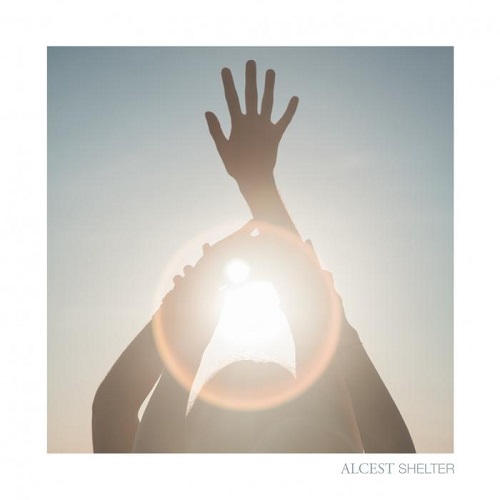
Review: Alcest – Shelter


I have a bad habit of failing to keep up with bands in the years after their big breakthrough albums. As a consequence, I tend to be caught off guard when I find an old band doing something drastically different from their old sound. That is not the case with Alcest. I have eagerly gobbled up everything Neige has thrown out there since Le Secret (2005), and I was well aware ahead of time that Shelter was not going to be a metal album. That did not phase me. Neige’s sound has evolved dramatically over the years, and as early as Souvenirs d’un autre monde (2007) you could not detect a residual shred of the style he presented on Tristesse Hivernale (2001). A dream pop/shoegaze/post-rock album was a reasonable thing to expect given the general direction his music had been going. I clicked play on Shelter fully convinced that I would enjoy it.

Alcest – Wings and Opale, from Shelter

If I was going to have doubts, they might have been about the level of external influence surrounding Neige’s music of late. Was it going to show? Would this not quite sound like Alcest? Neige claimed no knowledge of shoegaze music when he recorded Le Secret and Souvenirs d’un autre monde. I remember his publicized surprise when an early release of Souvenirs‘ title track got plastered with the genre label all over the internet. Since then, Neige has developed quite the fondness for those classic bands to which he was compared. Shelter even features a guest appearance by Neil Halstead of Slowdive. If Shelter was not going to be metal, there was certainly a chance we would hear a lot more of that influence in place of Neige’s self-derived affinity to the sound.

I don’t think that is an issue here at all. I can’t say I have heard much classic dream pop or shoegaze outside of Loveless, but if Neige had continued to boast total ignorance of the genres, I think I would have believed him. Shelter sounds deliciously like Alcest, whether the style is a departure or not. The album opens with the angelic, echoed vocal chant that by Les Voyages de l’Âme had become a staple Alcest sound. For the first minute and thirty seconds, there is nothing to distinguish Shelter from another Alcest black metal album. The instant familiarity is a pleasant relief for any fan that had major doubts. You might still wonder whether he could pull off a full 46 minute album of “soft” Neige without ever using metal to vary the dynamics, but that question dissolves into air a minute and a half in, as the first full track, “Opale”, kicks off. It’s so vibrant that your speculation seems a petty distraction in the face of the musical moment.

Alcest – Voix sereine, from Shelter

This feeling definitely persists through the third track, “La nuit marche avec moi”, and on it Neige’s trending toward post-rock, audible on “Opale”, becomes substantially more apparent. “Voix sereine”, 11 minutes into the album, is the first time things really calm down from a pretty jubilee to get your mind wandering again. It kicks off slow and simple, rather dull really, and I for one had a hard time remaining attentive for the first three minutes. Was this the sort of “down time” I ought to have feared could come with a complete abandonment of metal? Perhaps it is, but 3 minutes of bore could be easily forgiven from most musicians. At the three minute mark, the song transforms into something substantially more palpable, and my second thoughts are largely forgotten. Much to my delight, I do find out that Neige fibbed a bit about the album’s contents. We might not encounter any blast beats or gut-wrenching screams on this album, but he did not forget how to turn on the distortion altogether. As the song gets heavier and substantially more… substantive, the boredom of the build-up fails to hold. It becomes a really great song. On a re-listen, knowing that something fairly aggressive will come of it, the lull is easier to swallow.

Alcest – Délivrance, from Shelter

The next song, “L’éveil des muses”, finds a more interesting starting point, but another slow build-up gives me serious doubts for the first time. What holds post-rock in the moment is the knowledge that something earth-shattering will come of it all. Knowing that “Voix sereine” is likely as heavy as the album is going to get, and without the instant gratification of the opening dream pop tunes, I struggle to give the song 100% of my attention. Track six, “Shelter”, is a much needed return to something more upbeat. It opens with the sort of pitch shifting distortion made famous by My Bloody Valentine, and from start to finish it’s an enjoyable ride. “Away”, the track featuring Neil Halstead on vocals, is a beautiful composition that, I think, would have been a thousand times better with Neige singing. Halstead kind of kills it for me–not because of the quality of his singing but because it sounds totally out of place on an Alcest album.

And then we close with “Délivrance”. The longest track by far at 10 minutes, it carried the weight of my overall opinion of the album. Shelter had so far offered a lot of stellar moments, but at its calmest it dangled dangerously on the edge of boredom. “Délivrance” needed to be a pretty epic piece of post-rock. At 3 minutes, a really classic post-rock guitar kicks off to confirm my hopes–at least to a point. It’s where the song heads from here that really disappoints me. We’re building, and we’re building, and it’s definitely a fun ride, but then right when you expect the song to really cast its shell aside and go all-out…. did it just end? Not a ten minute song after all, “Délivrance” concludes with a three and a half minute toned down outro.

It’s not common for me to speak of a song being too short, but “Délivrance” feels so incomplete to me. I accepted the first 3 minutes because I assumed we were going somewhere. I loved the next 4 because we were going somewhere. But we never really got there. Neige is the guy who made post-black metal a reality in the first place. Granted the full-fledged, conscientious post-rock/black metal cross-overs came later, I guess I expected such a hero of modern metal to aim a bit higher when confronting a fairly traditional post-rock sound. I can try to enjoy “Délivrance” for what it does offer, but I can’t help but think that he failed to see how much further he could have taken it. It’s something that would have sounded appealing in the late 90s but seems incomplete to me today, when post-rock bands are a dime a dozen and competition is a bit more formidable. I can’t quite get over that enough to fully enjoy it.

In the end, I guess you might say Shelter disappoints me. Maybe that’s because I came into it with really high expectations, where a lot of fans might have set the bar low when they found out there would be no black metal element. The first three tracks boosted my expectations all the more by offering a really novel sound that grabbed me and held on. But that dream pop vibe did not last, and the more he got back to sounds you might expect from an Alcest album of old, the more they felt depleted of the old energy rather than infused with a new one. Where the post-rock kick would normally give way to a black metal rockout, here it just fizzes away. Tracks like “Opale” set a precedent for how I wanted the entire album to sound. I got half of that, and half something that just makes me hope he goes back to his roots on the next release.

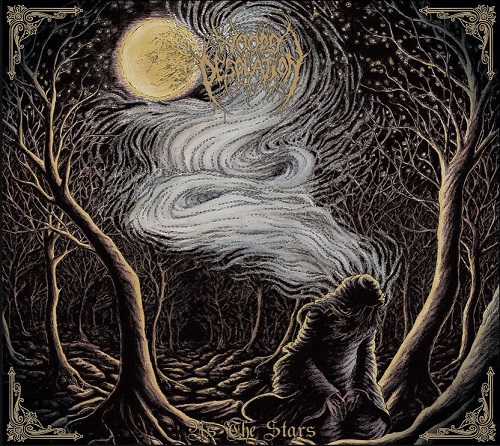
Review: Woods of Desolation – As the Stars


Has it really been two years since I’ve reviewed a new album? The fact came as a bit of surprise, but here it is late October and I’m staring at a massive horde of 2014 releases that I’ve barely cracked. I was a bit more diligent about keeping up with these when I actually took the time to write about them!

I hope to jump back into this business in force, but in case I fail, I’ll not put off the cream of the crop. My album collection is starting to get overrun by “Woods of” X artists; it seems to be the most popular black metal prefix after “Dark” these days. But one among them might be destined to distinguish itself with my #1 album of the year pick.

http://www.youtube.com/watch?v=ePHvl9vFmeo

Woods of Desolation – Unfold, from As the Stars

I spent a great deal of my late teens and early 20s basking in the polarizing glories of post-rock and black metal. The likes of Explosions in the Sky, Sigur Rós, Emperor, and Nokturnal Mortum pumped the residual poison of rock and roll out of my blood and raised me to higher expectations of musical fulfillment. I listened to them not with a care for technical precision or physical skill, but in search of an experience I did not fully understand. Both genres approached this through similar means, but fell short as social stigmata demanded modesty or brutality carry the day. As I grew into an adult, the ice was broken. Neige’s Le Secret whispered its meaning into my ears just as I was old enough to embrace it. He’d broken the Berlin wall of music, and what awaited beyond was strange and beautiful.

Post-black metal, shoegaze metal, “transcendental”, call it what you will. Ten years ago, this album–what the woefully uninformed all-purpose reviewers will write off as a Deafheaven copycat–was not possible. It emerged as many musicians with the same thoughts and greater talent than myself caught glimpse of that beautiful beyond and embraced it. You can name a dozen artists that might have influenced the Australian solo project known as Woods of Desolation, but this brave new genre demands our presence in the here and now. It calls on us to bask in glorious tremolo sweeps triumphant over entwined barricades of light and darkness. “Proud to be living in the echo–the mist of all things combined,” Krallice once wrote, and though they designed to crush it, we retain the luxury to return. When I hear a song this triumphant, that line always comes to me, and the albums that accomplish it are still few and far between. I still love Explosions in the Sky and their ilk, but they offer a different sort of grandeur. Theirs is an experience of climbing to the peak. Songs like “Unfold” allow us to explore the pinnacle at length, from start to finish.

http://www.youtube.com/watch?v=fh2n9kglppQ

Woods of Desolation – Like Falling Leaves, from As the Stars

To start at the summit and know where you stand. That might be post-black metal in a nutshell. What we can do there… that is still an on-going exploration. Where Liturgy and Primordial roar like lions into the jaws of death, “Like Falling Leaves” is something of the opposite. It accepts the end awaiting it. In this track we don’t hear any of the overarching optimism of “Unfold”. Instead, we’re accepting that something dear is gone forever, and we are held fast in that moment of realizing the fact’s finality. The bulk of the album seems in keeping with these two vibes, sometimes heightened, sometimes subdued, sometimes entwined. “Withering Fields” and “And If All the Stars Faded Away” seem peculiarly triumphant and longing simultaneously, while “Ad Infinitum” is pretty enough for a new Alcest album. Nearly every track bears a sufficiently memorable hook to sound familiar by the second or third play through, and at a mere 35 minutes, it does not waste much time dragging out build-up in between.

I don’t know that As the Stars will retain my #1 spot through the end of the year, especially if I start to pump out album reviews in force again. It is nothing remotely on par with my picks for the last three years, and it suffers from muddy production that can’t always do the song writing justice, but I stand by it as my favorite so far. This is one I’ll keep near and dear to me long after the bulk of my 2014 collection has been forgotten.

Ten Years #27: Alcest


Decade of last.fm scrobbling countdown:
27. Alcest (1,127 plays)
Top track (154 plays): Souvenirs d’un autre monde, from Souvenirs d’un autre monde (2007)
Featured track: Là Où Naissent Les Couleurs Nouvelles, from Les Voyages De L’Âme (2012)

About two years ago I passed up a rare opportunity to strike up a one on one conversation with a musician I admire to no end. Alcest had just finished opening for Enslaved on their 2011 U.S. tour, and I stumbled upon Neige idling in the outdoor smoking lounge, standing exposed in the middle without a pesky fan in sight. I’m not the sort to pester someone over a stupid autograph, and I couldn’t think of a question worth asking on the spur of the moment, so I let the opportunity pass. But if I could have it back again, I would ask him what bands he’d been listening to when he recorded Le Secret (2005). Influence has been a hot topic for Alcest interviews ever since Neige denied any knowledge of shoegaze music at the release of Souvenirs d’un autre monde (2007). He responded to the comparisons by actively engaging a lot of relevant 80s and early 1990s bands, such that the perceived similarities lead to real influence down the road. I don’t think that is as apparent in his more recent works as some fans would like to believe; in Alcest, Neige produces the sort of uniqueness and quality that transcends genres. Nevertheless, my fascination with the history of music begs the question. Le Secret delivered what I wanted with a unique innocence that could only ever succeed once, and it certainly wasn’t “shoegaze” that paved the way for it.

Le Secret rather felt to me like something the black metal scene was destined to produce sooner or later. I’d been craving it since I first heard Ulver’s “Of Wolf and Passion”. If black metal had always been more about De Mysteriis than Dom Sathanas, “Le Secret” was the final incantation–the first real invocation in a world of petty summoners. Le Secret battered down the stereotyped walls, presenting a glorious first glimpse at what dwelt beyond that meditative barrier of blast beats and tremolo. On Souvenirs d’un autre monde and beyond, Neige gave us a beautiful vision of just how that world appeared to him, and he continues to improve on it with each new release. “Là Où Naissent Les Couleurs Nouvelles”, the 2012 track here featured, might be his most encompassing song to date.

Don’t get me wrong. Neige was certainly not the first black metal artist to think outside the box. The Ukrainian black metal scene especially had been doing it for years. But I feel like Neige’s artistic accomplishment and subsequent popularity really paved the way towards a widespread abandonment of black metal’s pseudo-machismo persona in exchange for the artistry necessary to accomplish a more sublime beauty and brutality alike. If we are ever going to speak of “post-black metal” or some “third wave” supplanting the early 1990s establishment, it began in 2005 and 2006 with the likes of Alcest and Agalloch. It is only an odd coincidence that the term “shoegaze” has regained popularity outside of metal and adopted new definitions. I look at Alcest not as a merging of two styles, but as a change in mindset which has empowered countless bands over the last few years to let their novel ideas be heard and widely distributed.

Le Secret will always be my favorite Alcest recording because of its timeliness and audible obliviousness to this transition which was slowly gaining ground. But perhaps I’ve beat that horse to death over the past few years. When I listen to Les Voyages De L’Âme (2012), I hear a musician in his prime, undeterred by the expectations of any particular genre, who has successfully improved with every new album. Alcest’s sixth major release, Shelter, should be coming out some time later this year, and I have really high hopes.

Review: Alcest – Les Voyages De L’Âme


You would be hard-pressed to find an album which more reviews have simultaneously labeled generic and beautiful than Les Voyages De L’Âme. It’s an odd situation. Neige has definitely found his sound. I have to imagine that he personally is more satisfied with his work now than ever. The catch is that a lot of people appreciated his music best when he was still searching for something. Les Voyages De L’Âme is beautiful, no doubt about it. It’s a journey through a mysterious, fanciful world that I have taken for 50 minutes frequently this year; it was released in early January, so it’s technically a year old at this point.

Là Où Naissent Les Couleurs Nouvelles

But such descriptions cannot characterize all of his works. Neige’s music has a bit of a narrative in it, told not so much in a single album as in the scope of his career. His first release, Tristesse Hivernale (2001), was a poorly produced sinister ride not particularly unlike the debuts of the Norwegian legends. It also happened to feature an early appearance by Famine, whose Peste Noire took a drastically different and equally admirable path in the years to follow.

Neige didn’t release an Alcest follow-up until 2005, but “Le Secret” revolutionized metal. The two-track EP was an odd consequence of Neige continuing to play black metal while aspiring towards the atmospheric polar opposite. What you got was something beautiful but perpetually fragile; a glimpse at something angelic in music’s darkest corner, which threatened to fade away at any given moment. It’s the sense that what you’re hearing reveals itself in temporary, fleeting form that really places Le Secret above the rest of Neige’s work for me.

Neige was openly bothered by the reviews Le Secret received. A lot of people just didn’t get it, or more likely did get it but felt some bone-headed sense of masculinity in jeopardy should they admit to getting it. Neige regarded the album as a failure. I think the failure was on the part of the listeners who reviewed it, and I was borderline devastated when Neige re-recorded Le Secret last year. But in any case, the fleeting nature of Le Secret’s sound reflected a real fleeting feature of Neige’s style: It wasn’t what he was ultimately aiming for. It was, rather, the last step on the way to getting there. Souvenirs d’un autre monde was the full realization. We might for stylistic purposes label it shoegaze black metal, but it was really post-black metal in the most literal sense.

Souvenirs d’un autre monde was, to me, all about the triumph. It reached for that light buried within Le Secret and made it through to the other side. Neige’s music finally entered that fanciful world of light and beauty that he had envisioned all along. If Le Secret was all about getting there and Souvenirs d’un autre monde was the overwhelming awe he felt when he reached it, Écailles de Lune might be understood as a more orchestrated exploration of what waited on the other side.

Faiseurs De Mondes

This might seem a very peculiar and abstract way to go about describing a discography, but I think it reveals the reason why Les Voyages De L’Âme feels in some sense generic or repetitive. I don’t think Neige planned out any sort of progression from Tristesse Hivernale through to Écailles de Lune. Rather, he is one of those truly great musicians capable of effectively recreating his thoughts in music, and as Neige the man/musician developed his vision over time, his music progressed to reflect it. In the two years that separate Écailles de Lune from Les Voyages De L’Âme not much appears to have changed, and what Les Voyages De L’Âme lacks has absolutely nothing to do with quality. The music is superb. It’s just that we have come over the years to expect perpetual transition, and Les Voyages De L’Âme instead continues to explore the other-worldly landscape Neige first fully entered on Souvenirs d’un autre monde. Les Voyages De L’Âme is in every way Écailles de Lune Part 2.

Given Neige’s past responses to criticism, who knows how he might react to the labels of “generic” being pasted on Les Voyages De L’Âme in otherwise positive reviews. I think the aspect of his sound that is being criticized in this regard isn’t really something he can help, and anyway the context in which the album may be called “generic” is a major stretch from the normal sense of the word. Better to say that it is a continuation of Écailles de Lune, and outstanding as such.

If there are any further doubts, I should inform you that Sophie loved it. She has impeccable taste.

Review: Liturgy – Aesthethica


Two months ago I thought I could actually finish reviewing every album I wanted to before it came time for the year-end lists. Then I got hooked on Diotima by Krallice again, bought Skyrim, and had finals. (Yes, I will be a student until I’m pushing 40 at this rate.) So much for writing the rest of the reviews I’d intended to. But there remains one band that’s just too loud to pass up, and I am not necessarily referring to their music.


Returner

In certain ways, Aesthethica is the triumphal conclusion to a seed I first noticed begin to sprout on Ulver’s Nattens madrigal, recorded back in 1996. Hymn VI: Of Wolf and Passion accomplished something completely unprecedented in the history of black metal up to that time. The song began with a frightfully fleeting glimpse at something beautiful; it wasn’t an “introduction” to the song, prefixed for the purpose of defilement. No, it was an ecstatic jubilation shouting out from the depths, proclaiming a profound sublimity hidden beneath this shroud of loathsome chaos. Almost a decade later, in 2005, Neige found himself transfixed upon a fleeting vision of a word of pure light and recorded Le Secret. This is, roughly, a description he himself has used in attempting to articulate his muse. Feeling that the original recording failed to capture this, he recently released a new version of the EP. It, like Souvenirs d’un autre monde and more so Écailles de Lune, has a tendency to overemphasize the aural light, with angelic vocals and an uplifting shoegaze fuzz drowning out the cold death of traditional black metal. He has turned to what you might regard as stereotypical representations of purity in order to recreate his vision.

But this sense of something whole and eternal falls on deaf ears. To me it is merely pretty, never spiritual, because it fails to capture what made the original Le Secret so profound. There, the black metal never made amends. It was an ever present, undeniable force, fulfilling its original purpose and not merely conforming to a new creative whim. The beauty rested within it, perpetually fleeting, not beyond it and eternal. Neige was never aware of his own masterpiece. Perhaps that sort of innocence is what made it possible in the first place. I applaud him for seeing through his own vision to completion and not settling for mine, but the future of Alcest is of no further relevance to the musical progression I have been anticipating these past few years.

For that I turn to Liturgy. On Aesthethica we hear one of the first conscious recognitions of that seed I detected in Ulver, which has been slowly blossoming in the darkness ever since.


Harmonia

In case the video to Returner did not suffice, Liturgy’s frontman, Hunter Hunt-Hendrix, made a complete fool of himself in an interview last year while attempting to explain the philosophy behind his music. I will make no apologies here; he deserves every ounce of ridicule he’s received from it. At one point he suggested that fans read his ‘manifesto’, which is free to download, and I did. It is crammed to the hilt with pomp and self-righteousness, amidst which the following constitutes, I believe, his main idea: He describes metal as a pursuit of maximum intensity. The closer music evolves towards that end, the more apparent it becomes that “totality is indistinguishable from nothingness” (Hideous Gnosis: Black Metal Theory Symposium I, 57). Black metal long embraced nihilism as the ultimate end, but nihilism is a hollow reward. The true apex of humanity lies in the penultimate, one step from the void, reveling in the finite.

What I find interesting here is not what he’s saying (well, I do find it interesting, but I’ll keep those thoughts to myself), but rather the fact that paradigms are beginning to emerge which attempt to define the sensation I expressed in terms of my experiences with Ulver and Alcest. I call Aesthethica a triumphal conclusion because it is the first thoroughly self-conscious result of a musical trend I’ve been following for quite some time now–triumphal because, well, it’s pretty damn good. It marks the end of an evolutionary process, from which a new cycle will begin. Transcendental black metal is going to happen whether we like it or not, and in the process we will witness a very peculiar clash of values. I mean, just look at these guys:


High Gold

Aesthethica isn’t always this good. Some tracks bore me to tears. It’s in their intense moments that Liturgy really shine, and while these comprise the bulk of the album, the band seems to have little else to offer. Generation is a rhythmic plod which dreams of being post-metal but feels more like my cd is skipping. Glass Earth is a vocal chant that inspires only laughter; it sounds like something off a really bad indie rock album, and this amidst a genre as intimately connected to folk as metal. The intentional 60 seconds of silence at the end of Sun of Light is annoying, though forgivable in the wake of the album’s best track; but the three minute doodle filler track that follows seems to serve no purpose whatsoever.

Its finest moments though, such as High Gold, are amazing. I can’t say that the album is great, because it’s so inconsistent, but I will acknowledge that it contains some of the best songs written this year, and moreover, it is unique in what it attempts to accomplish. Perhaps a lot more could be said on its behalf had Hunter Hunt-Hendrix declined all interviews and published no ‘manifesto’, but I’m kind of glad he did what he did. It confirmed a message which I’ve been preaching for years now; not, that is, his precise philosophy, but at least a feeling. There has been something entirely positive and uplifting lurking out there in the black metal scene for a very long time. Liturgy are the first band I know of to not merely incorporate it but embrace it as the fundamental focus of their entire sound. Other bands have occasioned to evoke it in passing more effectively (Krallice for instance), or have consistently approximated it without ever fully cashing in (post-Le Secret Alcest and associated acts), but Liturgy provide me with something solid to point at and say unequivocally that is what I was talking about.