Music Video of the Day: Dancing In The Dark by Bruce Springsteen (1984, dir. Brian De Palma)


I love and hate when I end up with a music video like this one. I love it because there isn’t a whole lot to talk about, but that’s also why I don’t like it. At least Cyndi Lauper’s She Bop let me off the hook with a simple joke. That music video really does speak for itself.

Brian De Palma shot this video over two nights in Saint Paul, Minnesota on the 28th and 29th of June 1984. The first was purely shot for the music video. The other was shot on the opening night of the Born in the U.S.A. Tour. Springsteen and the E Street Band performed it twice during the show to make sure De Palma got enough footage. De Palma shot it because he was a big fan of Springsteen. As far as I know, there isn’t anything more to that.

The other major thing is that this is the music video with Courteney Cox getting pulled up onstage to dance with Springsteen. I love how she just launches up onstage with him. It looks like they had some steps or something so that Springsteen wouldn’t be yanking her up there.

As for the music video as a whole, it’s clean, simple, and De Palma obviously knew how to capture the energy of the group. You’d think that Springsteen hadn’t quite picked up acting because he seems starstruck and having the time of his life, but I don’t think so. I have never seen him live, but you can roll back to 1981 and watch the music video for The River to see that simply isn’t true. You can even go back further to 1977’s Thunder Road and see again that it isn’t true. I think the reason Springsteen looks like that is that it was probably the first time he was doing this kind of stage performance music video. I can imagine De Palma telling Springsteen to just let all the energy out regardless of what time they were shooting, and that he would make it look good.

Of course I type of all of that, and then stumble upon something really interesting. This was not the original way the music video was going to be done. It was originally going to be directed by Jeff Stein and shot by veteran cinematographer Daniel Pearl. There was a little falling out between Pearl and Springsteen during shooting that ended up coming around full circle on the shooting of Springsteen’s Human Touch. I would link to the site that explains the whole thing, but it looks like it might have been destroyed since it was posted in 2011, and is in limbo thanks to the Google Cache. Assuming that’s the case, I have repeated it below with a link to their site that may or may not work.

Here is an example of how the music video could have looked. Hopefully the two videos are still up when you read this post.

From the site called Golden Age of Music Video

At the end of July, a video surfaced online of the music video of Bruce Springsteen’s “Dancing In The Dark”, but not the iconic version directed by Brian DePalma where Courtney Cox makes her famous appearance at the end dancing with the Boss. This one is a somewhat blurry, copy-of-a-copy duplicated-tape version with Springsteen and Clarence Clemons on a soundstage, literally dancing in the dark.

So what IS this footage, where was it shot, and why has it never been seen before? Legend told of a first version of the song shot before the DePalma version, but no consensus has ever been reached on what happened.

Now, THE GOLDEN AGE OF MUSIC VIDEO has uncovered the true story of this first attempt to shoot the “Dancing in the Dark” video, straight from the two GAMV luminaries who helmed the original shoot: director of photography Daniel Pearl and video director Jeff Stein.

An award-winning cinematographer whose career spans nearly forty years, Daniel Pearl should be heralded as the MVP of the Golden Age of Music Video. Having acted as director of photography on a multitude of legendary music videos – everything from Michael Jackson’s “Billie Jean” to the Police’s “Every Breath You Take” to Guns N’ Roses “November Rain” – Pearl has always given music videos and commercials their cinematic due by treating each shot with feature film-level attention. Serving as cinematographer on the original “Texas Chainsaw Massacre”, Pearl has made all his music video projects, big budget or small, sparkle and shine in ways only the most gifted eye could.

“What happened was this,” Pearl explained about the first “Dancing” shoot. “I’d never worked with Jeff before, but Jeff is a New Yorker, and a producer named John Diaz put us together. Jeff’s idea was that ‘Dancing in the Dark’ was Bruce Springsteen in a completely dark space — black floor, black walls, black ceiling, stage as well. We’re at Kaufman Astoria Studios. Bruce Springsteen in a room in the dark. And I went, ‘Well, that isn’t really much of a concept,’ but he goes, “Oh no, it will be cool. Don’t worry about it, it’d be cool.’”

“Now for Bruce, this was the first single he’s releasing after Nebraska, which was not that big of a hit for him, so, Bruce is very nervous,” Pearl continued. “We’re all on set now and Bruce is really pumped. I mean, he’s been working out, and he has a little bit of stubble. Now, I would take a look at people when they first show up. I’ll say hello, and I take a quick look at their face to see, if I know them, if anything is changed – I’m seeing how to light them. I’m take a look at their face and where they part their hair — I mean, those all things that matter to me when I do the lighting. So anyhow, he’s got serious sideburns. Big sideburns, he’s pumped, rippling muscles in his arms, good muscle definition, he’s wearing a wife beater sleeveless shirt, sharkskin pants, and black pointy-toe shoes and basically, that’s the New Jersey, sort-of early ‘60s thing going on, right? But very manly, right? So I lit him very hard – hard edge lights for his rippling muscles, and just really chiseled him with light. He comes out and he stands there and he goes, ‘I don’t know. I think you should get like a big silk [lighting filter] out here and just put a big light through the silk, and silk over the camera, the big silk, you put a big light through it and I go, ‘That’s how we light Stevie Nicks.’ I said, ‘You’re not a p*ssy, you’re quite the opposite. You’re super manly here. I can’t light you like I would light a woman.’ And he said, ‘But that’s what I want.’ And Jeff Stein is there, and said, ‘Just try it once doing it Daniel’s way, and if you don’t like it, we’ll change it.’”

“So we shoot [a few takes], right? Then Bruce goes to the green room, and never returns. Bruce leaves. He just disappears. Doesn’t say a word to anybody, and he’s just out the door, gone. I’m like, ‘Oh, f*ck.’ I’m thinking to myself ‘Oh, my God. Am I, like, responsible for this falling apart?’ John Diaz says to me, “Don’t worry about it. It’s not on you, blah blah blah.’” But Pearl blamed himself and his comments for Springsteen’s quick departure.

Director Jeff Stein, a friend of Springsteen’s to this day, said he was brought in to direct this video, but immediately had misgivings about shooting Bruce in anything other than a concert setting. Then, when the concept of Springsteen and Clarence Clemons in an all-black background setting was established, Stein wanted to try shooting the video all in one take. Reluctant to further discuss the details of the shoot on the record with me, but acknowledging that Pearl was to blame for the walkout, Stein would only agree to be quoted as saying, “I love Bruce, and I had nothing to do with it [the video]. I usually take the blame, but not for that (laugh).”

The whole experience left Pearl somewhat scarred, resulting in him deflecting any opportunity to work with the Boss again. Pearl then started shooting various projects for commercial and music video director Meiert Avis, and soon, a Springsteen video was the next gig scheduled. Pearl said no. Three or four Springsteen videos came to Avis, and Pearl could not bring himself to say yes to any of them, still feeling guilt from the “Dancing in the Dark” experience.

“So Meiert goes to me, ‘So what am I going to do? I got a Bruce Springsteen job,’” Pearl recalls. “So I said, ‘I’m not going to shoot Springsteen. No, no, no. I told you, I don’t shoot Springsteen. No.’”

Little did Pearl realize that he was destined to cross paths with Springsteen again.

“So then a few years pass, and Meiert hired me to shoot a band called the Rituals and we’re shooting all the view on materials, it’s always like rituals like ancient African rituals, and we’re shooting in this cave and we got this moving camera. There’s lightning-strikes machine, and we’re shooting weddings and all first strange ritualistic behavior. And then when shoot material with this girl in like a ‘30s or ‘40s apartment. Well, we’re shooting the girl and there’s lightning flashing, and they told me we’re going to New Orleans, and there’s going to a street car and a spark when it goes over the joint. And so I’m playing with that in this shoot as well, and there are interior lights coming through the windows.”

“In between takes, I look, and Springsteen comes walking into the studio. So I go, ‘Oh, f*ck. What the f*ck is he doing here?’ I’m thinkin he’s probably coming out to a meeting with Meiert to talk about either what’s he going to be doing in the future, or look at some video Meiert made for him. So I just keep my eye here on the camera, thinking I’ll just stay with the camera and he’ll leave eventually. I won’t to have to deal with this guy. I’m not going to talk to him. So we’re shooting another take and as we finished the take, I get tapped on the shoulder by Springsteen, and he goes, ‘Daniel, the circle becomes complete.’ He says, ‘You were right on how you wanted to light me. I was wrong. This is my song. We’re shooting here now, and this is the only way we could get you to do it. I want to apologize because you were right.’ And that turned out to be the video for ‘Human Touch’, which I think, is a great video in a lot of ways.”
Music Video of the Day: Float On by Modest Mouse (2004, dir. Christopher Mills)


This is far from the first time I have heard this song, but it is the first time I have watched the music video. I have to imagine that it is based on the now infamous ending of the TV Show St. Elsewhere. In the last episode of that show, it appears that the entire show was actually taking place in the mind of an autistic guy named Tommy Westphall.

St. Elsewhere

St. Elsewhere

The same scene has been redone several times such as the 1996 episode of NewsRadio where it appears the entire show is taking place in the mind of Stephen Root’s character.

NewsRadio

NewsRadio

You might recall Stephen Root’s character as the Alec Baldwin character from 30 Rock since it’s the same show as NewsRadio, but fixed. 30 Rock did a similar episode for it’s series finale.

30 Rock

30 Rock

In the case of this music video, it takes place entirely within a small box being carried around by a drifter. This would fit with what Isaac Brock said about why he wrote the song in an interview with The A.V. Club:

“It was a completely conscious thing. I was just kind of fed up with how bad shit had been going, and how dark everything was, with bad news coming from everywhere. Our president George W. Bush is just a fucking daily dose of bad news! Then you’ve got the well-intentioned scientists telling us that everything is fucked. I just want to feel good for a day.”

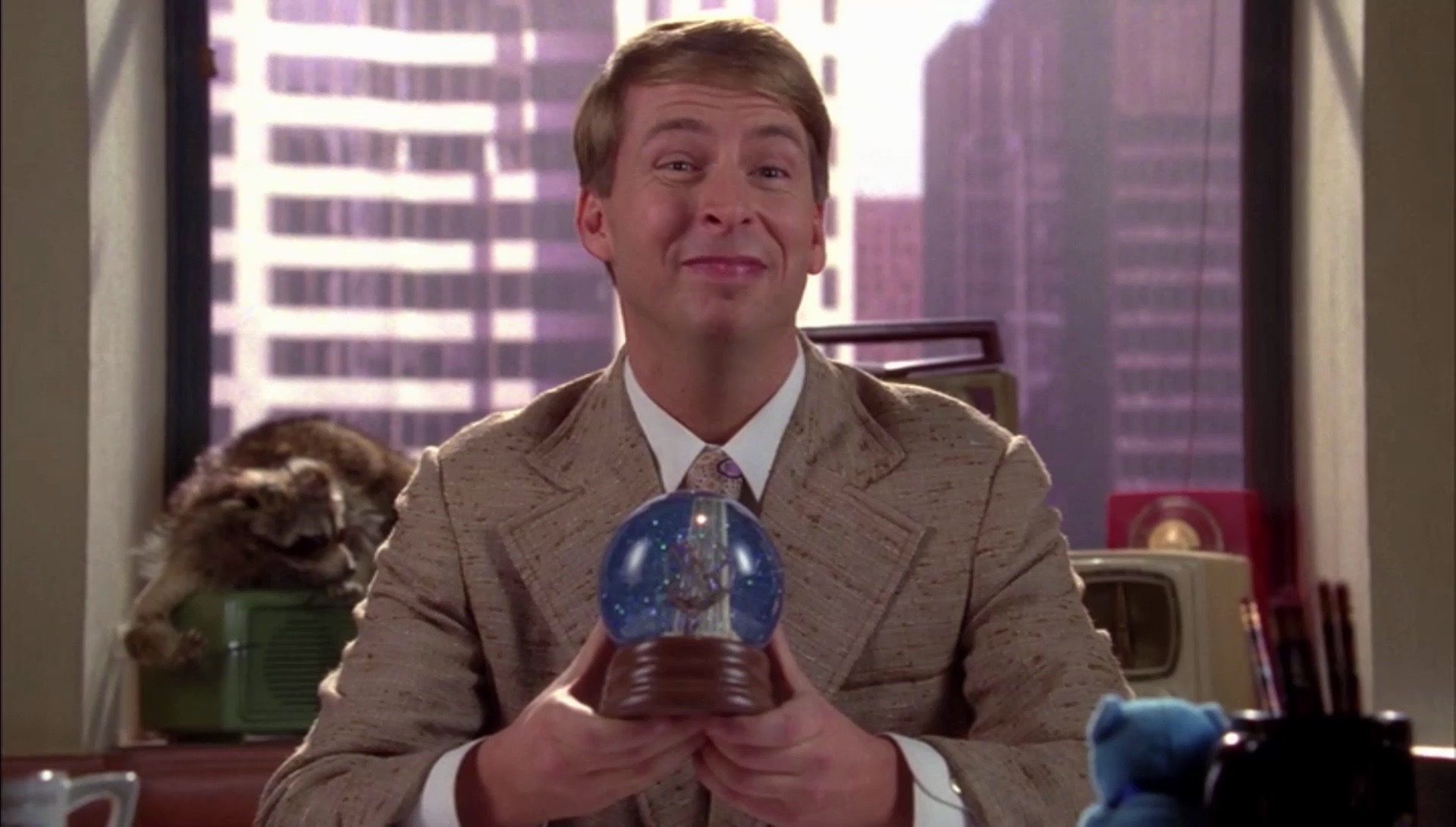
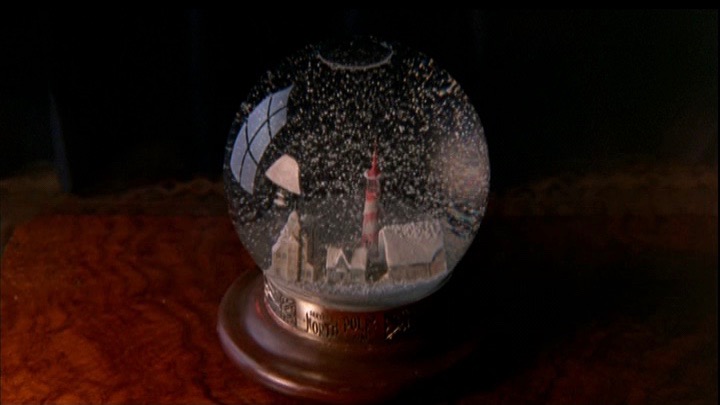
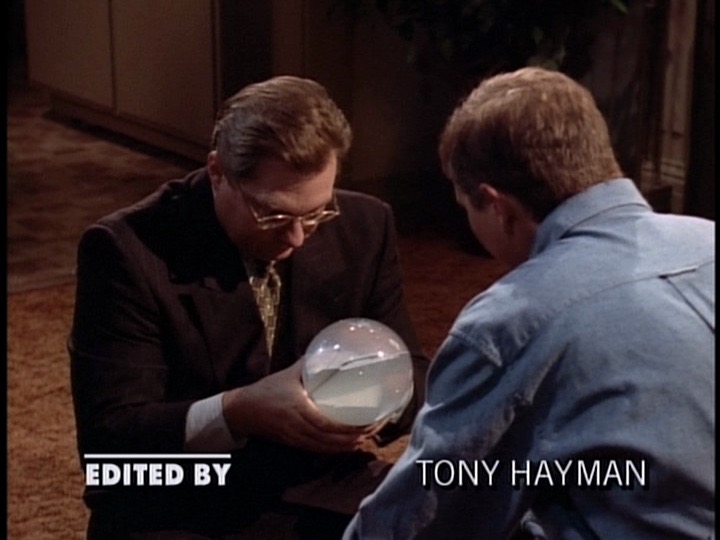
I guess it could also be a reference to One Magic Christmas (1985) where the central point of hope is the North Pole within a snow globe where the little girl visits Santa Claus.

One Magic Christmas (1985)

One Magic Christmas (1985)

The rest of the music video reminds me of the comic book styling of The Alan Parsons Project’s Don’t Answer Me in the way it portrays everything as a two-dimensional pop-up book. That music video has a comic book opening that contains the music video inside itself.

The rest is kind of morbid with the sheep being sent to slaughter, which seems to contrast with the intent of the song.

Still, a pretty music video to look at.

Christopher Mills directed the music video. He seems to have worked on somewhere around 70 music videos. He also wrote and worked as an animator on the video.

Kelly Norris worked as an executive producer on the video. It is a little difficult to tell, but she seems to have produced around 100 music videos.

Danny Lockwood’s work on the music video is new to me. He was the video commissioner. I had to look up what that means. A video commissioner is essentially a creative director in that the music company comes to him, and he goes out to find the appropriate director to make the music video. Lockwood seems to have worked in this capacity on around 140 music videos. He has also done some other work such as co-directing Last Friday Night (T.G.I.F.) for Katy Perry.

Enjoy!

Music Video of the Day: Man! I Feel Like A Woman by Shania Twain (1999, dir. Paul Boyd)


Yep! That is just like I remember. By that I mean, it’s the same music video as Addicted To Love with only minor changes. I recommend watching the two music videos side-by-side because you’ll notice only a couple of things are different:

  1. For whatever reason, they decided not to give the guys as much screen time as they gave the girls. I guess you can chalk this up to numerous things. Perhaps they wanted to send a message by showing that the music video works just as well with guys, but not sexualize them as much. On the other hand, they sexualize Shania Twain herself, so I am not sure. Perhaps it was to tie-in with the song, and make it about pride of female form rather than a simple display while also showing that guys can be just as simplified to an attractive form in the same way as Addicted To Love did with women. It could also just have been that they were told to put the heavy focus on Twain, and so that’s what they did. Given the time-period, that actually makes the most sense to me with maybe those other things being an afterthought.
  2. They throw in a few additional flourishes such as an iris transition, and give Shania some solo-time.
  3. It also looks better. One reason of which was most likely a result of a change in equipment and budget. The other reason is likely due to who they got to shoot the music video.

That’s it. Even the runtimes are only off by one second. This music video is one second longer than Addicted To Love.

Unlike Addicted To Love, where we know who all five girls are, I was only able to track down one of the guys named Bryce Buell. I won’t paraphrase the interview entirely, but the most interesting thing to me was that he noticed that Shania was quite petite, so they kept using some camera tricks to make her look taller than the guys. At about two minutes and fourteen seconds you can see the height difference he’s talking about.

Director Paul Boyd has shot somewhere around 150 music videos. He did several of them for Shania Twain.

I wish I could save the cinematographer of this music video for another day, but he happened to shoot this music video, so I’ll talk about him now.

His name is Daniel Pearl. He has shot at least 430 music videos since around 1982. Not small music videos either. He shot November Rain for Guns N’ Roses, Every Breath You Take for The Police, and Billie Jean for Michael Jackson to name a few. In fact, he’s credited as starting modern music videos back in 1969 when he made an experimental film called Rock ‘n’ Roll Nose using a song by The Byrds as the score. He also has numerous other film credits that are notable. He shot the original Texas Chainsaw Massacre in 1974. He was brought back to shoot the 2003 remake as well. He also did the 2009 Friday the 13th. His credits go on and on. Odds are, you’ve seen something he shot.

If you have only seen the music video for Addicted To Love, then this is well worth watching. For those who have seen this already, then enjoy this time capsule of the late 90’s pop princesses.

Music Video of the Day: Addicted To Love by Robert Palmer (1986, dir. Terence Donovan)


It’s obligatory to do legendary music videos like this one. The problem is finding something to write about when it comes to them.

We like things that look alike moving in unison. It’s as old as entertainment in general. You can swap them out for guys, or even toothbrushes, and it works just as well.

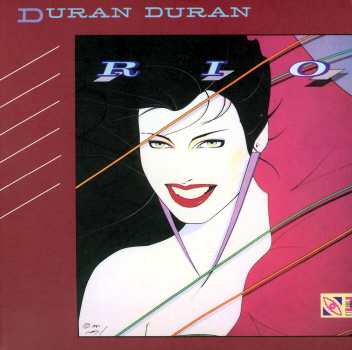
What seems to have some people slightly miffed is that they were stripped down to form rather than shown as a living breathing human being. According to Wikipedia, this is similar to what artist Patrick Nagel would do in his artwork. He happened to design the cover for Duran Duran’s album Rio.

duranrio

What I can do is a where-are-they-now on this music video because we actually know who all these girls are in the video.

The women go like this: Julie Pankhurst (keyboard), Patty Kelly (guitar), Mak Gilchrist (bass guitar), Julia Bolino (guitar), Kathy Davies (drums).

You can find some of them on Twitter. You can also find numerous articles on them since they appear to have been tracked down fairly recently.

Mak Gilchrist posted a reunion of four of the five girls.

There’s also an interesting video where some of the girls are interviewed. I wish I could embed said video, but it’s on Yahoo!, and WordPress.com does not allow that for security reasons, so you’ll have to follow the link. It’s worth it because it provides background information on what has happened to them since the music video.

https://uk.screen.yahoo.com/robert-palmer-girls-today-173805406.html?format=embed&player_autoplay=false

I particularly like Kathy Davies’ story about mostly watching Robert Palmer’s butt off-camera.

There’s also a humorous quote from Mak Gilchrist over on Wikipedia from Q magazine:

“I was 21 and got the part on the strength of my modeling book. We were meant to look and ‘act’ like showroom mannequins. Director Terence Donovan got us tipsy on a bottle of wine but as we were having our make-up retouched, I lost balance on my heels and knocked the top of my guitar into the back of Robert’s head, and his face then hit the microphone.”

The girls were miming five musicians that were off-camera. I agree with Mak Gilchrist in the video that they should be tracked down too because they probably have interesting stories to add about the shoot.

Enjoy!

Music Video of the Day: (Rock/Rap) Superstar by Cypress Hill (2000, dir. Dean Karr)


Prior to finding this one, I really only knew Cypress Hill from the early 90s with songs like Insane In The Brain. I picked this up later on. This is the first time I really watched the music video, and somebody is a fan of the music video for The Tubes’ She’s A Beauty, complete with including the rollercoaster entrance. Actually this song reminds me of The Tubes in general. In particular, the song What Do You Want From Life?

The video is what you would expect from a song about musicians getting launched into the stratosphere, then the next minute thrown back to Earth without any regard to what happened or happens to them. You might have been the creative one, but you are just a small person surrounded by the big people who are going to make or break you. The part where he is tiny and with big desks around him made me think of The Crowd (1928) that has inspired countless films over the years.

My favorite part is easily when he climbs the pyramid of televisions. That’s where the biggest difference between (Rock) Superstar and (Rap) Superstar is located in the music videos.

During that part, we get a different set of commentaries than we do in (Rock) Superstar. There are obviously other differences between the two since (Rap) Superstar comes in 24 seconds shorter than (Rock) Superstar. One of them is that in (Rock) Superstar, the kid is flung out and the music video stops with him mid-air, while in (Rap) Superstar we seem him land and smiling. We also get some commentary from Eminem at the beginning of the video as well.

Between the two, I prefer (Rock) Superstar. It feels like the more polished version of the two, but it’s definitely worth watching both of them.

Director Dean Karr seems to have done about 60-80 music videos and other music related films.

Dermott Downs shot the music video. He’s done about 10 music videos. He’s also done numerous other things including directing episodes of Arrow, Supergirl, and The Flash. It’s funny that he worked on the third Texas Chainsaw Massacre movie considering that the person who shot The Tubes’ music video for She’s A Beauty also shot the original and 2003 remake of The Texas Chainsaw Massacre.

Arthur Gorson produced the music video. He produced around 20 music videos. He’s also worked on various other films including producing Cronos (1993) for Guillermo del Toro.

Joe Oz was the 1st assistant director. He seems to have worked on about 140 music videos.

Trish Summerville was the stylist on the video. She seems to have done at least 25 music videos. She has also worked on films like The Girl with the Dragon Tattoo (2011), The Hunger Games: Catching Fire (2013), and Gone Girl (2014).

Music Video of the Day: Shake It Off by Taylor Swift (2014, dir. Mark Romanek)


Since I did Beck yesterday, I was obligated to do a Taylor Swift music video today since the two were brought together through the power of Kayne West.

This is the first music video from the current decade that I have done so far. I wish I was more familiar with recent music videos, but the first thing that came to mind was Limp Bizkit’s My Way except not stupid because it was directed by Mark Romanek rather than Fred Durst. My Way is that music video where they seemed to have no idea what they were going to do, so they had the band in a bunch of generic music videos that could have been done, and mixed it with a version that had the band in a simple fashion at the center of it all. In Shake It Off, that would be when she appears in a black top and bottoms.

Since it is off the 1989 album, I also thought that the different sections of the video tie-in to things that have struck Swift’s interest during her lifetime.

I also picked up that instead of it being Taylor Swift’s way or the highway, they were trying to bring the spirit of the song to a playful music video, and nothing more.

According to Wikipedia, a whole bunch of people reviewed the music video like it was the latest movie to premiere during the weekend. Romanek seems to largely agree with me by saying that “we simply chose styles of dance that we thought would be popular and amusing, and cast the best dancers that were presented to us without much regard or ethnicity” and that “if you look carefully, it’s a massively inclusive piece, it’s very, very innocently and positively intentioned. And–let’s remember–it’s a satirical piece. It’s playing with a whole range of music video tropes and cliches and stereotypes.” In other words, he made a better version of Limp Bizkit’s My Way.

Tyce Diorio was the choreographer. He has also worked as an actor, appearing in movies like Robin Hood: Men In Tights (1993) and Showgirls (1995).

Paul Martinez edited this music video.

John Emmons was the medic. There’s a credit first for me on a music video.

Samantha Abrams, Marisa Hood, and Katherine Way were backup dancers.

Music Video of the Day: Loser by Beck (1994, dir. Steve Hanft)


I’m not gonna lie. I really have no idea what they were going for by simply by watching the music video. I spot the reference to Django (1966). The coffin moving on its own reminds me of Vampyr (1932). A lot of the religious imagery makes me think of Dreyer. That, and the holiday–Day of the Dead. I’m also pretty sure Beck is wearing a Saturday Night Fever (1977) outfit at one point.

According to Wikipedia, director Steve Hanft was inspired by Stan Brakhage, Maya Deren, and 1920’s surrealist films for the moving coffin. Beck apparently said they were “fucking around” when they made the video. That sounds about right. According to IMDb, the line “I’m a driver. I’m a winner. Things are gonna change. I can feel it” was sampled from Steve Hanft’s own film called Kill the Moonlight (1994). They also used clips from the film.

Also according to Wikipedia, there is one clip in the video that was not shot by Steve Hanft. It’s the one where Jesco White dances on a bench in a white satin shirt. It is also the one part of the music video that was shot on video rather than film. It was shot by Julian Nitzberg.

There’s some more background information on the music video over on Wikipedia.

Director Steve Hanft appears to have done somewhere between 50 to 60 music videos along with other films.

Enjoy!

Music Video of the Day: Short Skirt/Long Jacket by Cake (2001, dir. John McCrea)


Sometimes I wind up on a music video that there really isn’t much to say about. This is one of them.

It’s a very simple idea. Just round up a bunch of different people to see how the react to the song. Of course, that’s a little oversimplifying things. The title of the song itself is a contradiction. You’ll notice that several times they put two different opinions of the song side-by-side that are opposites of each other. The best example is at the end when the German tourist gives some pointers, but generally likes the song. Then it cuts to the lady who thinks Cake is going to be a one-hit wonder. You’ll notice that kind of juxtaposition throughout the video.

According to Wikipedia, it was felt that the music video wouldn’t hold up over multiple viewings. That’s why they went and shot one in New York, Mexico, and Toronto. I could only find the New York and Canadian ones, which I have included below.

Both the original and New York ones were directed by John McCrea, who is the lead singer of the band. He directed a few other ones for his band.

The Mexican one was directed by Alejandro Romero who apparently used a fake name called los Hermanos Ponderosa that is also used by director Gustavo Hernandez. Jo Ann Thrailkill produced that version of the music video. She has produced about 130 music videos. Wikipedia also adds that it was edited by Alejandro Davalos Cantu.

Enjoy!

Music Video of the Day: Silent All These Years by Tori Amos (1991, dir. Cindy Palmano)


Funny enough–I am pretty much at a loss for words to talk about this music video even though I’ve been a big fan of Tori Amos for more than decade and a half at least. You have the child that emerges from behind the piano to connect her childhood to her adulthood, which represents the years of silence. Then we see the child run past her adult-self that is in a box–whether by choice or not. It doesn’t matter. There are other similar framings of Tori that emphasize height and face. You also have the inclusion of the old-lady outfit and breast implants. They are all pressures and conformity that she is walking away from with this song, the album, and literally by getting out of the box in the music video. It’s clever to have her stop lip-syncing at the part of the song where you would do that if you were going to do it anywhere. Then it ends with an uncomfortably long shot of Tori’s face where she looks like she is going to tear-up. There are some other things going on such as the innocent child popping in and chasing her during the video at the right times lyric-wise. You could do more analysis of this music video if you wanted to.

Considering this was Tori’s debut solo album, you would think this would be the first song on that album, but it isn’t. It’s the third one after Crucify and Girl. It all builds to the last song on the album about when she was raped, which is sung a capppella. The music videos seem to have started with this song, then were followed by Winter before getting to Crucify.

It’s a powerful music video, but it’s also a little misleading. I can’t recall the program where I saw it. It was probably a Behind The Music type thing. Regardless, I remember Tori saying that they started off trying to sell her like she was the new Carole King. The girl and the piano thing, which is exactly how she is shown in this music video at the beginning.

It’s funny to think of that in retrospect seeing as I remember being introduced to Tori Amos via the video for Spark. You know, the one where she is bound, blindfolded, and left with rats in the woods. I remember when I fell in love with her music. It was with her album of covers called Strange Little Girls. That’s the one where she took Eminem’s ’97 Bonnie and Clyde and made it particularly disturbing.

All in all, the music video is well-made, and a decent introduction to Tori Amos. You have to start somewhere, and the song is there even if I don’t think the video quite captures the musician you are getting. Plus, take a look at Madonna’s video for her early song Burning Up. You’d swear they thought they were selling a solo female Duran Duran.

Cindy Palmano directed five music videos for Tori Amos. From what I can tell, she hasn’t done anything else in the area of film since that time. Wikipedia says she was a photographer at the time. She’s obviously still around since you can find stuff about her with a simple Google search.

George Tiffin worked as the cinematographer on the music video. He directed a couple of music videos for Morissey. He seems to have done some other work as well in film. He is related to the Fiennes family.