Music Video of the Day: Street Of Dreams by Rainbow (1983, dir. Storm Thorgerson)


Can I milk Twin Peaks some more? I hope so, because I’m going to do 30 days of surreal–or at least weird–music videos. Twin Peaks being back on TV is totally the reason I’m doing this. It’s not just a flimsy excuse to do some videos I’ve wanted to do for awhile that share a similar quality.

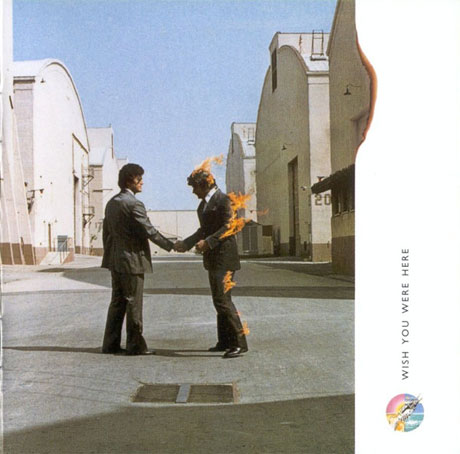
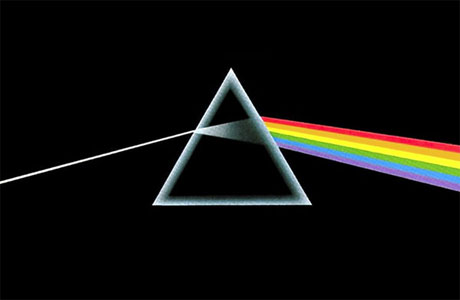
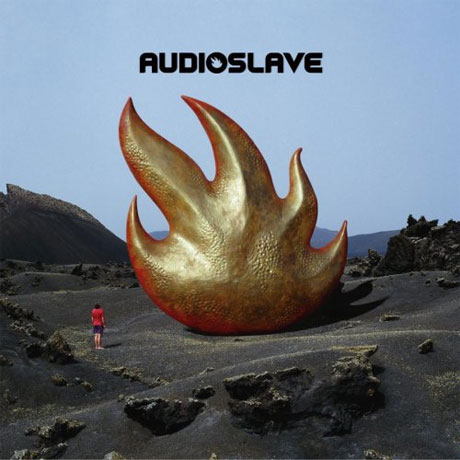
You probably recognize the name of the director. That is thee Storm Thorgerson. If the name doesn’t sound familiar, then some of the album covers below should look familiar.
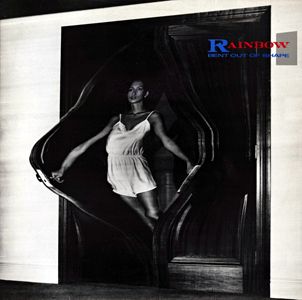
He also did the cover for the album this song is on called Bent Out Of Shape.
What you may not know is that he also directed around 50 music videos. I would love to know if mvdbase is accurate when it comes to the release date of this video. I say that because according to them, it first aired in August of 1983. If you’ve already listened to the music video, then you might of heard something that was new in 1983: dialog. According to mvdbase, Love Is A Battlefield by Pat Benatar aired in September of 1983, making this the first music video that used dialog. Then again, if the music video for Dead Ringer For Love by Meat Loaf & Cher did come out in 1981, as it appears it did, and wasn’t part of the 1981 movie Dead Ringer, then that one proceeds both of them by two years.

The last time I did a Rainbow music video, it was for Since You’ve Been Gone where I spent most of the time talking about the different covers of Roger Glover’s song that have been done over the years. I didn’t really talk too much about Rainbow.

Groups like Black Sabbath and Deep Purple are household names. The first is obvious, but if you need proof of the second one, then just watch 2016’s Hush, and you’ll notice that the female lead is wearing purple for the length of the movie. Hush being one of Deep Purple’s best songs. It was also used in I Know What You Did Last Summer (1997). They may have also done something about smoke and water.

Rainbow is what I think of as a pet project for a bunch of heavy metal icons of the 70s and 80s. The group was created by Richie Blackmore after moving on from Deep Purple. He joined forces with Ronnie James Dio’s band Elf, and soon Rainbow was born with Dio fronting the group. He eventually left, and would take Ozzy Osbourne’s place fronting Black Sabbath. Then Graham Bonnet came in for a short period of time. This song was done with Joe Lynn Turner on vocals. He would front the group till their first break-up in 1984. You can think of him as the MTV-face for Rainbow. That amuses me since between Ronnie James Dio, Graham Bonnet, and Joe Lynn Turner, I would pick Bonnet in a heartbeat to usher my group into the age of music videos.

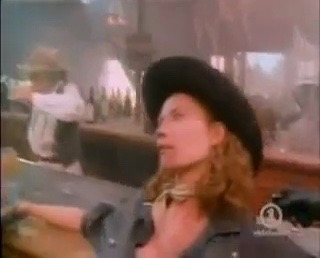
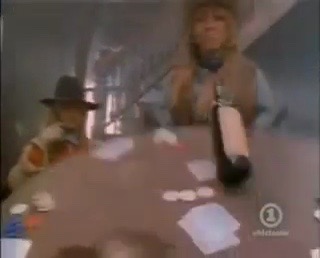
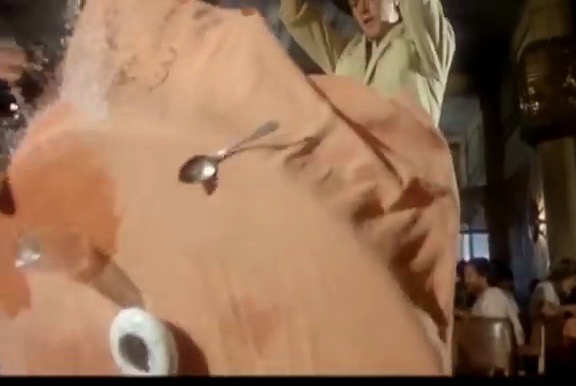
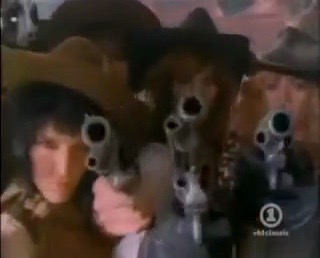
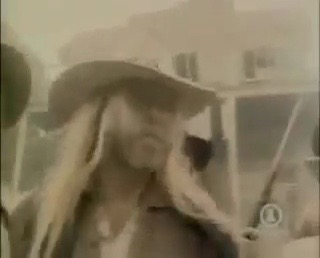
The video itself features a woman being locked in a room while her boyfriend gets hypnotized onto the sets of a music video. In the end, someone gets caught in the dreamworld. I’m not exactly sure who it is: the male lead or the psychiatrist. I wanna say it’s the second one, but the body moves so fast that I can’t tell. Also, as the boyfriend is freeing the woman, you can still hear water in the background.

My favorite part of this music video is what I have to imagine is an in-joke about music videos. One of the things the guy says is that the band he sees is always playing the same song. A surreal music video for a good song is like a repeating dream–except swap sleep for watching MTV and swap repeating for a video in heavy rotation.

There seems to be some disagreement between whether this aired on MTV in the first place. I’m inclined to believe that it did. Blackmore apparently said it was banned. That doesn’t mean it wasn’t ever aired. The reason this seems to be in dispute is that a Dr. Radecki said the following in a report on MTV for the National Coalition on Television Violence (NCTV):

“Street of Dreams” by Rainbow has a psychiatrist dominating a man through hypnosis intermixed with male-female violent fantasies including a bound and gagged woman.

Then again, based on the Wikipedia article on him, he doesn’t sound like the most reliable source on anything. However, he had to have seen it somewhere back when it would have come out. It’s kind of funny that about thirty years later, he would get arrested and sentenced for one to two decades for an opiates scandal. He appears to have had a checkered past in the field of medicine in general. In other words, it sounds like he sorta became the psychologist in the very video he chastised. It’s coming across weird stuff like this that helps to keep me motivated to continue doing these posts.

Anyways, enjoy the video! It is there. It’s just one of those videos that doesn’t like to show the thumbnail when you embed it.
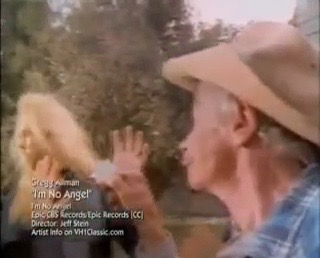
Music Video of the Day: I’m No Angel by The Gregg Allman Band (1987, dir. Jeff Stein)


Happy Memorial Day. Or at least as happy as it can be with the recent passing of Gregg Allman. I would have done a video for him yesterday, but there were extenuating circumstances that made it impossible–not the least of which is that their videos aren’t exactly well-documented or officially posted on YouTube.

Let’s look at this from the perspective of director Jeff Stein. You made a name for yourself with The Who documentary The Kids Are Alright (1979), which ensured that they wouldn’t be forgotten anytime soon by preserving their history. You directed one of the greatest live videos–Rebel Yell–for Billy Idol who was a 70s artist that you helped to make explode as an 80s MTV superstar. You took the not so photogenic The Cars, and turned in You Might Think, which was very ambitious and successful. You made Out Of Touch for Hall & Oates that Daryl Hall in I Want My MTV said, “was maybe our most significant video.” You survived the production of Torture by The Jacksons–even if that meant having to bring in a wax dummy of Michael and telling Paula Abdul she had to go when Jackie said she wanted to choreograph the video. You handled another 70s artist in Tom Petty And The Heartbreakers by making the wonderfully surreal Don’t Come Around Here No More. You also brought people the videos for My New Boyfriend by Carly Simon and These Dreams by Heart–both 70s artists.

Now you are approached to do a video for The Gregg Allman Band, probably based on your record of being able to bring 70s artists into the MTV-era. I know that the first thing that would have crossed my mind is ZZ Top. They were also a band that had been around since the early 70s, and Gregg would have been about 40 by the time you had to make a video for him. Too bad this video didn’t do for The Gregg Allman Band what the ZZ Top videos did. Then again, that was a minor miracle which even received its own chapter in I Want My MTV, so it’s unrealistic to expect lightning to strike twice. It’s a simple little video that could have just as easily been done as a stage performance. I’m guessing he wasn’t given much of a budget to make this video. I bring up Stein’s record and ZZ Top because ZZ Top was who I thought of when the ladies showed up, and I would imagine that Stein was approached because of his success with 70s musicians. Let’s walk through this video.

The band pulls up at a rundown saloon.

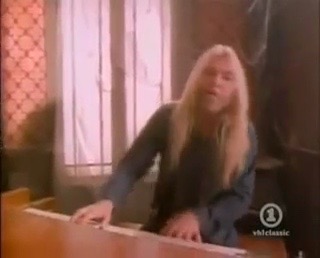
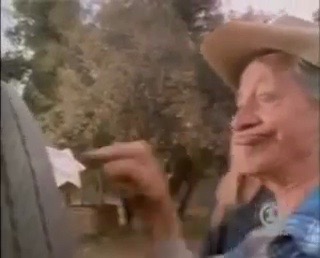
We see Gregg kick the tire and tell the attendant to fix the car.

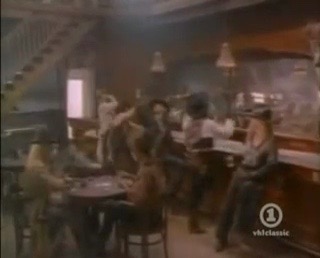
The band goes inside to find that under white sheets are instruments and other equipment that is already set up for them. They waste no time, and start playing.

We now find out one thing The Gregg Allman Band has in common with ZZ Top. They’re both a little magic. Gregg may not appear to deliver keys to a hot car, but his music does have the power push certain parts of a location into the past.

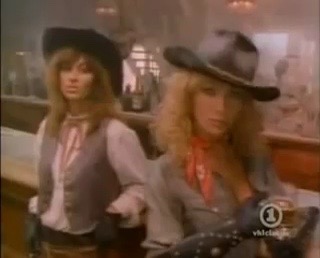
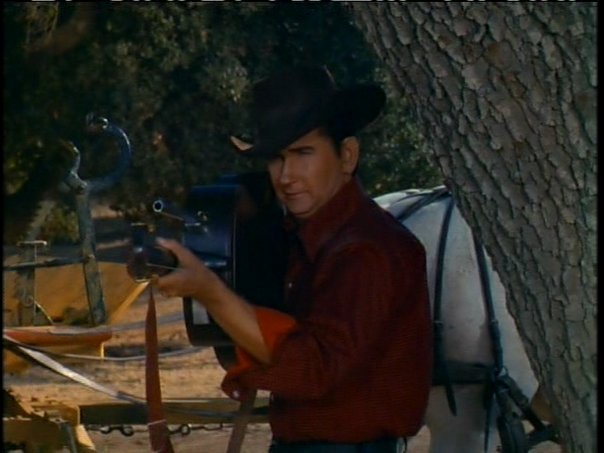
Apparently, this bar used to be frequented by gunslinging women.

Unruly gunslinging women at that at. Bonk! She’s out.

Now we get something I never would have imagined I’d see in a video for The Gregg Allman Band.

Hungry Like The Wolf by Duran Duran (1982)

A Duran Duran reference. Hungry Like The Wolf. I’m No Angel. I see the similarities.

The ladies soon take notice of Gregg, and appear to start to stick him up with their guns.

That’s when we find out that the ladies are indeed in the past as the video acquires a flashback tone. Gregg is taken outside.

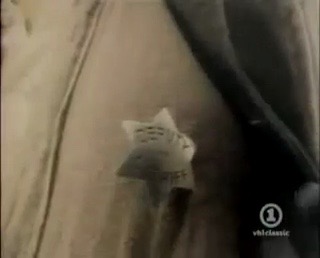
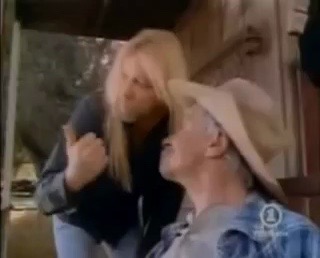
They string him up. Gregg gets in a quick kiss before being hanged. Just before it happens, we see that he was the deputy sheriff in the past–or possibly in another life.

The trap door opens and he’s hanged. Then just after we see his feet dangling, it cuts to Gregg putting down the cover over the keys. It sounds like the lid of a coffin closing.

It’s a nice bit of matching on action that brings the music, the story in the song, and the story in the video to a close. Gregg and the band leave the bar to see if their car is fixed. Turns out the badge is still around and was stuck in their tire–somehow.

The attendant offers it to Gregg. I love his reaction: No way! I saw the previous scene. I’ll just be on my way now.

It lends credence to the belief that the song is partially autobiographical. Perhaps his rejection of the badge is Gregg making a break with his past in order to move on with his life.

I can’t imagine this particular video did a whole lot for Gregg Allman. However, I could be wrong. This came out a couple years after MTV founded VH1 in order to drive Ted Turner’s competing network, CMC, out of business, which it promptly did. VH1 did play stuff that wouldn’t have been shown on MTV. Allman did go on to do some other videos, including another one with Jeff Stein and even one with Michael Bay for the song I’ll Be Holding On that was on the Black Rain (1989) soundtrack.

The song was a number-one hit. How much of an affect the video had on its success, I don’t know. It was more of a universally playable song because it fit the AOR (Album-Oriented Rock) format. I’m sure that contributed to it doing so well. From what I’ve read, it seems to be credited with essentially bringing Gregg’s career back to life.

I find it humorous that Wikipedia says the song featured “Allman’s gruff vocals in a Bruce Springsteen sound-alike way.” I say that because director Jeff Stein is the one who was originally meant to direct Dancing In The Dark when Springsteen walked off the set because he didn’t like the direction the video was going, leading to Brian De Palma making the version we are familiar with today.

The video was produced by Mike Riffle. He produced around 10 music videos.

Rest in peace, Gregg Allman.

Music Video of the Day: She’s A Mystery To Me by Roy Orbison (1989, dir. David Fincher)


Seeing as I did In Dreams yesterday, I felt it was necessary to follow it with She’s A Mystery To Me, since they are connected. I’m going quote Wikipedia below about how the song came to be, and it’s ties back to both In Dreams and Blue Velvet (1986) because me paraphrasing it doesn’t make any sense.

During a restless night of sleep in June 1987 in London during U2’s Joshua Tree Tour, Bono slept with the soundtrack to the film Blue Velvet CD on repeat. The CD had been given to him by the Edge’s wife. When he woke the following morning, he had a tune in his head which he assumed was from the soundtrack. He soon realized it wasn’t so he wrote down the basic structure of the song. Later that day he sang the unfinished song to the band at their pre-concert soundcheck at Wembley Arena. After the concert, Orbison paid the band an unannounced visit backstage, where a perplexed Bono played the song for him. Bono and Orbison worked again on the song in mid-November in Los Angeles. The album Mystery Girl was named after the song.

I haven’t seen all of David Fincher’s music videos, and I might be a little biased since I like Orbison so much, but I think this is the best one I’ve seen. I love that he did it with almost no one in the video. It’s all done as if we are a detective arriving on a series of scenes, and trying to piece together what happened.

According to Wikipedia, there are two versions of this video. This is the popular one where it is a grown woman that is planning on leaving, who we assume is Orbison because of the boots. In the other version, it’s a mother who is pursuing her young daughter who is about to board the plane. The woman is played by the same person in both videos. The big difference is that the second version has the one leaving return to the person showing up at the end rather than being left standing alone.

The only other video that I can think of that is quite as beautiful, or is at least very similar, is Butterfly, where Mariah Carey got veteran cinematographer, Daniel Pearl, to co-direct it with her.

The video was shot by Marc Reshovsky. He worked mainly as a cinematographer. However, he did get behind the camera for a few music videos like Nothin’ But A Good Time by Poison and I Remember You by Skid Row.

I’ve included the trailer below for the documentary made about the album, Mystery Girl, that was directed by Orbison’s son, Alex Orbison:

Also, assuming it is still up, here is Bono singing the song:

It’s amazing how much it sounds like something Bono would write, but it’s still inextricably linked to Orbison’s voice.

Enjoy!

Music Video of the Day: In Dreams by Roy Orbison (1987, dir. Leslie Libman)


Since I missed the day of the premiere of the Twin Peaks reboot, I’m doing my Twin Peaks tie-in video today. If Wikipedia and Songfacts are to be taken at face value, then there’s an interesting story behind this music video.

As hard as it is for someone like me who grew up on Orbison to hear, his career apparently stalled in the 1970s. Maybe people really didn’t like The Fastest Guitar Alive (1967), and held it against him.

The Fastest Guitar Alive (1967, dir. Michael D. Moore)

The Fastest Guitar Alive (1967, dir. Michael D. Moore)

I wonder how he ended up agreeing to be in that. Maybe he saw that Marty Robbins was starting to appear in movies such as that years Hell On Wheels, and decided he’d take a crack at it the same way Elvis did. His career probably stalled because it was eclipsed by the revolutions in music during the 60s and 70s.

Then Blue Velvet (1986) came along. Orbison didn’t authorize the use of the song in the movie or know how it was going to be used. Lynch went ahead and used it anyways. Since it was used so effectively and is one of the most important parts of the film, it stirred up renewed interest in Orbison. At the time, Orbison didn’t have access to the master recordings of many of his hit songs because of legal issues. Orbison changed his tune about its use in the movie at this point, and asked Lynch if he could use some footage from the movie in the music video for the song. To solve the legal problem, Orbison went back into the studio to re-record his hits for the 1987 album In Dreams: The Greatest Hits. Lynch not only was fine with him using scenes from the movie, but offered to help with the re-recording of the song for the greatest hits album, which he did.

The video is nice and simple. It captures the surreal feeling of the song, the film, and combines the two into a single music video. I love that it starts with Dean Stockwell lip-syncing the song before slowly fading to Orbison actually singing it. It uses Stockwell several more times during the video, but that initial part is like peeling back the curtain to see what is really behind it–a theme of Blue Velvet.

I am going to believe mvdbase when it says Leslie Libman directed this. It, and IMDb both say that she directed some videos for him. The only thing that throws me a bit is that Wikipedia says 1987, but mvdbase says 1989. I think that’s probably an error. Still, they did make videos after Orbison’s death in 1989. That’s why I’m making special mention of it.

You may or may not recognize one of the backup singers in the video. It’s Denise Vlasis, who is best-known as being a prominent Madonna lookalike.

Let’s put this all together here. You have David Lynch who used In Dreams by Roy Orbison in Blue Velvet. The video was directed by Leslie Libman. Leslie Libman would go on to direct Britney Ever After (2017). Britney Spears famously kissed Madonna onstage, and collaborated with her. Denise Vlasis is such a famous Madonna lookalike that she has worked with Madonna. Denise Vlasis is in the music video In Dreams, which brings us back to David Lynch.

You know, as bad as Britney Ever After was, this has me thinking it would have been appropriate for Libman to use She’s A Mystery To Me after the film’s attempt to explain away it not really having the rights to tell the story by saying that people only knew her through video clips–usually from TMZ.

Enjoy!

Music Video of the Day: I Predict by Sparks (1982, dir. Doug Martin & Steve Martin)


Or is directed by David Lynch?

Back when I went through all the David Lynch music videos, I specifically mentioned this one because it is frequently credited to David Lynch. If you do a Google search, then you’ll turn up lots of reviews and lists of Lynch music videos that include it. Even Wikipedia disagrees about it. If you go to the list of David Lynch music videos, then it’ll say he directed it. However, if you go to the article written about the song and video, then you’ll find out that it wasn’t. That article cites a book called Talent Is An Asset: The Story Of Sparks by Daryl Ealesa. It says the video was directed by Doug Martin and Steve Martin in the style of Lynch. I haven’t read it yet. Regardless, I just bought it so I can provide you with an excerpt covering it:

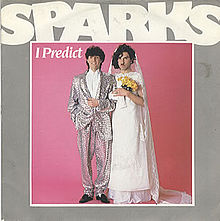
‘I Predict’ came with a striking video that fell foul of the conservatism of MTV. Directed in the style of David Lynch by group friends, identical twins and occasional actors Doug and Steve Martin, it is crammed full of strangeness. Shot in a dimly lit bar outside LA, Ron, in drag, develops the bride theme from the album’s cover with Russell still wearing the cover’s wedding suit. And Ron is stripping. And Russell is watching. Something is clearly not right. With the attendant promotion and the video’s notoriety, ‘I Predict’ reached number 60 on the Billboard Hot 100. Sparks had finally achieved a US Top 100 single after a decade of trying.

Below is the album cover the excerpt speaks of:

The funny thing is that despite being mis-credited to David Lynch, it does have a connection to him beyond being done in his style. David Lynch made a music video for the song Thank You, Judge by his group called BlueBOB that was made up of him and Jeff Neff. At the end of that music video, you have Eli Roth and Naomi Watts laughing at Jeff Neff about to receive an anal probe. Anyone who has watched Cabin Fever (2002) and David Lynch’s work, knows that from the opening to the very end, you’d be thinking of Lynch regardless of whether you knew there was any connection between them. From the Blue Velvet (1986) style opening credits to Party Cop to the person in the rabbit suit. There’s even a thanks to him in the credits. 7 years later, director Ti West made a sequel that is basically a lover-letter to 70s and 80s exploitation films. I watched all the Cabin Fever movies recently, and something caught my eye in the credits on Cabin Fever 2: Spring Fever (2009). They used the Sparks song Eaten By The Monster Of Love, which is from the album, Angst In My Pants, that includes the song I Predict. Even without having directed this video, Lynch is still connected to it beyond the use of his style in the video.

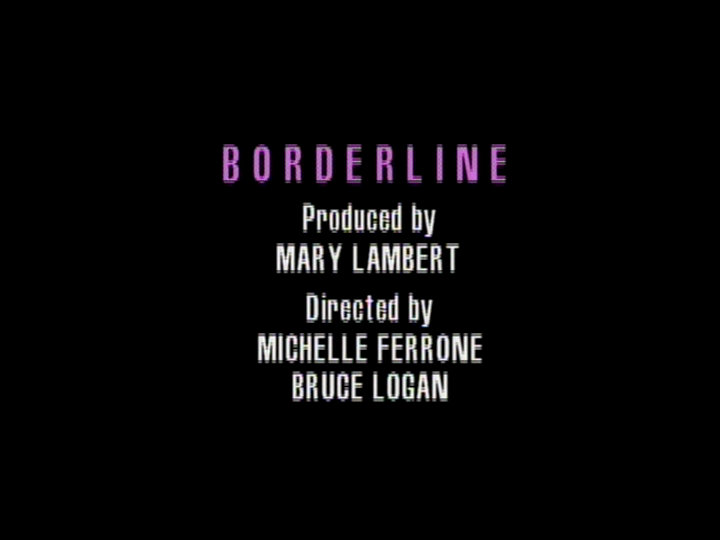
David Lynch being credited for this in so many places doesn’t surprise me. I have a copy of Madonna: The Immaculate Collection. It’s a compilation of her early music videos. It lists Mary Lambert as the producer of Borderline–not the director.

You’d think that would be pretty definitive. In fact, there’s a reference to Star Wars in Pet Sematary II (1992)–Bruce Logan having done visual effects on Star Wars.

However, if you read the book I Want My MTV, then you get information straight from Lambert and others that she did indeed direct Borderline.

The point is that it’s easy for this stuff to get confusing, and as a result, you can end up with these kinds of situations.

Enjoy!

Music Video of the Day: Never Tear Us Apart by INXS (1987, dir. Richard Lowenstein)


A couple of weeks ago a relative of mine passed away. He had serious issues in his life that brought it to a close far too early. I wasn’t close with him, but nevertheless. A week later we lost Chris Cornell under similar circumstances. Now we have the concert bombing, among other things.

When I heard of Cornell’s passing, I thought of this song because lead-singer Michael Hutchence also died of an apparent suicide 20 years ago in 1997. I thought it was an appropriate music video to spotlight at this time.

It was shot in Prague. It was directed by Richard Lowenstein, who directed many videos for INXS. It was edited by Bruce Ashley.

I’ve included numbers below that you can call if you find yourself in these kinds of situations. Thank you, Patrick, for listing them on your Twitter account.

24/7 Suicide: 800-273-8255
DV: 800-799-7233
Crisis: Text START to 741-741
Trans: 877-565-8860
TTY: 800-799-4889

Music Video of the Day: A View To A Kill by Duran Duran (1985, dir. Godley & Creme)


That turned out to be longer and more of a rollercoaster for my mind and body than I expected. After all the side effects of the meds and the subsequent withdrawals, it didn’t help the chronic cough. On the plus side, I now own a second dog named Elke. Whether she’s named after Elke Sommer or not, we don’t know. Regardless, since Lisa was kind enough to cover for me, it means I need to watch Lisa And The Devil (1973) with Elke Sommer. On the downside, I watched 70 films since my last post, which means I will have more stuff to sift through at the end of the year. Oh, well.

Rest in peace, Roger Moore.

To my knowledge this is the only music video that has Roger Moore in it–even if it is only in footage from the film. Speaking of which, you will notice two things immediately when you start up this music video:

  1. It is silent for a little over a minute.
  2. The video quality isn’t very good.

At first I thought my iPhone was glitching on me. It’s not like the iOS YouTube app is perfect or anything. I scrubbed forward, and the song kicked in. I didn’t notice the video quality was low until now. I have a theory about why it is silent during the opening film footage and is of low quality throughout.

This isn’t like Romancing The Stone by Eddy Grant. Yes, they tried to integrate him into the footage from the movie, but it’s easy to edit that out, and they did just that for a separate version of it. This video heavily integrates the film footage into the music video. You really can’t separate them, and expect to be able to put this up. My best guess, is that behind-the-scenes, a deal was struck that so long as they muted the opening part and reduced the quality, then whoever currently holds the license to the film would let them post it. Also, seeing as directors Godley & Creme integrated Duran Duran into the movie footage, you also couldn’t treat them differently. Thus, the whole thing is the way it is. That’s my theory.

If you pay attention to the music video, then you might notice a little Easter Egg in it. That of course being the female model having pictures taken of her. You guessed it. Godley & Creme directed the music video for Girls On Film.

In addition, you can say that the use of iris shots is a nod to Rio, and visually makes Duran Duran perfect to have made a Bond theme song. Finally, the name Simon Le Bon not only lends itself to being a stand-in for the famous “Bond, James Bond” line, but Roger Moore played Simon Templar on The Saint before becoming James Bond.

Wikipedia has an interesting backstory on how the band and John Barry worked together to write the song. I suggest going over there and reading it.

Lexi Godfrey produced the video.

I’m sorry it took till your death, Roger. But I need to go see how you managed to be in a movie called Gold (1974), the same year as you were in The Man With The Golden Gun (1974)–if for no other reason, than it being my favorite Bond film

Wait a second, you also played both Sherlock Holmes in 1976 and Inspector Clouseau in 1983. You sneaky devil. I’ll miss you.

Music Video Of The Day: Clocks by Coldplay (2003, directed by Dominic Leung)


For the longest time, I’ve had a fantasy about the collapse of civilization.

It goes something like this: The Left and the Right in America have finally realized that their true enemy is the deeply entrenched, deeply authoritarian, nonideological government.  The people have finally risen up.  Rioters are in the street, attacking both each other and their oppressors.  With the police proving either incapable or unwilling to try to control the riots, the National Guard has been called in.  Tanks roll down Main Street.  Helicopters hover above burning building.  Disembodied voices announce that anyone caught violating curfew will be shot.  It started with a burning city but now the entire country is on fire.

I see all of this as I sit in back of the limo that is carrying me and a few of my loved ones to the airport.  At first, I feel sad that America is collapsing but, as we get closer to the airport, that sadness is replaced by hope.  As bad as things are, at least we’ve got somewhere else to go.  At least we can start again, hopefully without any of the bullshit that led to the collapse of civilization in the first place.

There’s a private plane waiting for us.  We take our seats.  As the plane takes off, I look out the window and I can see that the tanks and the rioters have just arrived at the airport.  Our plane is the last one to take off.  We are the last ones to escape.  As the plane flies us to our new home (sometimes it’s Ireland, sometimes it’s Italy, sometimes it’s Spain, sometimes it’s an island off in the middle of nowhere), I looked out the window and I see the city burning below.

And, during all of this, Clocks is the song that’s playing in the background.  Seriously, it’s great escaping music!

As for the video above, it was filmed in London, at the Docklands Excel Building.  The audience was largely made up of local college students.  It’s actually a rather simple video but that’s okay.  It’s perfect for the song.

Enjoy!

(Val should be back and handling music video duties tomorrow!)

Music Video of the Day: Only Happy When It Rains (1995, dir by Samuel Bayer)


I’ve been told by more than one person that this song basically is me.  At first, I assumed they were just saying that because both Shirley Manson and I have red hair and people always tend to assume that all redheads are alike.  But then I actually listened to the song and I was like, “I’m only happy when it rains?  I’m only happy when it’s complicated?  My comfort is the night gone black?  Yeah, I guess that does kinda sound like me…”

And then I watched the video, which is basically Shirley singing and dancing in a dilapidated warehouse while the other members of the band destroy stuff in the background and I immediately had flashbacks to when I was going to college and me and my friends would spend the occasional weekend exploring an abandoned and/or condemned building.  And I was like, “I guess this song basically is me!”

This video was directed by Samuel Bayer.  Bayer has directed close to a 100 videos, for everyone from Maroon 5 to P!nk to Nirvana.  Bayer directed Nirvana’s famous Smells Like Teen Spirit video.  And, just by doing quick check, I see that Val has actually reviewed two other videos directed by Bayer: Zombie by the Cranberries and No Rain by Blind Melon.

Enjoy!

Music Video of the Day: Won’t Look Back by Duke Dumont (2014, directed by Tim Main)


Y’all are going to have to forgive me.  I am absolutely exhausted as I write this so I’m not going to say as much about this wonderful video as I possibly should.

One the one hand, this video is a pitch perfect takeoff of almost every heist film released since the mid-90s.  From the masks to the guns to the thrilling escape and subsequent chase, Won’t Look Back gets everything right.  Of course, what sets Won’t Look Back apart from other action homages is that it replaces fast cars with pogo sticks and segways.  It’s terrifically amusing and it all works a thousand times better than it has any right to.

This video was directed by Tim Main and edited by Sam Jones.  Pat Scola is credited as director of photography.  All three did an excellent job and have a lot to be proud of with this video.

Enjoy!