The other day I was heading to the movies to see SINNERS when I got a text from my son, “Have you seen the trailer for Jordan Peele’s new movie?” I hadn’t, and upon further review, he was talking about the movie HIM, which is produced by Jordan Peele. And then the trailer for HIM played before SINNERS. It’s definitely an interesting looking movie. Every year for my birthday I go to the theater to watch a movie, and it just so happens that HIM is scheduled to open on my birthday this year. I just may go watch it after I’m finished with my ribeye at the Texas Roadhouse! Check out the teaser trailer below!
Tag Archives: movie
The Eric Roberts Collection: Hunting Season (dir by Eduardo Castrillo)
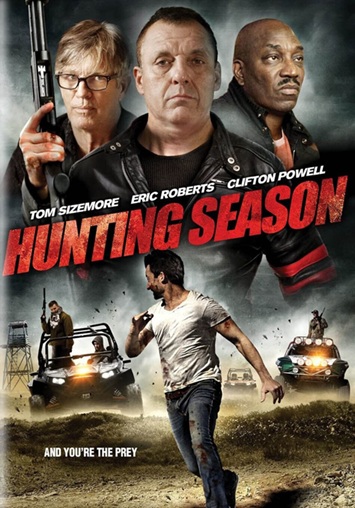
Yeah, I got nothing.
Seriously, 2016’s Hunting Season is so mind-numbingly dull and bad that I have no idea what to say about it. Usually, when I see an indie film that is this bad, I keep it to myself because I generally don’t believe in kicking people when they’re down. I’m far more comfortable trashing a bad film from a major studio than a mediocre one that was shot by some guy who put the entire budget on his credit card. But a visit to the imdb revealed several comments from people who worked on the film and were never actually paid for their efforts so screw it. This is one of the worst films that I have ever seen in my life.
Stock brokers are kidnapping people and hunting them for sport. Tom Sizemore plays Nick, who I guess is supposed to be the head stockbroker. If I sound confused, it’s because the soundtrack was so muddy that I often struggled to understand what people were saying. Sizemore disappears from the film, which is a shame because his unhinged, seemingly improvised performance was one of the only interesting things about the film. (At one point, Sizemore looked straight at the camera and extended his middle finger. I’m not sure if that moment was scripted or not.) Eric Roberts shows up for four scenes, playing the father-in-law of one of the stock brokers. The character’s daughter apparently has some sort of psychic connection with her husband and she shouted all of her dialogue. Clifton Powell shows up as a guy in a bar. Miguel Nunez Jr. plays an FBI agent.
Along with not being able to hear the dialogue, I also struggled to understand just where everyone was in relation to everyone else. The film was so haphazardly edited that it was impossible to really keep track of time or location or anything else that would have helped make the film interesting. It’s a talky film but good luck understanding what anyone’s saying. Most of the scenes have so many visible edits and so many close-ups that I got the feeling that everyone was on set at a different time. It makes for a disjointed and dull story. I couldn’t follow a bit of it.
Eric Roberts has appeared in nearly 800 films. This one might be the worst.
Previous Eric Roberts Films That We Have Reviewed:
- Star 80 (1983)
- Runaway Train (1985)
- Best of the Best (1989)
- Blood Red (1989)
- The Ambulance (1990)
- The Lost Capone (1990)
- Best of the Best II (1993)
- Love, Cheat, & Steal (1993)
- Voyage (1993)
- Love Is A Gun (1994)
- Sensation (1994)
- Dark Angel (1996)
- Doctor Who (1996)
- Most Wanted (1997)
- Mercy Streets (2000)
- Raptor (2001)
- Rough Air: Danger on Flight 534 (2001)
- Strange Frequency (2001)
- Wolves of Wall Street (2002)
- Border Blues (2004)
- Mr. Brightside (2004)
- Six: The Mark Unleased (2004)
- We Belong Together (2005)
- Hey You (2006)
- Depth Charge (2008)
- Amazing Racer (2009)
- In The Blink of an Eye (2009)
- Bed & Breakfast (2010)
- Enemies Among Us (2010)
- The Expendables (2010)
- Sharktopus (2010)
- Beyond The Trophy (2012)
- The Dead Want Women (2012)
- Deadline (2012)
- The Mark (2012)
- Miss Atomic Bomb (2012)
- Assault on Wall Street (2013)
- Bonnie And Clyde: Justified (2013)
- Lovelace (2013)
- The Mark: Redemption (2013)
- The Perfect Summer (2013)
- Self-Storage (2013)
- A Talking Cat!?! (2013)
- This Is Our Time (2013)
- Inherent Vice (2014)
- Road to the Open (2014)
- Rumors of War (2014)
- Amityville Death House (2015)
- Deadly Sanctuary (2015)
- A Fatal Obsession (2015)
- Las Vegas Story (2015)
- Stalked By My Doctor (2015)
- Enemy Within (2016)
- Joker’s Poltergeist (2016)
- Prayer Never Fails (2016)
- Stalked By My Doctor: The Return (2016)
- The Wrong Roommate (2016)
- Dark Image (2017)
- Black Wake (2018)
- Frank and Ava (2018)
- Stalked By My Doctor: Patient’s Revenge (2018)
- Clinton Island (2019)
- Monster Island (2019)
- The Reliant (2019)
- The Savant (2019)
- Seven Deadly Sins (2019)
- Stalked By My Doctor: A Sleepwalker’s Nightmare (2019)
- The Wrong Mommy (2019)
- Exodus of a Prodigal Son (2020)
- Free Lunch Express (2020)
- Her Deadly Groom (2020)
- Top Gunner (2020)
- Deadly Nightshade (2021)
- The Elevator (2021)
- Just What The Doctor Ordered (2021)
- Killer Advice (2021)
- Megaboa (2021)
- Night Night (2021)
- The Poltergeist Diaries (2021)
- The Rebels of PT-218 (2021)
- A Town Called Parable (2021)
- Bleach (2022)
- My Dinner With Eric (2022)
- 69 Parts (2022)
- D.C. Down (2023)
- Aftermath (2024)
- Bad Substitute (2024)
- Devil’s Knight (2024)
- The Wrong Life Coach (2024)
- When It Rains In L.A. (2025
Scene That I Love: The Blob Goes To The Movies
Today’s scene is from 1958’s The Blob. Even aliens with no apparent brain enjoy going to the movies!
4 Shots From 4 Films: Special Alien Invasion Edition
4 Shots From 4 Films is just what it says it is, 4 shots from 4 of our favorite films. As opposed to the reviews and recaps that we usually post, 4 Shots From 4 Films lets the visuals do the talking!
The aliens are here …. or are they?
4 Shots From 4 Alien Invasion Films

It Came From Outer Space (1953, dir by Jack Arnold, DP: Clifford Stine)

It Conquered The World (1956, dir by Roger Corman, DP: Fred E. West)

Starman (1984, dir by John Carpenter. DP: Donald M. Morgan)

Predator (1987, directed by John McTiernan, DP: Donald McAlpine)
Film Review: Carnal Knowledge (dir by Mike Nichols)
First released in 1971, Carnal Knowledge is the story of two friends, Jonathan (Jack Nicholson) and Sandy (Art Garfunkel).
Jonathan and Sandy meet in the late 40s, when they’re both assigned to be roommates at Amherst College. They’re both smart, handsome, and obviously from well-off families. They both believe that they have a wonderful future ahead of them and why shouldn’t they? World War II is over. America is the leader of the world and Jonathan and Sandy both appear to be future leaders of America. Sandy is shy and sensitive. When he meets Susan (Candice Bergen), he struggles to talk to her and when they date, he doesn’t know how far he should go with her. (When he tells Jonathan about getting a hand job from her, it’s obvious that Sandy didn’t previously realize such a thing was possible.) Jonathan, on the other hand, is confident and aggressive. He can be a braggart and he can be insensitive but there’s something undeniably attractive about someone who knows what he wants and is determined to get it. Soon, Susan finds herself torn between the two roommates, though Sandy is clueless that Jonathan is even interested in her.
Carnal Knowledge is divided into three separate parts, each taking place in a different decade and each shot in its own individual style. (The film was written by playwright Jules Feiffer and the script does very much feel like a three-act play.) As a character, Susan disappears after the first act but her relationship with Jonathan and Sandy haunts every bit of the second and third acts. By the end of the film, Sandy is no longer sensitive and Jonathan is no longer virile and one can’t help but feel that Susan, wherever she may be, is definitely better off without either one of them.
The second act is dominated by Jonathan’s relationship with Bobbie, played by Ann-Margaret. Bobbie is beautiful and heart-breakingly insecure. Her relationship with Jonathan starts with a dash of romance and then quickly becomes a trap for both of them. Jonathan is not ready (or mature enough) to settle down. Bobbie is desperate for him to marry her and willing to go to extremes to make that happen. The scenes where Jonathan and Bobbie fight are some of the most powerful in the film, with both Nicholson and Ann-Margaret giving the viewer raw and honest portrayals of two insecure people who are totally wrong for each other but also incapable of getting away from each other.
By the time the third act comes around, Jonathan has been reduced to paranoid ruminations about “ball-breakers” and can only get it up when he’s feeling like he’s the one in power. (Rita Moreno has a cameo as a very patient prostitute.) Meanwhile, middle-aged Sandy is dating an 18 year-old (Carol Kane) and clearly trying to live the free-spirited youth that he never had. Who is more pathetic? Jonathan, who bitterly realizes he’s never going to be young again, or Sandy, who is trying to deny the fact that he’s getting older?
Carnal Knowledge is a dark film and indeed, it sometimes feels like it’s a bit too dark for its own good. Even the worst people occasionally have a laugh. The script is full of sharp lines and the characters are interesting, even if they are for the most part unlikable. Still, there’s a staginess to the film’s narrative and director Mike Nichols never quite breaks free from it. That said, I still highly recommend this film. Not only is it a portrait of a culture-in-transition but it also features some wonderful performances, especially from Ann-Margaret and Jack Nicholson. (In most ways, Jonathan is definitely worse than Sandy but we still have more sympathy for Jonathan because Jack Nicholson is a considerably better actor than Art Garfunkel.) Ann-Margaret honestly portrays the heart-breaking insecurity that comes from being repeatedly told that you have nothing but your looks to offer. Meanwhile, Nicholson throws himself into playing the charismatic but immature Jonathan. We may not like Jonathan but we do, in the end, understand why he’s become the person that he has. It takes a certain amount of courage to play a character like Jonathan and, in this film, Nicholson shows every bit of that courage.
A Scene that Brad loves: Jack Nicholson as The Joker!
Jack Nicholson may have starred in CHINATOWN, ONE FLEW OVER THE CUCKOO’S NEST, and THE SHINING, but for a person born in 1973, the first movie I ever loved Jack Nicholson in was BATMAN (1989). I’ve been a fan ever since! Happy Birthday, Jack!
Icarus File No. 23: The Last Tycoon (dir by Elia Kazan)
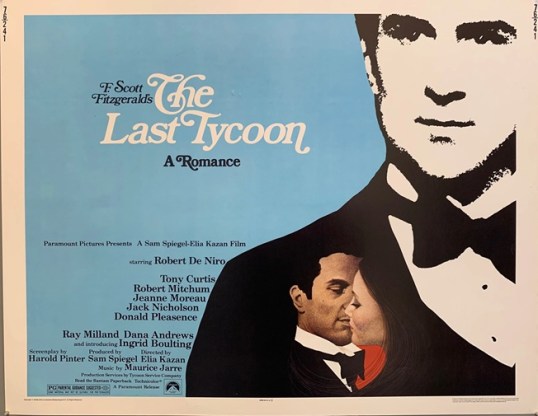
Based on the final (and unfinished) novel by F. Scott Fitzgerald, 1976’s The Last Tycoon tells the story of Monroe Stahr (Robert De Niro).
Monroe Stahr is the head of production at a film studio during the early days of Hollywood. Stahr is an unemotional and seemingly repressed man who only shows enthusiasm when he’s talking about movies. He may not be able to deal with real people but he instinctively knows what they want to see on the big screen. Stahr is a genius but he’s working himself to death, ignoring his health concerns while trying to create the perfect world through film. He’s haunted by a lost love and when he meets Kathleen Moore (Ingrid Boulting, giving a remarkably dull performance), he tries to find love with her but, naturally, he doesn’t succeed. Meanwhile, he has to deal with his boss (Robert Mitchum), his boss’s daughter (Theresa Russell), a neurotic screenwriter (Donald Pleasence), an impotent actor (Tony Curtis), and a lowdown dirty communist labor organizer (Jack Nicholson)! Sadly, for Stahr, McCarthyism is still a few decades away.
There’s a lot of talented people in The Last Tycoon and it’s undeniably interesting to see old school stars — like Mitchum, Curtis, Dana Andrews, Ray Milland — acting opposite a Method-driven, 30-something Robert De Niro. This is one of those films where even the minor roles are filled with name actors. John Carradine plays a tour guide. Jeff Corey plays a doctor. This is a film about Golden Age Hollywood that is full of Golden Age survivors. It’s a shame that most of them don’t get much to do. The Last Tycoon is a very episodic film as Stahr goes from one crisis to another. Characters show up and then just kind of disappear and we’re never quite sure how Stahr feels about any of them or how their existence really shapes Stahr’s worldview. Robert De Niro may be a great actor but, as portrayed in this film, Monroe Stahr is a boring character and De Niro’s trademark tight-lipped intensity just makes Stahr seem like someone who doesn’t have much to offer beyond employment. This is one of De Niro’s least interesting performances, mostly because he’s playing a not-particularly interesting person. Mitchum, Pleasence, and the old guard all make an impression because they’re willing to coast by on their bigger-than-life personalities. De Niro is trapped by the Method and a total lack of chemistry with co-star Ingrid Boulting.

Still, this is the only film to feature both De Niro and Jack Nicholson. (The Departed was originally conceived as a chance to bring De Niro and Nicholson together, with De Niro being the original choice for the role eventually played by Martin Sheen.) Nicholson’s role is small and he doesn’t show up until the film is nearly over. He and De Niro have an intense table tennis match. Nicholson doesn’t really dig deep into Brimmer’s character. Instead, he flashes his grin and let’s the natural sarcasm of his voice carry the scene. It’s nowhere close to being as emotionally satisfying as the De Niro/Pacino meeting in Heat. That said, Jack Nicholson at least appears to be enjoying himself. His natural charisma makes his role seem bigger than it actually is.
Why was The Last Tycoon such a disappointment? Though unfinished, the book still featured some of Fitzgerald’s best work and there’s a huge amount of talent involved in this film. The blame mostly falls on Elia Kazan, who came out of retirement to direct the film after original director Mike Nichols left the project. (Nichols reportedly objected to casting De Niro as Stahr. While it’s tempting to think that Nichols realized that De Niro’s intense style wouldn’t be right for the role, it actually appears that Nichols and De Niro sincerely disliked each other as Nichols also abandoned the next film he was hired to direct when he was told that De Niro wanted the lead role. Nichols choice for Monroe Stahr was Dustin Hoffman, which actually would have worked. If nothing else, it would have provided a Graduate reunion.) Kazan later said that he did the film solely for the money and it’s obvious that he didn’t really care much about the film’s story. The film has some good scenes but, overall, it feels disjointed and uneven. Kazan doesn’t really seem to care about Monroe Stahr and, as a result, the entire film falls flat.
Previous Icarus Files:
- Cloud Atlas
- Maximum Overdrive
- Glass
- Captive State
- Mother!
- The Man Who Killed Don Quixote
- Last Days
- Plan 9 From Outer Space
- The Last Movie
- 88
- The Bonfire of the Vanities
- Birdemic
- Birdemic 2: The Resurrection
- Last Exit To Brooklyn
- Glen or Glenda
- The Assassination of Trotsky
- Che!
- Brewster McCloud
- American Traitor: The Trial of Axis Sally
- Tough Guys Don’t Dance
- Reach Me
- Revolution
The Eric Roberts Collection: Megaboa (dir by Mario N. Bonassin)
Bless the Asylum and their love of giant monster movies!
In 2021’s Megaboa, a group of college students accompany Dr. Malone (Eric Roberts) a field trip to a remote island. They’re on the island specifically to explore some caves and study some drawings. It’s time to have some fun with anthropology! But when Dr. Malone gets bitten by a venomous spider, a group of students go off in search of an orchid that can neutralize the venom. This eventually leads to them discovering that they’re not alone on the island. There’s also a giant snake, a megaboa if you will.
This is pretty much a typical Asylum film. Giant snakes, tank top-wearing heroines, and Eric Roberts hamming it up in his usual delightful fashion. “Far out!” Dr. Malone says when he first sees the giant snake and how can you not agree with him? Those who complain that the Asylum makes cheap movies are missing the point. The film may be cheap but they’re almost always fun as well. This one features a giant snake that is actually kind of cute and it also features a scene of someone shouting, “Get me out of here!” after being swallowed by the snake and how can you not enjoy that? It’s like a much more honest and self-aware version of Anaconda and, best of all, it’s got Eric Roberts delivering his lines with a twinkle in his eye. He knows better than to take any of this too seriously and hopefully, you do as well.
Megaboa is fun. It’s like the type of films that I used to look forward to watching on the SyFy channel. Get together with a group of your wittiest friends and watch it. Don’t be afraid to talk back to the movie. Don’t be afraid to laugh when the snake first shows up. Tell the characters when they’re doing something dumb, that’s the point of the film. Megaboa is pure entertainment.
Previous Eric Roberts Films That We Have Reviewed:
- Star 80 (1983)
- Runaway Train (1985)
- Best of the Best (1989)
- Blood Red (1989)
- The Ambulance (1990)
- The Lost Capone (1990)
- Best of the Best II (1993)
- Love, Cheat, & Steal (1993)
- Voyage (1993)
- Love Is A Gun (1994)
- Sensation (1994)
- Dark Angel (1996)
- Doctor Who (1996)
- Most Wanted (1997)
- Mercy Streets (2000)
- Raptor (2001)
- Rough Air: Danger on Flight 534 (2001)
- Strange Frequency (2001)
- Wolves of Wall Street (2002)
- Border Blues (2004)
- Mr. Brightside (2004)
- Six: The Mark Unleased (2004)
- We Belong Together (2005)
- Hey You (2006)
- Depth Charge (2008)
- Amazing Racer (2009)
- In The Blink of an Eye (2009)
- Bed & Breakfast (2010)
- Enemies Among Us (2010)
- The Expendables (2010)
- Sharktopus (2010)
- Beyond The Trophy (2012)
- The Dead Want Women (2012)
- Deadline (2012)
- The Mark (2012)
- Miss Atomic Bomb (2012)
- Assault on Wall Street (2013)
- Bonnie And Clyde: Justified (2013)
- Lovelace (2013)
- The Mark: Redemption (2013)
- The Perfect Summer (2013)
- Self-Storage (2013)
- A Talking Cat!?! (2013)
- This Is Our Time (2013)
- Inherent Vice (2014)
- Road to the Open (2014)
- Rumors of War (2014)
- Amityville Death House (2015)
- Deadly Sanctuary (2015)
- A Fatal Obsession (2015)
- Las Vegas Story (2015)
- Stalked By My Doctor (2015)
- Enemy Within (2016)
- Joker’s Poltergeist (2016)
- Prayer Never Fails (2016)
- Stalked By My Doctor: The Return (2016)
- The Wrong Roommate (2016)
- Dark Image (2017)
- Black Wake (2018)
- Frank and Ava (2018)
- Stalked By My Doctor: Patient’s Revenge (2018)
- Clinton Island (2019)
- Monster Island (2019)
- The Reliant (2019)
- The Savant (2019)
- Seven Deadly Sins (2019)
- Stalked By My Doctor: A Sleepwalker’s Nightmare (2019)
- The Wrong Mommy (2019)
- Exodus of a Prodigal Son (2020)
- Free Lunch Express (2020)
- Her Deadly Groom (2020)
- Top Gunner (2020)
- Deadly Nightshade (2021)
- The Elevator (2021)
- Just What The Doctor Ordered (2021)
- Killer Advice (2021)
- Night Night (2021)
- The Poltergeist Diaries (2021)
- The Rebels of PT-218 (2021)
- A Town Called Parable (2021)
- Bleach (2022)
- My Dinner With Eric (2022)
- 69 Parts (2022)
- D.C. Down (2023)
- Aftermath (2024)
- Bad Substitute (2024)
- Devil’s Knight (2024)
- The Wrong Life Coach (2024)
- When It Rains In L.A. (2025
A Scene That I Love: Jack Nicholson Sings In Tommy
Today’s scene that I love comes from 1975’s Tommy. Based on The Who’s rock opera and directed by Ken Russell, Tommy featured several actors who weren’t necessarily known as singers. Oliver Reed is the most obvious example.
And then there’s Jack Nicholson! Jack’s role is pretty small. He’s the therapist who examines Tommy and who eye flirts with Ann-Margaret. And, of course, he gets his check.
4 Shots From 4 Films: Special Jack Nicholson Edition
4 Shots From 4 Films is just what it says it is, 4 shots from 4 of our favorite films. As opposed to the reviews and recaps that we usually post, 4 Shots From 4 Films lets the visuals do the talking!
Today is Jack Nicholson’s 88th birthday!
Though he has pretty much retired from acting, Jack Nicholson remains a screen icon with a filmography that is a cinema lover’s dream. He’s worked with everyone from Roger Corman to Stanley Kubrick to Milos Forman to Martin Scorsese and, along the way, he’s become a symbol of a very American-type of rebel. Though often associated with the counter-culture, his style has always been too aggressive and idiosyncratic for him to be a believable hippie. Instead, he’s one of the last of the beats, an outsider searching for meaning in Americana.
Over the course of his career, Nicholson has won three Oscars and been nominated for a total of 12. He’s the only actor to have been nominated in every decade from the 1960s to the 2000s. He is an actor who epitomizes an era in filmmaking, actually several eras. It’s been 15 years since he last appeared in a movie but Jack Nicholson will never be forgotten.
4 Shots From 4 Jack Nicholson Films

Psych-Out (1968, dir by Richard Rush, DP: Laszlo Kovacs)

Carnal Knowledge (1971, dir by Mike Nichols, DP: Giuseppe Rotunno)
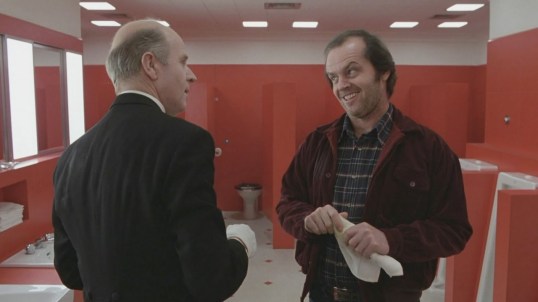
The Shining (1980, dir by Stanley Kubrick, DP: John Alcott)

The Departed (2006, dir by Martin Scorsese, DP: Michael Ballhaus)
 Through the Shattered Lens